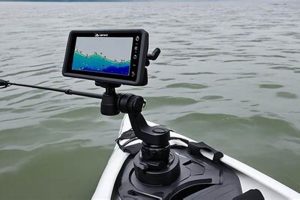
This pursuit combines the quiet, close-to-the-water experience of kayak angling with the technological advantage of electronic devices designed to locate fish. These devices utilize sonar to create underwater images, revealing bottom structure, water depth, temperature gradients, and, crucially, the presence and location of fish. This allows anglers to target specific species and habitats with increased precision.
Integrating such technology enhances angling success by providing real-time underwater intelligence. The ability to identify productive fishing areas quickly minimizes wasted time and effort, making the experience more efficient and enjoyable. Historically, anglers relied on experience, observation, and intuition to locate fish. Electronic fish finders represent a significant advancement, democratizing access to information previously gleaned only through years of dedicated practice. This technological advancement empowers anglers of all skill levels to make informed decisions, leading to improved catch rates and a deeper understanding of aquatic environments.
This approach to angling raises several key considerations, including choosing appropriate equipment, understanding sonar technology, and employing effective fishing techniques. Further exploration will cover these topics in detail, providing practical guidance for maximizing success on the water.
Tips for Effective Kayak Fishing with Sonar
Maximizing the advantages of sonar in a kayak requires a combination of strategic planning and practical understanding. The following tips offer guidance for enhancing angling success.
Tip 1: Choose the Right Transducer: Transducer selection depends on the fishing environment. In shallower freshwater, a higher-frequency transducer (e.g., 200 kHz) provides greater detail. Deeper saltwater environments may benefit from lower frequencies (e.g., 50 kHz) for better penetration.
Tip 2: Mount the Transducer Correctly: Proper transducer placement is crucial for accurate readings. Follow manufacturer instructions for optimal mounting location and ensure the transducer sits below the waterline and is free of obstructions.
Tip 3: Understand Sonar Settings: Familiarization with sonar settings, such as sensitivity, gain, and frequency, allows anglers to fine-tune the device for specific conditions. Experimentation and practice are key to interpreting the displayed information accurately.
Tip 4: Learn to Interpret Sonar Readings: Recognizing fish arches, bottom structure, and other underwater features is essential for effective sonar utilization. Study available resources and practice interpreting the displayed data to identify promising fishing locations.
Tip 5: Integrate Sonar with Other Techniques: Sonar should complement, not replace, traditional angling techniques. Use sonar to identify potential hotspots, but continue to rely on knowledge of fish behavior, water conditions, and lure presentation.
Tip 6: Consider GPS Integration: Combining sonar with GPS mapping allows anglers to mark productive areas and navigate back to them efficiently. This feature is particularly valuable for tracking successful fishing spots over time.
Tip 7: Power Management: Battery life is a crucial consideration for kayak anglers. Manage sonar usage and carry spare batteries or charging options to ensure continued operation throughout the fishing trip.
By implementing these strategies, anglers can leverage sonar technology to significantly improve their chances of success on the water. These tips facilitate more informed decisions, leading to a more efficient and rewarding kayak fishing experience.
Considering these practical tips and understanding their application will ultimately contribute to a more productive and fulfilling angling experience.
1. Kayak Selection
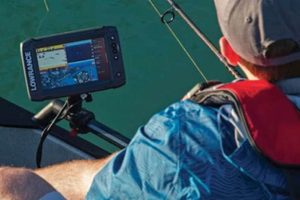
Kayak selection significantly impacts the effectiveness of utilizing a fish finder. Stability, maneuverability, and available mounting space directly influence transducer placement and subsequent sonar performance. A stable kayak minimizes transducer interference from surface chop, providing clearer readings. Sufficient mounting space accommodates the fish finder display and transducer arm without compromising angler comfort or paddling efficiency. For example, a sit-on-top kayak designed for fishing often features dedicated transducer scuppers and mounting areas, facilitating streamlined installation and optimal transducer positioning. Conversely, a narrow, recreational kayak might lack stability and appropriate mounting locations, hindering fish finder utility.
Choosing a kayak compatible with fish finder technology extends beyond simple mounting considerations. Hull design influences how sonar signals propagate through the water. A smooth hull bottom minimizes interference, whereas a complex hull shape can create turbulence and distort sonar readings. Further, kayak length and width affect maneuverability in tight fishing spots, allowing anglers to position themselves effectively based on sonar data. A shorter, wider kayak offers superior maneuverability for navigating shallows and structure-rich environments, maximizing the advantage of pinpoint sonar accuracy. A longer, narrower kayak, while faster in open water, may prove cumbersome when attempting to precisely target fish identified by the sonar in confined areas.
Therefore, strategic kayak selection is essential for maximizing the benefits of a fish finder. Prioritizing stability, considering available mounting space, and evaluating hull design are crucial factors influencing sonar performance. A well-chosen kayak seamlessly integrates with fish finder technology, enhancing angling precision and overall effectiveness on the water. Failing to consider these factors can compromise sonar accuracy and limit the angler’s ability to effectively utilize the technology.
2. Transducer Placement

Optimal transducer placement is critical for maximizing the effectiveness of fish finders in kayak fishing. Incorrect positioning can lead to inaccurate readings, hindering the angler’s ability to locate fish and understand underwater structures. Strategic placement ensures clear, reliable sonar data, enabling informed decisions about fishing locations and techniques. This discussion explores the key facets of transducer placement, emphasizing their impact on sonar performance and overall fishing success.
- Inside-Hull Mounting
Inside-hull mounting involves adhering the transducer to the inside of the kayak hull, typically using epoxy. This method eliminates the need for external hardware and minimizes drag. However, it’s generally suitable for smoother fiberglass or composite hulls, as rough or uneven surfaces can negatively impact sonar signal transmission. While offering a clean, protected installation, inside-hull mounting often results in slightly reduced sonar sensitivity compared to other methods. This approach may prove suitable for calm, shallow waters but might not be ideal for deeper or more turbulent environments. Furthermore, removing an inside-hull mounted transducer can be challenging and may damage the kayak’s hull.
- Transom Mounting
Transom mounting secures the transducer to the kayak’s stern. This method offers relatively easy installation and adjustment. However, the transducer’s exposed position increases the risk of damage from impact or entanglement. Turbulence created by the kayak’s movement can also interfere with sonar readings, particularly at higher speeds. Transom mounting is generally suitable for smaller kayaks and calmer waters, where the risk of impact and turbulence is minimal. In rougher conditions or higher speeds, the accuracy of the sonar data may be compromised.
- Trolling Motor Mounting
Attaching the transducer to the trolling motor positions it directly in the water, providing clear, unobstructed sonar readings. This setup allows for easy adjustment and keeps the transducer away from hull-generated turbulence. However, it requires a trolling motor, adding to the overall cost and complexity of the kayak setup. Moreover, the transducer cable must be carefully routed to avoid interference with the motor’s operation. While offering superior sonar performance, trolling motor mounting might not be feasible or desirable for all kayak anglers, especially those prioritizing simplicity and lightweight setups.
- Side Imaging Considerations
Side imaging transducers require specific placement considerations for optimal performance. These transducers emit wider sonar beams to the sides of the kayak, creating detailed images of the surrounding underwater environment. Proper alignment is crucial to ensure accurate side-scan imagery. Incorrect positioning can lead to distorted images or missed targets. Typically, these transducers are mounted on a dedicated bracket extending from the kayak’s side, ensuring the transducer faces perpendicular to the water surface. Careful consideration must be given to the positioning to minimize interference from the kayak’s hull or other underwater obstructions.
Effective transducer placement is an integral part of successful kayak fishing with a fish finder. Choosing the appropriate mounting method and ensuring proper alignment significantly impacts sonar performance and data accuracy. Understanding the advantages and limitations of each mounting option allows anglers to tailor their setup to specific fishing environments and kayak configurations, ultimately contributing to a more informed and productive angling experience.
3. Sonar Interpretation
Sonar interpretation is fundamental to effective kayak fishing with a fish finder. The ability to decipher the information displayed on the fish finder screen directly impacts angling success. Understanding the nuances of sonar readings allows anglers to identify fish, bottom structure, vegetation, and other underwater features critical for locating productive fishing zones. A misinterpretation of sonar data can lead to wasted time in unproductive areas or missed opportunities to target specific species. For example, distinguishing between a school of baitfish and a larger game fish requires careful analysis of sonar returns, considering factors like arch shape, signal strength, and depth. Similarly, recognizing subtle changes in bottom contour, such as drop-offs, humps, or submerged debris, can reveal prime ambush points favored by predatory fish. Without accurate sonar interpretation, these valuable insights remain hidden, limiting angling effectiveness.
Practical application of sonar interpretation involves more than simply identifying fish icons on the screen. It requires understanding the relationship between sonar settings and the displayed information. Adjusting sensitivity and frequency, for instance, can enhance the clarity of sonar returns and differentiate between fish and other underwater objects. Moreover, recognizing how sonar signals interact with different bottom typesmud, sand, rockenables anglers to refine their interpretations based on the environment. For example, a hard bottom typically produces a stronger, more defined sonar return compared to a soft, muddy bottom. Integrating this knowledge with observations of water clarity, current, and temperature allows for a more comprehensive understanding of the underwater landscape. Consider a scenario where the sonar displays fish arches suspended slightly above a hard bottom near a drop-off. This suggests fish might be holding in the thermocline or using the drop-off as an ambush pointvaluable information for selecting appropriate lures and fishing techniques.
In summary, sonar interpretation is not merely a supplementary skill but rather an integral component of successful kayak fishing with a fish finder. It bridges the gap between raw sonar data and practical angling decisions, empowering anglers to locate fish efficiently and maximize their chances of success. The ability to discern subtle variations in sonar readings and integrate this information with environmental observations significantly enhances angling precision and overall effectiveness. Mastering sonar interpretation transforms the fish finder from a simple depth sounder into a powerful tool for understanding and interacting with the underwater world, ultimately contributing to a more rewarding and informed angling experience.
4. Battery Management
Battery management is a critical aspect of kayak fishing with a fish finder, directly impacting the duration and effectiveness of fishing trips. Reliable power ensures continuous operation of the fish finder, enabling anglers to locate fish, navigate effectively, and maximize their time on the water. Depleted batteries can curtail fishing excursions prematurely, limiting opportunities and potentially compromising safety. Understanding power consumption, battery types, and charging strategies is essential for successful and uninterrupted kayak fishing experiences.
- Battery Type Selection
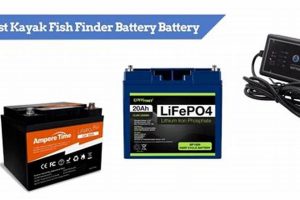
Selecting the appropriate battery type involves considering factors like capacity, weight, and lifespan. Lead-acid batteries offer a lower initial cost but are heavier and have a shorter lifespan compared to lithium-ion batteries. Lithium-ion batteries, while more expensive, provide higher energy density, allowing for longer run times with less weight. Choosing a battery with sufficient capacity to power the fish finder and other onboard electronics for the anticipated duration of the fishing trip is crucial. Underestimating power requirements can lead to premature battery depletion and a shortened fishing day.
- Power Consumption Estimation
Accurately estimating power consumption requires understanding the fish finder’s power draw and usage patterns. Fish finders with larger displays and more advanced features typically consume more power. Continuous use at maximum brightness and sonar output will drain the battery faster than intermittent use at lower settings. Calculating anticipated run times based on the battery’s capacity and the fish finder’s power requirements helps anglers select appropriately sized batteries and avoid unexpected power shortages. Factors like screen brightness, sonar frequency, and GPS usage all influence power consumption and should be factored into estimations.
- Charging Strategies and Maintenance
Implementing effective charging strategies involves using appropriate chargers and maintaining batteries properly. Using the correct charger for the specific battery type is essential for safe and efficient charging. Overcharging or undercharging can significantly reduce battery lifespan. Regularly checking battery terminals for corrosion and storing batteries in a cool, dry place helps maintain their performance and longevity. Carrying a spare battery or a portable power source provides a backup option in case of unexpected power depletion, ensuring continued fish finder operation throughout the fishing trip. Moreover, understanding the charging characteristics of different battery types, such as the optimal charging rate and voltage, is essential for maximizing battery life and performance.
- Power-Saving Practices
Employing power-saving practices during fishing trips extends battery life. Reducing screen brightness, using lower sonar frequencies when appropriate, and disabling unnecessary features can minimize power consumption without significantly impacting fish finder functionality. Utilizing power-saving modes, if available on the fish finder, can further optimize battery usage. Strategically planning fishing routes to minimize travel time and maximize time spent in productive areas also contributes to power conservation. Adopting these practices allows anglers to extend their time on the water and maximize the benefit of their fish finder technology without the concern of premature battery depletion.
Effective battery management is integral to a successful kayak fishing experience with a fish finder. By carefully considering battery type, estimating power consumption, implementing appropriate charging strategies, and employing power-saving practices, anglers ensure uninterrupted fish finder operation, maximizing their time on the water and increasing their chances of angling success. Failure to prioritize battery management can lead to shortened fishing trips, missed opportunities, and potential safety concerns, underscoring the importance of this often-overlooked aspect of kayak fishing.
5. GPS Integration

GPS integration significantly enhances the effectiveness of fish finders in kayak fishing, transforming them from simple depth and fish-locating devices into comprehensive navigational and angling tools. This integration allows anglers to mark waypoints, track routes, and precisely return to productive fishing locations. The synergy between GPS and sonar data provides a powerful combination for understanding underwater terrain and fish behavior. Consider a scenario where an angler locates a submerged structure holding fish. GPS allows marking the precise location, enabling a return to the exact spot even after drifting or exploring other areas. Without GPS, relocating such a feature, particularly in featureless open water or during changing light conditions, becomes significantly more challenging. This pinpoint accuracy is crucial for maximizing fishing efficiency, especially when targeting specific structures or bottom contours known to attract certain species.
Furthermore, GPS integration facilitates the creation of detailed fishing maps. By consistently marking waypoints at productive locations, anglers build a personalized database of fishing hotspots tailored to their target species and preferred fishing grounds. These maps become invaluable tools for planning future trips, allowing anglers to quickly navigate to proven areas and optimize their fishing time. GPS data, combined with sonar information, reveals patterns in fish distribution relative to underwater structures, depth contours, and vegetation. This data-driven approach allows anglers to refine their fishing strategies and target specific areas with greater precision. For example, tracking successful fishing locations over multiple trips might reveal a preference for a particular depth range or proximity to specific vegetation types, informing future fishing decisions. Moreover, GPS mapping facilitates safe navigation, especially in unfamiliar waters or during challenging weather conditions. The ability to track routes, mark hazards, and navigate accurately in low visibility significantly enhances safety on the water.
In conclusion, GPS integration represents a substantial advancement in kayak fishing with fish finders. It empowers anglers with precise navigation, detailed mapping capabilities, and a deeper understanding of fish behavior in relation to their environment. The ability to mark waypoints, track routes, and build personalized fishing maps significantly enhances angling efficiency and success. Moreover, GPS integration plays a crucial role in promoting safe navigation, allowing anglers to explore new waters with confidence. This integration transforms the fish finder from a standalone tool into a comprehensive navigational and angling system, fundamentally changing how anglers interact with their environment and pursue their quarry.
6. Fishing Techniques
Fishing techniques employed in conjunction with fish finders significantly influence angling success in kayak fishing. The fish finder provides crucial information about fish location and underwater terrain, but effectively utilizing this information requires adapting fishing techniques to the specific conditions revealed by the sonar. A strategic approach to lure selection, presentation, and retrieval, informed by real-time sonar data, maximizes angling efficiency and increases the likelihood of success. Failing to adapt fishing techniques based on sonar readings diminishes the fish finder’s utility and limits the angler’s ability to capitalize on identified opportunities.
- Vertical Jigging
Vertical jigging, particularly effective over deep structure or suspended fish identified by the sonar, involves presenting a jig directly beneath the kayak. Sonar allows precise placement of the jig within the target zone, maximizing its effectiveness. For instance, if the fish finder reveals fish holding tight to a submerged wreck, the angler can position the kayak directly above the wreck and lower the jig vertically into the strike zone. This targeted approach increases the chances of enticing a bite compared to blindly casting and retrieving in the general vicinity. Sonar also aids in determining the appropriate jig weight and retrieval speed, further optimizing the technique.
- Casting and Retrieving
Casting and retrieving, a versatile technique adaptable to various fishing scenarios, benefits from sonar information by guiding lure selection and retrieval patterns. Sonar reveals bottom composition, vegetation, and depth, informing decisions about lure type, size, and color. For example, when fishing shallow flats, the sonar might reveal patches of submerged grass. This information prompts the angler to choose weedless lures or topwater baits to avoid snags and target fish actively feeding in the vegetation. Similarly, sonar can identify baitfish schools, suggesting the use of lures that mimic the prevalent forage. Real-time observation of lure depth and fish response on the sonar screen allows for adjustments to retrieval speed and technique, further enhancing presentation effectiveness.
- Trolling
Trolling, a method involving dragging lures behind a moving kayak, gains efficiency and precision with sonar guidance. The fish finder displays depth contours, temperature gradients, and fish locations, enabling anglers to target specific depths or areas likely to hold fish. For example, if the sonar identifies a thermocline or a distinct temperature break, the angler can adjust trolling depth to present lures within this zone, often a prime location for active fish. Furthermore, sonar can detect schools of baitfish or individual game fish, prompting adjustments to trolling speed and direction to intersect their paths. This informed approach minimizes wasted time trolling in unproductive areas and focuses efforts on zones with higher fish activity.
- Drift Fishing
Drift fishing, a technique where the kayak drifts naturally with wind or current, benefits from sonar by providing real-time feedback on bottom structure and fish presence as the kayak moves. This allows anglers to identify productive areas within the drift path, focusing their efforts on prime locations. For example, if the sonar reveals a submerged ledge or a cluster of rocks during the drift, the angler can concentrate on presenting baits near this structure, capitalizing on potential ambush points. Sonar also helps in identifying changes in depth or bottom composition, signaling potential shifts in fish habitat and prompting adjustments in bait presentation or technique. This dynamic interaction with the underwater environment, guided by real-time sonar data, significantly enhances the effectiveness of drift fishing.
Integrating fish finder technology with adaptable fishing techniques significantly enhances angling success in kayak fishing. The sonar provides crucial insights into fish location and underwater terrain, empowering anglers to tailor their approach based on real-time data. A strategic combination of sonar interpretation and adaptive fishing techniques, exemplified by vertical jigging, casting and retrieving, trolling, and drift fishing, maximizes efficiency and increases the likelihood of successful catches. Failing to leverage the synergy between these elements diminishes the overall effectiveness of kayak fishing with a fish finder, underscoring the importance of a holistic and informed approach.
Frequently Asked Questions
This section addresses common inquiries regarding the utilization of fish finders in kayak angling, providing concise and informative responses.
Question 1: What is the typical cost of a fish finder suitable for kayak fishing?
Fish finder prices vary based on features and capabilities. Basic models suitable for kayak fishing typically range from $100 to $300. Advanced units with features like GPS, side imaging, and networking capabilities can cost upwards of $500 or more. Consideration of budget and required features is essential when selecting a fish finder.
Question 2: How does one choose the appropriate fish finder transducer for a kayak?
Transducer selection depends on the fishing environment and target species. Higher-frequency transducers (e.g., 200 kHz) excel in shallow freshwater, providing detailed images of structure and fish. Lower-frequency transducers (e.g., 50 kHz) offer better performance in deeper saltwater environments. Consider the primary fishing locations and target depths when choosing a transducer.
Question 3: Can a fish finder be used effectively in moving water?
Fish finders function effectively in moving water, although strong currents or turbulence can affect sonar readings. Proper transducer placement and adjustment of sonar settings can mitigate these effects. Understanding how water movement influences sonar interpretation is essential for accurate data analysis.
Question 4: Is it challenging to install a fish finder on a kayak?
Fish finder installation on a kayak varies in complexity depending on the specific unit and kayak model. Many kayaks offer dedicated mounting locations and transducer scuppers, simplifying installation. Some installations may require drilling or modifications to the kayak. Consulting manufacturer instructions or seeking professional installation assistance is recommended.
Question 5: What maintenance is required for a kayak fish finder?
Regular maintenance ensures optimal fish finder performance. Keeping the transducer clean and free of debris is crucial for accurate sonar readings. Protecting the display unit from direct sunlight and extreme temperatures extends its lifespan. Periodically checking wiring connections and ensuring software updates are current contributes to reliable operation.
Question 6: How does one interpret the images displayed on a fish finder screen?
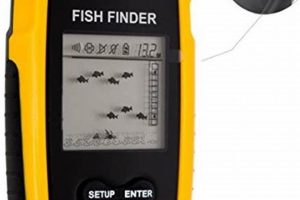
Interpreting fish finder displays involves recognizing patterns and understanding sonar principles. Fish typically appear as arches or distinct shapes on the screen. Bottom contours, vegetation, and other underwater structures are represented by variations in color and texture. Learning to differentiate between fish, structure, and other sonar returns requires practice and familiarity with the specific fish finder model. Consulting user manuals and online resources can aid in developing sonar interpretation skills.
Understanding these common aspects of using fish finders in kayak fishing allows for informed decisions about equipment selection, installation, and practical application. Addressing these inquiries proactively enhances the overall fishing experience and promotes greater success on the water.
This concludes the frequently asked questions section. The subsequent section will delve into advanced techniques for maximizing fish finder utilization in various kayak fishing scenarios.
Kayak Fishing with Fish Finder
Kayak fishing with fish finder technology represents a significant advancement in angling methodology. This exploration has highlighted the symbiotic relationship between kayak selection, transducer placement, sonar interpretation, battery management, GPS integration, and fishing techniques. Each component plays a crucial role in maximizing the effectiveness of electronic fish finding devices in the context of kayak angling. Understanding the nuances of sonar technology, coupled with strategic equipment choices and adaptable fishing strategies, empowers anglers to locate fish efficiently, navigate effectively, and ultimately enhance their chances of success on the water. Careful consideration of these elements transforms the kayak fishing experience from a passive pursuit into a dynamic interaction with the underwater environment.
The continued evolution of fish finder technology promises further advancements in angling precision and efficiency. As technology progresses, anglers can expect even more sophisticated tools for understanding fish behavior and interacting with aquatic ecosystems. Embracing these advancements, while maintaining a responsible approach to resource management and ethical angling practices, will shape the future of kayak fishing and ensure its sustainability for generations to come. The integration of technology and traditional angling knowledge offers a powerful combination for maximizing the enjoyment and productivity of kayak fishing while fostering a deeper appreciation for the underwater world.