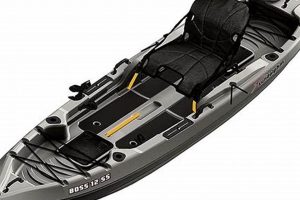
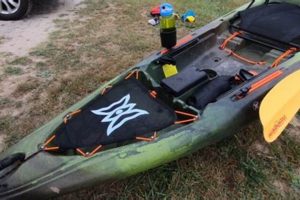
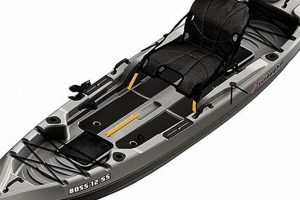
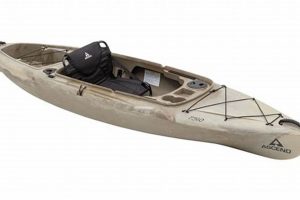
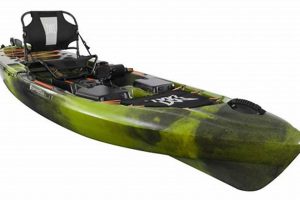
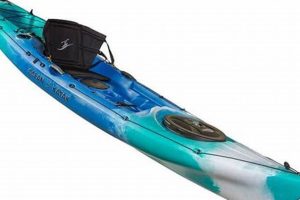
Angling from this type of small, human-powered watercraft offers a unique blend of mobility and stability. These vessels are specifically designed to be easily maneuvered in calm waters, allowing anglers to access shallow areas and tight spots often unreachable by larger boats. Their open design provides ample space for casting and reeling, while their relatively stable platform enhances comfort and balance during the activity.
This approach to angling presents several advantages. It allows for a closer connection with nature, offering a quiet and immersive experience. The compact size and lightweight nature of these boats facilitate easy transport and launch, eliminating the need for boat ramps or trailers. Furthermore, their affordability compared to motorized watercraft makes them an accessible option for many anglers. Over the past few decades, this method has gained significant popularity due to these benefits and the growing interest in eco-friendly recreational activities.
The following sections will delve deeper into various aspects of this angling technique, including choosing the right equipment, essential safety measures, and effective fishing strategies.
Tips for Kayak Fishing
Effective angling from a kayak requires careful planning and execution. These tips offer valuable insights for a successful and enjoyable experience.
Tip 1: Prioritize Stability: Select a kayak designed for stability, especially for beginners. Wider hulls generally offer greater stability than narrower designs. Consider adding outriggers for enhanced stability if desired.
Tip 2: Plan the Route: Research the fishing location beforehand. Identify potential fishing spots, water depths, and currents. Check weather forecasts and avoid venturing out in adverse conditions.
Tip 3: Organize Gear Efficiently: Utilize storage compartments and deck rigging to keep essential gear within easy reach. Secure all equipment to prevent loss in case of capsizing.
Tip 4: Practice Paddling and Casting Techniques: Develop proficient paddling skills to maneuver effectively and conserve energy. Practice casting from a seated position to maintain balance and accuracy.
Tip 5: Employ Appropriate Anchoring Techniques: Utilize a lightweight anchor suitable for kayaks and employ proper anchoring techniques to maintain position in desired fishing areas.
Tip 6: Adhere to Safety Regulations: Wear a personal flotation device (PFD) at all times. Carry a whistle, signaling device, and communication equipment for emergencies. Inform someone of the fishing plan and estimated return time.
Tip 7: Respect the Environment: Practice catch-and-release whenever possible. Avoid disturbing wildlife and dispose of waste responsibly.
By implementing these tips, anglers can enhance their safety, improve their fishing success, and contribute to a more enjoyable and sustainable experience on the water.
These insights provide a strong foundation for successful kayak angling. The concluding section offers additional resources and recommendations.
1. Stability

Stability forms a cornerstone of successful angling from a sit-on kayak. A stable platform allows anglers to cast, reel, and land fish effectively without compromising balance. This is particularly crucial when battling larger fish or navigating challenging water conditions. Compromised stability can lead to capsizing, jeopardizing both equipment and personal safety. Wider hulls, lower centers of gravity, and outriggers contribute to enhanced stability. A kayak specifically designed for fishing often incorporates these features, maximizing stability for angling activities. For example, a wider, flatter hull provides a more stable base compared to a narrow, rounded hull designed for speed.
The impact of stability extends beyond simply preventing capsizing. A stable kayak enhances overall fishing performance. Anglers can focus on fishing techniques rather than constantly correcting balance. This improved focus translates to more accurate casts, more effective retrieves, and ultimately, a more successful fishing experience. Furthermore, enhanced stability allows anglers to utilize a wider range of fishing techniques, including stand-up fishing, which requires a significantly higher degree of balance. Consider the scenario of an angler hooking a large fish. A stable platform provides the leverage and control necessary to successfully fight and land the fish, whereas an unstable platform would greatly hinder the anglers ability to manage the situation.
Understanding the significance of stability in kayak fishing is essential for both safety and success. Choosing a kayak with appropriate stability features is paramount. Factors such as hull design, weight capacity, and intended use influence stability. Careful consideration of these factors ensures anglers select a kayak that matches their individual needs and skill levels. Beyond the inherent stability of the kayak itself, anglers can further enhance stability through proper weight distribution and by avoiding sudden movements. This understanding, coupled with appropriate equipment selection and mindful practices, significantly enhances both safety and performance on the water.
2. Maneuverability

Maneuverability is a critical aspect of successful angling from a sit-on kayak. Efficient navigation through diverse water conditions allows anglers to access secluded fishing spots and position themselves strategically for optimal casting. Restricted maneuverability limits access to prime fishing areas and hinders effective presentation of lures or bait.
- Paddle Control
Precise paddle control is fundamental to kayak maneuverability. Efficient paddling techniques enable quick turns, precise adjustments in position, and navigation through complex environments such as shallows, weed beds, and currents. A skilled angler can leverage paddle strokes to maintain precise boat positioning while simultaneously managing fishing rods and tackle. For instance, a strong draw stroke allows for quick turns and adjustments, while a well-executed sweep stroke facilitates smooth, controlled turns. Inefficient paddling, conversely, results in wasted energy and reduced control, hindering the ability to access desired fishing locations or react effectively to changing water conditions.
- Hull Design
Kayak hull design significantly influences maneuverability. Shorter kayaks generally turn more quickly, while longer kayaks track more efficiently in open water. Hull shape also plays a role; a flatter hull provides greater initial stability but may sacrifice maneuverability, whereas a more rounded or V-shaped hull enhances maneuverability but can be less stable. Choosing a hull design appropriate for the intended fishing environmentcalm lakes versus flowing rivers, for exampleis essential. A shorter, more maneuverable kayak is ideal for navigating tight creeks and mangrove tunnels, whereas a longer, more stable kayak is better suited for open water or larger lakes.
- Water Conditions
Currents, wind, and waves directly impact kayak maneuverability. Strong currents require greater paddling effort and careful navigation. Wind can push a kayak off course, requiring constant correction. Waves can affect stability and make precise maneuvering challenging. Assessing water conditions before embarking on a fishing trip and adapting paddling techniques accordingly is crucial for maintaining control and ensuring safety. For instance, paddling upstream requires significantly more effort and careful planning than paddling downstream. Similarly, strong winds can quickly push a kayak off course, requiring anglers to adjust their paddling technique and potentially seek sheltered areas.
- Weight Distribution
Proper weight distribution within the kayak contributes significantly to maneuverability and stability. Unevenly distributed weight can make a kayak difficult to control and more susceptible to tipping. Distributing gear evenly throughout the kayak, and keeping heavier items lower in the hull, enhances both stability and responsiveness. This is especially important in sit-on-top kayaks where the center of gravity is higher. Correct weight distribution allows for more efficient paddling and quicker turns, improving the overall fishing experience. An angler who concentrates the weight at the rear of the kayak, for example, will find the bow raised higher in the water, increasing wind resistance and making the kayak more difficult to turn.
These factors interact dynamically to determine a kayaks maneuverability, influencing an angler’s ability to navigate efficiently and effectively reach desired fishing locations. Understanding these elements and choosing appropriate equipment and techniques based on the specific fishing environment enhances both safety and success on the water. Mastering kayak maneuverability unlocks access to prime fishing areas, allowing anglers to explore diverse environments and maximize their fishing potential.
3. Accessibility (to fishing spots)
Accessibility to fishing spots represents a significant advantage of angling from a sit-on kayak. These vessels grant access to shallow, secluded areas often unreachable by larger, motorized boats. This expanded reach unlocks opportunities for targeting specific species and exploring diverse aquatic environments, significantly enhancing the overall fishing experience. The following facets illustrate the impact of enhanced accessibility:
- Shallow Water Access
Sit-on kayaks excel in shallow water navigation due to their minimal draft. This capability allows anglers to explore shallow creeks, flats, and backwaters, prime habitats for various fish species often inaccessible to deeper-draft vessels. For example, pursuing species like redfish or bonefish in shallow saltwater flats becomes significantly more feasible. The ability to navigate these shallow environments opens up a wider range of fishing opportunities, expanding the potential for diverse catches and a more immersive experience.
- Maneuverability in Confined Areas
The compact size and maneuverability of sit-on kayaks allow access to confined areas like narrow streams, overgrown riverbanks, and mangrove tunnels. These areas often harbor significant fish populations and offer refuge from predators, making them attractive targets for anglers. The ability to navigate these confined environments provides a distinct advantage, opening up opportunities often unavailable to those limited by larger watercraft. Consider, for instance, the ability to quietly navigate a narrow, overgrown stream, presenting lures or bait to fish holding in the shade along the bank. This level of access provides a unique and often rewarding fishing experience.
- Ease of Portability and Launch
Sit-on kayaks are relatively lightweight and easy to transport, eliminating the need for boat ramps and trailers. This portability expands access to remote fishing locations, including smaller ponds, lakes, and rivers inaccessible to larger boats. Transporting a kayak on a car roof rack or even carrying it a short distance to a secluded shoreline opens up a multitude of fishing possibilities. This ease of transport allows anglers to explore diverse environments and discover hidden fishing gems, expanding their angling horizons beyond easily accessible locations. Imagine, for example, carrying a kayak to a remote mountain lake, offering an experience significantly different from fishing a heavily trafficked reservoir.
- Stealth and Reduced Disturbance
The quiet, human-powered nature of sit-on kayaks allows for a stealthy approach, minimizing disturbance to fish and the surrounding environment. This quiet approach is particularly advantageous in clear, shallow water where fish are easily spooked. The ability to quietly glide through the water increases the likelihood of approaching fish undetected, enhancing the chances of a successful catch. This reduced disturbance also contributes to a more respectful and sustainable approach to fishing, minimizing impact on delicate ecosystems. Compare, for instance, the quiet approach of a kayak to the noise and wake generated by a motorized boat. The kayak’s minimal disturbance increases the likelihood of approaching wary fish undetected.
These facets of accessibility, combined with the stability and maneuverability inherent in sit-on kayaks, significantly enhance the overall fishing experience. The ability to access secluded spots, navigate confined waterways, and approach fish stealthily contributes to a more productive and immersive engagement with the aquatic environment. This expanded access allows anglers to explore a greater diversity of fishing locations and pursue a wider range of species, expanding the potential for unique and rewarding fishing experiences.
4. Gear Storage

Effective gear storage is crucial for a successful and enjoyable fishing experience from a sit-on kayak. Limited space necessitates careful organization and efficient utilization of available storage options. Inadequate gear storage can lead to clutter, hindering access to essential equipment, compromising stability, and increasing the risk of losing items overboard. Conversely, well-organized storage enhances efficiency, improves safety, and maximizes fishing time.
Sit-on kayaks offer various storage solutions, including built-in compartments, tank wells, and deck rigging. Built-in compartments, often located in the bow and stern, provide dry storage for sensitive items like electronics and wallets. Tank wells, located behind the seat, offer larger, open storage for tackle boxes, coolers, and other bulky items. Deck rigging, consisting of bungee cords or straps, secures loose items to the deck, keeping them readily accessible. Anglers often customize their kayaks with additional storage solutions like rod holders, tackle bags, and crates to suit their specific needs. Consider, for example, an angler targeting different species throughout the day; dedicated storage for various tackle systems, such as lure boxes for bass and fly boxes for trout, becomes essential. Efficient organization maximizes space and minimizes time spent searching for specific items, allowing for a more focused and productive fishing experience.
Understanding the importance of gear storage and utilizing available storage solutions effectively contributes significantly to a positive kayak fishing experience. Proper organization maximizes limited space, enhances safety by reducing clutter and the risk of entanglement, and improves efficiency by allowing quick access to essential gear. This translates to more time focused on fishing and less time managing equipment, leading to a more enjoyable and potentially more successful outing. Furthermore, proper storage safeguards valuable equipment from damage or loss, protecting the angler’s investment and contributing to a more sustainable approach to the sport.
5. Comfort
Comfort plays a vital role in the overall enjoyment and success of kayak angling. An uncomfortable seating position can lead to fatigue, back pain, and a diminished fishing experience, potentially cutting outings short. Conversely, a comfortable and supportive seating arrangement allows for extended periods on the water, maximizing fishing time and enhancing overall enjoyment. Several factors contribute to comfort in a fishing sit-on kayak.
- Seat Design and Adjustability
The seat design is paramount for comfort. A well-designed seat provides adequate back support, cushioning, and adjustability to accommodate individual preferences and body types. Features like adjustable backrests, lumbar support, and breathable fabrics contribute significantly to long-term comfort. A poorly designed seat, on the other hand, can lead to discomfort, fatigue, and even pain, detracting from the fishing experience. Consider, for example, the difference between a basic, molded plastic seat and a padded, adjustable seat with lumbar support. The latter allows for personalized adjustment and significantly enhances comfort, especially during extended fishing trips.
- Legroom and Footrests
Ample legroom and adjustable footrests are essential for maintaining a comfortable and stable posture. Adequate legroom allows anglers to change positions and stretch, reducing stiffness and fatigue. Adjustable footrests provide support and leverage for paddling and casting, contributing to both comfort and efficiency. Restricted legroom or poorly positioned footrests can lead to cramping, discomfort, and reduced paddling effectiveness. For instance, an angler with longer legs will require more legroom and adjustable footrests to maintain a comfortable and efficient paddling position compared to someone with shorter legs. The ability to adjust footrests to accommodate individual leg length is crucial for maximizing comfort and stability.
- Kayak Width and Stability
Kayak width and stability indirectly influence comfort. A wider, more stable kayak provides a greater sense of security and reduces the need for constant balance adjustments, contributing to a more relaxed and comfortable experience. Conversely, a narrow, less stable kayak may require constant effort to maintain balance, leading to fatigue and discomfort. Consider the difference between fishing from a wide, stable platform and a narrow, tippy one. The stable platform allows the angler to relax and focus on fishing, while the unstable platform demands constant attention to balance, increasing tension and fatigue.
- Clothing and Personal Gear
Appropriate clothing and personal gear contribute significantly to on-the-water comfort. Moisture-wicking fabrics keep anglers dry and comfortable, while appropriate layering allows for adjustments to changing weather conditions. Sun protection, including hats, sunglasses, and sunscreen, is essential for prolonged exposure to the elements. Items like padded paddling gloves and a comfortable PFD further enhance comfort. For example, wearing non-cotton, breathable clothing in warm weather will keep the angler cooler and drier than wearing heavy cotton clothing, which absorbs and retains moisture, leading to discomfort. Similarly, wearing appropriate rain gear in wet conditions maintains comfort and prevents hypothermia.
These factors collectively contribute to the overall comfort level experienced while fishing from a sit-on kayak. Prioritizing comfort enhances endurance, improves focus, and maximizes enjoyment on the water, leading to longer, more productive, and more satisfying fishing trips. Addressing these comfort considerations ensures anglers can fully immerse themselves in the experience, focusing on the joy of fishing rather than physical discomfort. A comfortable angler is a more focused and successful angler.
6. Safety

Safety is paramount when angling from a sit-on kayak. The inherent risks associated with open water activities necessitate careful planning and adherence to safety protocols. Overlooking safety measures can lead to serious consequences, including injury, equipment loss, or even fatality. Understanding and mitigating these risks is crucial for a safe and enjoyable experience.
Several factors contribute to potential safety hazards. Weather conditions, including sudden changes in wind, temperature, or water currents, can create challenging situations. Capsizing poses a significant risk, especially in cold water or strong currents. Collisions with other vessels or submerged objects represent another hazard, particularly in areas with heavy boat traffic. Personal factors, such as inexperience, inadequate swimming skills, or pre-existing medical conditions, can also increase risk. Consider, for example, an angler venturing out without checking the weather forecast. Sudden strong winds or a rapid drop in temperature could create a dangerous situation, especially if the angler is far from shore or lacks proper safety equipment. Similarly, an angler unfamiliar with local currents could be swept into hazardous areas. In another scenario, an angler overloading a kayak with gear could compromise stability, increasing the risk of capsizing.
Mitigating these risks requires proactive measures. Wearing a personal flotation device (PFD) is non-negotiable. Checking weather forecasts before embarking on a fishing trip is crucial. Carrying essential safety equipment, such as a whistle, signaling device, and communication equipment, can prove invaluable in emergencies. Informing someone of the fishing plan, including the intended location and estimated return time, is a fundamental safety practice. Adequate preparation and adherence to safety guidelines significantly reduce the likelihood of incidents. Furthermore, understanding self-rescue techniques and practicing them in calm water conditions can enhance preparedness in the event of a capsize. Practicing basic kayak maneuvers and developing proficient paddling skills further contributes to overall safety. These precautions, coupled with a respect for the environment and a realistic assessment of one’s own capabilities, contribute to a safer and more enjoyable kayak fishing experience.
Frequently Asked Questions
This section addresses common inquiries regarding angling from sit-on kayaks, providing concise and informative responses.
Question 1: What are the primary advantages of fishing from a sit-on kayak?
Sit-on kayaks offer several advantages for angling, including enhanced access to shallow or confined waters, increased stealth, affordability, and ease of transport and launch. Their stability and open design facilitate comfortable casting and reeling.
Question 2: How does one choose an appropriate sit-on kayak for fishing?
Selection depends on individual needs and fishing style. Factors to consider include stability, maneuverability, storage capacity, weight capacity, and intended fishing environment (calm lakes, rivers, or coastal waters). Specialized fishing kayaks often feature built-in rod holders, tackle storage, and other angler-specific amenities.
Question 3: What essential safety precautions should be taken when kayak fishing?
Always wear a personal flotation device (PFD). Check weather forecasts prior to departure. Inform someone of the fishing plan, including location and estimated return time. Carry essential safety gear, including a whistle, signaling device, and communication device. Understanding self-rescue techniques is highly recommended.
Question 4: What are the essential gear and equipment requirements for kayak fishing?
Essential gear includes a paddle, PFD, appropriate fishing rods and reels, tackle, and suitable clothing. Additional equipment might include an anchor, rod holders, fish finder, GPS device, and dry storage containers for electronics and personal items.
Question 5: Are there specific fishing techniques best suited for kayak angling?
While many traditional fishing techniques adapt well to kayak fishing, certain methods, such as trolling, drifting, and sight casting in shallow water, are particularly effective from a kayak. Adapting techniques to the specific environment and target species is key.
Question 6: What are the typical costs associated with kayak fishing?
Costs vary widely depending on kayak choice, gear selection, and fishing location. Kayak prices range from a few hundred to several thousand dollars. Additional costs include essential safety gear, fishing equipment, and potential transportation expenses. However, kayak fishing generally offers a more affordable alternative to motorized boating.
Careful consideration of these frequently asked questions contributes to a safer, more informed, and ultimately more enjoyable kayak angling experience.
The following section offers a concluding summary and additional resources for further exploration.
Conclusion
Angling from a sit-on kayak offers a unique and rewarding approach to fishing. This method combines accessibility to diverse environments, a close connection with nature, and the physical engagement of paddling with the strategic challenge of angling. Careful consideration of stability, maneuverability, gear storage, comfort, and safety enhances the experience. Proper equipment selection and adherence to safety protocols are paramount for a successful and safe outing. Understanding and adapting fishing techniques to the specific challenges and opportunities presented by this angling method contributes significantly to success.
This approach represents more than simply a means of catching fish; it embodies a connection with the aquatic environment and a commitment to responsible angling practices. Continued exploration of techniques and responsible stewardship of natural resources will ensure the enduring enjoyment and sustainability of this rewarding pursuit.