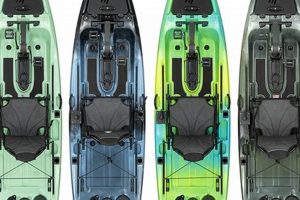
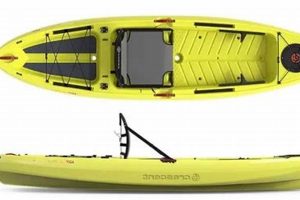
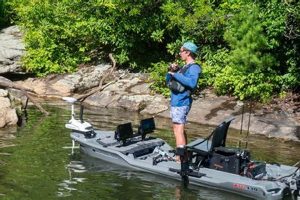
The dimensions of a kayak designed for angling activities are crucial for performance and comfort. These watercraft are typically categorized by length, width, and weight capacity, with each measurement influencing stability, speed, maneuverability, and the ability to carry gear. For example, a longer, narrower kayak might be faster, while a shorter, wider one offers greater stability.
Appropriate dimensions directly impact a successful and enjoyable fishing experience. A properly sized vessel ensures stability in various water conditions, facilitating accurate casting and retrieval. Ample storage space allows for carrying essential fishing equipment, while appropriate weight capacity ensures safety and efficient movement. Over time, manufacturers have refined kayak designs to cater specifically to anglers, leading to specialized features like rod holders, tackle storage, and comfortable seating.
Understanding the relationship between these dimensions and their impact on performance is key to selecting the right kayak. This article will further explore the factors influencing optimal kayak dimensions, covering popular size categories and the nuances of choosing the perfect vessel for different fishing styles and environments.
Tips for Selecting Appropriate Kayak Dimensions
Choosing the right kayak dimensions is paramount for a successful fishing experience. The following tips offer guidance for selecting a vessel tailored to individual needs and fishing styles.
Tip 1: Consider the fishing environment. Calm lakes and rivers allow for longer, narrower kayaks for speed and efficiency. Oceans or larger bodies of water with potential for rough conditions require wider, more stable hulls.
Tip 2: Factor in angler weight and gear. The kayak’s weight capacity must accommodate the combined weight of the angler, fishing gear, and any potential catch. Exceeding the capacity compromises stability and safety.
Tip 3: Evaluate storage needs. Sufficient storage is essential for tackle boxes, rods, and other equipment. Consider dedicated storage compartments and their accessibility.
Tip 4: Prioritize stability versus speed. Wider kayaks offer greater initial stability, ideal for beginners or anglers requiring a stable casting platform. Longer, narrower kayaks offer increased speed and tracking, suitable for covering larger distances.
Tip 5: Consider the intended fishing style. Stand-up fishing requires a wider, more stable platform. Trolling requires a kayak designed for tracking and speed.
Tip 6: Test different sizes if possible. Demoing kayaks provides firsthand experience with stability and maneuverability. This allows anglers to make informed decisions based on personal preferences.
Tip 7: Research and compare models. Consult reviews and compare specifications before making a purchase. This ensures selection of a kayak that aligns with specific needs and budget.
Selecting appropriate dimensions optimizes performance, comfort, and safety. Careful consideration of these tips will contribute significantly to a positive and productive fishing experience.
By understanding the nuances of kayak sizing and applying these tips, anglers can confidently choose a vessel that complements their individual fishing style and maximizes their time on the water.
1. Length

Kayak length significantly influences performance on the water, particularly for fishing. Understanding the relationship between length and intended use is essential for selecting an appropriate vessel.
- Tracking and Speed
Longer kayaks generally track straighter and glide more efficiently, requiring less effort to maintain speed. This characteristic benefits anglers covering larger distances, such as those trolling or paddling between fishing spots. A 12-foot kayak, for example, will track better and maintain momentum more effectively than a 10-foot kayak. Conversely, shorter kayaks offer enhanced maneuverability, valuable in tight spaces like creeks or rivers with obstacles.
- Stability
While width primarily dictates stability, length plays a supporting role. Longer kayaks tend to have a lower center of gravity, contributing to overall stability. However, excessive length can make a kayak feel less responsive and more challenging to control in windy conditions. A stable fishing platform is crucial for casting, reeling, and landing fish, particularly in rougher waters.
- Storage Capacity
Longer kayaks often offer increased storage space, accommodating more fishing gear and equipment. This is a significant advantage for anglers requiring ample space for tackle boxes, rods, and other essentials. A longer kayak might feature larger hatches or dedicated compartments for specific gear.
- Maneuverability
Shorter kayaks offer superior maneuverability, enabling quicker turns and easier navigation in tight spaces. This trait is advantageous for anglers fishing in rivers, streams, or areas with dense vegetation. A shorter kayak allows for agile adjustments in current or around obstacles, maximizing fishing opportunities in confined environments.
Ultimately, selecting the optimal kayak length requires balancing the need for speed and tracking against the demands of maneuverability and storage capacity. Careful consideration of the intended fishing environment and personal preferences will lead to a kayak that enhances fishing effectiveness and overall enjoyment on the water.
2. Width
Width is a critical dimension in fishing kayak design, directly influencing stability, maneuverability, and overall comfort. Understanding the impact of width on performance is essential for selecting a kayak suited to specific fishing needs and water conditions.
- Initial Stability
Wider kayaks provide greater initial stability, referring to the resistance to tipping when at rest or moving slowly. This is particularly important for anglers who prefer to stand while fishing, require a stable platform for casting, or are new to kayaking. A wider hull minimizes rocking and provides a more secure feeling, boosting angler confidence and allowing focus on fishing rather than balance. A 34-inch wide kayak, for instance, offers significantly more initial stability than a 28-inch wide model.
- Secondary Stability
While initial stability is crucial, secondary stabilitythe resistance to tipping when leaned or tiltedalso plays a vital role. Wider kayaks often exhibit less secondary stability, meaning they can feel tippier when leaned beyond a certain point. This is a trade-off anglers must consider, balancing initial stability with the ability to edge the kayak for maneuvering or navigating currents. Anglers frequently leaning to one side for retrieves or reaching for gear will benefit from understanding the relationship between width and secondary stability.
- Speed and Tracking
Wider kayaks typically offer less speed and tracking efficiency compared to narrower kayaks. The increased water resistance created by a wider hull requires more effort to paddle and maintain speed over longer distances. For anglers primarily fishing in calm waters and covering shorter distances, the reduced speed might be a negligible trade-off for increased stability. However, those paddling longer distances or fishing in moving water may prioritize a narrower hull design.
- Internal Space
Width influences the internal space and comfort of a fishing kayak. Wider kayaks generally offer more room for seating adjustments, legroom, and gear storage within the hull. This increased space contributes to angler comfort, especially during longer fishing trips. Anglers requiring ample space for tackle boxes, larger gear, or prefer a more open cockpit will find a wider kayak advantageous.
Selecting the optimal width involves carefully considering the trade-offs between stability, maneuverability, and speed. Prioritizing stability requires a wider hull, while maximizing speed necessitates a narrower design. Understanding these relationships, along with individual fishing style and target environments, allows for informed decisions and a more enjoyable fishing experience. Comparing specifications and, ideally, testing different kayak widths provides valuable insight into the impact of this critical dimension.
3. Weight Capacity

Weight capacity is a critical factor intertwined with fishing kayak size. It represents the maximum combined weight a kayak can safely support, encompassing the angler, gear, and any potential catch. This specification directly impacts stability, performance, and safety. Exceeding the weight capacity compromises buoyancy and stability, increasing the risk of capsizing. A kayak designed for a 250-pound capacity, for example, becomes unstable and performs poorly if loaded with 300 pounds. Conversely, a kayak with ample weight capacity provides a stable platform even when fully loaded, allowing for safe and efficient fishing.
The relationship between weight capacity and kayak size is multifaceted. Larger kayaks generally offer higher weight capacities due to increased volume and buoyancy. However, simply choosing the largest kayak isn’t always the solution. Anglers must consider their individual weight, the anticipated weight of their gear, and the potential weight of their catch. Overestimating weight capacity needs leads to unnecessary bulk and reduced maneuverability. Underestimating needs compromises safety and performance. For instance, an angler planning multi-day trips with substantial camping gear requires a kayak with a significantly higher weight capacity than an angler fishing for a few hours on a local lake.
Understanding weight capacity is paramount for safe and successful kayak fishing. It ensures proper buoyancy and stability, contributing to a comfortable and efficient experience on the water. Neglecting this factor risks performance issues and potential safety hazards. Consulting manufacturer specifications and carefully assessing individual needs allows anglers to choose a kayak with the appropriate weight capacity, maximizing both safety and enjoyment on the water.
4. Hull Design

Hull design significantly influences a fishing kayak’s performance characteristics, impacting stability, speed, maneuverability, and suitability for various water conditions. The interplay between hull design and overall kayak size is crucial for selecting a vessel optimized for specific fishing styles and environments. Understanding the nuances of different hull designs empowers anglers to make informed decisions based on their individual needs.
- Flat Bottom Hulls
Flat bottom hulls offer exceptional initial stability, making them ideal for calm waters and activities like stand-up fishing. Their wide, flat profile resists tipping, providing a secure platform. However, they tend to be slower and less efficient in tracking compared to other hull designs. They are well-suited for smaller lakes, ponds, and slow-moving rivers where stability is paramount. A shorter, wider kayak with a flat bottom hull provides excellent stability for sight fishing but sacrifices speed for open-water paddling.
- Rounded Hulls
Rounded hulls offer a balance of stability and maneuverability. They track well and maintain speed efficiently, while still providing reasonable stability. This design performs well in a variety of conditions, from calm lakes to moderate currents. They are a versatile choice for anglers who prioritize a combination of stability and performance. A longer, narrower kayak with a rounded hull is suitable for exploring larger bodies of water or paddling against moderate currents.
- V-Shaped Hulls
V-shaped hulls excel in tracking and cutting through waves, making them suitable for open water and rougher conditions. They offer efficient paddling and maintain speed effectively, but sacrifice some initial stability compared to flatter hull designs. Anglers prioritizing speed and performance in challenging waters often prefer this hull type. A sea kayak designed for ocean paddling typically features a pronounced V-shaped hull for efficient tracking and wave handling.
- Pontoon Hulls
Pontoon hulls provide exceptional stability due to their multiple contact points with the water. They are often found in wider, more specialized fishing kayaks designed for maximum stability and load-carrying capacity. While extremely stable, pontoon hulls tend to be slower and less maneuverable than other designs. They are ideal for anglers requiring a highly stable platform, such as those fishing in challenging conditions or needing to carry substantial gear. Larger fishing kayaks designed for standing and casting often incorporate pontoon hull elements for enhanced stability.
The interaction between hull design and overall kayak size is crucial. A longer kayak with a V-shaped hull may track well in open water but sacrifice maneuverability in tight spaces. Conversely, a shorter, wider kayak with a flat bottom hull excels in stability for calm waters but may struggle in choppy conditions. Carefully considering these factors, alongside intended use and personal preferences, ensures optimal kayak selection for a safe and enjoyable fishing experience.
5. Storage Space

Storage space is integral to fishing kayak size, directly impacting functionality and the angler’s experience. Adequate storage accommodates essential gear, enhancing organization and efficiency on the water. Insufficient storage compromises functionality, potentially limiting fishing effectiveness and overall enjoyment. Understanding storage options and their relationship to kayak size is crucial for selecting a suitable vessel.
- Types of Storage
Fishing kayaks offer various storage solutions, including open compartments, sealed hatches, and specialized storage for rods and tackle boxes. Open compartments provide quick access to frequently used items. Sealed hatches protect sensitive gear from water damage. Dedicated rod holders secure fishing rods during transport and while fishing. The type and amount of storage influence kayak size. Kayaks with extensive storage systems are typically larger to accommodate these features.
- Capacity and Organization
Storage capacity directly relates to kayak size. Larger kayaks generally offer more storage space. Effective organization within storage compartments maximizes utility. Features like dividers, trays, and anchor trolleys keep gear organized and accessible. A well-organized storage system enhances efficiency and reduces clutter, allowing anglers to focus on fishing. Ample storage in larger kayaks facilitates longer trips and diverse fishing styles.
- Accessibility and Placement
Storage placement influences accessibility and kayak balance. Easy access to frequently used items is crucial for efficient fishing. Weight distribution within storage compartments impacts kayak stability and maneuverability. Placing heavier items lower in the hull improves stability. Distributing weight evenly enhances balance. Rear storage wells accommodate larger items but can affect tracking if overloaded. Understanding these principles contributes to optimal kayak performance.
- Material and Durability
Storage compartments should be constructed from durable, water-resistant materials. Hatches and seals must effectively prevent water intrusion, protecting gear from damage. High-quality materials ensure long-term performance and reliability in various weather conditions. The durability of storage components contributes to the overall longevity and value of the fishing kayak.
Storage space considerations significantly influence fishing kayak size and selection. Balancing storage needs with maneuverability, stability, and intended use ensures optimal performance. Evaluating storage options based on fishing style, environment, and gear requirements allows anglers to select a kayak that maximizes both efficiency and enjoyment on the water.
6. Cockpit Size

Cockpit size is a crucial element of fishing kayak size, directly influencing angler comfort, mobility, and fishing effectiveness. The cockpit is the open area where the angler sits, and its dimensions significantly impact the overall kayaking experience. A properly sized cockpit allows for comfortable seating, easy entry and exit, and sufficient space for movement while fishing. An overly large cockpit can compromise stability and make paddling less efficient, while a too-small cockpit restricts movement and can feel confining, especially during longer fishing trips. The interplay between cockpit size and overall kayak dimensions is essential for selecting a vessel that balances comfort, performance, and fishing functionality. For example, a larger angler might require a kayak with a wider cockpit for comfortable seating and legroom, potentially influencing the overall width and stability of the kayak. Conversely, a smaller angler prioritizing maneuverability might prefer a narrower cockpit and a correspondingly narrower kayak.
The practical significance of understanding cockpit size lies in its impact on fishing performance. Sufficient cockpit space allows anglers to cast, reel, and fight fish effectively. It provides room for gear storage within easy reach and facilitates smooth transitions between paddling and fishing activities. For instance, a kayak designed for stand-up fishing requires a larger, more open cockpit to allow for comfortable and stable standing, impacting the overall size and stability of the kayak. Similarly, a kayak designed for trolling might prioritize a smaller cockpit to maximize paddling efficiency and minimize wind resistance, potentially affecting overall kayak length and speed. Matching cockpit size to intended fishing style and individual body size ensures optimal comfort and fishing effectiveness.
Cockpit size is an integral aspect of fishing kayak design, influencing comfort, performance, and fishing functionality. Its relationship to overall kayak size is a key consideration when selecting a vessel. Understanding this connection empowers anglers to choose a kayak that balances individual needs with intended use, leading to a more comfortable and productive fishing experience. Analyzing cockpit dimensions alongside other key size factors allows for informed decisions that optimize both comfort and fishing effectiveness on the water.
Frequently Asked Questions
Addressing common inquiries regarding fishing kayak dimensions provides clarity for informed decision-making. The following questions and answers offer guidance for selecting a kayak optimized for individual needs and fishing styles.
Question 1: How does kayak length affect fishing performance?
Length influences tracking, speed, and maneuverability. Longer kayaks track straighter and maintain speed more efficiently, advantageous for covering distance. Shorter kayaks offer enhanced maneuverability in tight spaces.
Question 2: What is the significance of kayak width?
Width primarily dictates stability. Wider kayaks offer greater initial stability, ideal for stand-up fishing or beginners. Narrower kayaks prioritize speed and efficiency but may feel less stable.
Question 3: How is weight capacity determined, and why is it important?
Weight capacity represents the maximum weight a kayak can safely support, encompassing the angler, gear, and potential catch. Exceeding this limit compromises stability and safety. Accurate assessment of individual needs is crucial for proper selection.
Question 4: How does hull design influence kayak performance?
Hull design affects stability, speed, and maneuverability. Flat bottoms excel in stability, rounded hulls offer a balance, V-shaped hulls prioritize speed, and pontoon hulls maximize stability for specialized fishing.
Question 5: What storage features should anglers consider?
Anglers should consider storage capacity, accessibility, and organization. Ample, well-organized storage accommodates essential gear and enhances fishing efficiency. Features like hatches, compartments, and rod holders contribute to functionality.
Question 6: What is the importance of cockpit size?
Cockpit size determines angler comfort and mobility. Sufficient space allows for easy entry and exit, comfortable seating, and freedom of movement for casting and reeling. Matching cockpit size to individual body size enhances the fishing experience.
Understanding these key aspects of fishing kayak size empowers informed decisions. Careful consideration of length, width, weight capacity, hull design, storage, and cockpit size ensures selection of a kayak optimized for individual needs, fishing style, and target environment.
For further insights into specific kayak models and their respective dimensions, consult detailed product specifications and reviews.
Fishing Kayak Size
Appropriate fishing kayak dimensions are paramount for a successful and enjoyable angling experience. This exploration has highlighted the interconnectedness of length, width, weight capacity, hull design, storage space, and cockpit size, emphasizing their individual and combined influence on performance, stability, comfort, and overall fishing effectiveness. Understanding these factors empowers informed decision-making, leading to the selection of a kayak optimized for individual needs, fishing styles, and target environments.
Careful consideration of fishing kayak size ensures not only an efficient and productive fishing experience but also enhances safety and enjoyment on the water. Matching kayak dimensions to specific fishing requirements allows anglers to maximize their time on the water, focusing on the pursuit of their passion rather than the limitations of their equipment. Ultimately, choosing the right kayak size unlocks the full potential of every fishing adventure.