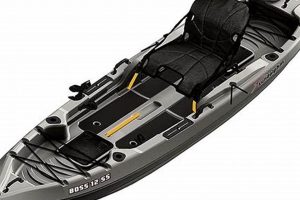
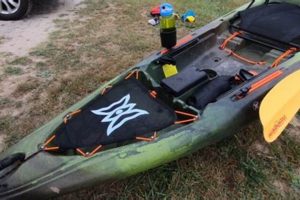
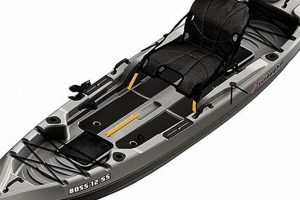
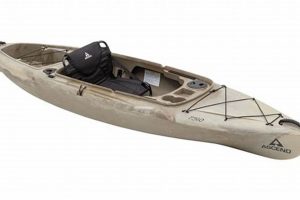
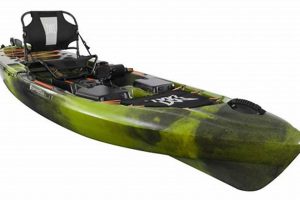
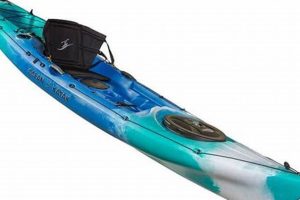
This phrase describes a specific type of recreational watercraft designed for angling. These kayaks feature an open deck, providing anglers with increased stability, easier entry and exit, and greater freedom of movement compared to traditional sit-inside kayaks. The open design also facilitates easier re-entry in the event of an accidental capsize. Typically, these kayaks are equipped with features like rod holders, gear tracks, and storage compartments tailored to the needs of fishermen.
The popularity of these specialized vessels stems from their versatility and practicality for fishing. Their open design makes them exceptionally stable, a crucial factor for anglers casting lines and reeling in catches. Furthermore, the elevated seating position offers improved visibility for spotting fish and navigating shallow waters. Historically, fishing kayaks have evolved from basic recreational designs to highly specialized platforms incorporating advanced materials and features. This evolution reflects the growing popularity of kayak fishing and the demand for watercraft tailored to specific angling needs.
This exploration of specialized fishing kayaks will cover key topics including selecting the right size and features, essential safety considerations, popular brands and models, and tips for outfitting and maintaining these versatile watercraft. Further discussion will also cover different fishing styles suited to this type of kayak, and the advantages they offer in various aquatic environments.
Tips for Selecting and Using a Fishing Kayak
Choosing and utilizing a fishing kayak effectively involves careful consideration of various factors to ensure optimal performance, safety, and enjoyment on the water.
Tip 1: Consider Hull Design: Different hull designs (e.g., pontoon, V-shaped, flat) offer varying degrees of stability, speed, and maneuverability. A pontoon hull provides exceptional stability, ideal for calm waters. A V-shaped hull offers better tracking and speed, suited for open water. Flat hulls are highly maneuverable, advantageous in rivers and streams.
Tip 2: Evaluate Weight Capacity: Ensure the kayak’s weight capacity accommodates the combined weight of the angler, gear, and potential catch. Exceeding the capacity compromises stability and performance.
Tip 3: Prioritize Comfort and Ergonomics: A comfortable seat and adjustable footrests are essential for extended fishing trips. Consider seat material, back support, and the ability to adjust the seating position.
Tip 4: Assess Storage Options: Adequate storage is crucial for carrying fishing gear, tackle boxes, and personal items. Evaluate the size, location, and accessibility of storage compartments.
Tip 5: Inspect Rod Holders and Gear Tracks: Ensure the kayak has sufficient rod holders and gear tracks for mounting accessories like fish finders and GPS units. Consider the placement and adjustability of these features.
Tip 6: Practice Essential Safety Procedures: Always wear a personal flotation device (PFD). Carry a whistle, signaling device, and first-aid kit. Inform someone of your fishing plans, including location and expected return time.
Tip 7: Choose Appropriate Paddles: Select paddles appropriate for your height and paddling style. Consider lightweight materials like fiberglass or carbon fiber for reduced fatigue during long paddling sessions.
By carefully considering these factors, anglers can select a fishing kayak that best suits their individual needs and fishing style. Proper preparation and adherence to safety guidelines will contribute to a more enjoyable and successful fishing experience.
These tips offer a starting point for selecting and using a fishing kayak. Further research and consultation with experienced anglers are recommended to gain a deeper understanding of specific models, techniques, and best practices.
1. Fishing

The phrase “fishing kayak sit on top for sale” centers around a specific purpose: fishing. This activity dictates the design, features, and ultimately, the market for these specialized kayaks. Fishing, unlike casual paddling, requires specific equipment and considerations. A stable platform for casting and reeling, convenient storage for tackle and rods, and ease of movement are crucial. These needs directly influence the “sit on top” design, which offers enhanced stability and accessibility compared to traditional kayaks. Consider a fly fisherman wading in a river; a sit-on-top kayak allows easy entry and exit, crucial for navigating shallow waters and changing fishing spots. Similarly, an angler targeting large game fish needs a stable platform to manage powerful catches; the sit-on-top design provides this stability, reducing the risk of capsizing. The “for sale” aspect then connects this purpose-built vessel with its intended audience: individuals actively seeking a watercraft specifically designed for fishing.
The importance of “fishing” as a purpose-driven activity is further exemplified by the specialized features often found on these kayaks. Built-in rod holders, gear tracks for mounting fish finders, and dedicated storage compartments for tackle boxes all reflect the specific needs of anglers. These features would be superfluous on a kayak intended for recreational paddling or touring. Understanding this purpose-driven design allows prospective buyers to evaluate the suitability of a kayak for their specific fishing needs. An angler targeting bass in a lake will have different requirements than someone fishing for salmon in the ocean. Recognizing the nuances of each fishing style and how they translate into kayak design is paramount for making informed purchasing decisions.
In conclusion, the “fishing” component in “fishing kayak sit on top for sale” is not merely descriptive; it is the driving force behind the entire concept. It dictates the design features, target market, and ultimately, the value proposition of these specialized kayaks. Recognizing fishing as a purpose-driven activity provides a crucial framework for understanding the practical significance of the sit-on-top design, specialized features, and the overall market for these vessels. This understanding empowers anglers to select the right equipment for their specific needs, enhancing their fishing experience and promoting responsible enjoyment of the sport.
2. Kayak

The term “kayak” in “fishing kayak sit on top for sale” specifies the fundamental type of watercraft under consideration. This designation immediately establishes certain inherent characteristics relevant to the overall concept. Kayaks, by definition, are small, human-powered boats propelled by double-bladed paddles. This distinction separates them from other watercraft like canoes, motorboats, or sailboats, each with differing functionalities and applications. Understanding the inherent attributes of a kayak provides a foundation for appreciating the subsequent modifiers in the phrase.
- Maneuverability and Stability:
Kayaks are known for maneuverability, enabling navigation through narrow waterways and shallow areas often favored by anglers. Their relatively compact size and responsive handling contribute to precise control, allowing anglers to position themselves strategically for optimal casting. Stability, a crucial factor for fishing, varies depending on hull design (as explored in the sit-on-top section). Consider a kayak navigating a winding creek filled with submerged logs; maneuverability is essential for avoiding obstacles. Similarly, the stability offered by a well-designed kayak allows an angler to stand and cast without fear of capsizing, a critical advantage when sight fishing.
- Human-Powered Propulsion:
Kayaks rely on human power for propulsion. This reliance on paddling offers distinct advantages for fishing. The quiet operation minimizes disturbance to aquatic life, increasing the chances of a successful catch. Furthermore, the slower pace allows for a more immersive and observant experience, enabling anglers to appreciate the natural environment. Compare this to a motorized boat; the noise and rapid movement can scare fish and disrupt the tranquility of the experience. The human-powered nature of a kayak aligns with the often-sought solitude and connection with nature that fishing provides.
- Size and Portability:
Kayaks are typically smaller and lighter than other fishing vessels. This characteristic contributes to their portability, allowing transport on car roof racks or even by hand in some cases. This ease of transport expands access to a wider range of fishing locations, from remote ponds and small lakes to larger bodies of water. Contrast this with the logistical challenges of transporting a larger boat requiring a trailer and dedicated launch ramp. The portability of kayaks democratizes access to fishing spots, allowing anglers to explore diverse environments.
- Specialized Designs:
While the term “kayak” establishes a basic watercraft type, it also encompasses a wide range of specialized designs, including those tailored for fishing. The “fishing kayak” designation signifies modifications and features optimized for angling, such as rod holders, storage compartments, and specialized seating arrangements. These adaptations build upon the inherent characteristics of a kayak, enhancing its suitability for fishing. A recreational kayak, lacking these specialized features, would be less effective for serious angling. The existence of specialized fishing kayaks underscores the importance of matching equipment to the specific activity.
These facets of the “kayak” component contribute to the overall understanding of “fishing kayak sit on top for sale.” The inherent maneuverability, human-powered propulsion, portability, and adaptability to specialized designs create a platform ideally suited for fishing. Recognizing these characteristics establishes a foundational understanding of why kayaks, in particular, have become a popular choice for anglers seeking a versatile and effective means of accessing and enjoying their sport.
3. Sit on top
Within the phrase “fishing kayak sit on top for sale,” the “sit on top” design feature represents a pivotal distinction. This design choice directly influences the kayak’s suitability for fishing, impacting stability, accessibility, and overall functionality. Understanding the implications of this design is crucial for evaluating its relevance to the target audience: anglers.
- Enhanced Stability:
Sit-on-top kayaks offer inherent stability due to their wider beam and higher center of gravity. This design characteristic is particularly advantageous for fishing activities, allowing anglers to cast, reel, and even stand without compromising balance. Consider an angler battling a strong current; the stability of a sit-on-top kayak provides a secure platform, reducing the risk of capsizing. This stability is further enhanced by the self-bailing scupper holes, which drain water from the deck, preventing accumulation and maintaining buoyancy.
- Ease of Entry and Exit:
The open deck design of a sit-on-top kayak facilitates easy entry and exit, a significant advantage for anglers frequently entering and exiting the water. This accessibility proves beneficial in various fishing scenarios, such as wading in shallows, accessing difficult-to-reach fishing spots, or re-entering the kayak after an accidental capsize. Imagine an angler fly fishing in a river; the sit-on-top design allows for seamless transitions between wading and paddling. This ease of access is a key differentiator compared to traditional sit-inside kayaks.
- Greater Freedom of Movement:
Sit-on-top kayaks provide anglers with greater freedom of movement compared to their sit-inside counterparts. The open deck allows for unrestricted leg movement and easier shifting of body position, facilitating casting and retrieving in various directions. This freedom is crucial for techniques like fly fishing, where casting requires a wider range of motion. Contrast this with the confined space of a sit-inside kayak, which can restrict movement and hinder casting effectiveness.
- Simplified Water Management:
The self-bailing scupper holes, a characteristic feature of sit-on-top kayaks, provide a simple and effective drainage system. These holes allow water to drain off the deck, preventing accumulation and maintaining buoyancy. This feature is particularly important for fishing in rough conditions or when encountering waves and splashes. Consider a kayak navigating choppy waters; the self-bailing system ensures the deck remains clear of water, contributing to stability and preventing the kayak from becoming waterlogged.
These interconnected facets of the sit-on-top design contribute directly to the appeal of “fishing kayak sit on top for sale.” The enhanced stability, ease of entry and exit, greater freedom of movement, and simplified water management create a platform optimized for angling. These features resonate with the specific needs and priorities of fishermen, making sit-on-top kayaks a popular choice within the broader kayaking market. The emphasis on functionality and user experience reinforces the connection between the “sit on top” design feature and the target audience actively seeking a watercraft tailored to their fishing requirements.
4. For sale
The “for sale” component in “fishing kayak sit on top for sale” signifies market availability, connecting the specific producta fishing kayak with a sit-on-top designwith potential buyers. This availability status transforms the preceding descriptive elements into an actionable proposition. Without the “for sale” qualifier, the phrase merely describes a type of kayak; with it, the phrase becomes a market offering, suggesting an opportunity for acquisition. This distinction is crucial; it shifts the context from theoretical description to a tangible commercial proposition. Consider a dedicated angler searching online for fishing equipment; the “for sale” element triggers a purchasing pathway, linking the desired product with its accessibility in the marketplace.
Several factors influence the availability of these kayaks. Seasonal demand plays a significant role, with availability typically increasing during peak fishing seasons. Manufacturing output, distribution networks, and retailer inventories all contribute to the overall supply. Conversely, factors like supply chain disruptions, increased raw material costs, or heightened demand can limit availability. Understanding these market dynamics provides context for observed availability fluctuations. For instance, limited availability during the off-season might prompt an angler to purchase earlier than planned, while a surplus during peak season could create opportunities for discounts or promotions. Recognizing these patterns empowers consumers to make informed purchasing decisions.
The practical significance of “for sale” within this context lies in its transactional nature. It signifies the potential for ownership transfer, connecting the specific product with the individuals seeking to acquire it. This connection fuels market activity, driving sales and shaping purchasing behavior. Moreover, the “for sale” element often implies associated details crucial for potential buyers, including pricing, location, and seller information. These details further facilitate the transaction, providing the necessary information for consumers to evaluate offers and complete purchases. In essence, “for sale” acts as a bridge between product description and market transaction, enabling the acquisition of specialized fishing kayaks by the anglers who seek them.
5. Stability and access
Stability and access represent crucial advantages directly linked to the “fishing kayak sit on top for sale” concept. These benefits stem from the inherent design features of sit-on-top kayaks and significantly influence their suitability for fishing activities. The relationship between these benefits and the target audienceanglersis fundamental to understanding the overall market appeal.
Stability: The sit-on-top design, characterized by a wider beam and higher center of gravity, contributes significantly to enhanced stability. This stability proves invaluable for anglers engaged in various on-the-water activities, from casting and reeling to landing fish. Consider the scenario of an angler hooking a large fish; the stability of the kayak becomes paramount for maintaining balance and control during the fight. Furthermore, the self-bailing scupper holes characteristic of sit-on-top kayaks further enhance stability by constantly draining water from the deck, preventing accumulation that could compromise balance. This design feature allows anglers to navigate choppy waters or unexpected splashes with greater confidence.
Access: The open deck of a sit-on-top kayak facilitates unparalleled ease of access. Anglers can easily enter and exit the kayak, a crucial advantage for activities like wading in shallows, navigating through tight spaces, or re-entering the kayak after an accidental fall. Imagine an angler sight-fishing in a shallow river; the ability to quickly and easily transition between wading and paddling becomes essential for pursuing fish effectively. This ease of access also extends to situations requiring quick reactions, such as landing a fish or adjusting to changing water conditions. The open design eliminates the potential confinement and restricted movement associated with traditional sit-inside kayaks.
The combined benefits of stability and access synergistically enhance the fishing experience. Stability provides a secure platform for casting, fighting fish, and navigating various water conditions. Access allows for seamless transitions between different fishing approaches and facilitates quick reactions to changing circumstances. These advantages directly address the specific needs and challenges faced by anglers, contributing to the popularity of sit-on-top kayaks within the fishing community. The “for sale” aspect then connects these sought-after benefits with the individuals actively seeking a purpose-built fishing platform. Understanding the interconnectedness of stability, access, and the target audience provides a key insight into the market demand for “fishing kayak sit on top for sale.”
6. Target audience
The “fishing kayak sit on top for sale” concept inherently targets a specific demographic: anglers. This focus is not accidental; it represents a strategic alignment between product design and consumer needs. The features that define these kayaksstability, accessibility, specialized storage, and adaptabilitydirectly address the practical requirements and challenges faced by individuals engaged in fishing activities. This targeted approach differentiates these kayaks from general-purpose recreational kayaks, highlighting their specialized functionality and value proposition for the intended audience. Cause and effect are clearly linked; the demand for a stable and accessible fishing platform drives the design and production of sit-on-top kayaks equipped with angler-specific features. Consider a fly fisherman requiring a stable platform for casting in moving water; the sit-on-top design directly addresses this need. Similarly, a deep-sea angler benefits from the ample storage space for tackle and equipment, a feature specifically tailored to their fishing style.
The importance of “anglers” as the target audience becomes evident when analyzing market trends and product development within the kayaking industry. Manufacturers invest in research and development to create kayaks that cater specifically to the evolving needs of anglers. This includes incorporating features like rod holders, fish finders, and specialized seating systems designed for comfort during long fishing trips. The “for sale” component then connects these angler-centric designs with their intended market, creating a pathway for purchase and utilization. Practical applications of this understanding are numerous. Retailers can tailor marketing strategies to reach fishing enthusiasts directly, highlighting the benefits of sit-on-top kayaks for specific fishing styles. Manufacturers can continue refining designs based on angler feedback, further optimizing kayak performance and user experience. This dynamic interplay between target audience and product development results in continuous innovation and improvement within the fishing kayak market.
In conclusion, “anglers” as the target audience represents a critical component of the “fishing kayak sit on top for sale” concept. The design, features, and marketing of these kayaks are inextricably linked to the specific needs and preferences of this demographic. Understanding this connection provides valuable insights into market dynamics, product development, and the ongoing evolution of fishing kayak technology. This angler-centric approach ensures that the products offered meet the practical demands of the intended users, fostering a positive feedback loop that drives innovation and enhances the overall fishing experience. Addressing the challenges faced by anglers through targeted design and feature integration remains a key driver of market success within this specialized segment of the kayaking industry.
Frequently Asked Questions
This FAQ section addresses common inquiries regarding fishing kayaks designed with the sit-on-top configuration currently available for purchase. The information provided aims to clarify key aspects of these specialized watercraft and assist potential buyers in making informed decisions.
Question 1: What are the primary advantages of a sit-on-top kayak for fishing?
Sit-on-top kayaks offer enhanced stability, ease of entry and exit, and greater freedom of movement compared to traditional sit-inside designs. These features are particularly advantageous for anglers, allowing for easier casting, reeling, and maneuvering in various fishing environments.
Question 2: Are sit-on-top kayaks suitable for all fishing conditions?
While sit-on-top kayaks excel in many fishing scenarios, certain conditions, such as extremely cold water or consistently rough seas, might warrant consideration of alternative kayak designs. Anglers should evaluate their typical fishing environment and personal preferences when selecting a kayak.
Question 3: How does one choose the appropriate size and weight capacity for a fishing kayak?
Kayak size and weight capacity should be selected based on the angler’s body weight, anticipated gear load, and potential catch weight. Exceeding the manufacturer’s recommended weight capacity can compromise stability and performance. Consulting sizing charts and expert advice is recommended.
Question 4: What essential safety equipment should accompany a fishing kayak?
Essential safety equipment includes a personal flotation device (PFD), a whistle or signaling device, a first-aid kit, and communication devices. Informing someone of fishing plans, including location and expected return time, is also a crucial safety precaution.
Question 5: How does one maintain and care for a fishing kayak?
Regular rinsing with fresh water after each use helps prevent saltwater corrosion and damage from UV exposure. Proper storage in a shaded area further protects the kayak’s hull and components. Periodic inspections for damage and necessary repairs ensure optimal performance and longevity.
Question 6: What are the typical price ranges for fishing kayaks currently available for purchase?
Prices vary based on brand, features, materials, and size. Entry-level models can be found at lower price points, while high-end fishing kayaks equipped with advanced features command higher prices. Researching various brands and models allows potential buyers to compare features and identify kayaks within their budget.
This FAQ section has provided essential information addressing common concerns regarding fishing kayaks currently available for purchase. Prospective buyers are encouraged to conduct further research and consult with experienced anglers to gather additional insights before making a purchase decision.
The next section will explore specific brands and models of fishing kayaks currently available on the market, providing detailed comparisons and reviews to assist prospective buyers in their selection process.
Conclusion
Exploration of the “fishing kayak sit on top for sale” concept reveals a convergence of design, functionality, and market demand. The sit-on-top configuration, with its inherent stability and accessibility, directly addresses the specific needs of anglers. Specialized features like rod holders, gear tracks, and ample storage further enhance the suitability of these kayaks for fishing activities. Market availability, indicated by the “for sale” component, connects these purpose-built vessels with their target audience. The confluence of these factorsdesign, functionality, and availabilityestablishes the “fishing kayak sit on top for sale” concept as a distinct and relevant segment within the broader kayaking market.
The evolution of fishing kayak design reflects a growing appreciation for specialized watercraft tailored to specific activities. As angling techniques and technologies continue to advance, the demand for purpose-built kayaks will likely persist. Careful consideration of individual fishing needs, kayak features, and market availability remains essential for anglers seeking to optimize their on-the-water experiences. Ultimately, the selection of a fishing kayak represents an investment in both equipment and experience, enabling anglers to pursue their passion with enhanced efficiency, comfort, and enjoyment.