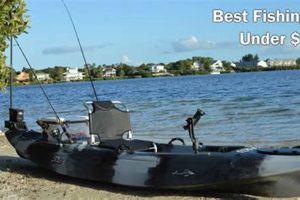
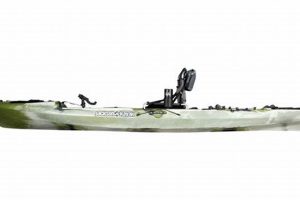
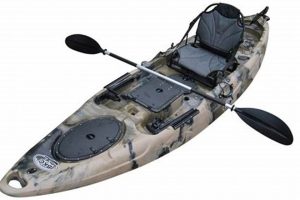
Top-tier inflatable kayaks designed for angling offer a unique blend of portability, stability, and fishability. These specialized watercraft often include features like rod holders, gear tracks, and ample storage space, enabling anglers to effectively pursue their passion from a lightweight and easily transportable platform. Consider, for example, an angler transporting an inflatable kayak in a backpack to a remote mountain lake, offering access to pristine fishing grounds otherwise unreachable.
The increasing popularity of this approach to fishing stems from its ability to combine convenience with performance. Traditional kayaks, while stable and seaworthy, can be cumbersome to transport and store. Inflatable models address these challenges, allowing anglers to easily pack and carry their vessels to diverse fishing locations. This accessibility opens up new possibilities for exploring various waterways, from tranquil lakes and slow-moving rivers to sheltered coastal areas. Moreover, advancements in materials and design have significantly improved the durability and performance of inflatable kayaks, making them a serious contender in the angling world.
Further exploration will cover key factors in selecting an appropriate inflatable fishing kayak, including material construction, size and capacity considerations, essential features, and recommended accessories to enhance the fishing experience. Understanding these aspects will empower anglers to make informed decisions and maximize their on-the-water success.
Tips for Optimized Inflatable Kayak Fishing
Strategic planning and careful consideration of various factors can significantly enhance the inflatable kayak fishing experience. The following tips offer guidance for maximizing efficiency, safety, and overall enjoyment on the water.
Tip 1: Prioritize Stability and Capacity: Kayak selection should align with anticipated load requirements, including angler weight, gear, and potential catch. A wider beam generally provides greater stability, while higher weight capacity ensures safe and efficient performance.
Tip 2: Evaluate Hull Design: Consider the intended fishing environment. V-shaped hulls track well in open water, while flatter hulls excel in shallow or slow-moving waters, offering superior stability for stand-up fishing.
Tip 3: Select Appropriate Materials: Durable, puncture-resistant fabrics like PVC or Hypalon are essential for navigating various water conditions. Reinforced seams and multiple air chambers offer added safety and peace of mind.
Tip 4: Optimize Seating and Positioning: Adjustable seating positions and backrests contribute significantly to comfort, especially during extended fishing trips. Elevated seating facilitates casting and improves visibility.
Tip 5: Maximize Storage and Organization: Ample storage compartments, D-rings, and gear tracks enable efficient organization of fishing tackle, ensuring quick access to essential equipment. Dry storage protects sensitive items from water damage.
Tip 6: Prioritize Safety Equipment: A personal flotation device (PFD) is paramount. Carry a whistle, signaling mirror, and first-aid kit. Inform someone of the fishing location and expected return time.
Tip 7: Practice Proper Inflation and Deflation Techniques: Adhere to manufacturer recommendations for inflation pressure. Proper deflation and storage prolong the lifespan of the inflatable kayak.
By adhering to these guidelines, anglers can enhance safety, improve fishing efficiency, and fully appreciate the advantages of inflatable kayaks in accessing a diverse range of fishing environments.
With these key considerations addressed, the focus shifts to the practical application of these principles and the enjoyment of a successful and fulfilling fishing experience.
1. Stability

Stability forms a cornerstone of effective inflatable kayak fishing. A stable platform is essential not only for safety but also for optimizing casting, retrieving, and landing fish. Without adequate stability, anglers risk capsizing, losing gear, and missing opportunities. This section explores critical facets contributing to stability in inflatable kayaks designed for fishing.
- Hull Design and Width
Wider hulls inherently offer greater initial stability, reducing the likelihood of tipping. Flat-bottomed hulls excel in calm waters, providing a stable platform for stand-up fishing. However, they can be less efficient in tracking a straight line. V-shaped hulls, conversely, track well but offer less initial stability. Inflatable kayaks designed specifically for fishing often incorporate a hybrid design, balancing stability and tracking performance. Consider a wide, flat-bottomed hull with a slight V at the bow for optimal performance in various fishing environments.
- Tube Diameter and Pressure
Larger diameter tubes contribute significantly to stability. Proper inflation pressure is crucial; under-inflated tubes compromise stability, while over-inflation can risk bursting. Manufacturer recommendations for inflation pressure should be strictly followed. Regularly checking and adjusting pressure, especially in fluctuating temperatures, maintains optimal performance and safety.
- Center of Gravity and Weight Distribution
Maintaining a low center of gravity is paramount for stability. Distributing weight evenly within the kayak minimizes the risk of tipping. Securing gear low and centrally, and avoiding sudden shifts in weight, contribute to a balanced and stable platform. Anglers should be mindful of their own movements and avoid leaning too far over the side.
- Water Conditions and Environmental Factors
Calm lakes and slow-moving rivers provide inherently more stable fishing environments than open ocean or fast-flowing currents. Wind and waves can significantly impact stability, even in relatively calm waters. Anglers should always assess water conditions and choose appropriate fishing locations based on their kayak’s stability characteristics and their own skill level. Avoiding strong currents and windy conditions is recommended, especially for less experienced anglers.
Understanding these interconnected factors allows anglers to choose and effectively utilize inflatable kayaks suited for their fishing needs, prioritizing stability as a fundamental element of a successful and safe fishing experience. A stable kayak improves casting accuracy, facilitates fish fighting techniques, and ensures angler safety, ultimately contributing to a more rewarding experience on the water.
2. Durability

Durability is a paramount consideration in selecting an inflatable kayak for fishing. The demands of navigating various water bodies, encountering potential obstacles, and transporting the kayak necessitate robust construction. A durable kayak translates to fewer repairs, a longer lifespan, and ultimately, more time spent fishing. The relationship between durability and optimal inflatable kayak fishing hinges on material selection, construction techniques, and user maintenance. For instance, kayaks constructed from multiple layers of PVC or Hypalon offer superior resistance to punctures and abrasion compared to single-layer designs. Reinforced seams and high-frequency welding further enhance the structural integrity of the kayak, ensuring its ability to withstand the rigors of regular use. Consider an angler navigating a rocky riverbed; a durable kayak is far less likely to succumb to punctures, allowing the angler to continue fishing uninterrupted.
The practical significance of durability extends beyond mere longevity. A durable inflatable kayak provides a reliable and safe platform for fishing, allowing anglers to focus on the task at hand rather than worrying about potential damage. This reliability becomes particularly crucial in remote locations or challenging conditions, where repairs might be difficult or impossible. Furthermore, a well-maintained and durable kayak retains its value over time, making it a worthwhile investment for serious anglers. Regular cleaning, proper storage, and adherence to manufacturer guidelines contribute significantly to the long-term durability of inflatable kayaks. For example, storing a kayak out of direct sunlight and away from extreme temperatures prevents material degradation, preserving its structural integrity.
In conclusion, durability serves as a critical factor in achieving the best inflatable kayak fishing experience. Material selection, construction techniques, and user maintenance play pivotal roles in ensuring a kayak’s longevity and reliability. A durable kayak offers peace of mind, allowing anglers to confidently explore diverse fishing locations and focus on their pursuit, maximizing their time on the water and enhancing the overall enjoyment of the sport.
3. Portability

Portability stands as a defining characteristic of inflatable kayaks, significantly impacting their suitability for fishing. The ease of transport and storage offered by these vessels opens up a wealth of fishing opportunities inaccessible to traditional kayaks. This advantage allows anglers to reach remote locations, navigate challenging terrain, and store their equipment conveniently. The following explores the multifaceted connection between portability and optimal inflatable kayak fishing.
- Transport Convenience
Deflated inflatable kayaks pack down to a compact size, easily fitting into a car trunk, backpack, or even on public transportation. This ease of transport contrasts sharply with rigid kayaks, which require specialized roof racks or trailers. Consider an angler living in an apartment with limited storage; an inflatable kayak allows them to pursue their passion without the constraints of storing and transporting a bulky vessel. This convenience translates to more frequent fishing trips and access to a wider range of fishing locations.
- Reaching Remote Waters
Inflatable kayaks enable anglers to access secluded fishing spots unreachable by car or larger boats. Hiking into a remote mountain lake or navigating shallow creeks becomes feasible, expanding fishing possibilities. This advantage is particularly significant for anglers seeking pristine waters and avoiding crowded fishing areas. For example, accessing a hidden alpine lake teeming with trout becomes a realistic proposition with a portable inflatable kayak.
- Storage Efficiency
The compact storage footprint of inflatable kayaks proves advantageous for anglers with limited storage space. Unlike rigid kayaks, inflatables can be easily stored in closets, garages, or even under beds. This compact storage reduces clutter and simplifies off-season storage, preserving the kayak’s condition and prolonging its lifespan.
- Travel and Air Travel
The portability of inflatable kayaks extends to air travel. Many models can be checked as luggage, enabling anglers to fish in distant destinations without the logistical challenges of transporting a rigid kayak. This opens up opportunities for fishing expeditions in diverse environments, from tropical flats to remote river systems. The ability to pack and travel with an inflatable kayak broadens angling horizons significantly.
In summary, portability represents a cornerstone of the inflatable kayak fishing experience. The convenience of transport, access to remote waters, efficient storage, and travel opportunities combine to create a uniquely versatile fishing platform. This inherent portability empowers anglers to explore a wider range of fishing environments and pursue their passion with greater freedom and flexibility, ultimately enhancing the overall fishing experience.
4. Specialized Features

Specialized features distinguish fishing-oriented inflatable kayaks from recreational models, significantly enhancing angling performance and overall experience. These purpose-built design elements cater specifically to the needs of anglers, optimizing efficiency, comfort, and success on the water. Understanding these features is crucial for selecting the best inflatable kayak for a given fishing style and target species.
- Rod Holders
Integrated rod holders secure fishing rods, freeing hands for paddling, landing fish, or managing tackle. Flush-mounted rod holders minimize interference while trolling or paddling, whereas adjustable rod holders offer versatility in positioning rods for different fishing techniques. An angler trolling for salmon, for example, benefits from strategically placed rod holders, allowing multiple lines to be fished simultaneously. The number, type, and placement of rod holders should align with individual fishing preferences and target species.
- Gear Tracks and Mounting Points
Gear tracks and strategically placed D-rings provide versatile mounting points for fish finders, GPS units, cameras, and other accessories. These features allow anglers to customize their kayak setup, optimizing their fishing experience. A bass angler, for example, might mount a fish finder to locate structure and track fish, while a fly fisherman might attach a camera to document their catches. The availability and positioning of these mounting points influence the versatility and adaptability of the inflatable kayak.
- Storage Options
Ample storage space is essential for carrying tackle boxes, dry bags, and other fishing gear. Dedicated storage compartments, including waterproof hatches and bungee systems, protect equipment from the elements and ensure efficient organization. An angler embarking on a multi-day fishing trip, for instance, requires sufficient storage for food, water, and camping gear, in addition to fishing equipment. Well-designed storage solutions contribute significantly to the overall fishing experience, particularly during longer expeditions.
- Anchor Systems
Integrated anchor systems allow anglers to maintain position in desired fishing locations, particularly in currents or windy conditions. Anchor trolleys facilitate controlled drifting and precise boat positioning. A kayak angler fishing in a river, for example, can use an anchor trolley to maintain a desired position relative to the current, maximizing fishing effectiveness. The presence and design of an anchor system influence an inflatable kayak’s suitability for specific fishing environments.
These specialized features, while seemingly minor, collectively contribute significantly to the effectiveness and enjoyment of inflatable kayak fishing. Selecting a kayak equipped with features tailored to specific fishing needs optimizes performance, enhances comfort, and ultimately maximizes success on the water. The strategic incorporation of these elements distinguishes a purpose-built fishing kayak from a recreational model, empowering anglers to pursue their passion with greater efficiency and satisfaction.
5. Targeted Fish Species
The concept of “best inflatable kayak fishing” is intrinsically linked to the targeted fish species. Different species inhabit diverse environments and exhibit varying behaviors, necessitating specific kayak features and angling techniques. Understanding this connection is crucial for optimizing kayak selection, equipment choices, and overall fishing success. For example, pursuing large game fish offshore requires a kayak with exceptional stability, high weight capacity, and ample storage for heavy tackle, whereas targeting trout in a small stream necessitates a maneuverable, lightweight kayak with a shallow draft.
Consider the following examples illustrating the interplay between targeted fish species and kayak selection:
- Offshore Pelagic Fish (Tuna, Marlin): A longer, more stable inflatable kayak with a high weight capacity and features like rod holders, outriggers, and a GPS/fish finder setup is essential. This setup allows anglers to handle larger fish and navigate open water conditions safely and effectively.
- Inshore Game Fish (Redfish, Snook): A shorter, more maneuverable kayak with a shallow draft is ideal for navigating shallow flats and estuaries. Features like a stand-up platform and pole holders enhance sight fishing capabilities and maneuverability in tight spaces.
- Freshwater Fish (Bass, Trout): Kayak selection varies depending on the specific environment. For lake fishing, a stable platform with ample storage for tackle and accessories is beneficial. For river fishing, a maneuverable kayak with a comfortable seat and features like anchor systems and rod holders is preferable.
The practical significance of understanding this connection lies in the ability to tailor the fishing approach for maximum success. Choosing the right kayak for the targeted species enhances efficiency, reduces frustration, and ultimately leads to a more rewarding fishing experience.
In summary, aligning kayak choice and fishing techniques with the specific characteristics and habitat of the targeted fish species significantly contributes to a successful and enjoyable inflatable kayak fishing experience. Failing to consider this critical relationship can lead to ineffective fishing techniques, compromised safety, and ultimately, a less fulfilling experience on the water. Understanding the nuances of targeted fish species allows anglers to refine their approach, maximize their opportunities, and fully appreciate the versatility and effectiveness of inflatable kayaks in diverse fishing environments.
Frequently Asked Questions about Top-Tier Inflatable Kayak Fishing
This section addresses common inquiries regarding inflatable kayaks designed for fishing, offering concise and informative responses to facilitate informed decision-making.
Question 1: How durable are inflatable fishing kayaks compared to traditional hard-shell kayaks?
Modern inflatable kayaks constructed from durable materials like PVC or Hypalon rival hard-shell kayaks in durability, particularly when reinforced seams and multiple air chambers are incorporated. While susceptibility to punctures exists, proper care and maintenance minimize this risk.
Question 2: Can inflatable kayaks handle challenging water conditions suitable for fishing?
While not designed for extreme whitewater, inflatable fishing kayaks perform admirably in calm to moderate conditions, including lakes, slow-moving rivers, and protected coastal areas. Choosing appropriate models based on anticipated conditions is critical.
Question 3: How easily can inflatable kayaks be transported and stored?
Portability represents a significant advantage of inflatable kayaks. They deflate and pack into compact sizes, readily fitting into vehicle trunks, closets, or even backpacks, facilitating transport and storage convenience.
Question 4: What specialized features should anglers look for in an inflatable fishing kayak?
Essential features include rod holders, gear tracks, ample storage compartments, anchor systems, and comfortable seating. Specific requirements vary based on individual fishing styles and target species.
Question 5: How stable are inflatable kayaks for activities like casting and landing fish?
Inflatable kayak stability is influenced by design elements such as hull width, tube diameter, and weight distribution. Many fishing-specific models offer excellent stability, often exceeding that of some hard-shell kayaks.
Question 6: What maintenance is required for inflatable fishing kayaks?
Routine maintenance includes cleaning after each use, proper drying, and checking for damage. Following manufacturer recommendations for storage and inflation pressure prolongs kayak lifespan.
Careful consideration of these factors empowers anglers to make informed decisions and select inflatable kayaks best suited to their specific needs and fishing pursuits.
This concludes the FAQ section. Subsequent content will explore specific inflatable kayak models recommended for various fishing applications.
Best Inflatable Kayak Fishing
Optimal inflatable kayak fishing arises from a confluence of factors, including meticulous selection, informed decision-making, and a comprehensive understanding of the interplay between kayak features, target species, and fishing environments. Durability, stability, portability, and specialized design elements collectively contribute to a successful and rewarding angling experience. Consideration of individual fishing styles, target species, and prevailing water conditions further refines kayak selection and optimizes performance on the water.
The evolution of inflatable kayak technology continues to expand angling horizons, providing access to previously inaccessible waters and enhancing the overall fishing experience. Careful evaluation of individual needs and a commitment to responsible angling practices will ensure the continued growth and enjoyment of this dynamic and evolving facet of the sport.