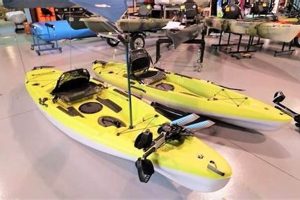
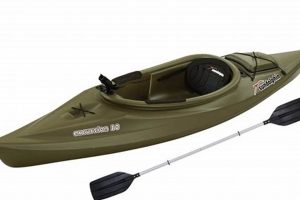
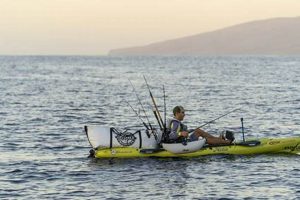
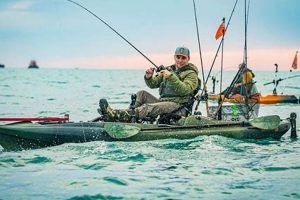
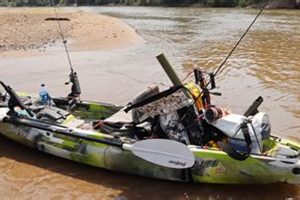
This term refers to a specific type of kayak designed and equipped for fishing. Such vessels typically feature specialized components like rod holders, tackle storage, and often a more stable hull design compared to recreational kayaks. They may also include features like anchor trolleys, live wells, and comfortable seating designed for extended periods on the water.
Angling kayaks offer significant advantages for fishing enthusiasts. Their low profile allows for closer access to fish and shallower waters, while the quiet operation minimizes disturbance, increasing the chances of a successful catch. The specialized features contribute to an efficient and organized fishing experience, keeping essential gear within easy reach. Historically, kayaks have been used for fishing for centuries by various cultures, but modern designs incorporate advanced materials and technology to enhance performance and comfort. This form of fishing offers a unique connection with nature and provides an engaging way to enjoy the outdoors.
The following sections will explore various aspects of this specialized fishing vessel in greater detail, covering topics such as popular models, essential equipment, recommended techniques, and ideal fishing locations.
Tips for Kayak Fishing
Effective angling from a kayak requires specific knowledge and techniques. The following tips offer guidance for a successful and enjoyable experience.
Tip 1: Stability is Paramount: Prioritize stability when selecting a kayak. Wider hulls generally offer greater stability, particularly beneficial for beginners. Consider testing various models before making a purchase.
Tip 2: Master Paddling Techniques: Efficient paddling conserves energy and allows for precise maneuvering. Practice different strokes to control direction and speed effectively.
Tip 3: Organize Tackle and Gear: A well-organized setup maximizes efficiency. Utilize tackle boxes and storage compartments to keep essential equipment readily accessible.
Tip 4: Safety First: Always wear a personal flotation device (PFD). Inform someone of your fishing location and estimated return time. Check weather conditions before embarking.
Tip 5: Respect the Environment: Practice catch-and-release whenever possible. Avoid disturbing natural habitats and dispose of waste responsibly.
Tip 6: Choose the Right Location: Research suitable fishing spots considering factors like water depth, currents, and fish species. Local regulations should be reviewed and followed.
Tip 7: Learn Basic Knots: Mastering essential fishing knots is crucial for rigging lines and securing lures effectively. Practice tying various knots appropriate for the target species.
By implementing these strategies, anglers can significantly enhance their kayak fishing experience, promoting both success and safety on the water.
These fundamental principles provide a strong foundation for successful kayak angling. Further exploration of specific techniques and equipment can enhance proficiency and enjoyment of this rewarding pursuit.
1. Stability

Stability stands as a paramount consideration when selecting a fishing kayak. A stable platform is essential for various on-the-water activities, from casting and reeling to landing fish and navigating varying water conditions. Compromised stability can lead to capsizing, jeopardizing safety and equipment. The following facets explore key components contributing to kayak stability.
- Hull Design:
Hull design significantly influences stability. Wider, flatter hulls generally offer greater primary stability, resisting initial tipping. Longer kayaks tend to track straighter, while shorter designs offer enhanced maneuverability, potentially at the expense of some stability. Pontoon-style hulls provide exceptional stability, making them suitable for calmer waters. The chosen hull design should align with the intended fishing environment and angler experience.
- Center of Gravity:
A lower center of gravity contributes to increased stability. Seating position and weight distribution within the kayak play crucial roles in maintaining balance. Keeping weight low and centered minimizes the risk of tipping. Properly securing gear and distributing weight evenly enhances overall stability.
- Water Conditions:
Water conditions directly impact stability. Calm lakes and slow-moving rivers present fewer challenges compared to choppy waters or swift currents. Wind and waves can significantly affect stability, requiring heightened awareness and adjustment of paddling techniques. Understanding and anticipating potential environmental influences is crucial for safe and effective kayak fishing.
- Angler Experience:
An angler’s experience level influences their ability to maintain balance and control the kayak. Beginners may benefit from wider, more stable platforms, while experienced anglers might opt for designs prioritizing speed or maneuverability. Progressive skill development allows for transitioning to kayaks with varying stability characteristics.
Evaluating these facets comprehensively allows anglers to select a kayak offering appropriate stability for their individual needs and the anticipated fishing environment. Prioritizing stability ensures a secure and enjoyable fishing experience while minimizing the risk of capsizing, ultimately contributing to a successful and safe outing on the water.
2. Storage Capacity

Ample storage capacity is a defining feature of a well-equipped fishing kayak, directly impacting its practicality and the angler’s overall experience. Sufficient storage accommodates essential gear, including tackle boxes, rods, reels, safety equipment, and personal items. This organized arrangement contributes to efficiency, allowing anglers to focus on fishing rather than managing equipment. Inadequate storage can lead to a cluttered and inefficient fishing experience, potentially compromising safety and enjoyment. Consider a scenario where an angler needs to access a specific lure quickly but struggles to locate it amidst a disorganized pile of gear. This not only wastes valuable fishing time but also creates frustration and disrupts the flow of the angling experience. Conversely, a kayak with well-designed storage compartments enables quick and easy access to necessary equipment, promoting a smooth and productive outing.
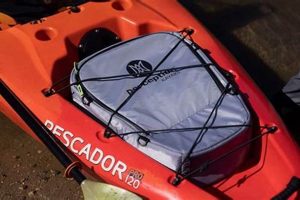
Several types of storage solutions cater to diverse needs and preferences. Dedicated compartments for tackle boxes keep lures and terminal tackle organized. Rod holders secure rods while paddling or when not in use. Bungee cords and netting provide additional storage for items like dry bags or extra clothing. Recessed storage wells protect sensitive electronics or other valuables from water damage. The strategic placement and accessibility of these storage features significantly influence their practicality. For instance, readily accessible storage for frequently used items, like pliers or line cutters, streamlines the fishing process. Some kayaks even incorporate specialized storage for live bait or fish catches, further enhancing their utility. The volume and configuration of storage should align with the angler’s specific fishing style and anticipated needs. A longer fishing trip necessitates greater storage capacity compared to a shorter excursion.
In conclusion, adequate storage capacity is integral to a successful kayak fishing experience. Well-designed storage solutions promote organization, efficiency, and safety on the water. Understanding the various types of storage options and their practical implications empowers anglers to select a kayak that effectively meets their individual requirements. This, in turn, contributes to a more focused, enjoyable, and ultimately, more productive fishing experience.
3. Maneuverability
Maneuverability represents a critical performance attribute in fishing kayaks, directly influencing an angler’s ability to navigate diverse water environments and optimize fishing strategies. Effective maneuvering enables precise boat control, facilitating access to secluded fishing spots, navigating complex waterways, and responding efficiently to changing conditions. Consider a scenario where an angler encounters a submerged log or a dense patch of vegetation. A highly maneuverable kayak allows for deft navigation around such obstacles, preventing entanglement and maintaining fishing momentum. Conversely, a less maneuverable vessel might hinder progress, potentially disrupting fishing opportunities.
Several factors contribute to a kayak’s maneuverability. Hull design plays a significant role; shorter kayaks with a rockered hull (curved upward at the bow and stern) typically offer greater maneuverability, enabling tighter turns and quicker directional changes. Longer kayaks, while offering superior tracking in open water, might prove less agile in confined spaces. The kayak’s width also influences maneuverability, with narrower designs generally exhibiting enhanced responsiveness. Furthermore, the type and placement of fins or rudders contribute to directional stability and control, impacting turning performance and overall maneuverability. Paddle length and blade shape also factor into the equation, affecting paddling efficiency and control.
The practical significance of maneuverability becomes particularly apparent in specific fishing scenarios. In rivers or streams with swift currents and obstacles, a highly maneuverable kayak allows anglers to navigate effectively, maintaining position and control. Similarly, when fishing in tight quarters, such as along mangrove shorelines or within weed beds, maneuverability is paramount for accessing prime fishing locations and avoiding entanglement. Understanding the interplay between hull design, fin configuration, and paddling technique empowers anglers to select and operate their kayaks efficiently, maximizing their fishing potential in diverse environments. Balancing maneuverability with stability is crucial, as excessive maneuverability can sometimes compromise stability, particularly in challenging conditions. Choosing a kayak that effectively balances these characteristics contributes to a safe and successful fishing experience.
4. Comfort

Comfort plays a pivotal role in the overall kayak fishing experience. Extended periods on the water necessitate a comfortable and supportive environment to minimize fatigue and maximize enjoyment. An uncomfortable seating arrangement can detract from the fishing experience, leading to discomfort, distraction, and potentially curtailing the duration of the outing. A well-designed, comfortable kayak enables anglers to focus on fishing, enhancing both enjoyment and productivity.
- Seat Design:
Seat design significantly influences comfort. Features like adjustable backrests, padded cushions, and breathable fabrics contribute to a supportive and comfortable seating experience. High-quality seating mitigates fatigue and allows anglers to maintain focus during long hours on the water. Conversely, a poorly designed seat can lead to discomfort and back pain, potentially shortening the fishing trip.
- Legroom and Positioning:
Adequate legroom and adjustable footrests contribute to overall comfort and paddling efficiency. Sufficient space allows anglers to change positions, reducing stiffness and promoting circulation. Adjustable footrests ensure proper leg extension and support, optimizing paddling power and minimizing fatigue. Restricted legroom can lead to discomfort and cramping, hindering both comfort and performance.
- Stability and Deck Space:
A stable platform contributes to comfort by providing a secure and predictable fishing environment. Ample deck space allows for comfortable movement and gear storage, minimizing clutter and maximizing efficiency. A stable kayak reduces anxiety and allows anglers to relax and focus on fishing. Conversely, a cramped or unstable kayak can lead to discomfort and anxiety, detracting from the overall experience.
- Accessibility and Ergonomics:
Easy access to essential gear, such as tackle boxes and rod holders, enhances comfort and efficiency. Ergonomically designed features, like strategically placed handles and paddle holders, minimize strain and promote ease of use. Well-placed accessories contribute to a seamless and comfortable fishing experience. Conversely, difficult-to-reach storage compartments or awkwardly positioned accessories can lead to frustration and discomfort.
These facets of comfort collectively contribute to a positive and productive kayak fishing experience. Prioritizing comfort enables anglers to spend more time on the water, focus on fishing, and ultimately, enhance their enjoyment and success. Investing in a comfortable kayak represents an investment in the overall quality of the fishing experience.
5. Durability

Durability represents a critical factor in the evaluation and selection of a fishing kayak, directly impacting its longevity, performance, and overall value. Kayaks designed for fishing often encounter challenging environments, including rocky shorelines, submerged obstacles, and abrasive sands. A durable construction safeguards against damage from impacts, UV exposure, and general wear and tear, ensuring the kayak remains functional and seaworthy over extended periods. Consider the scenario of landing a kayak on a rocky beach; a robust hull material will resist scratches and abrasions, preserving the kayak’s structural integrity. Conversely, a less durable material might sustain damage, potentially compromising its long-term performance and requiring costly repairs.
Several factors contribute to a kayak’s durability. Hull material plays a significant role; kayaks constructed from high-density polyethylene (HDPE) or rotomolded plastic offer excellent impact resistance and durability. Other materials, like fiberglass or composites, provide enhanced strength and stiffness but may be more susceptible to cracking or chipping upon impact. Construction methods, such as welding or molding techniques, also influence overall durability. Reinforced seams and robust hardware, including handles, hatches, and deck fittings, further enhance the kayak’s ability to withstand stress and strain. UV resistance is another crucial consideration, as prolonged exposure to sunlight can degrade certain materials, leading to discoloration, brittleness, and reduced lifespan.
The practical implications of durability extend beyond the kayak’s structural integrity. A durable kayak maintains its performance characteristics over time, ensuring consistent tracking, stability, and maneuverability. This reliability contributes to a safer and more enjoyable fishing experience. Furthermore, a durable kayak retains its value, minimizing depreciation and potentially offering a higher resale value. Investing in a durable kayak represents a long-term investment in the quality and enjoyment of the fishing experience. Understanding the factors contributing to durability empowers anglers to make informed decisions, selecting kayaks that withstand the rigors of the fishing environment and provide years of reliable service.
6. Specialized Features

Specialized features distinguish fishing kayaks from recreational models, optimizing them for angling activities and enhancing on-the-water effectiveness. These purpose-built additions cater specifically to the needs of anglers, facilitating efficient gear management, improved fishing techniques, and enhanced overall experience. Understanding these features and their practical applications is crucial for maximizing fishing success and enjoyment.
- Rod Holders:
Rod holders secure fishing rods while paddling, trolling, or rigging, freeing the angler’s hands for other tasks. Flush-mounted rod holders offer a streamlined profile, minimizing interference with paddling, while adjustable rod holders allow for customized positioning. Multiple rod holders accommodate diverse fishing techniques and target species. For example, a kayak angler might utilize one rod for trolling while keeping another rigged and ready for casting.
- Tackle Storage:
Dedicated tackle storage compartments keep lures, hooks, lines, and other essential gear organized and readily accessible. Waterproof compartments protect sensitive electronics and gear from water damage. Customizable storage systems allow anglers to tailor their setup to specific fishing styles and preferences. A well-organized tackle system streamlines the fishing process, enabling efficient lure changes and minimizing wasted time searching for gear. For instance, readily available compartments for frequently used lures optimize efficiency during active fishing periods.
- Anchor Trolleys:
Anchor trolleys allow anglers to control the kayak’s position in current or wind, maintaining an optimal fishing location. This system facilitates precise boat control, enabling anglers to hold position near structure or cover. Efficient anchor deployment and retrieval minimize disturbance and maximize fishing time. For example, an angler fishing in a river can use an anchor trolley to maintain position upstream of a promising eddy.
- Fish Finders and Electronics:
Integrated mounts and wiring systems accommodate fish finders, GPS units, and other electronic devices, providing valuable information about water depth, fish location, and bottom structure. These technological aids enhance fishing efficiency and success. Recessed mounting areas protect electronics from damage while maintaining a clean deck layout. For example, a fish finder can help locate submerged structure or schools of baitfish, significantly increasing the chances of finding target species.
These specialized features collectively contribute to a more productive and enjoyable kayak fishing experience. They streamline essential tasks, enhance fishing techniques, and optimize the angler’s interaction with the environment. Selecting a kayak equipped with appropriate specialized features empowers anglers to maximize their fishing potential and pursue their angling passion effectively. The strategic selection and utilization of these features ultimately differentiates a purpose-built fishing kayak from a standard recreational model.
Frequently Asked Questions
This section addresses common inquiries regarding specialized fishing watercraft, providing concise and informative responses to clarify key aspects and address potential concerns.
Question 1: What are the primary advantages of using a specialized fishing kayak compared to other boat types?
Specialized fishing kayaks offer distinct advantages over other watercraft, including enhanced stealth, allowing for closer approaches to fish in shallow water, superior maneuverability in confined spaces, and affordability compared to larger motorized boats. Their compact size facilitates access to remote fishing locations often inaccessible to larger vessels.
Question 2: How does one choose the appropriate size and type of fishing kayak?
Selecting the appropriate kayak involves considering factors such as angler size and weight, intended fishing environment (calm lakes, rivers, or open ocean), and storage capacity requirements. Longer kayaks offer better tracking, while shorter designs excel in maneuverability. Wider kayaks provide enhanced stability, while narrower hulls prioritize speed.
Question 3: What essential safety precautions should be observed when engaging in this type of fishing activity?
Essential safety precautions include consistently wearing a personal flotation device (PFD), informing someone of the fishing location and planned return time, checking weather forecasts before embarking, and carrying essential safety equipment such as a whistle, signaling device, and first-aid kit. Understanding basic navigation and self-rescue techniques is also highly recommended.
Question 4: What are the key features to consider when selecting essential equipment?
Essential equipment considerations encompass paddle length and blade shape for efficient propulsion, appropriate fishing rods and reels suited to the target species, suitable tackle and lures, and a well-organized storage system for efficient gear management. Comfort and safety enhancements, such as a comfortable seat and appropriate clothing, further contribute to a positive experience.
Question 5: How does one maintain and care for a fishing kayak to ensure its longevity?
Proper maintenance includes rinsing the kayak with fresh water after each use to remove salt and debris, storing the kayak out of direct sunlight to prevent UV damage, regularly inspecting and tightening hardware, and addressing any damage promptly. Proper storage practices contribute significantly to the kayak’s lifespan.
Question 6: What resources are available for individuals new to kayak fishing, seeking to learn fundamental techniques?
Numerous resources cater to newcomers, including online forums, instructional videos, local kayak fishing clubs, and guided tours. These resources provide valuable insights into paddling techniques, fishing strategies, safety protocols, and recommended equipment choices.
These responses provide foundational knowledge for informed decision-making regarding specialized fishing kayaks. Thorough research and preparation contribute significantly to a safe, enjoyable, and successful fishing experience.
For further exploration, the following section delves into advanced techniques for maximizing fishing success from a specialized kayak.
Conclusion
This exploration of the specialized fishing kayak has encompassed critical aspects, from core design features like stability and maneuverability to specialized equipment considerations and essential safety protocols. The multifaceted nature of these vessels underscores their adaptability to diverse fishing environments and angling styles. The synthesis of comfort, storage capacity, and purpose-built features enhances on-the-water effectiveness and overall angler experience. Durability ensures long-term value and sustained performance in demanding conditions.
The informed selection and utilization of a fishing kayak unlock unique opportunities for anglers to connect with nature and pursue their passion in a dynamic and rewarding manner. Continued exploration of advanced techniques and responsible environmental stewardship will further enrich the experience and ensure the sustainability of this engaging pursuit. The future of kayak fishing rests on a foundation of informed decision-making, responsible practices, and a deep appreciation for the aquatic environment.