![Does Lowe's Sell Kayaks? [2024 Guide] | Certified Kayak Fishing Instructor – Learn Kayak Angling with Expert Guidance](data:image/svg+xml;base64,PHN2ZyB4bWxucz0iaHR0cDovL3d3dy53My5vcmcvMjAwMC9zdmciIHdpZHRoPSI0NzQiIGhlaWdodD0iMzY0IiB2aWV3Qm94PSIwIDAgNDc0IDM2NCI+PHJlY3Qgd2lkdGg9IjEwMCUiIGhlaWdodD0iMTAwJSIgc3R5bGU9ImZpbGw6I2NmZDRkYjtmaWxsLW9wYWNpdHk6IDAuMTsiLz48L3N2Zz4= "Kayaks") Kayaks? [2024 Guide]" width="100%" style="margin-right: 8px;margin-bottom: 8px;" />
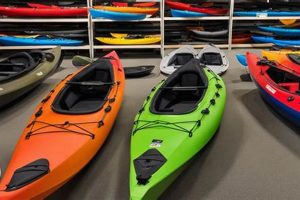
Kayaks? [2024 Guide]" width="100%" style="margin-right: 8px;margin-bottom: 8px;" />The question of kayak availability at a particular home improvement retailer reflects consumer interest in outdoor recreational equipment. It exemplifies the growing trend of large retailers expanding their product lines to include specialized items, catering to diverse customer needs. For example, a consumer might seek a kayak alongside home repair supplies, streamlining their shopping experience.
Offering such products can significantly benefit both the retailer and the consumer. For the retailer, it expands market reach and potentially increases sales. For the consumer, it offers convenience and a potential one-stop shopping opportunity. The increasing popularity of outdoor activities like kayaking contributes to this demand, making it a potentially lucrative market segment for retailers. This shift reflects broader trends in consumer behavior and retail strategy.
This exploration of product availability and market trends provides a foundation for a deeper understanding of the retail landscape and consumer demand. Further investigation could examine specific retailer strategies, consumer purchasing habits, and the broader impact of outdoor recreation on the economy.
Tips for Finding Kayaks
Locating specific recreational equipment requires a strategic approach. These tips offer guidance for efficiently finding kayaks and making informed purchasing decisions.
Tip 1: Check Retailer Websites: Reviewing online inventories saves time and provides an overview of available products, brands, and pricing. Websites often offer detailed product descriptions and specifications.
Tip 2: Contact Local Stores Directly: Calling or visiting stores allows for direct inquiries about in-stock items, upcoming shipments, and specific models not listed online. This personal interaction can provide valuable insights.
Tip 3: Explore Specialized Retailers: Dedicated outdoor recreation stores often carry a wider selection of kayaks and related gear. Their expertise can be invaluable during the selection process.
Tip 4: Consider Online Marketplaces: Online marketplaces offer a broader range of sellers and potential deals. However, careful research is essential to ensure reputable sellers and product authenticity.
Tip 5: Compare Prices and Features: Thorough comparison shopping helps identify the best value and ensures the selected kayak meets specific needs and preferences regarding size, material, and features.
Tip 6: Read Product Reviews: User reviews provide valuable insights into the performance, durability, and overall satisfaction with specific kayak models. They offer real-world perspectives beyond manufacturer descriptions.
By following these strategies, consumers can effectively locate kayaks, compare options, and make informed decisions based on their individual needs and preferences. A thorough approach ensures a satisfactory purchasing experience and a kayak well-suited for intended use.
This guidance contributes to a better understanding of navigating the retail landscape for specialized equipment, leading to a more informed and efficient purchasing process.
1. Product Availability

Product availability is central to the inquiry “does Lowe’s sell kayaks.” This factor directly determines whether a consumer can purchase a kayak at a specific Lowe’s location. Availability is influenced by several elements, including consumer demand, seasonal trends, supply chain dynamics, and individual store stocking decisions. For instance, a Lowe’s in a coastal region with high kayaking interest might stock kayaks year-round, while a store in a landlocked area might only stock them seasonally or not at all. Similarly, disruptions in the supply chain can impact kayak availability regardless of location or demand.
The practical significance of understanding product availability lies in efficient purchasing. Checking inventory online, contacting the store directly, or exploring alternative retailers are strategies informed by this understanding. Consider a scenario where a consumer travels to a Lowe’s expecting to purchase a kayak, only to discover it is out of stock. Prior knowledge of availability could have prevented wasted time and effort. This understanding empowers consumers to make informed decisions, saving time and optimizing purchasing strategies. Retailers also benefit from analyzing product availability data to refine inventory management and meet consumer demand effectively.
In summary, product availability is a crucial component of determining whether Lowe’s carries kayaks. Factors influencing availability include demand, seasonality, and supply chain dynamics. Understanding these factors enables consumers to make informed purchase decisions and facilitates efficient inventory management for retailers. This highlights the practical importance of checking availability through various channels before attempting a purchase, ultimately contributing to a smoother and more successful shopping experience.
2. Seasonal Variations

Seasonal variations significantly influence kayak availability at retailers like Lowe’s. Kayaking, primarily a warm-weather activity, experiences peak demand during spring and summer. Consequently, retailers often align inventory with these peak seasons, stocking kayaks during warmer months and potentially reducing or eliminating stock during fall and winter. This fluctuation reflects both consumer demand patterns and efficient inventory management practices. For instance, a Lowe’s located in a region with a distinct summer season might stock kayaks from April to September, while a store in a more temperate climate might maintain a limited supply year-round. Understanding these seasonal variations is crucial for consumers planning kayak purchases.
The practical implications of seasonal availability are substantial. Consumers seeking kayaks during the off-season might face limited selection or complete unavailability at certain retailers. This necessitates flexibility in purchase timing or exploring alternative sourcing options like specialized outdoor stores or online marketplaces. Imagine a consumer planning a winter kayaking trip in a warmer climate. Attempting to purchase a kayak locally during winter might prove challenging, requiring online purchases or travel to a region with year-round availability. Conversely, shoppers during peak season benefit from wider selection but might encounter higher prices due to increased demand. Understanding these dynamics empowers consumers to strategize effectively, considering timing, location, and alternative options.
In summary, seasonal variations play a crucial role in kayak availability at retailers like Lowe’s. Peak demand during warmer months influences stocking decisions, potentially leading to limited or no availability during the off-season. Consumers must consider these fluctuations when planning kayak purchases, adapting their timing, location, and sourcing strategies accordingly. This awareness contributes to a more efficient and successful purchasing process, aligning consumer expectations with retail realities. Ultimately, understanding the interplay between seasonality and product availability is essential for both consumers and retailers operating within the recreational goods market.
3. Specific Lowe's Locations

The question of kayak availability at Lowe’s necessitates considering the variability among individual store locations. Product offerings are not uniform across all Lowe’s stores; specific location factors significantly influence inventory decisions. Understanding these location-based differences is crucial for effectively determining kayak availability.
- Regional Market Demand
Consumer demand for kayaks varies regionally, influenced by factors like proximity to water bodies, local recreational interests, and climate. A Lowe’s in a coastal area with high boating activity might prioritize stocking kayaks, while a store in a desert region might not. This regional variation underscores the importance of checking inventory at specific stores rather than assuming uniform availability.
- Store Size and Format
Lowe’s stores vary in size and format. Larger stores, particularly those with dedicated outdoor or sporting goods sections, are more likely to carry kayaks than smaller, urban locations with limited space. The store format, reflecting specific market demographics and product focus, directly impacts kayak availability. Checking store details online or contacting the location directly helps clarify available product categories.
- Distribution Networks and Logistics
Each Lowe’s store operates within a specific distribution network. Logistics, including warehouse proximity and transportation routes, can influence product availability. A store closer to a distribution center specializing in outdoor equipment might have more consistent kayak stock than a remote location. These logistical considerations, often invisible to the consumer, can significantly affect product availability.
- Individual Store Management Decisions
While corporate strategies guide overall product offerings, individual store managers retain some autonomy in inventory management. Based on local market analysis and sales data, managers might prioritize certain product categories over others. This localized decision-making further contributes to variations in kayak availability between different Lowe’s locations.
These location-specific factors demonstrate that the question “does Lowe’s sell kayaks” requires a nuanced understanding of individual store characteristics. Generalizing availability based on the retailer’s name alone is insufficient. Consumers seeking kayaks must utilize store locators, online inventory checks, or direct contact with specific locations to accurately determine product availability. This targeted approach maximizes efficiency and avoids potential disappointment arising from assumptions about uniform stock across all Lowe’s stores.
4. Online versus in-store

The distinction between online and in-store availability significantly impacts the process of determining whether Lowe’s sells kayaks. This dichotomy introduces complexities and opportunities for consumers seeking specific products. Online inventory listings offer a convenient overview of potential stock, but do not guarantee real-time availability at physical stores. Conversely, in-store stock may not be fully reflected online, potentially leading to missed opportunities. This disconnect requires a multi-faceted approach to accurately assess kayak availability.
Consider a scenario where a consumer checks Lowe’s website and finds kayaks listed as “in stock” at a nearby store. Upon arriving, the consumer discovers the kayaks are sold out. This discrepancy highlights the limitations of relying solely on online information. Conversely, a consumer might visit a store without checking online inventory and miss out on a kayak available for online purchase with in-store pickup or delivery. These examples illustrate the practical significance of utilizing both online and in-store resources. Checking online inventory provides a preliminary overview, while contacting the store directly confirms real-time availability and explores potential alternatives if the desired product is unavailable.
Several factors contribute to discrepancies between online and in-store inventory. Real-time inventory updates can be challenging, leading to lags between actual stock and online reflections. Online listings might represent regional warehouse stock rather than specific store availability. Furthermore, in-store purchases can deplete stock rapidly, creating discrepancies before online updates occur. Understanding these factors underscores the need for a combined approach. Utilizing both online resources and direct store contact provides the most accurate and comprehensive view of kayak availability at Lowe’s, maximizing the efficiency of the purchasing process. This integrated approach allows consumers to navigate the complexities of modern retail, optimizing their chances of successfully acquiring the desired product.
5. Alternative Retailers

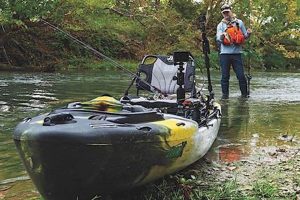
The availability of kayaks at Lowe’s directly influences the consideration of alternative retailers. If Lowe’s does not stock kayaks locally or if the desired model is unavailable, exploring alternative sources becomes essential. This connection represents a crucial aspect of the consumer decision-making process when seeking specialized recreational equipment. Several factors contribute to the necessity of considering alternatives, including limited stock, specific model preferences, pricing considerations, and the desire for specialized expertise. For instance, a consumer seeking a high-end fishing kayak might not find suitable options at Lowe’s, necessitating exploration of specialized outdoor retailers. Similarly, competitive pricing or specific features offered by alternative retailers might incentivize consumers to explore options beyond Lowe’s.
The practical significance of understanding alternative retailers lies in maximizing purchasing options and potentially optimizing the acquisition process. Imagine a consumer seeking a whitewater kayak. Given Lowe’s typical focus on recreational kayaks, the consumer might explore specialized paddling shops offering a wider selection of whitewater-specific models and expert advice. This example highlights the value of considering alternative retailers tailored to specific needs. Furthermore, exploring alternative retailers can contribute to price comparison and informed decision-making. A consumer might find a comparable kayak at a different retailer offering a more competitive price or a bundled package with essential accessories. This comparison shopping, facilitated by the awareness of alternatives, empowers consumers to make informed choices based on value, selection, and specialized service.
In summary, the consideration of alternative retailers is intrinsically linked to the availability of kayaks at Lowe’s. When Lowe’s doesn’t meet specific needs regarding product availability, model selection, or pricing, alternative retailers provide crucial options. Understanding these alternatives empowers consumers to navigate the retail landscape effectively, maximizing their chances of acquiring the desired kayak. This understanding represents a critical element in the consumer journey, contributing to informed decisions, potentially enhanced value, and a more satisfactory purchasing experience. The exploration of alternative retailers ultimately broadens consumer perspectives beyond a single retailer, opening avenues for optimized acquisition strategies within the specialized market of recreational equipment.
Frequently Asked Questions
This section addresses common inquiries regarding kayak availability and related considerations, providing concise and informative responses.
Question 1: Are kayaks consistently stocked at all Lowe’s locations?
Kayak availability varies significantly among Lowe’s stores. Factors such as store size, regional demand, and individual management decisions influence inventory. Checking with specific locations is recommended.
Question 2: What types of kayaks are typically found at Lowe’s?
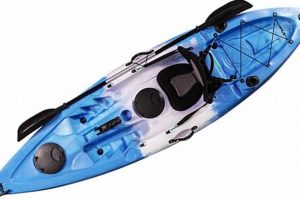
When available, Lowe’s generally stocks recreational kayaks suitable for calm water activities. Specialized kayaks, like whitewater or fishing models, are less common.
Question 3: How does seasonality impact kayak availability at Lowe’s?
Kayak availability often aligns with peak seasons. Stock tends to be higher during spring and summer and may decrease or disappear during fall and winter.
Question 4: Are prices for kayaks comparable across different Lowe’s locations?
While corporate pricing strategies provide a framework, minor price variations might occur between locations due to local market conditions and promotional activities.
Question 5: What alternatives exist if kayaks are unavailable at a specific Lowe’s store?
Specialty outdoor retailers, online marketplaces, and sporting goods stores offer alternative avenues for acquiring kayaks if unavailable at Lowe’s.
Question 6: How can one determine real-time kayak availability at a particular Lowe’s?
Direct contact with the desired Lowe’s location, either by phone or in-person visit, offers the most accurate real-time inventory assessment.
Careful consideration of these frequently asked questions enhances the efficiency of locating and acquiring kayaks. A strategic approach, incorporating these insights, contributes to informed purchasing decisions.
This FAQ section clarifies common points of interest, paving the way for further exploration of kayak selection, purchasing considerations, and related topics.
Conclusion
The inquiry “does Lowe’s sell kayaks” necessitates a nuanced understanding of various influencing factors. Kayak availability at Lowe’s is not uniform; it depends on individual store locations, regional market dynamics, seasonal variations, and inventory management practices. Online resources offer preliminary insights, while direct store contact provides the most accurate real-time availability information. Alternative retailers represent crucial options when specific kayak models or specialized expertise are required. Strategic planning, incorporating these factors, optimizes the kayak acquisition process.
Informed decision-making requires a comprehensive approach encompassing online research, direct contact with Lowe’s locations, and consideration of alternative retailers. This proactive strategy empowers consumers to navigate the complexities of specialized product availability, contributing to a more efficient and successful purchasing experience. The evolving retail landscape demands adaptable strategies; consumers must remain informed and resourceful to effectively locate desired products like kayaks within this dynamic market.