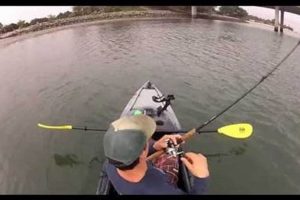
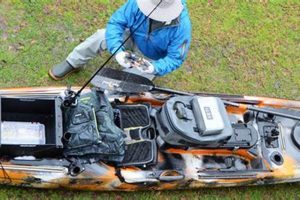
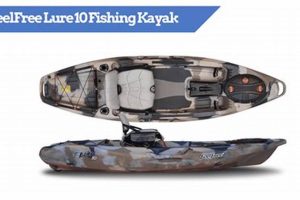
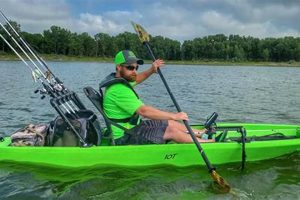
Tandem kayaks designed for angling offer a stable platform for two individuals to enjoy the sport. These vessels typically feature specialized storage for rods, tackle, and often include features like rod holders and anchor trolleys. A popular choice for friends, family, or fishing guides and their clients, they provide ample space and weight capacity for a comfortable and successful fishing experience.
Sharing a watercraft enhances camaraderie and allows for shared responsibilities like paddling, navigating, and landing fish. The increased stability inherent in a larger kayak can be particularly advantageous in challenging conditions or when fighting larger fish. Historically, shared fishing experiences from larger canoes or boats have been common; the tandem fishing kayak provides a modern, compact, and efficient way to continue this tradition.
This article will further explore the key features to consider when selecting a suitable vessel for two anglers, including hull design, materials, and important accessories. Considerations for paddling techniques specific to tandem kayaks, as well as safety precautions, will also be addressed.
Tips for Tandem Kayak Fishing
Successful tandem kayak fishing trips require planning and coordination. These tips offer guidance for maximizing enjoyment and effectiveness on the water.
Tip 1: Coordinate Paddling: Synchronized paddling is crucial for efficient movement and maintaining a desired course. Practicing on calm water before venturing into more challenging conditions is recommended.
Tip 2: Distribute Weight Evenly: Proper weight distribution is essential for stability. Gear should be balanced throughout the kayak, considering both side-to-side and front-to-back distribution.
Tip 3: Establish Communication Protocols: Clear communication is vital, especially when navigating complex waterways or battling strong currents. Predetermined signals or verbal cues can prevent misunderstandings.
Tip 4: Designate Roles and Responsibilities: Assigning roles such as navigation, anchoring, and fish handling streamlines the experience and prevents confusion.
Tip 5: Choose Appropriate Fishing Techniques: Certain fishing techniques are better suited for tandem kayaks than others. Trolling and casting are often effective, while techniques requiring significant maneuvering might present challenges.
Tip 6: Prioritize Safety: Wearing personal flotation devices is paramount. Carrying a safety kit including a whistle, signaling device, and first-aid supplies is also essential.
Tip 7: Respect Wildlife and the Environment: Practice catch-and-release whenever possible and adhere to all local fishing regulations. Proper disposal of fishing line and other waste is crucial for preserving the natural environment.
By implementing these strategies, anglers can enhance safety, improve fishing success, and foster a more enjoyable shared experience on the water.
This information provides a foundation for successful tandem kayak fishing. Further exploration of specific techniques and equipment can enhance proficiency and enjoyment.
1. Capacity

Capacity, a critical factor in tandem fishing kayak selection, directly impacts comfort, performance, and safety. Understanding weight capacity limitations and how they relate to angler size and gear requirements is crucial for a successful and enjoyable fishing experience.
- Maximum Weight Capacity:
This specification, provided by the manufacturer, indicates the maximum combined weight of anglers and gear the kayak can safely support. Exceeding this limit compromises stability and increases the risk of capsizing. A kayak with a higher maximum weight capacity offers greater flexibility for carrying heavier individuals, larger amounts of gear, or potentially larger catches. A real-world example would be choosing a kayak with a higher maximum capacity for extended trips requiring camping gear or larger coolers.
- Kayak Weight:
The kayak’s own weight influences transport and maneuverability. Heavier kayaks are more challenging to car-top, launch, and paddle, particularly against wind or current. Conversely, lighter kayaks, though potentially less stable, are easier to manage on land and water. Transporting a kayak with a rooftop carrier necessitates consideration of both the kayak’s weight and the carrier’s capacity.
- Storage Capacity:
Storage space within the kayak directly impacts gear organization and accessibility. Dedicated compartments for tackle boxes, rod holders, and other fishing essentials optimize space utilization and streamline fishing activities. Sufficient storage capacity is particularly important for longer trips or specialized fishing techniques requiring more equipment. For example, fly fishing often necessitates more storage than traditional baitcasting.
- Interior Space and Angler Size:
The kayak’s cockpit dimensions determine angler comfort and freedom of movement. Anglers of larger stature require more spacious cockpits for comfortable seating and paddling. Adequate legroom and seating adjustments contribute to a more enjoyable and less fatiguing experience, particularly during extended fishing trips. Comparing cockpit dimensions and features across different models is crucial for ensuring a proper fit.
Careful evaluation of these capacity-related elements ensures a well-matched kayak for individual angler needs and intended fishing applications. Selecting a tandem fishing kayak with appropriate capacity is paramount for safety, comfort, and optimized performance on the water.
2. Stability
Stability is a paramount consideration in tandem fishing kayaks, directly influencing safety and angler confidence, particularly in challenging conditions. A stable platform allows anglers to focus on fishing rather than maintaining balance, contributing to a more enjoyable and productive experience. Various factors contribute to a kayak’s stability, including hull design, width, and weight distribution.
- Hull Design:
Hull design significantly impacts stability. Wider, flatter hulls generally offer greater primary stability (initial resistance to tipping), making them suitable for calmer waters and stand-up fishing. Pontoon hulls provide exceptional stability. V-shaped hulls, while less stable initially, offer superior secondary stability (resistance to capsizing once tilted) and perform well in rougher conditions. A kayak intended for ocean fishing would likely benefit from a V-shaped hull, while a kayak used primarily on lakes might prioritize a flatter hull for enhanced stability while casting.
- Width and Length:
Wider kayaks inherently offer greater stability than narrower designs. However, increased width can compromise maneuverability and tracking. Longer kayaks generally track better in a straight line but may be less maneuverable than shorter designs. A shorter, wider kayak might be preferred for fishing in small ponds or rivers, while a longer, narrower kayak could be more suitable for open water fishing.
- Weight Distribution:
Proper weight distribution is crucial for maintaining stability. Evenly distributing gear and anglers’ weight within the kayak minimizes the risk of tipping. Positioning heavier items lower in the kayak enhances stability. Loading gear asymmetrically can compromise stability and make the kayak difficult to control. Balancing tackle boxes and other equipment throughout the kayak, rather than concentrating weight in one area, optimizes stability.
- Center of Gravity:
A lower center of gravity contributes to increased stability. Sitting lower in the kayak and keeping weight close to the center improves balance. Standing up in a kayak raises the center of gravity and significantly reduces stability. Understanding the impact of angler movement and weight shifts on the center of gravity is crucial for maintaining balance and preventing capsizes.
Careful consideration of these stability-related factors is essential for selecting a tandem fishing kayak appropriate for intended water conditions and fishing styles. Prioritizing stability ensures a safer and more confident on-the-water experience, allowing anglers to fully enjoy their time on the water.
3. Storage

Storage solutions in tandem fishing kayaks directly impact organization, efficiency, and overall fishing success. Adequate and well-designed storage allows anglers to carry essential gear, maintain a clutter-free cockpit, and quickly access necessary equipment. The connection between storage and a positive fishing experience is significant, influencing both practicality and enjoyment. For example, dedicated storage for tackle boxes prevents tangled lines and wasted time searching for lures, while rod holders secure rods, freeing hands for paddling and other tasks. Insufficient or poorly designed storage can lead to frustration, lost gear, and compromised safety.
Several storage features enhance the functionality of tandem fishing kayaks. Dry storage compartments protect sensitive items like electronics and wallets from water damage. Bungee cords secure larger items like coolers and tackle bags. Recessed storage wells offer convenient access to frequently used items while minimizing interference with paddling. The location and accessibility of storage compartments are crucial factors to consider. Easy-to-reach storage allows for quick retrieval of essential gear without disrupting fishing activities. For instance, readily accessible rod holders facilitate swift reactions to fish strikes, while strategically placed tackle storage minimizes movement and maintains stability.
Effective storage solutions contribute significantly to a productive and enjoyable tandem kayak fishing experience. Careful consideration of storage capacity, features, and accessibility during kayak selection ensures anglers can carry necessary gear, maintain organization, and focus on fishing. Understanding the direct relationship between storage and fishing success empowers informed decision-making and enhances on-the-water performance. Failing to prioritize storage can lead to a disorganized and frustrating experience, hindering fishing effectiveness and potentially compromising safety.
4. Maneuverability
Maneuverability in a two-person fishing kayak significantly impacts its effectiveness and suitability for various fishing environments. The ability to precisely control the kayak’s direction and movement is crucial for navigating tight waterways, approaching fish-holding areas stealthily, and responding effectively to changing conditions. Several factors influence maneuverability, including hull design, length, and the use of rudders or skegs.
Shorter kayaks generally offer greater maneuverability than longer ones, allowing for tighter turns and quicker adjustments in direction. This characteristic is advantageous when fishing in confined spaces like narrow creeks or rivers, where precise maneuvering is essential for navigating obstacles and reaching prime fishing spots. Conversely, longer kayaks excel in tracking, maintaining a straight course with less effort, a benefit in open water scenarios. Hull design also plays a crucial role. A kayak with a more pronounced keel or tracking fin will track straighter but sacrifice some maneuverability. The trade-off between tracking and maneuverability requires careful consideration based on the intended fishing environment. For example, a shorter, more maneuverable kayak might be preferred for navigating mangrove tunnels, while a longer, tracking-focused kayak might be better suited for trolling in open lakes.
Furthermore, features like rudders or skegs can enhance maneuverability, particularly in windy conditions or strong currents. Rudders offer active control over steering, allowing for precise adjustments to maintain course and counteract external forces. Skegs, while offering less control than rudders, improve tracking and reduce the tendency of the kayak to yaw (turn unintentionally). Understanding the interplay of these factorslength, hull design, and control featuresempowers informed decisions regarding kayak selection, ensuring optimal performance and enjoyment on the water. Prioritizing maneuverability when necessary, such as in tight rivers, enhances fishing effectiveness and safety, while understanding its impact on tracking performance allows for informed choices in open water environments.
5. Features

Specialized features distinguish fishing kayaks from recreational models, enhancing their utility and angler effectiveness. These features directly impact comfort, fishing success, and overall enjoyment on the water. Careful consideration of these features is essential for selecting a two-person fishing kayak tailored to specific needs and fishing styles. For example, integrated rod holders free hands for paddling and other tasks, while strategically placed storage compartments keep essential gear organized and readily accessible.
- Rod Holders:
Rod holders secure fishing rods, allowing anglers to paddle, control the kayak, or handle other tasks without constantly holding their rods. Various types of rod holders exist, including flush-mounted, adjustable, and rotating models. Flush-mounted holders offer a streamlined profile but less flexibility, while adjustable holders allow for customized rod positioning. Rotating holders facilitate different fishing techniques. Selecting the appropriate type and number of rod holders depends on individual fishing preferences and techniques.
- Seat Design and Comfort:
Comfortable seating is crucial for extended fishing trips. Adjustable seats with adequate back support and cushioning enhance comfort and reduce fatigue. Features like adjustable footrests further contribute to a comfortable and ergonomic paddling position. Higher-end models may offer features like breathable mesh seating to enhance comfort in warm weather. Prioritizing seating comfort ensures a more enjoyable and less strenuous fishing experience.
- Anchor Trolley System:
An anchor trolley system allows anglers to control the kayak’s position in current or wind, maintaining an optimal fishing location. This system involves a line running along the length of the kayak, allowing the anchor point to be adjusted, controlling drift and positioning. This feature is particularly valuable in rivers or windy conditions, allowing anglers to hold position effectively.
- Paddle Holders/Leashes:
Paddle holders or leashes secure paddles when not in use, preventing loss and ensuring they are readily available when needed. This simple feature enhances safety and convenience, eliminating the need to search for a misplaced paddle, especially in challenging conditions.
These features, while not exhaustive, represent key considerations when selecting a two-person fishing kayak. Understanding the purpose and benefits of each feature allows for informed decisions, ensuring the chosen kayak effectively meets individual fishing needs and preferences. Prioritizing features relevant to specific fishing styles enhances overall enjoyment and success on the water. The interplay between these features contributes significantly to a well-equipped and efficient fishing platform.
Frequently Asked Questions
This section addresses common inquiries regarding tandem fishing kayaks, providing concise and informative responses to facilitate informed decision-making and enhance understanding.
Question 1: What are the key advantages of a tandem fishing kayak over two solo kayaks?
Tandem kayaks offer increased stability, often carry a larger combined weight capacity, and can be more cost-effective than purchasing two separate kayaks. They also promote collaborative fishing and shared experiences.
Question 2: How does hull design influence the performance of a tandem fishing kayak?
Hull design significantly impacts stability and tracking. Wider, flatter hulls provide greater initial stability, while V-shaped hulls offer better performance in rougher water and enhanced tracking. Pontoon hulls maximize stability, often at the expense of speed and maneuverability.
Question 3: What safety precautions should be taken when using a tandem fishing kayak?
Always wear personal flotation devices (PFDs). Carry a safety kit containing a whistle, signaling device, first-aid supplies, and a bilge pump. Check weather conditions before embarking and inform someone of planned routes and return times.
Question 4: How is weight capacity determined, and why is it important?
Manufacturers determine weight capacity through testing. Exceeding this limit compromises stability and increases the risk of capsizing. Weight capacity should accommodate the combined weight of anglers, gear, and any potential catch.
Question 5: What features should one look for when choosing a tandem fishing kayak?
Essential features include rod holders, ample storage compartments, comfortable seating, and an anchor trolley system. Additional features like rudders or skegs can enhance maneuverability and control.
Question 6: How does paddling a tandem kayak differ from paddling a solo kayak?
Tandem kayaking requires synchronized paddling and effective communication between paddlers. Weight distribution is crucial for maintaining balance and efficient movement.
Understanding these key aspects of tandem fishing kayaks empowers informed choices and contributes to safer and more enjoyable fishing experiences. Prioritizing safety, appropriate kayak selection, and effective paddling techniques ensures successful outings on the water.
For further information on specific models and advanced techniques, consult specialized resources and expert advice.
Conclusion
Tandem fishing kayaks offer a unique platform for shared angling experiences, demanding careful consideration of various factors for optimal performance and safety. Hull design, capacity, stability, storage solutions, maneuverability, and specialized features all contribute significantly to a successful and enjoyable outing. Understanding the interplay of these elements empowers informed decisions regarding kayak selection and utilization.
Successful tandem kayak fishing hinges on informed choices and responsible practices. Prioritizing safety, adhering to capacity limits, and employing effective paddling techniques ensure a rewarding experience. The selection of a well-equipped tandem kayak, tailored to specific fishing needs and environmental conditions, unlocks the full potential of shared angling adventures.