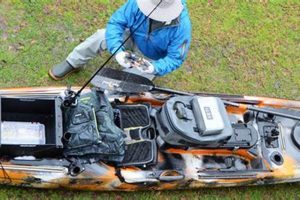
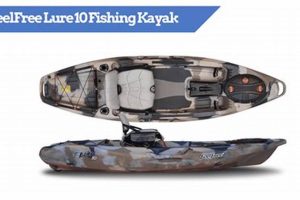
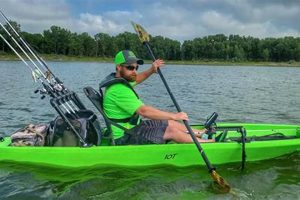
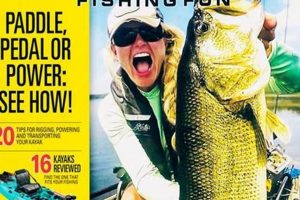
This specific model is a sit-on-top vessel designed for angling. Characterized by its stability and portability, this type of watercraft offers anglers a platform for accessing various fishing locations, from calm lakes to slow-moving rivers. Its design often incorporates features like rod holders, storage compartments, and comfortable seating tailored for extended fishing trips.
Such specialized kayaks provide enhanced stability and maneuverability compared to traditional recreational kayaks, enabling anglers to focus on their fishing experience. The compact design facilitates easy transport and storage, making it accessible to a wider range of users. Furthermore, the sit-on-top configuration provides greater freedom of movement and simplifies re-entry after an accidental fall, enhancing safety on the water.
This discussion will further explore key features, performance characteristics, user experiences, and potential competitors, providing prospective buyers with a comprehensive resource for making informed purchasing decisions. Topics covered will include an in-depth look at construction materials, design innovations, and overall suitability for different fishing environments.
Tips for Sit-On-Top Kayak Fishing
Proper preparation and technique enhance safety and fishing success when using this type of watercraft. The following tips provide guidance for anglers of all experience levels.
Tip 1: Understand Weight Capacity: Respect the manufacturer’s specified weight limit, including the combined weight of the angler, gear, and any potential catch. Exceeding this limit compromises stability and safety.
Tip 2: Practice Paddling and Maneuvering: Before venturing into open water, practice basic paddling strokes and maneuvering techniques in a controlled environment. This builds confidence and control.
Tip 3: Prioritize Safety Gear: Always wear a personal flotation device (PFD). Carry essential safety equipment, including a whistle, signaling device, and first-aid kit.
Tip 4: Plan Fishing Locations Carefully: Research potential fishing spots beforehand, considering factors such as water conditions, currents, and potential hazards. Inform someone of your intended location and estimated return time.
Tip 5: Organize and Secure Gear: Utilize onboard storage compartments and secure loose items to prevent loss or interference during paddling and fishing.
Tip 6: Dress Appropriately for Conditions: Wear clothing suitable for expected weather conditions and water temperatures. Consider sun protection, including hats, sunglasses, and sunscreen.
Tip 7: Check Weather Forecasts: Before embarking on any fishing trip, check weather forecasts and be prepared to adjust plans or postpone if conditions are unfavorable.
Adhering to these guidelines promotes a safe and enjoyable experience on the water, maximizing fishing opportunities and minimizing potential risks.
This information provides a starting point for anglers seeking to enhance their sit-on-top kayak fishing adventures. The following sections will delve deeper into specific aspects of equipment, techniques, and location selection.
1. Sit-on-top Design

The sit-on-top design is a defining characteristic of the Journey SS 10 fishing kayak, directly influencing its functionality and suitability for angling. This design distinguishes it from traditional sit-inside kayaks, offering distinct advantages and disadvantages relevant to the fishing experience.
- Enhanced Stability:
The wider hull and higher center of gravity inherent in sit-on-top kayaks contribute to increased primary stability, reducing the likelihood of capsizing. This stability is crucial for anglers, particularly when casting, reeling, or landing fish. The open design also allows for quick recovery in the event of a capsize.
- Improved Access and Egress:
The open deck allows anglers to easily enter and exit the kayak, even from the water. This feature simplifies launching and landing, particularly in shallow water or challenging shoreline environments. It also provides greater freedom of movement while fishing.
- Enhanced Gear Storage and Accessibility:
Sit-on-top kayaks typically offer more accessible storage options than sit-inside models. Gear can be easily stowed and retrieved, and larger items can be accommodated on the open deck. This is essential for anglers who need readily available access to rods, tackle boxes, and other equipment.
- Self-Bailing System:
Many sit-on-top kayaks incorporate scupper holes that allow water to drain automatically, preventing water accumulation within the hull. This feature is valuable in rough conditions or when navigating through waves or splashes, maintaining buoyancy and stability.
The sit-on-top design of the Journey SS 10 directly addresses the specific needs of anglers, prioritizing stability, accessibility, and gear management. These features contribute to a more comfortable and efficient fishing experience, making it a practical choice for a variety of fishing environments.
2. Fishing-Specific Features

Dedicated features distinguish fishing kayaks from recreational models. The Journey SS 10 integrates several such features, enhancing its utility for angling. These features contribute directly to angler efficiency, comfort, and overall fishing success.
Common inclusions are rod holders, strategically positioned for easy access and secure rod storage during paddling or while fighting fish. Flush-mounted rod holders minimize interference with paddling strokes, while adjustable rod holders accommodate different fishing techniques and rod lengths. Recessed tackle storage compartments provide organized storage for lures, hooks, and other essential gear, keeping them within easy reach while protecting them from the elements. Some models also feature dedicated storage for larger items such as tackle boxes or fish finders.
For instance, the inclusion of multiple rod holders allows anglers to switch between different rod and reel setups quickly, adapting to changing fishing conditions or targeting different species. Integrated tackle storage reduces clutter and streamlines access to essential gear, minimizing distractions and maximizing fishing time. These design elements contribute to a more focused and productive angling experience.
Further enhancements may include paddle parks or clips, securing the paddle while fishing, preventing loss and freeing the angler’s hands. Anchor trolleys facilitate controlled drift fishing, allowing anglers to maintain position in current or wind. These features highlight the design considerations specific to fishing kayaks, optimizing their functionality for the demands of the sport.
Understanding these features is crucial for selecting a kayak that meets individual angling needs. The inclusion and implementation of these fishing-specific features contribute significantly to the Journey SS 10’s suitability as a dedicated fishing platform, differentiating it from general-purpose recreational kayaks.
3. Stability and Maneuverability

Stability and maneuverability are critical performance characteristics for fishing kayaks, directly impacting angler safety, comfort, and fishing effectiveness. The Journey SS 10’s design addresses these factors, aiming to provide a balanced platform suitable for various fishing environments. Stability, the resistance to capsizing or tipping, is paramount when casting, reeling, and landing fish. A stable platform allows anglers to shift weight and make adjustments without compromising balance. Maneuverability, the ability to change direction and navigate efficiently, is crucial for accessing tight spots, following fish, and adapting to changing water conditions. The hull design, including width, length, and rocker profile, directly influences these performance characteristics.
A wider hull typically provides greater initial stability, making it less prone to tipping, which is beneficial for beginners or when fishing in calm waters. However, increased width can compromise maneuverability, making it less responsive to paddle strokes. A longer kayak generally tracks straighter and glides more efficiently, advantageous for covering longer distances. However, increased length can reduce maneuverability in tight spaces or when navigating shallow water. Rocker, the curvature of the hull from bow to stern, affects turning performance. A higher rocker profile enhances maneuverability in rough water and facilitates turning, while a lower rocker profile promotes better tracking and speed in calm conditions. The Journey SS 10’s design seeks to balance these factors, aiming for stability suitable for fishing activities while maintaining sufficient maneuverability for navigating diverse aquatic environments. For example, an angler fishing in a narrow, winding creek requires greater maneuverability to navigate tight turns and obstacles, while an angler fishing in open, choppy water prioritizes stability to maintain balance in challenging conditions.
Understanding the relationship between stability, maneuverability, and hull design is crucial for selecting a kayak suited to individual fishing preferences and target environments. The Journey SS 10’s specific design choices aim to provide a compromise between these performance characteristics, offering a platform suitable for a range of fishing situations while prioritizing stability for angler safety and comfort. This balance facilitates confident casting, reeling, and landing, contributing to a more enjoyable and productive fishing experience.
4. Portability and Storage

Portability and storage considerations are essential factors influencing the practicality and accessibility of kayaks, particularly for individuals with limited storage space or transportation options. The Journey SS 10 fishing kayak addresses these concerns through its compact dimensions and lightweight construction. Facilitating convenient transport and storage, these attributes expand the kayak’s usability for a broader range of users. Reduced size and weight simplify loading and unloading from vehicles, minimizing the physical strain often associated with larger, heavier kayaks. This ease of transport expands access to diverse fishing locations, from remote lakes to urban waterways.
The ability to store the kayak efficiently in garages, sheds, or even apartments contributes to its overall practicality. This compact storage footprint eliminates the need for specialized storage solutions or large outdoor spaces, making kayak ownership more feasible for individuals living in urban environments or with limited storage capacity. For example, an angler living in an apartment can easily transport the Journey SS 10 in a car and store it on a balcony or in a storage closet, eliminating the need for a dedicated storage facility or a large vehicle. Similarly, an angler with limited physical strength can manage the kayak’s weight more easily, simplifying the loading and unloading process. This enhanced portability expands fishing opportunities, allowing anglers to explore diverse locations without the constraints of complex transportation or storage logistics.
In conclusion, the emphasis on portability and storage in the Journey SS 10’s design significantly enhances its overall practicality and accessibility. The compact dimensions and lightweight construction facilitate convenient transport and storage, broadening its appeal to anglers with varying storage limitations and transportation resources. This focus on practical usability expands fishing opportunities, enabling individuals to pursue their passion regardless of logistical constraints. This contributes to the kayak’s versatility and suitability for a wide range of users and environments.
5. Targeted user profile
The Journey SS 10 fishing kayak occupies a specific niche within the broader kayak market, appealing to a distinct user profile. Understanding this target demographic informs design choices, marketing strategies, and overall product positioning. This kayak caters primarily to recreational anglers seeking a stable, maneuverable, and feature-rich platform suitable for diverse fishing environments. Its compact size and portability further expand its appeal to individuals with limited storage space or transportation options. The target user prioritizes functionality, ease of use, and value, seeking a kayak that enhances their fishing experience without demanding extensive expertise or significant financial investment. For example, a weekend angler seeking a stable platform for fishing calm lakes and slow-moving rivers finds the Journey SS 10’s stability and fishing-specific features appealing. Similarly, an angler living in an urban environment with limited storage space appreciates the kayak’s compact size and portability.
The kayak’s design reflects the needs and priorities of this target user. Features like multiple rod holders, integrated tackle storage, and comfortable seating cater specifically to angling requirements. The relatively stable hull design provides a secure platform for casting and reeling, while the manageable size and weight enhance portability and ease of use. This targeted approach distinguishes the Journey SS 10 from specialized fishing kayaks designed for experienced anglers or extreme environments, as well as from recreational kayaks lacking fishing-specific features. This focus allows the manufacturer to optimize design and features for a particular segment of the market, maximizing appeal and competitiveness within that niche. Consider an angler transitioning from shore fishing to kayak fishing. The Journey SS 10 provides an accessible entry point, offering stability and essential features without the complexity or cost of more specialized models. This focus on accessibility broadens the potential user base, attracting individuals new to kayak fishing.
Understanding the targeted user profile is crucial for effective product development and marketing. By aligning design choices with the needs and preferences of the target demographic, manufacturers can create a product that resonates with its intended audience. This targeted approach maximizes market penetration within the specific niche, contributing to product success and customer satisfaction. Recognizing the intended user profile also facilitates informed purchasing decisions. Potential buyers can assess whether the kayak’s features and performance characteristics align with their individual fishing styles, experience levels, and logistical constraints. This understanding empowers consumers to make informed choices, leading to greater satisfaction and positive product experiences. The Journey SS 10, through its design and features, effectively targets a specific user profile, contributing to its relevance and appeal within the recreational fishing kayak market.
Frequently Asked Questions
This section addresses common inquiries regarding the Journey SS 10 fishing kayak, providing concise and informative responses to facilitate informed purchasing decisions and enhance user understanding.
Question 1: What is the maximum weight capacity of the Journey SS 10?
The maximum weight capacity varies depending on the specific model year and manufacturer specifications. Consulting the official product documentation is recommended for precise weight limits. Exceeding the specified capacity compromises stability and safety.
Question 2: Is the Journey SS 10 suitable for ocean use?
While designed primarily for calm waters such as lakes and slow-moving rivers, the Journey SS 10 can handle moderate coastal conditions with appropriate safety precautions and experience. Ocean use requires careful consideration of weather forecasts, tides, and currents. Consulting experienced kayakers or local paddling guides is advisable before venturing into open ocean environments.
Question 3: What materials are used in the construction of the Journey SS 10?
Construction materials typically include high-density polyethylene (HDPE) or similar durable plastics. Specific material composition can vary depending on the model year and manufacturer. These materials offer a balance of durability, impact resistance, and UV protection, contributing to the kayak’s longevity and performance in various environmental conditions.
Question 4: How does the Journey SS 10 perform in windy conditions?
Performance in wind depends on several factors, including wind speed, direction, and water conditions. The kayak’s relatively low profile and sit-on-top design can make it susceptible to wind drift. Appropriate paddling techniques and the use of a rudder or drift anchor can mitigate wind effects and enhance control in breezy conditions.
Question 5: What maintenance is required for the Journey SS 10?
Routine maintenance includes rinsing the kayak with fresh water after each use, particularly after exposure to saltwater. Periodic inspection for damage, proper storage, and occasional application of UV protectant contribute to the kayak’s longevity and maintain its appearance and performance over time.
Question 6: Are there any accessories recommended for use with the Journey SS 10?
Recommended accessories may include a personal flotation device (PFD), paddle leash, dry bag for storing valuables, and a cart for convenient transport. Additional accessories such as fishing rod holders, anchor trolleys, and fish finders can enhance the fishing experience based on individual preferences and angling styles.
Careful consideration of these frequently asked questions facilitates informed decision-making regarding the Journey SS 10 fishing kayak. Understanding these aspects enhances user experience, promotes safe operation, and maximizes enjoyment on the water.
The subsequent sections will offer in-depth reviews, comparisons with competing models, and detailed analyses of specific features, providing a comprehensive resource for prospective buyers.
Conclusion
This exploration of the Journey SS 10 fishing kayak encompassed key aspects relevant to prospective buyers. Its sit-on-top design, fishing-specific features, stability and maneuverability characteristics, portability, and suitability for a specific user profile were examined. The analysis highlighted the kayak’s strengths as a platform for recreational angling, emphasizing its balance of functionality, practicality, and accessibility. Frequently asked questions addressed common concerns regarding weight capacity, suitability for various water conditions, construction materials, performance in wind, maintenance requirements, and recommended accessories.
The Journey SS 10 presents a compelling option for anglers seeking a dedicated fishing kayak. Its targeted design and feature set cater specifically to the needs of recreational anglers, offering a balanced platform suitable for diverse fishing environments. Further research and consideration of individual fishing styles, experience levels, and logistical constraints are recommended prior to purchase. Thorough evaluation empowers informed decisions, maximizing the likelihood of a satisfying and productive ownership experience.