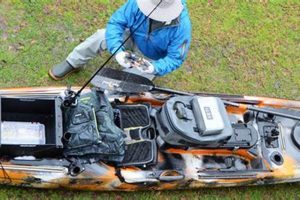
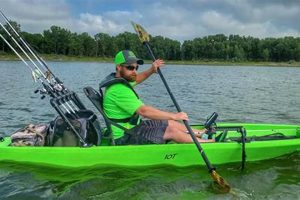
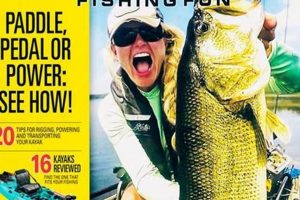
Specialized personal flotation devices (PFDs) designed for anglers using kayaks offer features tailored to this activity. These often include high buoyancy ratings, multiple pockets and attachment points for fishing gear, and designs that allow for comfortable paddling and casting. An example would be a PFD with integrated rod holders, a knife sheath, and a bright color for enhanced visibility.
Enhanced safety and convenience are paramount for kayak anglers. These specialized PFDs provide crucial buoyancy in case of capsizing, especially in challenging conditions. The strategic placement of pockets and attachments keeps essential tools readily accessible, improving efficiency and reducing the risk of losing gear overboard. Historically, anglers adapted general-purpose life vests for fishing, but the evolution of kayak fishing has driven the development of purpose-built PFDs for improved performance and safety.
The following sections will explore key features to consider when selecting a PFD for kayak fishing, including buoyancy ratings, design variations, essential accessories, and proper fitting techniques.
Tips for Choosing and Using Kayak Fishing PFDs
Selecting and utilizing a suitable personal flotation device (PFD) is crucial for safe and successful kayak angling. The following tips provide guidance for making informed decisions and maximizing PFD effectiveness.
Tip 1: Consider Buoyancy and Fit: Select a PFD with appropriate buoyancy for individual weight and anticipated conditions. Ensure a snug yet comfortable fit that allows for unrestricted movement while paddling and casting.
Tip 2: Prioritize Comfort and Mobility: Opt for designs with adjustable straps and ventilation features to enhance comfort during extended wear, especially in warm weather. Ensure the PFD does not hinder paddling or casting motions.
Tip 3: Evaluate Storage Capacity: Assess pocket configurations and attachment points to accommodate essential fishing gear such as pliers, knives, and tackle boxes. Consider specialized features like integrated rod holders.
Tip 4: Check for High Visibility: Choose bright colors and reflective elements for enhanced visibility in low-light conditions or open water, increasing safety and aiding potential rescue efforts.
Tip 5: Inspect and Maintain Regularly: Regularly inspect the PFD for wear and tear, including buckles, straps, and flotation material. Ensure proper maintenance and replace if necessary to maintain optimal performance.
Tip 6: Practice Deployment: Familiarize oneself with the PFD’s operation and deployment mechanisms. Practice donning and adjusting the PFD in a controlled environment before venturing onto the water.
Tip 7: Consider Accessory Integration: Explore compatibility with other safety equipment such as whistles, lights, and personal locator beacons (PLBs) for enhanced safety and preparedness.
Adhering to these guidelines will ensure optimal safety and convenience while kayak fishing, allowing anglers to focus on their pursuit while mitigating potential risks.
By understanding the importance of PFD selection and usage, anglers can enhance their overall fishing experience and prioritize safety on the water. The concluding section will reiterate the key takeaways and emphasize the crucial role PFDs play in responsible kayak angling.
1. Buoyancy

Buoyancy, the upward force exerted by a fluid that opposes the weight of an immersed object, is paramount in the design and function of personal flotation devices (PFDs) specifically engineered for kayak fishing. This upward force is what keeps a person afloat in the water. PFDs achieve buoyancy through inherently buoyant materials, such as foam, or through inflatable chambers. The amount of buoyancy a PFD provides is measured in Newtons and classified into different types, with Type III PFDs commonly preferred by kayak anglers for their balance of buoyancy and flexibility.
The significance of buoyancy in kayak fishing PFDs cannot be overstated. Kayak angling often takes place in diverse water environments, from calm lakes to swift rivers and open ocean. Unexpected capsizing, challenging weather conditions, or unforeseen emergencies can pose significant risks. A PFD with appropriate buoyancy provides essential flotation, keeping the angler’s head above water and aiding in self-rescue or rescue by others. Consider a scenario where an angler hooks a large fish, causing the kayak to become unstable; a high-buoyancy PFD can prevent submersion and potential injury during the struggle. Similarly, in cold water conditions, maintaining buoyancy can prevent hypothermia by minimizing exposure to the chilling effects of immersion.
Understanding the role of buoyancy in kayak fishing PFDs is crucial for angler safety and preparedness. Selecting a PFD with the appropriate buoyancy rating for individual weight and anticipated water conditions is essential. Regularly inspecting the PFD for wear and tear that might compromise buoyancy is equally vital. Recognizing the direct relationship between buoyancy and survival in the event of an aquatic accident underscores the importance of properly fitted and maintained PFDs for all kayak anglers.
2. Fit

Proper fit is paramount when selecting a personal flotation device (PFD) for kayak fishing. A correctly fitted PFD maximizes both safety and comfort, allowing for unrestricted movement while providing crucial buoyancy in the event of capsizing or immersion. An ill-fitting PFD can hinder paddling and casting, reduce effectiveness in emergency situations, and even pose a safety risk due to slippage or restricted breathing. A PFD that is too loose may ride up, obstructing the airway or failing to provide adequate support, while a PFD that is too tight can restrict breathing and movement, leading to discomfort and fatigue.
Consider the following scenario: an angler wearing a loose-fitting PFD experiences a sudden capsize. The PFD rides up, potentially obstructing the angler’s face and hindering their ability to self-rescue. Conversely, a PFD that is too tight can constrict the chest and make it difficult to breathe, especially under stress. These examples highlight the importance of a proper fit. Adjustable straps, multiple sizes, and different PFD styles cater to varying body types and preferences. Trying on different PFDs and adjusting the straps to achieve a snug yet comfortable fit is essential. The PFD should stay in place without riding up or restricting movement when performing typical kayaking and fishing actions, such as paddling, casting, and leaning over the side.
Prioritizing proper fit ensures that the PFD functions as intended, providing crucial buoyancy and safety without compromising comfort or mobility. This allows anglers to focus on their fishing experience while minimizing potential risks. A well-fitting PFD is not simply a piece of equipment; it is a vital component of safe and enjoyable kayak fishing. Neglecting proper fit compromises safety and hinders performance, underscoring the importance of careful selection and adjustment for every angler.
3. Storage
Integrated storage solutions within personal flotation devices (PFDs) designed for kayak fishing significantly enhance angler efficiency and safety. These specialized compartments and attachment points accommodate essential tools and equipment, keeping them readily accessible while minimizing the risk of loss or damage. This integrated storage eliminates the need for separate tackle boxes or bags, reducing clutter and maximizing space within the kayak. The ability to quickly access essential items, such as pliers, line cutters, and lures, streamlines fishing processes and contributes to a more organized and productive experience. For example, an angler encountering a tangled line can swiftly retrieve a line cutter from a designated PFD pocket, resolving the issue efficiently and minimizing disruption. Similarly, readily available pliers facilitate hook removal and other essential tasks, contributing to a smoother and safer fishing experience. The strategic placement of pockets and attachment points also minimizes the need for excessive reaching or bending, reducing the risk of capsizing and enhancing overall stability on the water.
Beyond individual efficiency, integrated storage solutions within kayak fishing PFDs contribute to overall safety. Keeping essential tools secured on the PFD minimizes the risk of these items becoming entangled in fishing lines or other gear, preventing potential hazards. In the event of a capsize, essential tools and equipment remain attached to the angler, increasing the likelihood of recovery and enhancing survival preparedness. Consider a scenario where an angler capsizes in challenging conditions; a knife securely attached to their PFD becomes a critical tool for cutting free from entangled lines or other debris. The readily available storage also reduces the need for anglers to turn or reach within the kayak, minimizing the risk of sudden shifts in weight distribution that could lead to instability or capsizing.
The practical significance of integrated storage solutions in kayak fishing PFDs lies in their contribution to both efficiency and safety. The convenient access to essential tools and equipment streamlines fishing processes, maximizing productivity while mitigating potential risks. By keeping necessary items secure and readily available, these PFDs enhance safety preparedness and contribute to a more organized and productive fishing experience. The strategic integration of storage solutions within kayak fishing PFDs reflects a thoughtful design approach that prioritizes both functionality and safety, ensuring that anglers can focus on their pursuit while minimizing potential risks and maximizing their overall fishing experience. These benefits underscore the value and importance of adequate storage considerations in the design and selection of PFDs for kayak fishing.
4. Mobility
Unrestricted mobility is a critical factor influencing the design and efficacy of personal flotation devices (PFDs) tailored for kayak fishing. A PFD must facilitate a full range of motion required for paddling, casting, and retrieving lines, without hindering the angler’s ability to react to changing conditions or unexpected events. Restrictive designs compromise paddling efficiency, reduce casting accuracy, and limit the angler’s ability to maneuver effectively, particularly in dynamic environments such as rivers or open water. Consider an angler attempting a long cast with a PFD that restricts shoulder rotation; the restricted movement compromises casting distance and accuracy, diminishing fishing effectiveness. Similarly, a PFD that hinders paddling strokes reduces speed, maneuverability, and overall efficiency on the water.
The importance of mobility extends beyond basic fishing functions to encompass essential safety considerations. An angler’s ability to react swiftly to unexpected situations, such as changing weather conditions, entanglement with fishing lines, or sudden shifts in the kayak’s balance, relies heavily on unrestricted movement. A PFD that impedes quick reactions can escalate potentially hazardous situations. For instance, an angler encountering a submerged obstacle requires unimpeded arm movement to brace against the kayak and prevent capsizing. A restrictive PFD could hinder this crucial reaction, increasing the risk of an accident. Furthermore, the ability to execute self-rescue procedures or assist others in an emergency relies on unhindered mobility, underscoring the direct link between PFD design and angler safety.
The practical significance of mobility in kayak fishing PFDs lies in its contribution to both performance and safety. A well-designed PFD allows anglers to perform essential fishing tasks efficiently and effectively while maintaining the freedom of movement necessary for safe navigation and rapid response to unforeseen events. Prioritizing mobility in PFD design ensures that safety considerations are seamlessly integrated with the functional requirements of kayak angling. This integration promotes a safer and more enjoyable fishing experience, enabling anglers to focus on their pursuit without compromising safety or performance. Failure to address mobility limitations in PFD design negatively impacts both fishing success and, critically, angler safety.
5. Visibility

Enhanced visibility is a crucial safety feature in personal flotation devices (PFDs) designed for kayak fishing. Bright colors and reflective elements significantly increase the wearer’s detectability in various conditions, including low light, fog, or open water. This enhanced visibility aids in locating anglers in distress, facilitating swift rescue efforts and mitigating potential risks associated with prolonged immersion or challenging weather conditions. Consider a scenario where an angler capsizes in foggy conditions; a brightly colored PFD significantly increases the chances of being spotted by other boaters or rescue personnel, expediting rescue and potentially preventing a life-threatening situation. The incorporation of reflective elements further amplifies visibility, especially during nighttime fishing or search and rescue operations involving spotlights or searchlights. These design features directly contribute to angler safety by maximizing detectability in compromised visibility scenarios.
Beyond emergency situations, enhanced visibility in kayak fishing PFDs contributes to increased safety in routine fishing activities. Bright colors increase the wearer’s visibility to other boaters, minimizing the risk of collisions, particularly in congested waterways or areas with limited visibility. This is especially relevant in popular fishing locations where multiple kayaks or other vessels may be present. For example, a brightly colored PFD can alert a powerboat operator to the presence of a kayak angler, preventing a potential collision. This heightened awareness contributes to a safer environment for all water users, reducing the risk of accidents. Furthermore, enhanced visibility can assist in locating anglers who may have drifted away from their intended fishing spots due to currents or changing weather conditions, facilitating swift recovery and preventing potential disorientation or distress.
The practical significance of enhanced visibility in kayak fishing PFDs lies in its direct contribution to angler safety. By increasing detectability in various conditions, these features facilitate rapid response in emergency situations, minimizing the risk of prolonged exposure to hazardous conditions. Beyond emergencies, enhanced visibility contributes to overall safety awareness on the water, reducing the risk of collisions and aiding in locating anglers who may become separated from their designated fishing areas. The integration of high-visibility design elements in kayak fishing PFDs reflects a comprehensive approach to safety that considers both emergency preparedness and routine fishing activities. This focus on visibility underscores its essential role in promoting safe and responsible kayak angling practices.
Frequently Asked Questions
This section addresses common inquiries regarding personal flotation devices (PFDs) designed for kayak fishing, providing concise and informative responses to clarify key aspects of selection, usage, and maintenance.
Question 1: What type of PFD is recommended for kayak fishing?
Type III PFDs are generally recommended for kayak fishing due to their balance of buoyancy and freedom of movement. They allow for comfortable paddling and casting while providing sufficient flotation for calm to moderately rough waters.
Question 2: How important is the fit of a kayak fishing PFD?
Proper fit is crucial for both safety and comfort. A PFD that fits correctly will stay in place during a capsize and allow for unrestricted movement while paddling and fishing. An improperly fitted PFD can hinder mobility and compromise safety.
Question 3: What features should one look for in a kayak fishing PFD?
Key features include high visibility colors, ample storage pockets for tackle and tools, attachment points for accessories, and a design that allows for comfortable paddling and casting. Integrated rod holders and knife sheaths can also be beneficial.
Question 4: How often should a kayak fishing PFD be inspected?
Regular inspection is essential. Check before each use for signs of wear and tear, such as frayed straps, broken buckles, or damage to the flotation material. More thorough inspections should be performed at least annually.
Question 5: Can inflatable PFDs be used for kayak fishing?
Inflatable PFDs are permissible for kayak fishing but require diligent maintenance and adherence to manufacturer guidelines. Automatic inflation mechanisms must be regularly checked, and manual inflation options should be practiced regularly.
Question 6: What are the legal requirements for PFDs while kayak fishing?
Regulations vary by jurisdiction, but most require readily accessible, U.S. Coast Guard-approved PFDs for each person on board a kayak. It is essential to consult local regulations before venturing onto the water.
Understanding these key aspects of PFD selection and usage contributes significantly to angler safety and preparedness. Prioritizing proper fit, functionality, and regular maintenance ensures that the PFD performs as intended in both routine fishing situations and emergency scenarios.
For further information on specific PFD recommendations and safety guidelines, consult reputable paddling organizations or relevant regulatory bodies. The next section will provide a concluding summary of key information presented throughout this guide.
Conclusion
Proper selection and utilization of specialized personal flotation devices (PFDs) designed for kayak fishing are paramount for angler safety and preparedness. This discussion has explored key features including buoyancy, fit, storage solutions, mobility considerations, and the crucial role of enhanced visibility. Understanding these elements empowers informed decision-making, enabling anglers to choose PFDs that optimize both safety and performance. Furthermore, regular inspection and maintenance ensure long-term effectiveness and reliability in emergency situations. Addressing frequently asked questions reinforces the importance of proper PFD usage and adherence to relevant safety regulations. Selecting a suitable PFD is an investment in personal safety and contributes to a more responsible and enjoyable kayak fishing experience.
Prioritizing safety through informed PFD selection is not merely a recommendation but a critical component of responsible angling practices. This knowledge equips anglers with the understanding necessary to make informed decisions, enhancing their safety and fostering a culture of preparedness within the kayak fishing community. Continued emphasis on PFD education and adherence to safety regulations will contribute to a safer and more enjoyable experience for all kayak anglers.