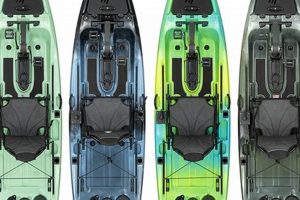
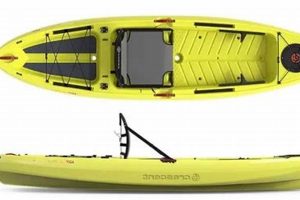
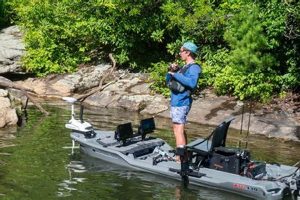
The elastic material used in landing nets designed for kayak angling is crucial for both fish and angler safety. This specialized netting material, often composed of latex or similar polymers, offers flexibility and durability in the compact environment of a kayak. Its elasticity allows for a gentler handling of captured fish, minimizing stress and potential injury during the landing and release process. This type of netting also tends to be more resistant to tearing and abrasion from hooks and sharp fish features. A common example is a coated, knotless mesh that retains its shape and strength even after repeated use and exposure to saltwater.
Historically, natural materials like cotton or linen were employed in fishing nets. However, these materials absorb water, adding significant weight and becoming less manageable in a kayak setting. They are also prone to rot and degradation. Modern, synthetic elastics provide a lightweight and robust alternative. This shift has contributed significantly to improved fish handling practices, particularly in catch-and-release fisheries, while also enhancing the overall efficiency and enjoyment of kayak fishing. The non-absorbent nature of the material prevents unpleasant odors and simplifies cleaning and maintenance.
The following sections delve deeper into specific aspects of selecting and maintaining appropriate netting for kayak fishing, including material choices, mesh sizes, and net designs best suited for this specialized angling approach. Furthermore, proper care and storage techniques will be explored to ensure the longevity and effectiveness of kayak fishing nets.
Tips for Selecting and Maintaining Kayak Fishing Nets
Appropriate net selection and maintenance are critical for successful and responsible kayak angling. These tips provide guidance on choosing and caring for suitable netting material.
Tip 1: Prioritize Durable, Knotless Mesh: Knotless mesh netting minimizes the chances of fish hooks becoming entangled, facilitating quicker releases and reducing fish stress. Durability is essential for resisting abrasion and tears.
Tip 2: Consider a Rubberized Coating: A rubberized coating enhances grip, protecting the netting from damage caused by sharp fish spines and teeth. It also aids in preventing unpleasant odors and simplifies cleaning.
Tip 3: Opt for a Smaller Net Size: Kayak fishing often involves limited space. A smaller net is easier to maneuver and store, making it ideal for the compact environment of a kayak.
Tip 4: Choose a Teardrop or Folding Net Design: Teardrop and folding nets further optimize space efficiency, collapsing easily for storage when not in use.
Tip 5: Rinse the Net Thoroughly After Each Use: Rinsing the net with freshwater after each fishing trip removes salt, debris, and odors, extending the lifespan of the material.
Tip 6: Dry the Net Completely Before Storage: Proper drying prevents mildew and bacterial growth, preserving the net’s integrity and preventing unwanted smells.
Tip 7: Inspect the Net Regularly for Damage: Periodically check for tears, loose strands, or damage to the coating. Address any issues promptly to prevent further deterioration and ensure continued effectiveness.
By following these tips, anglers can ensure their netting material contributes to efficient, enjoyable, and responsible kayak fishing practices, promoting both angler convenience and fish welfare.
The subsequent sections offer additional resources and product recommendations for kayak fishing nets.
1. Durability
Durability represents a critical characteristic of effective kayak fishing net rubber. The demanding environment of kayak angling, characterized by limited space, potential contact with abrasive surfaces, and exposure to saltwater, necessitates a robust netting material. Durable rubberized netting resists tearing, puncturing, and general wear, ensuring the net remains functional over extended periods. This longevity reduces the need for frequent replacements, representing both an economic and environmental advantage. For example, a durable rubber net can withstand the impact of a struggling fish without tearing, maintaining its structural integrity and ensuring a secure capture. Conversely, less durable netting materials might fail under such stress, potentially leading to lost catches and environmental harm if discarded netting fragments pollute the waterway.
The practical significance of net durability extends beyond the immediate act of landing a fish. A durable net also contributes to efficient fish handling and release. The quick and secure retrieval facilitated by a robust net minimizes stress on the captured fish, contributing to its well-being, especially in catch-and-release scenarios. Furthermore, a durable net’s resistance to abrasion prevents tangling and damage from hooks and sharp fish features, further expediting the release process. This aspect also protects the angler from potential injuries during handling. A robust, rubberized net material maintains its effectiveness even after repeated exposure to sunlight and saltwater, elements known to degrade less resistant materials.
The durability of kayak fishing net rubber directly correlates with its overall value and utility. Investing in a net constructed from high-quality, durable rubberized materials ultimately benefits both the angler and the environment. Reduced replacement frequency minimizes costs and waste, while the robust netting facilitates responsible fish handling, promoting conservation efforts and contributing to sustainable angling practices. The inherent challenges of the kayak fishing environment underscore the paramount importance of net durability as a key factor in equipment selection.
2. Flexibility

Flexibility in kayak fishing net rubber contributes significantly to both ease of use and fish safety. A flexible net adapts readily to the confined space of a kayak, simplifying storage and deployment. This adaptability also minimizes the risk of accidental entanglement with other gear or the kayak itself. Moreover, the give of a flexible net reduces stress on the captured fish during landing and handling, promoting safe and responsible catch-and-release practices.
- Compact Storage
Flexible netting compresses easily, allowing for compact storage within the limited space of a kayak. This characteristic is essential for maintaining a clutter-free and efficient fishing environment. For example, a flexible net can be folded or rolled, minimizing its footprint and maximizing available storage space for other essential gear. This contrasts sharply with rigid nets that occupy valuable space and can impede movement within the kayak.
- Ease of Deployment and Retrieval
The flexibility of the netting allows for quick and easy deployment and retrieval, crucial in the dynamic environment of kayak fishing. A flexible net can be swiftly extended to secure a catch and then retracted just as easily for storage. This seamless transition minimizes disruption and maximizes fishing time. Furthermore, the pliable nature of the net reduces the likelihood of snagging on the kayak or surrounding objects during deployment and retrieval, contributing to efficient handling.
- Reduced Fish Stress
A flexible net conforms to the shape of the fish, cushioning its impact and minimizing stress during the landing process. This gentle handling reduces the risk of injury to the fish, particularly important for delicate species. This characteristic is essential for ethical catch-and-release practices, ensuring the fish is returned to the water in good condition. The yielding nature of the net also provides a more secure hold, reducing the likelihood of the fish escaping during handling.
- Adaptability to Different Fish Sizes
The inherent flexibility of the rubberized netting allows the net to accommodate a range of fish sizes effectively. The net stretches to accommodate larger catches while still providing adequate support for smaller fish, ensuring a secure hold regardless of size. This adaptability eliminates the need for multiple nets, further optimizing space and efficiency on a kayak.
The inherent flexibility of rubberized kayak fishing nets significantly enhances the overall angling experience. From simplified storage and efficient handling to reduced fish stress and adaptability to diverse catches, flexibility represents a crucial factor in net selection for kayak anglers. The confluence of these benefits underscores the essential role of flexibility in promoting both angler convenience and responsible fishing practices.
3. Fish-friendly
Fish-friendly design in kayak fishing nets, particularly regarding the rubberized netting material, represents a critical aspect of responsible angling. This approach prioritizes minimizing harm to captured fish, promoting healthy fish populations and sustainable fishing practices. The properties of the rubberized netting material directly influence its fish-friendliness. Specifically, soft, knotless rubber mesh reduces the likelihood of scale loss, fin damage, and entanglement, common issues with traditional netting materials. This gentle handling minimizes stress and injury, promoting quick recovery and survival, especially in catch-and-release scenarios. For example, a trout caught in a rubberized, knotless net experiences significantly less abrasion and stress compared to one caught in a coarse, knotted net. This reduction in trauma contributes to the fish’s overall health and ability to thrive upon release.
The practical implications of fish-friendly net design extend beyond immediate fish welfare. Reduced handling time, facilitated by the smooth, non-abrasive nature of the rubber netting, minimizes air exposure and stress for the fish. This rapid release process contributes to higher post-release survival rates. Furthermore, the non-absorbent properties of rubberized netting prevent the spread of harmful bacteria and parasites between fish, promoting overall ecosystem health. Consider a scenario where an angler catches and releases multiple fish in quick succession. A fish-friendly rubber net minimizes the risk of cross-contamination, contributing to the health of the entire fish population.
Choosing fish-friendly rubberized netting demonstrates a commitment to ethical angling practices and long-term fishery sustainability. While the initial investment in high-quality, fish-friendly netting might be slightly higher, the long-term benefits outweigh the costs. Reduced fish mortality and improved ecosystem health contribute to a thriving fishery, ensuring future angling opportunities. Ultimately, prioritizing fish-friendly gear benefits both the individual angler and the broader angling community. This approach aligns with conservation principles and underscores the importance of responsible stewardship of aquatic resources.
4. Corrosion Resistance
Corrosion resistance represents a critical factor in the longevity and performance of kayak fishing net rubber. The constant exposure to saltwater, a highly corrosive environment, necessitates netting materials that can withstand degradation. Corrosion weakens the net, compromising its structural integrity and leading to premature failure. A corrosion-resistant rubberized net maintains its strength and functionality over extended periods, ensuring reliable performance and minimizing the need for frequent replacements. This durability contributes to both economic efficiency and environmental responsibility by reducing waste.
- Material Selection
The choice of rubber material significantly influences corrosion resistance. High-quality synthetic rubbers, specifically formulated for marine environments, exhibit superior resistance to saltwater degradation compared to natural rubber or lower-grade synthetics. For instance, neoprene and EPDM (ethylene propylene diene monomer) rubber demonstrate excellent resistance to saltwater, UV radiation, and ozone, contributing to extended net lifespan in harsh conditions. Choosing a net constructed with these materials ensures long-term durability and minimizes the environmental impact associated with frequent net replacement.
- Protective Coatings
Specialized coatings applied to the rubber netting further enhance corrosion resistance. These coatings act as a barrier, preventing direct contact between the rubber and corrosive elements. For example, a UV-resistant coating not only protects against sun damage but also provides an additional layer of defense against saltwater corrosion. Similarly, a hydrophobic coating repels water, minimizing the duration of saltwater contact and further reducing the potential for corrosion. These coatings contribute to the overall longevity and performance of the net, even in demanding marine environments.
- Hardware Considerations
Corrosion resistance extends beyond the netting material itself. The metal components of the net, such as the frame and handle, also require corrosion-resistant properties. Materials like anodized aluminum or stainless steel offer superior resistance to rust and degradation compared to untreated metals. For example, a stainless steel frame maintains its structural integrity even after prolonged exposure to saltwater, ensuring the net remains functional and safe to use. Careful consideration of hardware materials contributes to the overall durability and longevity of the kayak fishing net.
- Maintenance Practices
Proper maintenance practices play a crucial role in preserving the corrosion resistance of kayak fishing nets. Thoroughly rinsing the net with freshwater after each use removes residual salt and other corrosive substances, minimizing the potential for long-term damage. Allowing the net to dry completely before storage further inhibits corrosion and prevents the growth of mildew or bacteria. These simple yet effective maintenance practices contribute significantly to extending the lifespan of the net and maintaining its performance over time. Neglecting these practices can accelerate corrosion, compromising the net’s integrity and necessitating premature replacement.
The corrosion resistance of a kayak fishing net directly impacts its usability, lifespan, and overall value. Investing in a net constructed from corrosion-resistant materials and incorporating appropriate maintenance practices ensures long-term performance and minimizes environmental impact. This approach reflects a commitment to both practical efficiency and responsible resource management, essential considerations for any dedicated kayak angler.
5. Easy Cleaning

Maintaining the cleanliness of kayak fishing net rubber is essential for both hygiene and equipment longevity. The ease of cleaning directly influences angler convenience and the net’s overall lifespan. Simplified cleaning processes encourage regular maintenance, preventing the buildup of odor-causing bacteria, fish slime, and saltwater residue, which can degrade the net material over time. This section explores the key aspects that contribute to easy cleaning in kayak fishing nets.
- Non-Absorbent Material
The non-absorbent nature of rubberized netting prevents the material from retaining water, fish slime, and odors. This characteristic simplifies the cleaning process considerably. Unlike traditional netting materials that absorb and retain these substances, rubberized netting allows for easy rinsing and quick drying, preventing the growth of mildew and bacteria. For example, a quick rinse with freshwater after each use effectively removes most debris and residue from a rubberized net, minimizing cleaning time and effort. Conversely, a net made of absorbent material would require more extensive cleaning and drying to prevent unpleasant odors and material degradation.
- Smooth Surface
The smooth surface of rubberized netting further contributes to easy cleaning. Debris and fish slime do not readily adhere to the smooth material, simplifying removal. A simple wipe or rinse effectively cleans the net, minimizing the need for scrubbing or harsh cleaning agents. This characteristic contrasts sharply with rough or textured materials, which can trap debris and require more vigorous cleaning methods. The smooth surface also inhibits the growth of microorganisms by providing fewer crevices for them to colonize, further contributing to hygiene and ease of maintenance.
- Resistance to Staining
Rubberized netting typically exhibits resistance to staining from fish blood, bait residue, and other common fishing-related substances. This characteristic maintains the net’s appearance and prevents the absorption of potentially harmful chemicals or bacteria often present in these staining agents. Resistance to staining also simplifies cleaning, as stubborn stains do not require specialized cleaning products or extensive scrubbing. This contributes to the net’s longevity by reducing the need for harsh cleaning methods that could degrade the material over time.
- Quick-Drying Properties
The quick-drying properties of rubberized netting further contribute to its ease of cleaning and overall hygiene. Rapid drying minimizes the time the net remains damp, inhibiting the growth of mildew and bacteria, which thrive in moist environments. This characteristic also allows for quicker storage after cleaning, essential for the limited space available in a kayak. The quick-drying nature of the material reduces the likelihood of unpleasant odors developing, ensuring the net remains fresh and ready for the next fishing trip.
The ease of cleaning associated with rubberized kayak fishing nets significantly enhances their practicality and longevity. By minimizing cleaning time and effort, these nets encourage regular maintenance, preventing the buildup of harmful substances and preserving the material’s integrity. This ease of care contributes to a more hygienic and enjoyable fishing experience, further solidifying the value of rubberized netting in the context of kayak angling.
6. Knotless Construction
Knotless construction represents a significant advancement in kayak fishing net design, particularly when combined with rubberized netting materials. Traditional knotted nets, while functional, present several drawbacks in the context of kayak fishing. Knots create points of weakness in the net, increasing the likelihood of tears and snags, especially when handling fish with sharp fins or spines. Furthermore, knots can abrade the delicate skin of captured fish, increasing the risk of injury and infection. Knotless construction eliminates these issues, resulting in a stronger, more fish-friendly net. The smooth, continuous strands of a knotless net minimize the potential for damage to both fish and the net itself, contributing to a more ethical and efficient fishing experience. For example, a hooked fish thrashing in a knotted net might easily tear the mesh at a knot, leading to escape and potential harm to the fish from the remaining netting. In contrast, a knotless net distributes the force more evenly, reducing the risk of tearing and facilitating a smoother, safer release.
The combination of knotless construction and rubberized materials further enhances the benefits of each. Rubberized netting, inherently flexible and durable, complements the smooth, snag-free nature of knotless construction. This synergy creates a net that is both gentle on fish and resistant to damage. The practical implications are significant. Reduced handling time, facilitated by the snag-free design, minimizes stress on the captured fish, contributing to higher post-release survival rates. Furthermore, the increased durability of the net translates to a longer lifespan, reducing the need for frequent replacements and minimizing environmental impact. Consider a scenario where an angler frequently targets species with sharp teeth or spines. A knotless, rubberized net would offer significantly greater protection against damage compared to a traditional knotted net, ensuring consistent performance and minimizing the risk of gear failure at a critical moment.
Knotless construction in kayak fishing nets, particularly when combined with rubberized materials, represents a significant advancement in angling technology. This design feature directly addresses the challenges associated with traditional knotted nets, promoting fish welfare, enhancing net durability, and improving overall angling efficiency. The practical benefits of this approach extend beyond the individual angler, contributing to sustainable fishing practices and the long-term health of fish populations. Understanding the advantages of knotless construction empowers anglers to make informed equipment choices that align with both performance goals and ethical considerations. This knowledge underscores the importance of continuous improvement in fishing gear design, driven by a commitment to both angling success and environmental responsibility.
Frequently Asked Questions about Kayak Fishing Net Rubber
This section addresses common inquiries regarding the specialized rubber netting used in kayak fishing nets, clarifying key aspects and dispelling potential misconceptions.
Question 1: What distinguishes kayak fishing net rubber from standard fishing net material?
Kayak fishing net rubber is typically formulated for enhanced flexibility and durability, crucial in the confined environment of a kayak. It often features a knotless construction for increased fish-friendliness and resistance to tearing. Specialized coatings may also be applied to enhance resistance to saltwater corrosion and UV degradation.
Question 2: Why is knotless netting preferred for kayak fishing?
Knotless netting minimizes the risk of fish becoming entangled and reduces the likelihood of the net tearing under stress. It also protects the fish’s delicate skin and slime coat, promoting healthier releases. The smooth surface of knotless netting also facilitates easier cleaning and prevents the buildup of odors and bacteria.
Question 3: How does the flexibility of the rubber contribute to kayak fishing?
Flexibility allows for compact storage and easy deployment within the limited space of a kayak. A flexible net is also less likely to snag on gear or the kayak itself. Furthermore, it conforms to the shape of the fish during landing, reducing stress and minimizing the risk of injury.
Question 4: What maintenance practices are recommended for rubberized kayak fishing nets?
Rinsing the net thoroughly with freshwater after each use is crucial. Allowing the net to dry completely before storage prevents mildew and bacterial growth. Regular inspection for tears or damage is also recommended. Avoid storing the net in direct sunlight or extreme temperatures.
Question 5: Does rubberized netting pose any environmental concerns?
High-quality rubberized netting, particularly when sourced from reputable manufacturers, poses minimal environmental risk. The durability of these nets reduces the need for frequent replacements, minimizing waste. Responsible disposal practices are nonetheless crucial. Recycling options should be explored whenever available.
Question 6: How does the rubberized coating affect fish handling?
The rubberized coating enhances grip, facilitating secure handling of the fish. It also protects the netting material from damage caused by sharp fins, teeth, or hooks. The smooth coating reduces friction, minimizing abrasion and stress on the fish’s skin during landing and release.
Understanding these key aspects of kayak fishing net rubber contributes to informed equipment selection and promotes responsible angling practices. Prioritizing fish welfare, equipment durability, and ease of use ensures a positive and sustainable kayak fishing experience.
The following section explores specific product recommendations and reviews to aid in the selection of an appropriate kayak fishing net.
Conclusion
Effective kayak angling necessitates specialized equipment choices. This exploration of the properties and benefits of specialized netting materials highlights the crucial role of durable, flexible, fish-friendly rubberized construction in promoting both successful fishing and responsible conservation practices. Key attributes discussed include corrosion resistance, ease of cleaning, and the advantages of knotless designs. These factors contribute significantly to net longevity, efficient fish handling, and minimized environmental impact.
Investing in high-quality netting optimized for kayak fishing represents a commitment to both angling success and the long-term health of aquatic ecosystems. Careful consideration of material properties, construction techniques, and maintenance practices ensures optimal performance and contributes to a sustainable approach to this increasingly popular angling discipline. The confluence of these factors empowers anglers to make informed decisions that benefit both present fishing endeavors and the future of the sport.