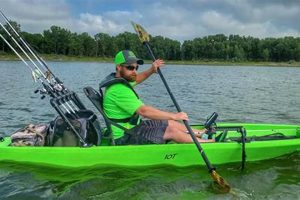
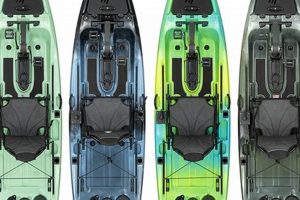
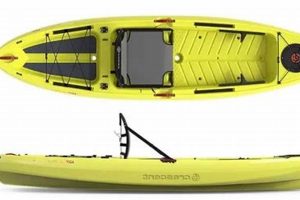
A 10-foot kayak designed for fishing often incorporates features like rod holders, tackle storage, and a stable hull for casting and reeling. Such vessels are typically lightweight and maneuverable, suitable for various water conditions, from calm lakes to slow-moving rivers. They provide anglers with a platform to access fishing spots otherwise difficult to reach from shore or larger boats.
Smaller fishing kayaks offer distinct advantages, including portability and affordability. Their reduced size simplifies transportation and storage, making them appealing to individuals with limited space or those who frequently travel to different fishing locations. Furthermore, these kayaks are generally less expensive than larger motorized boats or even larger kayaks, reducing the financial barrier to entry for aspiring anglers. Historically, smaller watercraft have played a vital role in fishing cultures worldwide, and the modern iteration in the form of a specialized fishing kayak continues that tradition with enhanced design and materials.
This discussion will further explore key considerations related to selecting, outfitting, and utilizing this type of kayak, including factors like hull design, propulsion options, essential accessories, and popular fishing techniques applicable to these versatile vessels.
Tips for Fishing from a 10-Foot Kayak
Effective angling from a compact kayak requires careful planning and execution. The following tips offer guidance for maximizing success and safety on the water.
Tip 1: Prioritize Stability: Selecting a kayak with a wider, flatter hull enhances stability, especially crucial when casting, fighting fish, or navigating challenging conditions.
Tip 2: Optimize Gear Storage: Efficient organization of tackle and equipment within the limited space of a smaller kayak is essential. Utilize specialized storage solutions and prioritize essential items.
Tip 3: Master Kayak Control: Practice paddling and maneuvering the kayak effectively before venturing into fishing areas. This ensures efficient navigation and precise positioning.
Tip 4: Choose Appropriate Fishing Techniques: Certain techniques, like trolling or casting lightweight lures, are particularly well-suited to smaller kayaks due to their maneuverability and shallower draft.
Tip 5: Emphasize Safety Precautions: Always wear a personal flotation device (PFD) and carry essential safety gear, including a whistle, signaling device, and first-aid kit. Inform someone of the fishing location and estimated return time.
Tip 6: Respect the Environment: Practice catch-and-release whenever possible and adhere to all local fishing regulations. Minimize environmental impact by properly disposing of waste and avoiding sensitive habitats.
Tip 7: Adapt to Weather Conditions: Check weather forecasts before embarking on a fishing trip. Be prepared for changing conditions and understand potential hazards like wind, rain, or temperature fluctuations.
By adhering to these guidelines, anglers can enhance both their fishing success and overall safety while enjoying the unique advantages of a 10-foot fishing kayak.
These tips offer a starting point for anglers embarking on fishing expeditions from a 10-foot kayak. Further research and experience will refine these skills and contribute to a rewarding and safe experience on the water.
1. Stability

Stability forms a cornerstone of effective angling from a 10-foot kayak, particularly when employing lure fishing techniques. A stable platform allows for precise casting, controlled retrieval, and secure hooksets, maximizing the chances of landing a fish. Conversely, instability compromises accuracy, potentially leading to missed strikes or tangled lines. Furthermore, a stable kayak provides a safer environment when battling larger fish, reducing the risk of capsizing or losing balance. The direct relationship between stability and angling success underscores its critical importance in kayak selection and utilization.
Consider the scenario of casting a lure near submerged structures. A stable kayak permits precise placement of the lure in the target zone, increasing the likelihood of enticing a strike. In contrast, an unstable platform may cause the angler to overcompensate, resulting in inaccurate casts and reduced effectiveness. Similarly, when fighting a fish, stability becomes paramount. A stable kayak allows the angler to focus on playing the fish, while an unstable one necessitates constant adjustments to maintain balance, potentially leading to a lost fish or even a capsize. Practical examples like these highlight the tangible benefits of stability in a 10-foot fishing kayak designed for lure fishing.
In summary, stability stands as a non-negotiable feature for successful lure fishing from a compact kayak. It directly influences casting accuracy, fish-fighting control, and overall safety on the water. Understanding the fundamental importance of stability empowers anglers to make informed decisions regarding kayak selection and technique, ultimately maximizing their fishing experience while mitigating potential risks.
2. Maneuverability

Maneuverability represents a critical attribute of a 10-foot fishing kayak, particularly within the context of lure fishing. Effective lure presentation often necessitates precise boat control to navigate complex shorelines, weave through submerged structures, or position the kayak optimally for casting and retrieval. A highly maneuverable kayak allows anglers to exploit these opportunities, accessing areas often inaccessible to larger, less agile vessels. This ability to navigate tight spaces or quickly reposition the kayak significantly enhances fishing effectiveness.
Consider navigating a narrow, winding creek choked with fallen logs. A highly maneuverable kayak allows the angler to negotiate these obstacles with ease, reaching prime fishing locations upstream. Conversely, a less maneuverable kayak restricts access, limiting fishing opportunities and potentially requiring laborious portages. In open water scenarios, maneuverability enables quick adjustments to changing wind or current conditions, maintaining optimal casting angles and lure presentation. Such dynamic control proves invaluable when targeting specific fish-holding structures or reacting to sudden fish activity.
In conclusion, maneuverability stands as a key factor influencing the efficacy of lure fishing from a 10-foot kayak. The ability to precisely control the kayak’s position and direction directly impacts access to fishing locations, lure presentation, and overall angling success. Prioritizing maneuverability during kayak selection equips anglers with a versatile tool for exploring diverse aquatic environments and maximizing their chances of a successful catch.
3. Storage Capacity

Adequate storage capacity represents a critical aspect of a 10-foot fishing kayak designed for lure fishing. Efficient organization and accessibility of tackle, gear, and safety equipment directly impacts angling efficiency and overall safety on the water. Limited storage can hinder lure selection, compromise tackle management, and restrict the angler’s ability to adapt to changing fishing conditions or respond to emergencies. Therefore, careful consideration of storage solutions within the constraints of a compact kayak is essential for a successful and safe fishing experience.
- Tackle Organization
Effective tackle organization within a 10-foot kayak optimizes lure retrieval and replacement, minimizing downtime during critical fishing moments. Dedicated compartments for various lure types, hooks, weights, and tools prevent tangling and facilitate quick access to essential items. For example, employing waterproof tackle boxes or trays with adjustable dividers allows for customized organization tailored to specific fishing techniques and target species. This streamlined approach ensures that anglers can quickly switch lures or adjust their rigs without disrupting the flow of their fishing session. Inefficient tackle storage, on the other hand, can lead to frustration, lost time, and missed opportunities.
- Gear Storage
Beyond tackle, essential gear such as safety equipment, electronics, and personal items must be securely and accessibly stored. Designated compartments for a first-aid kit, signaling devices, and spare batteries maintain readiness in case of emergencies. Examples include waterproof bags or hatches for storing electronics, and strategically placed bungee cords or straps for securing paddles and rods. Efficient gear storage maximizes space utilization and ensures critical items are readily available when needed.
- Space Management
Maximizing limited space is paramount in a 10-foot kayak. Thoughtful storage solutions preserve onboard space for comfortable seating, casting, and fish handling. Utilizing vertical storage options, such as rod holders and tackle mounts, frees up deck space and minimizes clutter. Careful consideration of storage placement also balances weight distribution, contributing to kayak stability and performance.
- Kayak Selection
Evaluating storage options forms a key component of the kayak selection process. Considering the type, size, and placement of storage compartments, along with the overall kayak design, ensures compatibility with individual fishing styles and anticipated needs. Prioritizing storage capacity aligns with the angler’s specific requirements and contributes significantly to overall fishing success and enjoyment. For example, an angler specializing in topwater lures might prioritize readily accessible storage for a variety of surface lures, while an angler targeting bottom-dwelling species might prioritize storage for heavier jigs and sinkers.
In summary, thoughtful consideration of storage capacity is an integral component of optimizing a 10-foot fishing kayak for lure fishing. Efficient storage solutions directly influence tackle management, gear accessibility, and overall on-the-water performance. By carefully assessing their specific needs and selecting a kayak with appropriate storage features, anglers enhance their efficiency, safety, and overall fishing experience.
4. Casting Platform

The casting platform of a 10-foot fishing kayak directly influences angling effectiveness, particularly when employing lure-fishing techniques. A stable and ergonomically designed platform promotes accurate casting, efficient lure retrieval, and overall angler comfort. Understanding the key elements contributing to an effective casting platform is crucial for maximizing fishing success from a compact kayak.
- Stability
A stable casting platform minimizes unwanted movement during casting and retrieval, enhancing accuracy and control. Kayak design features, such as hull shape and seat positioning, contribute significantly to platform stability. A wider, flatter hull provides a more stable base, while a well-positioned seat ensures balance and minimizes rocking. For example, a kayak designed with a sit-on-top configuration and a wide, stable hull offers a superior casting platform compared to a narrower, less stable sit-inside model.
- Ergonomics
Ergonomic considerations play a vital role in casting platform design. Seat height, legroom, and the positioning of rod holders and other accessories influence casting comfort and efficiency. A comfortable and supportive seat minimizes fatigue during long fishing sessions, while ample legroom allows for freedom of movement during casting. Strategically placed rod holders keep rods within easy reach, facilitating quick and efficient lure changes. An example would be a kayak featuring an adjustable seat with lumbar support and ample legroom, combined with strategically positioned flush-mounted rod holders.
- Deck Space
Sufficient deck space around the casting platform facilitates unobstructed casting motion and provides ample room for maneuvering and landing fish. A cluttered deck can hinder casting accuracy and create safety hazards. For example, a kayak with a large, open deck provides ample space for casting, fighting fish, and storing essential gear within easy reach. Conversely, a cramped deck restricts movement and increases the risk of tangling lines or losing balance.
- Integration with Accessories
Seamless integration of accessories, such as rod holders, fish finders, and anchor trolleys, further enhances the functionality of the casting platform. Well-placed accessories streamline workflow and maximize efficiency. For instance, integrating a fish finder mount directly into the casting platform provides easy access to critical information without requiring awkward reaching or twisting. Similarly, strategically positioned rod holders keep rods secure and readily accessible, promoting quick lure changes and minimizing downtime.
In summary, the casting platform of a 10-foot lure fishing kayak represents a crucial element influencing angling success. Prioritizing stability, ergonomics, deck space, and accessory integration during kayak selection ensures a comfortable, efficient, and productive fishing experience. By carefully considering these factors, anglers can optimize their kayak setup to maximize their casting potential and enhance their overall enjoyment on the water.
5. Lightweight Design

Lightweight design constitutes a significant advantage for 10-foot fishing kayaks employed in lure fishing. Reduced weight simplifies transport and handling, expanding accessibility to diverse fishing locations. Consider the scenario of accessing a remote pond or lake requiring portage over uneven terrain. A lightweight kayak significantly eases transport compared to a heavier counterpart. This portability allows anglers to reach secluded fishing spots often inaccessible with bulkier vessels. Furthermore, lighter kayaks are easier to load and unload from vehicles, simplifying transport logistics and reducing physical strain. This ease of handling translates to more time spent fishing and less time wrestling with cumbersome equipment. The practical benefits of a lightweight design enhance overall fishing enjoyment and broaden the range of fishable waters.
Beyond portability, lightweight design also influences on-the-water performance. Reduced weight translates to improved maneuverability and paddling efficiency. A lighter kayak accelerates and decelerates more readily, allowing for quick adjustments to lure presentation and navigation through complex environments. This agility proves advantageous when navigating tight quarters, such as narrow creeks or weed-choked shorelines. Moreover, reduced weight requires less energy expenditure during paddling, conserving stamina for extended fishing trips and facilitating exploration of wider areas. Consider the scenario of paddling against a headwind or current. A lightweight kayak reduces the physical exertion required to maintain position and control, allowing anglers to focus on fishing rather than battling the elements. The performance benefits of lightweight design enhance both efficiency and enjoyment on the water.
In summary, lightweight design presents a compelling advantage for 10-foot fishing kayaks intended for lure fishing. The benefits extend beyond mere portability, encompassing improved maneuverability, increased paddling efficiency, and reduced physical strain. These advantages translate to greater access to fishing locations, enhanced on-the-water performance, and a more enjoyable overall fishing experience. Understanding the practical significance of lightweight design empowers anglers to make informed decisions when selecting a kayak and optimizing their approach to lure fishing. The interplay between weight, portability, and performance underscores the importance of this design element in maximizing angling effectiveness and enjoyment.
Frequently Asked Questions
This section addresses common inquiries regarding 10-foot kayaks designed for lure fishing, providing concise and informative responses to facilitate informed decision-making.
Question 1: What advantages does a 10-foot kayak offer for lure fishing compared to larger kayaks or boats?
Maneuverability in tight spaces, ease of transport and storage, and affordability often characterize 10-foot kayaks, making them attractive for anglers targeting areas inaccessible to larger craft.
Question 2: How does hull design impact lure fishing performance in a 10-foot kayak?
Hull design significantly influences stability and maneuverability. Wider, flatter hulls generally offer greater stability for casting and fighting fish, while narrower hulls enhance speed and maneuverability in open water or currents. Selecting a hull design depends on the intended fishing environment and angler preference.
Question 3: What essential features should one consider when selecting a 10-foot kayak for lure fishing?
Key features include rod holders, tackle storage compartments, a comfortable and stable seating arrangement, and sufficient deck space for casting and landing fish. The presence and configuration of these features directly influence angling efficiency and overall comfort.
Question 4: What safety precautions are paramount when lure fishing from a 10-foot kayak?
Wearing a personal flotation device (PFD) is crucial. Carrying essential safety gear, such as a whistle, signaling device, and first-aid kit, along with informing someone of the fishing location and estimated return time, further enhances safety. Checking weather forecasts before embarking and understanding potential hazards are also critical.
Question 5: How does one maximize storage efficiency in a 10-foot fishing kayak?
Utilizing waterproof tackle boxes and bags, employing vertical storage solutions like rod holders and tackle mounts, and strategically placing gear to optimize weight distribution are effective strategies. Prioritizing essential items and minimizing unnecessary equipment further enhances storage efficiency.
Question 6: What fishing techniques are best suited to a 10-foot lure fishing kayak?
Techniques like casting and trolling, especially with lighter lures, are well-suited to the maneuverability and shallower draft of these kayaks. Adapting techniques to the specific water conditions and target species maximizes fishing success.
Careful consideration of these frequently asked questions empowers anglers to make informed decisions, enhancing both fishing effectiveness and safety when utilizing a 10-foot kayak for lure fishing.
The subsequent section will delve into advanced techniques and specialized equipment for optimizing lure presentation and maximizing catch rates.
Conclusion
Exploration of 10-foot fishing kayaks optimized for lure fishing reveals the critical interplay of design elements like stability, maneuverability, storage capacity, casting platform design, and lightweight construction. These factors contribute significantly to angling effectiveness and overall experience. Careful consideration of these elements during kayak selection empowers anglers to choose vessels best suited to individual needs and target fishing environments. Understanding the practical implications of each design feature optimizes performance and contributes to a more rewarding fishing experience.
The evolution of fishing kayak design continues to refine these core elements. Advances in materials, construction techniques, and accessory integration promise further enhancements to stability, maneuverability, and overall functionality. As technology progresses, anglers can anticipate increasingly specialized and efficient 10-foot kayaks designed to maximize lure fishing success in diverse aquatic environments. The ongoing pursuit of optimized design underscores the enduring appeal and expanding potential of this versatile fishing platform.