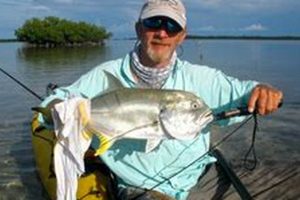
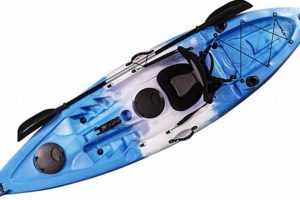
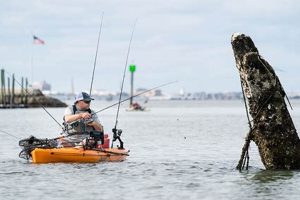
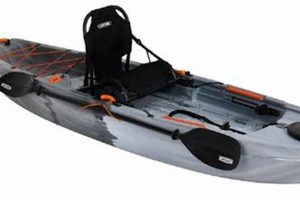
A specialized kayak designed for fishing and diving activities combines stability, maneuverability, and features tailored to these pursuits. Such vessels often include rod holders, anchor trolleys, storage for diving gear, and potentially even mounting points for fish finders or other electronics. They are typically constructed from durable, lightweight materials like polyethylene or composites, prioritizing both performance and longevity in marine environments.
The integration of fishing and diving capabilities within a single watercraft offers significant advantages. It streamlines equipment needs, eliminating the requirement for separate boats. This dual functionality provides greater flexibility on the water, allowing users to transition seamlessly between angling and underwater exploration. Historically, fishing and diving have been pursued independently, requiring separate vessels and logistical planning. The advent of specialized hybrid kayaks represents a significant advancement, enhancing efficiency and expanding recreational opportunities.
This exploration will further examine the key features, design considerations, and performance characteristics of these versatile watercraft. Specific topics will include material selection and construction techniques, stability and maneuverability in various water conditions, storage solutions for fishing and diving equipment, and the integration of specialized electronics and accessories.
Essential Guidance for Combined Kayak Fishing and Diving
Safe and successful combined kayak fishing and diving requires careful planning and execution. The following tips offer practical advice for maximizing enjoyment and mitigating potential risks.
Tip 1: Prioritize Stability: Select a kayak with a wide, stable hull specifically designed for fishing and diving activities. Added stability is crucial when entering and exiting the water with diving gear.
Tip 2: Master Kayak Control: Practice maneuvering the kayak effectively in various conditions before combining fishing and diving. Confident paddling and control are essential for safe navigation and retrieval of dive gear.
Tip 3: Streamline Equipment Storage: Organize and secure all fishing and diving equipment meticulously within the kayak. Proper storage minimizes clutter and prevents gear shifting during dives or while fighting fish.
Tip 4: Plan Dive Entry and Exit Strategies: Develop clear procedures for entering and exiting the water with diving gear. Consider using a dive ladder or other assistive devices for ease and safety.
Tip 5: Monitor Weather and Water Conditions: Check forecasts before each outing and avoid venturing out in unfavorable conditions. Sudden changes in weather or currents can significantly impact safety during both fishing and diving.
Tip 6: Employ Proper Dive Safety Protocols: Always dive with a buddy and follow established dive safety procedures. Carry appropriate signaling devices and inform someone onshore of dive plans.
Tip 7: Respect Marine Environments: Practice responsible anchoring and avoid disturbing marine life or sensitive habitats. Proper disposal of fishing line and other waste is essential.
Adhering to these guidelines enhances safety, improves efficiency, and minimizes environmental impact. Careful planning and preparation contribute significantly to a rewarding and enjoyable combined kayak fishing and diving experience.
By incorporating these tips, individuals can confidently and safely enjoy the unique benefits of combined fishing and diving from a kayak platform.
1. Stability

Stability is paramount in a kayak designed for combined fishing and diving, significantly impacting safety and performance. Entering and exiting the water while wearing diving gear presents a unique challenge, demanding a stable platform to prevent capsizing. Similarly, fighting a fish or navigating through chop requires a kayak that maintains equilibrium. A stable hull allows anglers to cast and reel effectively, minimizing the risk of losing balance. For divers, a stable platform facilitates smooth transitions into and out of the water, reducing the risk of equipment entanglement or other mishaps. Consider a scenario where a diver surfaces with a full catch bag; a stable kayak ensures a safe and controlled re-entry, preventing potential capsizing.
Several design elements contribute to kayak stability. A wider hull, a lower center of gravity, and strategically placed outriggers or pontoons enhance stability. Hull design plays a critical role, with flat-bottomed hulls providing greater initial stability while more rounded or V-shaped hulls offer superior secondary stability (resistance to tipping at greater angles). Weight distribution within the kayak also influences stability. Properly distributing gear and maintaining a balanced load optimizes performance and safety. For instance, placing heavier items lower in the kayak and closer to the center improves overall stability. Understanding these design principles and their impact on stability empowers informed choices.
Prioritizing stability is essential for maximizing both fishing and diving success. A stable kayak enhances safety, improves angling and diving performance, and provides greater confidence on the water. However, it’s crucial to balance stability with maneuverability. Excessively wide or stable kayaks can be challenging to paddle and maneuver, particularly in windy conditions or tight spaces. Therefore, selecting a kayak with the optimal balance of stability and maneuverability is crucial for a successful combined fishing and diving experience.
2. Storage Capacity

Ample storage capacity is a defining feature of specialized fishing and diving kayaks, directly impacting their utility and practicality. These kayaks must accommodate not only standard kayaking gear but also the specialized equipment required for both fishing and diving. Fishing necessitates storage for rods, reels, tackle boxes, bait, and potentially even a catch. Diving adds another layer of complexity, requiring space for fins, masks, snorkels, buoyancy compensators, dive weights, and potentially even underwater cameras or spearfishing gear. Insufficient storage capacity compromises efficiency and safety. A cluttered deck impedes movement and increases the risk of entanglement or equipment loss, especially during critical moments like entering or exiting the water for a dive. Consider a scenario where a tangled fishing line interferes with access to essential diving safety gear adequate storage mitigates such risks.
Several design features contribute to maximizing storage capacity in these specialized kayaks. Large, watertight hatches provide secure storage for sensitive electronics and other essential items. Recessed storage wells offer convenient access to frequently used gear while minimizing interference with paddling. Bungee cord systems secure items on deck for quick retrieval. Rod holders and specialized compartments for fishing gear further enhance organization. Innovative designs incorporate features like integrated tackle storage within arm’s reach of the angler. For divers, dedicated compartments for fins and other dive gear streamline preparation and minimize the risk of equipment damage. For example, a kayak might feature dedicated storage for dive weights, ensuring they are readily accessible yet securely stowed during transit.
Effective storage solutions are crucial for a seamless and enjoyable combined fishing and diving experience. Well-designed storage compartments maintain order, improve safety, and maximize efficiency on the water. Beyond simply providing space, effective storage solutions prioritize accessibility, security, and organization. This allows users to focus on the activities at hand, whether casting a line, exploring the underwater world, or simply enjoying the tranquility of the water. Ultimately, the ability to securely and efficiently manage equipment contributes significantly to a successful and rewarding outing.
3. Maneuverability
Maneuverability is a critical performance characteristic in kayaks designed for combined fishing and diving, directly influencing both efficiency and safety. These kayaks operate in diverse environments, from open water to shallow coves and potentially areas with submerged obstacles. Precise control and responsive handling are essential for navigating these varied conditions, particularly when carrying specialized fishing and diving equipment. Effective maneuverability enables anglers to position the kayak strategically for optimal casting and fish retrieval. Divers benefit from precise control when approaching and departing dive sites, especially in currents or challenging environments.
- Tracking and Turning Performance
Tracking refers to the kayak’s ability to maintain a straight course with minimal paddling input. Efficient tracking conserves energy and allows for more focused fishing or dive preparation. Turning performance dictates how quickly and responsively the kayak changes direction. Sharp turning capabilities are crucial for navigating tight spaces, avoiding obstacles, and maneuvering in currents. A kayak’s hull design, length, and keel configuration significantly influence both tracking and turning performance. For example, a longer kayak with a pronounced keel generally tracks better in open water, while a shorter, wider kayak with less keel offers superior maneuverability in confined areas.
- Influence of Wind and Current
Wind and current significantly impact kayak maneuverability. A kayak’s susceptibility to wind drift depends on its hull design, size, and above-water profile. Strong winds can push a kayak off course, requiring corrective paddling strokes and potentially compromising fishing or diving efforts. Currents present similar challenges, demanding precise paddling and maneuvering to maintain position or navigate effectively. Understanding how a particular kayak handles in varying wind and current conditions is essential for safe and efficient operation. For instance, a kayak with a higher profile may be more susceptible to wind drift compared to a lower-profile design.
- Impact of Weight Distribution
The distribution of weight within a kayak significantly influences its maneuverability. Unevenly distributed weight can create instability and affect tracking and turning performance. Properly balancing fishing and diving gear within the kayak is crucial for maintaining optimal maneuverability. Concentrating heavier items lower in the hull and closer to the center of gravity improves stability and responsiveness. Conversely, excessive weight at the bow or stern can hinder turning performance and increase susceptibility to wind and current. Consider a scenario where dive weights are improperly stowed at the stern, making the kayak less responsive and more challenging to turn.
- Paddle Selection and Technique
Paddle selection and technique also contribute to kayak maneuverability. A properly sized and shaped paddle enhances efficiency and control. Efficient paddling techniques, such as sweep strokes and draws, enable precise maneuvering in tight spaces and challenging conditions. Paddle length and blade shape influence both power and control. Longer paddles provide greater leverage for powerful strokes, while shorter paddles are better suited for quick maneuvering. Blade shape affects the efficiency of the stroke and the kayak’s responsiveness. For example, a symmetrical blade offers balanced performance for both forward and reverse paddling, while an asymmetrical blade may provide greater efficiency for forward strokes.
Maneuverability plays a vital role in the overall performance and safety of specialized fishing and diving kayaks. Selecting a kayak with appropriate maneuverability characteristics for the intended environment and usage enhances efficiency, improves safety, and contributes to a more enjoyable experience on the water. Balancing maneuverability with stability and storage capacity ensures a versatile and practical platform for combined fishing and diving pursuits.
4. Equipment Mounting

Effective equipment mounting is essential for optimizing functionality and efficiency in specialized fishing and diving kayaks. Secure and accessible mounting systems accommodate various accessories, enhancing both angling and diving experiences. Strategic placement of mounts minimizes interference with paddling and maximizes utility. Understanding the nuances of equipment mounting contributes significantly to a streamlined and productive on-water experience.
- Rod Holders
Rod holders provide secure storage for fishing rods, freeing hands for paddling, maneuvering, and other tasks. Various rod holder types exist, including flush-mount, adjustable, and rotating designs. Selecting appropriate rod holders depends on fishing style and target species. For instance, trolling requires sturdy rod holders capable of withstanding the pressure of a fighting fish, while fly fishing may benefit from adjustable holders that facilitate casting. Properly positioned rod holders enhance fishing efficiency and minimize the risk of rod entanglement or loss.
- Electronics Mounts
Electronics mounts accommodate fish finders, GPS units, and other electronic devices crucial for navigation and fish identification. Secure mounting systems ensure electronics remain stable and accessible, even in rough conditions. Mount placement considers visibility, accessibility, and minimizing interference with paddling. For example, a fish finder mount positioned near the cockpit provides easy viewing without obstructing paddling strokes. Secure and strategically placed electronics mounts enhance situational awareness and improve fishing success.
- Gear Tracks and Mounting Rails
Gear tracks and mounting rails offer versatile mounting solutions for various accessories, including cameras, lights, and dive gear. These systems allow for customized equipment placement based on individual needs and preferences. Tracks and rails provide flexibility to adjust equipment positioning for optimal accessibility and functionality. For example, a gear track can accommodate a camera mount for capturing underwater footage or a dive flag holder for enhanced visibility. The adaptability of these systems enhances the kayak’s versatility for diverse fishing and diving activities.
- Dive Gear Attachment Points
Dedicated attachment points secure dive gear, such as tanks, buoyancy compensators, and dive flags, keeping equipment organized and accessible. Securely attaching dive gear minimizes clutter on the deck and prevents equipment shifting during dives or while paddling. Specialized attachment points designed for specific dive gear enhance safety and streamline dive preparation. For instance, dedicated tank straps secure dive tanks firmly in place, preventing movement and potential entanglement. Strategically positioned attachment points contribute to a safer and more efficient diving experience.
Effective equipment mounting solutions are essential for maximizing the functionality and versatility of fishing and diving kayaks. Securely mounted equipment enhances safety, improves efficiency, and contributes to a more enjoyable and productive on-water experience. Properly chosen and installed mounting systems optimize the kayak’s adaptability for diverse fishing and diving pursuits. By carefully considering equipment mounting needs and selecting appropriate solutions, individuals can customize their kayaks to perfectly match their specific requirements and preferences.
5. Material Durability
Material durability is a critical factor influencing the longevity and performance of kayaks designed for combined fishing and diving activities. These specialized kayaks face unique challenges, encountering harsh marine environments, potential impacts with submerged objects, and the abrasive effects of saltwater and sand. Durable construction ensures the kayak withstands these rigors, maintaining structural integrity and providing reliable performance over extended periods. Selecting appropriate materials directly impacts the kayak’s resistance to punctures, abrasion, UV degradation, and other forms of wear and tear. For instance, a kayak constructed from high-density polyethylene (HDPE) exhibits excellent impact resistance, making it suitable for navigating rocky shorelines or shallow waters. Conversely, a kayak made from a less durable material might be prone to cracking or damage under similar conditions.
The choice of materials influences not only the kayak’s structural integrity but also its overall weight and performance. Lightweight yet durable materials contribute to easier transport and improved paddling efficiency. Heavier materials can negatively impact maneuverability and increase fatigue, particularly during longer outings. Furthermore, material selection affects the kayak’s resistance to UV degradation, a crucial factor for maintaining color and preventing material weakening over time. Consider a brightly colored kayak frequently exposed to sunlight; UV-resistant materials prevent fading and maintain the kayak’s aesthetic appeal while preserving its structural integrity. The practical significance of material durability extends beyond mere longevity; it directly impacts the kayak’s overall performance, safety, and enjoyment on the water.
In conclusion, material durability stands as a pivotal consideration in the design and selection of specialized fishing and diving kayaks. Choosing durable materials safeguards against potential damage, enhances longevity, and ensures reliable performance in demanding environments. Understanding the properties of different kayak construction materials empowers informed decisions, aligning material choice with intended usage and environmental conditions. This, in turn, contributes to a safer, more enjoyable, and ultimately more rewarding experience for those pursuing the combined thrills of fishing and diving from a kayak platform. Balancing durability with weight, performance characteristics, and cost considerations remains a key challenge in kayak design. Further research and development in materials science promise continued advancements in kayak construction, leading to even more durable, lightweight, and high-performing vessels for specialized applications.
Frequently Asked Questions
This section addresses common inquiries regarding kayaks designed for combined fishing and diving.
Question 1: What key features distinguish a fishing and diving kayak from a standard recreational kayak?
Specialized fishing and diving kayaks prioritize stability, storage capacity, and specialized mounting systems. They often feature wider hulls, dedicated storage compartments for fishing and diving gear, and mounting points for rod holders, fish finders, and other accessories. These features enhance functionality and safety for combined fishing and diving activities.
Question 2: How does one choose the appropriate size and weight capacity for a combined fishing and diving kayak?
Kayak size and weight capacity selection depends on individual body weight, gear requirements, and intended usage. Larger kayaks offer greater stability and storage but may be less maneuverable. Weight capacity should accommodate the combined weight of the paddler, fishing and diving equipment, and any potential catch. Exceeding the weight capacity compromises stability and performance.
Question 3: What safety precautions are essential when combining fishing and diving from a kayak?
Essential safety precautions include wearing a personal flotation device, carrying signaling devices, informing someone of planned activities, checking weather conditions, and adhering to established diving safety protocols. Diving with a buddy is crucial, and proper storage and accessibility of safety equipment are paramount.
Question 4: Are there specific regulations or licensing requirements for kayak fishing and diving?
Regulations regarding kayak fishing and diving vary by location. Researching and adhering to local regulations, including fishing licenses and permits, is essential. Some areas may have specific restrictions on fishing or diving practices, requiring specialized certifications or adherence to designated zones.
Question 5: What maintenance considerations apply to kayaks used for both fishing and diving?
Regular rinsing with freshwater after each use, particularly in saltwater environments, is crucial for preventing corrosion and extending kayak lifespan. Inspecting and maintaining hardware, such as rod holders and mounting systems, ensures continued functionality and safety. Proper storage, protected from direct sunlight and extreme temperatures, preserves material integrity.
Question 6: How does one effectively organize and store fishing and diving gear within a specialized kayak?
Utilizing waterproof bags and containers protects sensitive electronics and other essential items from water damage. Distributing weight evenly within the kayak enhances stability and performance. Securing gear with bungee cords or straps prevents shifting during transit or while on the water. Designated compartments for specific items, such as fishing tackle or dive weights, improve organization and accessibility.
Careful consideration of these frequently asked questions enhances understanding and promotes informed decisions regarding the selection, use, and maintenance of kayaks designed for combined fishing and diving activities. Prioritizing safety and adhering to best practices ensures enjoyable and productive experiences on the water.
Further exploration of specialized kayak features, accessories, and advanced techniques can enhance performance and safety for combined fishing and diving adventures.
Cobra Fish N Dive Kayak
Specialized kayaks designed for combined fishing and diving represent a significant advancement in watersport versatility. Careful consideration of stability, storage, maneuverability, equipment mounting, and material durability is crucial for selecting and effectively utilizing these specialized craft. Prioritizing these elements ensures optimal performance, safety, and enjoyment on the water. A well-equipped and properly maintained fishing and diving kayak expands recreational opportunities, enabling seamless transitions between angling and underwater exploration.
The integration of fishing and diving capabilities within a single platform offers unique advantages for enthusiasts seeking to maximize their time on the water. Continued innovation in kayak design and materials promises further enhancements in performance, efficiency, and safety. Thorough preparation, informed decision-making, and adherence to established safety protocols are essential for maximizing the potential of these versatile watercraft and fostering responsible enjoyment of aquatic environments.