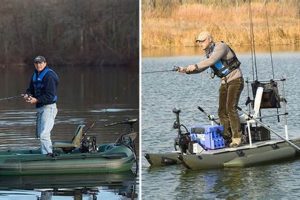
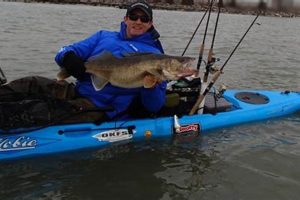
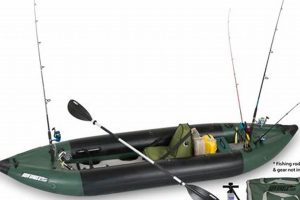
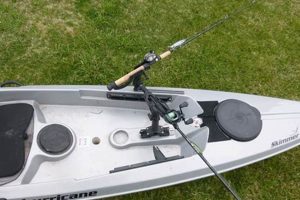
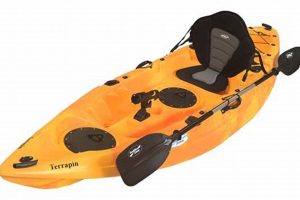
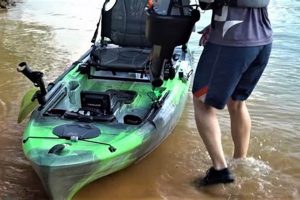
Anglers choosing between a canoe and a kayak for fishing face a decision based on factors like stability, maneuverability, and storage capacity. A canoe, open and propelled by single-bladed paddles, offers excellent stability and ample space for gear and multiple anglers. Kayaks, enclosed and propelled by double-bladed paddles, provide superior maneuverability and speed, particularly in flowing water. The choice depends significantly on the fishing environment and angler preferences.
This decision is significant because it directly impacts fishing success and enjoyment. Selecting the appropriate watercraft allows anglers to effectively access desired fishing locations, whether shallow-water coves reachable only by a maneuverable kayak or larger lakes and rivers more suited to a stable canoe. Historically, both canoes and kayaks have served as essential fishing platforms for diverse cultures worldwide, demonstrating their enduring utility for this purpose. Modern designs and materials further enhance their performance and adaptability for specific fishing needs.
The following sections will delve deeper into specific aspects of canoe and kayak fishing, comparing and contrasting their respective strengths and weaknesses to aid anglers in making informed choices.
Tips for Choosing Between a Canoe and Kayak for Fishing
Selecting between a canoe and a kayak requires careful consideration of individual fishing styles, target species, and environmental factors. The following tips provide guidance for making an informed decision.
Tip 1: Consider Water Conditions. Calm lakes and slow-moving rivers favor canoes, given their stability. Kayaks excel in rougher waters and faster currents due to their lower profile and maneuverability.
Tip 2: Evaluate Storage Needs. Canoes offer greater storage capacity for gear, coolers, and even additional anglers. Kayaks provide more limited storage, suitable for essential tackle and smaller items.
Tip 3: Assess Fishing Style. Trolling or still-fishing benefits from the stability of a canoe. Casting and sight fishing often favor the maneuverability of a kayak, allowing for quicker adjustments in position.
Tip 4: Factor in Transportation. Kayaks are generally easier to transport and store due to their smaller size and lighter weight. Canoes may require specialized roof racks or trailers.
Tip 5: Consider Physical Limitations. Entering and exiting a kayak can be more challenging for some individuals. Canoes offer easier access and a more comfortable seating position for longer outings.
Tip 6: Think About Solo vs Tandem Fishing. Canoes readily accommodate two or more anglers, while kayaks are typically designed for solo use, although tandem options exist.
Tip 7: Account for Desired Speed and Efficiency. Kayaks typically glide through the water more efficiently than canoes, allowing for faster travel speeds and covering greater distances.
Careful consideration of these factors will ensure the chosen watercraft aligns with specific fishing requirements, enhancing both comfort and success on the water.
By evaluating individual needs and preferences in relation to the characteristics of each vessel type, anglers can confidently select the optimal platform for a rewarding fishing experience.
1. Stability

Stability plays a crucial role in the “canoe vs. kayak fishing” debate. A stable platform is essential for various fishing activities, including casting, landing fish, and remaining comfortable during long hours on the water. Canoes, with their wider beam and open design, generally offer superior primary stabilityresistance to initial tippingcompared to kayaks. This makes them well-suited for activities requiring standing or moving around within the boat, such as fly fishing or spin casting in calm waters. However, secondary stabilitythe ability to recover from a significant tiltcan be less predictable in a canoe, especially when loaded with gear or encountering unexpected waves. A heavily loaded canoe, while initially stable, can capsize quickly if tilted beyond its center of gravity.
Kayaks, with their lower center of gravity and narrower profile, offer different stability characteristics. Their initial stability is generally lower than canoes, making them feel less secure for standing. However, their secondary stability tends to be higher, allowing them to recover from significant leans. This characteristic makes kayaks well-suited for rougher waters and conditions where waves or currents might impact balance. Specialized fishing kayaks often feature wider beams and design features that enhance stability, further bridging the gap with canoes in terms of steadiness. Anglers focusing on sight fishing in moving water or navigating challenging environments may find the enhanced secondary stability of a kayak advantageous.
Understanding the nuances of stability in both canoes and kayaks is paramount for angler safety and fishing success. Choosing the appropriate vessel depends on the intended fishing environment and individual preferences regarding stability characteristics. While canoes excel in initial stability for calm-water activities, kayaks offer superior secondary stability for dynamic conditions and maneuvering. Ultimately, the best choice depends on a careful assessment of individual needs and the specific fishing environment.
2. Maneuverability

Maneuverability represents a critical differentiator in the canoe versus kayak fishing comparison. A vessel’s ability to navigate efficiently and respond effectively to changing conditions significantly impacts fishing success. Canoes, typically longer and propelled by single-bladed paddles, excel in straight-line tracking but exhibit limitations in turning radius and agility. This makes them well-suited for traversing larger, open bodies of water where precise maneuvering is less critical. However, in confined spaces, such as narrow creeks or weed-choked areas, a canoe’s turning limitations can hinder access to prime fishing spots.
Kayaks, generally shorter and propelled by double-bladed paddles, offer superior maneuverability. Their shorter length and more efficient paddling stroke enable quick turns and precise adjustments in position. This agility proves advantageous when navigating complex waterways, pursuing agile fish species, or adjusting to changing currents. Consider a scenario where an angler needs to navigate through a series of fallen logs or quickly reposition to follow a school of fish. In such situations, a kayak’s maneuverability provides a distinct advantage. Similarly, anglers fishing in rivers or tidal streams benefit from the kayak’s responsiveness to current changes and obstacles.
The choice between a canoe and a kayak, based on maneuverability considerations, depends significantly on the target fishing environment. While canoes offer efficient travel in open water, kayaks excel in complex and confined spaces. Understanding these maneuverability differences allows anglers to select the appropriate vessel for their specific needs, maximizing their ability to access desired fishing locations and respond effectively to dynamic on-the-water situations. Prioritizing maneuverability ensures anglers maintain control, enhance fishing effectiveness, and navigate diverse aquatic environments with confidence.
3. Storage Capacity

Storage capacity represents a crucial factor in the canoe versus kayak fishing comparison. The ability to transport gear, supplies, and potentially even harvested fish directly influences fishing trip duration and success. Anglers must carefully evaluate their storage needs based on intended trip length, fishing style, and anticipated catch volume.
- Gear Storage
Canoes, with their open design and larger deck space, offer significantly greater gear storage capacity than kayaks. This allows for transporting bulky items such as coolers, camping gear, and multiple tackle boxes. Kayaks, while offering dedicated storage compartments, primarily accommodate smaller items like tackle boxes, rods, and personal belongings. The choice depends on the angler’s needs; multi-day expeditions or outings requiring substantial equipment favor canoes, while shorter trips or minimalist approaches suit kayaks. Consider an angler planning an overnight fishing trip. A canoe allows transporting a tent, sleeping bag, and ample food supplies, whereas a kayak would necessitate careful prioritization and potentially limit trip duration.
- Fish Handling
Storing caught fish presents another key consideration. Canoes offer ample space for coolers or livewells, facilitating catch preservation. Kayaks, with their limited storage, necessitate more immediate fish handling or shorter trips to maintain catch quality. Anglers targeting larger species or intending to keep multiple fish benefit from the generous storage volume of a canoe. Conversely, catch-and-release fishing or targeting smaller species minimizes the impact of limited kayak storage. Picture an angler successfully landing a large trophy fish. In a canoe, the fish can be safely stored in a cooler or livewell until returning to shore. A kayaker, however, faces limited options for preserving such a catch.
- Accessibility
Accessibility of stored gear also differentiates canoes and kayaks. Canoes allow for easier access to stored items due to their open design. Kayaks, while featuring secure storage compartments, often require more effort to retrieve items, especially in confined spaces. Consider an angler needing to quickly access a first-aid kit or a specific lure. In a canoe, the item can be readily retrieved from the open deck. A kayaker may need to pause fishing and potentially exit the kayak to access a similar item stored in a hatch.
- Weight Capacity
Overall weight capacity, including gear and anglers, is higher in canoes than kayaks. This allows for carrying heavier loads, but requires careful weight distribution for stability. Exceeding a kayak’s weight capacity significantly impacts performance and safety. Canoes offer greater flexibility for carrying heavier gear or multiple passengers. Kayaks demand more stringent adherence to weight limits to maintain optimal performance and stability. Understanding weight capacity limitations is crucial for both safety and efficient vessel operation. Overloading a kayak, even within its stated capacity, can make it sluggish and difficult to control, while overloading a canoe can lead to instability and potentially capsizing.
By carefully considering these aspects of storage capacity, anglers can choose the vessel best suited to their specific needs and fishing style. Matching storage capacity to intended trip duration, gear requirements, and fish handling needs ensures a successful and enjoyable fishing experience. Whether prioritizing ample space and accessibility in a canoe or embracing the minimalist approach of a kayak, understanding the impact of storage capacity empowers anglers to make informed decisions and optimize their time on the water.
4. Speed
Speed, a critical factor in fishing, significantly influences an angler’s ability to cover water, reach desired locations, and respond to changing conditions. The inherent design differences between canoes and kayaks directly impact their respective speeds and suitability for various fishing scenarios.
- Hull Design
Hull design significantly influences watercraft speed. Canoes, typically featuring a displacement hull, move through the water by pushing it aside. This design, while stable, creates greater drag and limits maximum speed. Kayaks, often employing a planing hull or a modified displacement hull, are designed to rise up and skim over the water’s surface at higher speeds, reducing drag and increasing efficiency. This difference in hull design results in kayaks generally achieving higher speeds than canoes with comparable effort. Consider an angler needing to travel a considerable distance to reach a specific fishing spot. A kayak’s planing hull allows for faster travel, maximizing fishing time.
- Paddling Efficiency
Paddling efficiency further differentiates canoe and kayak speeds. Kayaks, using a double-bladed paddle and a seated position, facilitate a more streamlined and powerful stroke. Canoes, typically paddled with a single-bladed paddle from a kneeling or seated position, offer less efficient power transfer. The double-bladed kayak paddle allows for continuous propulsion, generating more consistent speed and requiring less effort for sustained paddling. Consider an angler paddling against a current. The continuous propulsion of a kayak paddle provides a more effective means of maintaining position and forward momentum compared to the alternating strokes of a canoe paddle.
- Water Conditions
Water conditions significantly impact the relative speeds of canoes and kayaks. Calm, flat water favors the kayak’s efficient hull design and paddling technique, allowing it to reach higher speeds. In rougher conditions or strong currents, a canoe’s higher stability can prove advantageous, allowing for more consistent paddling and potentially greater overall speed in challenging environments. Consider an angler navigating a choppy lake. While a kayak might be faster in calm sections, the canoe’s stability may allow for more consistent paddling speed through waves, ultimately resulting in a faster overall travel time.
- Fishing Techniques
Specific fishing techniques also influence the importance of speed. Trolling, a method involving slow, controlled movement, benefits from the stability of a canoe. Techniques requiring quick repositioning, such as chasing schooling fish or sight fishing, favor the kayak’s maneuverability and speed. Consider an angler sight fishing for bonefish in shallow flats. A kayak’s speed and agility allow for quickly maneuvering into position for a cast as the fish moves across the flat.
Considering these factors, speed becomes a crucial element in the canoe versus kayak fishing decision. While kayaks generally offer higher potential speeds in calm conditions due to their hull design and paddling efficiency, canoes provide stability advantages in rough water. Ultimately, the optimal choice depends on the specific fishing environment, target species, and preferred techniques. By carefully evaluating these factors, anglers can select the vessel best suited to their individual needs and maximize their fishing success.
5. Fishing Style

Fishing style significantly influences the choice between a canoe and a kayak. Different fishing techniques demand specific vessel characteristics, impacting success and angler comfort. Still-fishing, for example, benefits from the inherent stability of a canoe. Anglers can comfortably remain stationary for extended periods, focusing on bait presentation and subtle line movements. Trolling, another technique favoring canoe stability, involves slow, controlled movement while trailing lines behind the boat. The canoe’s stable platform minimizes disturbances, allowing for precise lure presentation and detection of strikes. Consider an angler targeting bottom-dwelling species in a deep lake. The canoe’s stability provides a comfortable and effective platform for maintaining position and detecting subtle bites.
Conversely, active fishing styles often favor the maneuverability and speed of a kayak. Fly fishing, requiring frequent casting and adjustments in position, benefits from the kayak’s responsiveness. Anglers can quickly maneuver into optimal casting positions and easily navigate shallow water or complex river systems. Similarly, sight fishing, involving visually locating and targeting individual fish, demands the precise maneuvering and rapid acceleration offered by a kayak. Chasing schooling fish or navigating tight quarters, such as mangrove tunnels or rocky shorelines, also favors the kayak’s agility. Consider an angler pursuing bonefish in shallow saltwater flats. The kayak’s maneuverability allows for quick adjustments in position to intercept moving fish and execute accurate casts.
Matching fishing style to vessel type optimizes effectiveness and enjoyment. Analyzing the demands of preferred techniqueswhether emphasizing stability for still-fishing or maneuverability for active pursuitsinforms the canoe versus kayak decision. Recognizing the interplay between fishing style and vessel choice empowers anglers to select the optimal platform, enhancing their ability to connect with target species and maximize their time on the water. Choosing the right vessel for the intended fishing style directly translates to a more productive and rewarding experience. A mismatch, however, can lead to frustration, decreased efficiency, and potentially compromised safety. Therefore, careful consideration of fishing style remains paramount in the canoe versus kayak decision-making process.
6. Water Conditions

Water conditions represent a pivotal factor in the canoe versus kayak fishing equation. Currents, wind, and wave action significantly influence vessel stability, maneuverability, and overall safety. Calm lakes or slow-moving rivers favor canoes, given their inherent stability. Anglers can confidently cast, troll, and maneuver in these conditions without excessive concern for tipping or instability. Kayaks, while less stable initially, excel in rougher water scenarios due to their lower center of gravity and responsive handling. Ocean surf, fast-flowing rivers, and windy conditions highlight the kayak’s ability to navigate challenging environments. Consider an angler fishing in a sheltered cove versus one navigating open ocean waters. The cove’s calm conditions suit a canoe’s stability, while the ocean’s dynamic environment demands a kayak’s responsiveness.
Current strength directly impacts vessel control and positioning. Canoes, less maneuverable than kayaks, can become challenging to manage in strong currents. Kayaks, with their enhanced maneuverability, allow anglers to navigate swift water and maintain precise positions for fishing. Wind also plays a significant role. A canoe’s higher profile presents greater wind resistance, making it susceptible to drifting and challenging to paddle against strong winds. Kayaks, with their lower profile, offer less wind resistance, facilitating more efficient paddling in windy conditions. Consider an angler fishing a river with varying current speeds. A kayak allows for navigating swift sections while maintaining control, whereas a canoe might struggle in faster currents.
Understanding the interplay between water conditions and vessel choice is crucial for both safety and fishing effectiveness. Matching the vessel to the prevailing conditions optimizes angler control, comfort, and ultimately, success. Ignoring these factors can lead to challenging situations, compromising both safety and the fishing experience. Choosing the appropriate watercrafta stable canoe for calm waters or a maneuverable kayak for dynamic conditionsempowers anglers to confidently navigate their chosen environment and focus on the task at hand. Ultimately, adapting to the specific water conditions ensures a safer and more rewarding fishing experience.
7. Transportation

Transportation considerations significantly impact the choice between a canoe and a kayak for fishing excursions. Transporting these vessels requires varying levels of effort and specialized equipment, depending on vehicle type and storage capacity. Kayaks, generally smaller and lighter, often fit readily onto vehicle roof racks or within truck beds. This ease of transport makes them appealing for anglers with limited storage space or smaller vehicles. Some kayaks can even be transported inside larger vehicles, eliminating the need for external racks or trailers. This simplifies logistics and reduces travel time to and from fishing locations. Consider an angler with a compact car living in an urban environment. A kayak’s ease of transport facilitates quick trips to local waterways without requiring a larger vehicle or specialized equipment.
Canoes, typically larger and heavier, present greater transportation challenges. Specialized roof racks, trailers, or even dedicated canoe carriers are often necessary for safe and secure transport. This added complexity can deter anglers lacking appropriate equipment or storage space. The increased weight and bulk of a canoe also contribute to higher fuel consumption during transport. Consider an angler planning a remote wilderness fishing trip. Transporting a canoe to such a location might necessitate a larger vehicle with a trailer, adding complexity and cost to the expedition. Further, accessing remote put-in locations with a canoe can require additional planning and potentially off-road vehicle capabilities.
The decision between a canoe and kayak, influenced by transportation logistics, must align with an angler’s individual circumstances and available resources. Evaluating vehicle capacity, storage space, and accessibility of launch sites informs this choice. Choosing a vessel easily transported simplifies pre- and post-fishing logistics, maximizing time spent on the water. Failing to adequately address transportation needs, however, can create unnecessary difficulties, potentially impacting the overall fishing experience. Therefore, careful consideration of transportation practicality is crucial for ensuring a smooth and enjoyable fishing outing, regardless of chosen vessel.
Frequently Asked Questions
This section addresses common inquiries regarding the choice between canoes and kayaks for fishing, providing concise and informative responses to aid decision-making.
Question 1: Which is more stable, a canoe or a kayak?
Canoes generally offer greater initial stability due to their wider beam and open design. Kayaks, however, often possess superior secondary stability, meaning they are more likely to recover from a significant tilt.
Question 2: Which is faster, a canoe or a kayak?
Kayaks typically achieve higher speeds due to their streamlined hull design and more efficient paddling technique.
Question 3: Which is better for fishing in rivers, a canoe or a kayak?
Kayaks generally handle rivers better due to their superior maneuverability in currents and around obstacles. Canoes are better suited to calm rivers and lakes.
Question 4: Which is easier to transport, a canoe or a kayak?
Kayaks are typically easier to transport due to their smaller size and lighter weight, often requiring only a standard roof rack.
Question 5: Which offers more storage space, a canoe or a kayak?
Canoes provide significantly more storage space for gear, coolers, and other equipment.
Question 6: Which is better for solo fishing, a canoe or a kayak?
Both can be used for solo fishing, but kayaks are generally designed with the solo angler in mind, while canoes are often better suited for two or more people.
Careful consideration of these factors, alongside individual needs and preferences, will guide anglers toward the most suitable watercraft for their specific fishing pursuits.
For further information on specific models and features, consult detailed product reviews and expert angler recommendations.
Canoe vs Kayak Fishing
Choosing between a canoe and a kayak for fishing presents a decision requiring careful consideration of various factors. Vessel stability, maneuverability, storage capacity, speed, and suitability for specific fishing styles and water conditions all contribute to the ultimate choice. Canoes offer stability and ample storage, advantageous for calm waters and techniques like still-fishing or trolling. Kayaks excel in maneuverability and speed, making them ideal for navigating challenging environments and engaging in active fishing styles such as fly fishing or sight fishing. Transportation practicality also plays a role, with kayaks generally easier to transport than canoes.
Ultimately, the optimal choice hinges on a thorough assessment of individual angler needs, target fishing environments, and preferred fishing styles. A well-informed decision ensures a safe, efficient, and ultimately rewarding fishing experience. Understanding the inherent strengths and weaknesses of each vessel type empowers anglers to select the ideal platform for maximizing their success and enjoyment on the water.