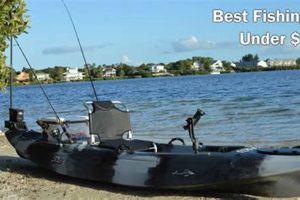
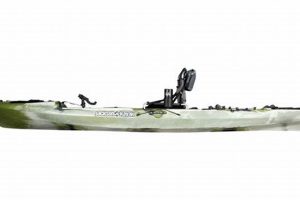
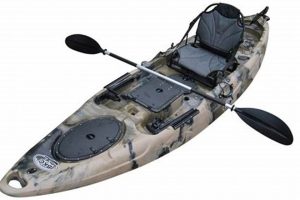
A premium, balance-focused watercraft designed for angling offers anglers a secure platform for casting lines and reeling in catches. Such vessels typically incorporate features like wider hulls, flatter bottoms, and outriggers for enhanced stability, allowing fishers to stand and cast with confidence. These kayaks are often equipped with specialized features such as rod holders, tackle storage, and even livewells.
Enhanced stability translates to improved safety and comfort on the water, particularly in challenging conditions like currents or choppy waters. A secure platform allows anglers to focus on fishing rather than maintaining balance, leading to a more enjoyable and productive experience. The evolution of these specialized kayaks has mirrored the growing popularity of kayak fishing, offering anglers increasingly sophisticated and purpose-built vessels.
Key considerations when selecting a fishing-oriented, balance-optimized kayak include hull design, weight capacity, storage options, and propulsion systems. The following sections will delve into these factors in detail, providing guidance for choosing the ideal watercraft to meet individual angling needs and preferences.
Tips for Selecting a Stability-Focused Fishing Kayak
Choosing a kayak optimized for fishing and stability requires careful consideration of various factors. These tips offer guidance for making an informed decision.
Tip 1: Prioritize Hull Design: Consider wider, flatter hulls, pontoon hulls, or those with outriggers for maximum stability. A wider hull provides a larger base of support, minimizing tipping, while a flatter bottom enhances stability on calm water.
Tip 2: Evaluate Weight Capacity: Select a kayak with a weight capacity that accommodates the angler’s weight, fishing gear, and potential catch. Exceeding the weight limit can compromise stability and performance.
Tip 3: Assess Storage Options: Ample storage is crucial for fishing gear. Look for kayaks with dedicated compartments, rod holders, and storage hatches for convenient access and organization.
Tip 4: Consider Propulsion Systems: Choose between paddle, pedal, or motor propulsion based on fishing style and preferences. Pedal kayaks offer hands-free fishing while motors provide greater range and speed.
Tip 5: Test Before Purchasing: If possible, test different kayaks on the water to assess their stability and handling characteristics firsthand. This allows anglers to determine the best fit for their individual needs.
Tip 6: Factor in Seating Comfort: A comfortable seat is essential for long hours on the water. Look for adjustable seats with good back support and ample cushioning.
Tip 7: Research Reputable Brands: Choose kayaks from reputable manufacturers known for quality construction and reliable performance. This ensures durability and longevity.
By considering these factors, anglers can select a kayak that offers both stability and functionality, enhancing their fishing experience.
Careful selection ensures a safe, comfortable, and productive fishing experience, allowing anglers to focus on the sport.
1. Hull Design

Hull design plays a critical role in determining a fishing kayak’s stability. Wider, flatter hulls provide greater initial stability, making them less prone to tipping, particularly in calm water conditions. These designs maximize the kayak’s contact area with the water surface, creating a broader base of support. Pontoon hulls, featuring two separate hulls connected by a platform, offer exceptional stability, allowing anglers to stand and cast with confidence. A tunnel hull, characterized by a recessed area running the length of the hull, provides a balance between stability and maneuverability. For example, a wide, flat-bottomed hull offers excellent primary stability for calm lakes, while a pontoon hull excels in stability even in choppy conditions.
The choice of hull design involves trade-offs between stability and other performance characteristics. While wider, flatter hulls maximize stability, they often sacrifice maneuverability and speed compared to narrower, more streamlined designs. Tunnel hulls offer a compromise, providing good stability while maintaining reasonable maneuverability. A kayak designed for ocean fishing might prioritize a longer, V-shaped hull for better tracking and wave handling, accepting a slightly lower initial stability for improved performance in rougher waters. Conversely, a kayak intended for calm ponds or slow-moving rivers benefits from a shorter, flatter hull, maximizing stability for casting and fishing in shallow waters.
Understanding the relationship between hull design and stability is crucial for selecting a fishing kayak suited to specific needs and water conditions. Prioritizing stability often benefits anglers who prefer to stand and cast, fish in challenging conditions, or require a secure platform for photography or other activities. Choosing the appropriate hull design significantly impacts overall fishing experience, contributing to safety, comfort, and angling success. Careful consideration of intended use and desired performance characteristics should guide the selection process.
2. Weight Capacity

Weight capacity plays a crucial role in kayak stability, particularly for fishing kayaks where anglers carry additional gear and potential catches. A kayak’s weight capacity represents the maximum combined weight of the angler, gear, and any other items the kayak can safely support without compromising stability or performance. Exceeding this limit submerges a greater portion of the hull, decreasing freeboard and increasing the risk of capsizing, especially in rough conditions. Sufficient weight capacity ensures the kayak remains buoyant and stable, providing a secure platform for fishing activities.
Choosing a fishing kayak with adequate weight capacity directly impacts stability and safety. For example, an angler weighing 175 pounds with 50 pounds of gear requires a kayak with a minimum weight capacity of 225 pounds. Opting for a kayak with a higher weight capacity, such as 300 pounds, provides a greater margin of safety and improved stability. A higher weight capacity allows for additional gear or larger catches without compromising performance or increasing the risk of instability. Consider potential future needs, such as carrying additional passengers or upgrading fishing equipment, when assessing weight capacity requirements.
Evaluating weight capacity is essential for selecting a stable fishing kayak. Manufacturers specify weight capacity limits based on design and testing. Understanding and respecting these limits contributes significantly to on-the-water safety. Selecting a kayak with ample weight capacity ensures stability, performance, and a safe fishing experience, particularly when carrying substantial gear or navigating challenging water conditions. This proactive approach to weight management minimizes risks associated with overloading and contributes to a more enjoyable and secure angling experience.
3. Storage Solutions

Effective storage solutions are integral to the functionality and stability of a best stable fishing kayak. Organized storage directly impacts balance and performance. A kayak with strategically placed storage compartments allows for even weight distribution, contributing to overall stability. Conversely, haphazardly stowed gear can shift during movement, creating instability and potentially compromising safety. Dedicated storage for rods, tackle boxes, and other equipment keeps essential items secure and readily accessible, enhancing angling efficiency. For example, integrated rod holders prevent rods from shifting or obstructing paddling strokes, while recessed tackle compartments keep essential gear within easy reach without compromising deck space or balance.
The type and arrangement of storage solutions further influence a fishing kayak’s stability. Front and rear storage hatches offer convenient access and weight distribution, while side-mounted storage compartments provide quick access to frequently used items. Tank wells, typically located behind the seat, offer secure storage for larger items such as coolers or dry bags, contributing to a balanced center of gravity. Ergonomically designed storage solutions minimize the need for excessive reaching or bending, reducing the risk of sudden weight shifts that could compromise stability. A well-designed kayak balances storage capacity with weight distribution considerations, ensuring both functionality and stability.
Optimal storage solutions contribute significantly to both the practicality and safety of a stable fishing kayak. Efficient storage promotes a balanced and organized vessel, enhancing stability and overall performance. Proper weight distribution minimizes the risk of capsizing, especially in challenging conditions. Strategically placed and readily accessible storage compartments improve angling efficiency, allowing anglers to focus on fishing rather than managing gear. Selecting a fishing kayak with well-designed storage solutions ultimately enhances safety, comfort, and fishing success.
4. Propulsion Method
Propulsion method significantly influences the stability and overall fishing experience offered by a kayak. Selecting an appropriate propulsion system impacts maneuverability, speed, and hands-free fishing capability, all crucial factors for a successful and enjoyable angling experience. Different propulsion methods present distinct advantages and disadvantages regarding stability, particularly in varying water conditions.
- Paddle Propulsion
Traditional paddle propulsion offers excellent control and maneuverability, beneficial in tight spaces or shallow water. However, paddling requires both hands, limiting simultaneous fishing activities. While generally stable, paddle kayaks can become unstable if weight distribution shifts during paddling. Experienced kayakers often use specialized paddling techniques to maintain balance and stability, particularly in challenging conditions. Paddle propulsion remains a popular choice for its simplicity, affordability, and quiet operation, minimizing disturbance to fish.
- Pedal Propulsion
Pedal kayaks offer hands-free propulsion, allowing anglers to maintain a steady position and fish simultaneously. The pedal drive system typically utilizes a propeller or fin system below the waterline, offering efficient and stable propulsion. While generally stable, pedal kayaks can be affected by submerged obstacles or shallow water, potentially impacting balance. The hands-free nature of pedal propulsion enhances fishing efficiency, particularly for techniques requiring precise boat control. Pedal kayaks often feature a rudder system for enhanced steering and maneuverability.
- Motor Propulsion
Motorized kayaks provide increased speed and range, enabling anglers to cover larger distances and access remote fishing spots. Electric motors offer quiet operation, minimizing disturbance to fish, while gasoline motors offer greater power and range. However, adding a motor can impact a kayak’s stability, particularly if the motor is not properly mounted or balanced. Weight distribution and proper motor placement become critical for maintaining stability, especially at higher speeds or in windy conditions.
- Hybrid Propulsion
Some kayaks offer hybrid propulsion systems, combining paddle power with either pedal or motor propulsion. This offers versatility for various fishing situations. Anglers can utilize paddle power for quiet maneuvering in shallow water or switch to pedal or motor propulsion for covering larger distances. This adaptability contributes to overall stability by allowing anglers to choose the most suitable propulsion method for specific conditions. Hybrid systems can offer greater control and stability compared to relying solely on a single propulsion method, particularly in varying environments.
The chosen propulsion method contributes significantly to the overall stability and fishing experience. Matching the propulsion system to the intended fishing environment and style maximizes stability and performance. Consider factors such as fishing location, target species, and personal preferences when selecting a propulsion method to ensure a stable, efficient, and enjoyable fishing experience. Each method presents unique stability considerations, and careful selection ensures a balanced and secure platform for angling success.
5. Comfort and Seating
Comfort and seating are critical factors influencing the overall experience in a stable fishing kayak. An uncomfortable or poorly designed seat can negatively impact stability, particularly during long fishing trips. Proper posture and support contribute to balance and reduce fatigue, allowing for extended periods on the water. A comfortable and supportive seating system enhances stability by allowing the angler to maintain a balanced and secure position, even in challenging conditions. This section explores key facets of comfort and seating in relation to kayak stability.
- Seat Design and Adjustability
Seat design plays a crucial role in both comfort and stability. A well-designed seat provides adequate back support, promoting proper posture and reducing strain. Adjustable features, such as backrest angle and seat height, allow for customization based on individual preferences and physical characteristics. A seat that can be adjusted to different positions allows anglers to maintain a comfortable and balanced posture throughout the day, contributing to overall stability. For example, a high-back seat with adjustable lumbar support offers enhanced comfort and stability compared to a basic molded seat. The ability to fine-tune the seat position ensures optimal weight distribution and balance, further enhancing stability.
- Seat Material and Padding
Seat material and padding contribute significantly to comfort and influence stability. Breathable, weather-resistant materials prevent discomfort from moisture and temperature fluctuations. Adequate padding minimizes pressure points and enhances comfort during prolonged sitting. A comfortable seat allows anglers to maintain a stable position without shifting or fidgeting, which can compromise balance. Durable and high-quality padding ensures long-lasting comfort and support, contributing to a more stable and enjoyable fishing experience. Materials like closed-cell foam offer cushioning and resist water absorption, maintaining comfort and stability even in wet conditions.
- Seat Height and Positioning
Seat height and positioning relative to the kayak’s center of gravity affect stability. A higher seat position elevates the angler’s center of gravity, potentially making the kayak feel less stable, particularly in windy conditions or rough water. A lower seat position lowers the center of gravity, improving stability but potentially compromising visibility and paddling comfort. The optimal seat height balances stability with comfort and visibility, allowing for efficient paddling and casting. The seat’s position within the kayak also influences weight distribution and overall balance. A seat positioned too far forward or backward can negatively impact stability. Proper seat positioning ensures a balanced and stable platform for fishing.
- Seat Stability and Securement
A securely mounted and stable seat is paramount for overall kayak stability. A loose or wobbly seat can shift unexpectedly, disrupting balance and potentially leading to capsizing. Secure attachment points and robust mounting hardware ensure the seat remains firmly in place, even during dynamic movements. A stable seat provides a solid foundation for the angler, contributing to overall kayak stability and control. Features like adjustable straps and non-slip surfaces further enhance seat stability and prevent unwanted movement. A stable and secure seat contributes to a safer and more enjoyable fishing experience.
Comfort and seating directly influence stability in a fishing kayak. A comfortable and well-designed seating system allows anglers to maintain a balanced and secure position, contributing to overall stability and control. Prioritizing comfort and seating enhances not only the fishing experience but also safety on the water. Investing in a kayak with a comfortable, adjustable, and securely mounted seat is crucial for long-term fishing enjoyment and on-the-water safety. Proper consideration of seat design, materials, positioning, and stability ensures a balanced and comfortable fishing platform, maximizing both performance and enjoyment on the water.
6. Build Quality/Materials

Build quality and materials are fundamental to the performance, durability, and stability of a best stable fishing kayak. Material selection directly influences the kayak’s structural integrity, weight, and resistance to impact and environmental factors. A well-constructed kayak, built with high-quality materials, provides a stable and reliable platform for angling, contributing to a safer and more enjoyable experience on the water. The following facets explore the critical relationship between build quality, materials, and stability in a fishing kayak.
- Material Selection
Kayak construction materials significantly impact performance and stability. Common materials include polyethylene (HDPE and rotomolded), thermoformed ABS, composite materials (fiberglass, carbon fiber, Kevlar), and inflatable materials (PVC, Hypalon). Polyethylene kayaks offer durability and affordability, while composite kayaks provide lighter weight and increased performance at a higher cost. Inflatable kayaks offer portability and convenience but may sacrifice some stability compared to rigid hulls. Selecting appropriate materials involves balancing performance requirements, budget constraints, and desired durability. For example, a rotomolded polyethylene kayak offers excellent impact resistance and durability for navigating rocky shorelines, while a lighter-weight composite kayak might be preferred for longer paddling distances or enhanced maneuverability.
- Construction Methods
Construction methods influence a kayak’s structural integrity and resistance to wear and tear. Rotomolding creates a seamless, one-piece hull with uniform thickness, offering excellent durability and impact resistance. Thermoforming utilizes heat to mold sheets of plastic over a mold, creating a durable and lightweight hull. Composite construction involves layering fiberglass, carbon fiber, or Kevlar over a mold, resulting in a strong, lightweight, and high-performance hull. Each construction method offers specific advantages and disadvantages regarding durability, weight, and cost. The chosen construction method directly impacts the kayak’s ability to withstand stress and maintain structural integrity, crucial for ensuring stability and longevity.
- Hardware and Fittings
Hardware and fittings, such as handles, deck rigging, seat attachments, and hatch closures, contribute to overall kayak stability. High-quality hardware, constructed from corrosion-resistant materials like stainless steel or marine-grade aluminum, ensures long-lasting performance and reliability. Securely attached and properly functioning hardware prevents unwanted movement or failure, maintaining the kayak’s structural integrity and stability. For example, robust deck rigging provides secure attachment points for gear and accessories, preventing weight shifts that could compromise stability. Reliable hatch closures protect stored items from water damage and maintain the kayak’s buoyancy and balance. Well-chosen hardware contributes significantly to the kayak’s overall durability, stability, and safety on the water.
- Hull Thickness and Design
Hull thickness and design directly influence a kayak’s stability and durability. A thicker hull generally offers increased rigidity and resistance to impact but adds weight. The hull design, including features such as chines, keels, and rocker, affects the kayak’s tracking, maneuverability, and stability in various water conditions. For example, a kayak with pronounced chines offers increased primary stability, making it less prone to tipping, while a kayak with a shallow-V hull design enhances tracking and speed. Balancing hull thickness with design considerations ensures optimal performance, stability, and durability for intended use and water conditions. Careful consideration of hull thickness and design contributes to a stable, durable, and well-performing fishing kayak.
The interplay of build quality and materials directly impacts the stability and overall performance of a best stable fishing kayak. Durable construction and high-quality materials ensure the kayak maintains its structural integrity and resists damage from impacts and environmental factors. A stable and well-built kayak provides a secure platform for fishing, enhancing safety, comfort, and angling success. Investing in a kayak constructed with quality materials and sound construction techniques ensures long-lasting performance, reliability, and a more enjoyable fishing experience.
Frequently Asked Questions
This section addresses common inquiries regarding stability-focused fishing kayaks, providing concise and informative responses.
Question 1: How is stability measured in a fishing kayak?
Stability is assessed through primary and secondary stability. Primary stability refers to resistance to initial tipping, while secondary stability describes how stable the kayak feels when tilted. Wider hulls and lower centers of gravity contribute to higher initial stability.
Question 2: What hull design offers the most stability for fishing?
Wider, flatter hulls, pontoon hulls, and those with outriggers offer exceptional stability, enabling anglers to stand and cast. Tunnel hulls provide a balance of stability and maneuverability.
Question 3: Does kayak weight capacity affect stability?
Weight capacity directly impacts stability. Exceeding the manufacturer’s specified weight limit compromises stability and increases the risk of capsizing. Selecting a kayak with ample weight capacity is crucial for safety and performance.
Question 4: How does propulsion type influence stability?
Each propulsion methodpaddle, pedal, or motorpresents distinct stability considerations. Pedal kayaks offer hands-free fishing, enhancing stability. Motorized kayaks require careful weight distribution and motor placement to maintain balance. Paddle kayaks rely on user technique for stability.
Question 5: What role does seating play in kayak stability?
A comfortable and properly positioned seat enhances stability. Adequate back support and adjustability allow for proper posture and weight distribution, reducing fatigue and improving balance. A secure and stable seat prevents unwanted shifting that could compromise stability.
Question 6: How do materials affect kayak stability and durability?
Material selection influences both stability and durability. High-quality materials, such as rotomolded polyethylene or composites, contribute to a robust and stable hull. Durable construction ensures long-lasting performance and resistance to impact and environmental factors.
Careful consideration of these factors ensures selection of a stable and functional fishing kayak, enhancing safety and angling success. Understanding these elements allows for informed decision-making tailored to individual needs and preferences.
For further information, consult detailed reviews and comparisons of specific kayak models, considering factors like intended use, water conditions, and personal preferences.
Conclusion
Selecting a premium, stability-focused fishing kayak requires careful evaluation of various interconnected factors. Hull design, weight capacity, storage solutions, propulsion method, comfort and seating, and build quality/materials all contribute significantly to a kayak’s overall stability, performance, and suitability for angling. Understanding the interplay of these elements empowers informed decision-making, enabling anglers to choose a vessel optimized for their specific needs and fishing style. Prioritizing stability enhances not only fishing success but also safety and enjoyment on the water.
The pursuit of the ideal stability-focused fishing kayak represents an ongoing evolution driven by advancements in design, materials, and technology. As kayak fishing continues to grow in popularity, manufacturers will likely introduce further innovations aimed at enhancing stability, comfort, and functionality. Careful consideration of individual needs and preferences, coupled with thorough research and on-the-water testing when possible, remains paramount for selecting a kayak that delivers a secure, comfortable, and productive fishing experience.