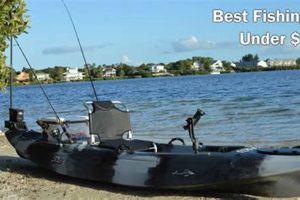
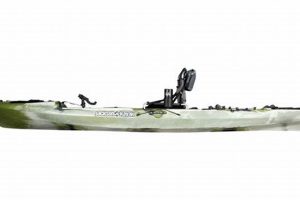
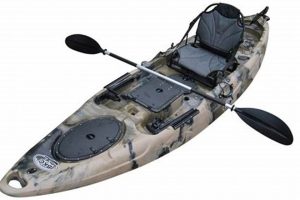
High-quality kayaks designed for river fishing prioritize stability, maneuverability, and specialized features. These vessels often include rod holders, tackle storage, and comfortable seating arrangements built to withstand the currents and obstacles encountered in river environments. An example would be a sit-on-top kayak constructed from durable polyethylene, equipped with adjustable footrests and a rudder system for enhanced control.
Selecting an appropriate watercraft is crucial for a successful and enjoyable fishing experience on rivers. A stable and maneuverable kayak allows anglers to navigate shallows, rapids, and other challenging river conditions safely and effectively. Furthermore, integrated features such as rod holders and storage compartments streamline the fishing process, allowing for greater focus on the activity itself. Over time, kayak design has evolved significantly, with modern river fishing kayaks incorporating advanced materials and construction techniques for increased durability and performance.
This article will delve into the key factors to consider when choosing a river fishing kayak, including hull design, length, weight capacity, and essential features. It will also explore various popular models and provide guidance on selecting the optimal kayak for specific river conditions and fishing styles.
Tips for Selecting a River Fishing Kayak
Choosing the right kayak for river fishing requires careful consideration of various factors. The following tips offer guidance for making an informed decision.
Tip 1: Prioritize Stability: A wider, flatter hull provides enhanced stability, especially important in moving water. Consider a sit-on-top design for added security and self-rescue capability.
Tip 2: Evaluate Maneuverability: Shorter kayaks offer superior maneuverability, enabling navigation through tight turns and obstacles commonly found in rivers. A rudder system can further enhance control.
Tip 3: Assess Weight Capacity: Ensure the kayak’s weight capacity accommodates the angler’s weight, fishing gear, and any potential catch. Exceeding the limit compromises stability and performance.
Tip 4: Consider Storage Options: Ample storage space for tackle, rods, and other equipment is essential for a streamlined fishing experience. Look for dedicated compartments and integrated rod holders.
Tip 5: Choose Durable Construction: River environments present potential hazards such as rocks and submerged debris. Select a kayak constructed from robust materials like polyethylene for enhanced durability.
Tip 6: Examine Seating Comfort: Long hours on the water necessitate a comfortable seating system. Adjustable backrests and footrests contribute to a more enjoyable and less fatiguing experience.
Tip 7: Factor in River Conditions: Consider the specific river conditions where the kayak will be used. Faster currents and rapids may require a different kayak design than calmer waters.
By considering these factors, anglers can select a kayak optimized for their individual needs and river conditions, ensuring a safe and productive fishing experience.
This guidance aims to equip anglers with the knowledge necessary to select the most suitable river fishing kayak, ultimately leading to enhanced enjoyment and success on the water.
1. Stability

Stability is a paramount characteristic of best river fishing kayaks, directly influencing safety and fishing efficacy. A stable platform allows anglers to cast, retrieve, and land fish effectively, even in moving water or challenging river conditions. Compromised stability can lead to capsizing, jeopardizing both angler safety and fishing success.
- Hull Design:
Hull design significantly impacts stability. Wider, flatter hulls offer primary stability, resisting initial tipping. A shallow-V hull provides secondary stability, aiding recovery from larger disturbances. For river fishing, a balance between initial and secondary stability is crucial, optimizing both resistance to tipping and maneuverability in currents.
- Center of Gravity:
A lower center of gravity contributes significantly to stability. Sit-on-top kayaks generally offer a lower center of gravity compared to sit-inside designs, promoting enhanced stability. Proper weight distribution within the kayak also influences balance and stability. Keeping heavier items low and centered within the hull minimizes the risk of tipping.
- Water Conditions:
River conditions directly influence stability requirements. Faster currents and turbulent water demand greater stability. Anglers fishing in challenging conditions should prioritize kayaks with enhanced stability features, such as wider hulls and a lower center of gravity. Calm, slow-moving rivers allow for greater flexibility in kayak selection.
- Angler Movement:
Angler movements, such as casting, reeling, and landing fish, can shift the kayak’s center of gravity and compromise stability. Kayaks designed for fishing often incorporate features to mitigate these effects, such as a stable standing platform or enhanced seating systems. Anglers should practice smooth, deliberate movements to maintain balance and stability on the water.
These factors underscore the importance of stability in selecting the best river fishing kayak. A stable platform allows anglers to focus on fishing, rather than constantly battling to maintain balance. Prioritizing stability contributes significantly to both safety and fishing success in diverse river environments.
2. Maneuverability

Maneuverability is a critical attribute of best river fishing kayaks, directly impacting an angler’s ability to navigate diverse river environments effectively. Rivers present unique challenges, including currents, obstacles like rocks and fallen trees, and varying water depths. A highly maneuverable kayak allows anglers to navigate these complexities efficiently, accessing prime fishing locations and responding effectively to changing river conditions. For instance, a shorter kayak with a multi-chine hull design enables quick turns and precise adjustments in tight spaces, crucial for navigating narrow, winding streams or maneuvering around obstacles in faster currents. Conversely, longer kayaks, while offering superior tracking in open water, may struggle in confined areas, limiting access to productive fishing spots.
The relationship between maneuverability and hull design is significant. Shorter kayaks generally offer enhanced maneuverability due to their reduced length and responsiveness to paddle strokes. Specific hull designs, such as those incorporating a rocker (upward curve of the hull) or a multi-chine configuration, further enhance turning performance. A rockered hull allows for easier pivoting, while multiple chines provide grip and control during turns, preventing slippage and maintaining stability. These design elements are particularly beneficial in shallow water and fast currents, where precise control is essential for avoiding obstacles and maintaining position. Furthermore, features like a rudder or skeg can enhance directional stability and tracking, especially in windy conditions or when paddling upstream, supplementing the kayak’s inherent maneuverability.
Understanding the importance of maneuverability is crucial for selecting a kayak suited to specific river conditions and fishing styles. Anglers fishing in tight, technical rivers will prioritize maneuverability over tracking performance, opting for shorter kayaks with responsive hull designs. Those fishing larger, open rivers may sacrifice some maneuverability for increased tracking and speed. The optimal balance between maneuverability and stability depends on individual needs and the intended fishing environment. Ultimately, selecting a kayak with appropriate maneuverability characteristics contributes significantly to efficient navigation, access to desirable fishing locations, and enhanced overall fishing success.
3. Storage Capacity

Storage capacity is a defining feature of best river fishing kayaks, directly influencing organizational efficiency and overall fishing success. Ample and well-designed storage facilitates access to essential gear, including tackle boxes, rods, reels, safety equipment, and personal items. This organized approach minimizes time spent searching for items, maximizing time spent fishing and enhancing overall enjoyment. Insufficient storage can lead to cluttered decks, hindering movement and increasing the risk of tangles or lost equipment, ultimately compromising fishing effectiveness. For example, a kayak equipped with dedicated compartments for tackle boxes, rod holders secured within easy reach, and dry storage for electronics and personal belongings streamlines the fishing process, allowing anglers to focus on the task at hand. Conversely, limited storage capacity necessitates difficult choices regarding essential gear and may require improvised storage solutions that compromise stability and safety.
The practical implications of inadequate storage extend beyond mere inconvenience. In situations requiring quick access to specific gear, such as changing lures or responding to changing weather conditions, insufficient storage can create significant challenges. For instance, an angler encountering a sudden shift in fish activity might need to switch to a different lure quickly. If lures are stored haphazardly, valuable time is lost searching, potentially missing peak fishing opportunities. Similarly, in the event of unexpected rain or rough water, readily accessible dry storage for electronics and other sensitive items becomes crucial. Kayaks designed with strategically placed and easily accessible storage compartments mitigate these challenges, ensuring essential gear is readily available when needed. Such considerations underscore the connection between storage capacity and effective river fishing.
In summary, adequate storage capacity is not simply a convenience but a critical component of successful river fishing. It contributes directly to organizational efficiency, rapid response to changing conditions, and overall safety. Well-designed storage solutions enable anglers to focus on the fishing experience itself, maximizing enjoyment and success on the water. When evaluating river fishing kayaks, prioritizing storage capacity alongside stability, maneuverability, and other key features ensures a well-equipped and efficient platform for pursuing diverse fishing opportunities.
4. Durability

Durability is a critical factor in determining the longevity and performance of best river fishing kayaks. River environments present numerous potential hazards, including rocks, submerged logs, and abrasive sandbars. A durable kayak withstands these challenges, maintaining structural integrity and ensuring angler safety. Durable construction translates to a longer lifespan, reducing the need for frequent repairs or replacements. For example, kayaks constructed from high-density polyethylene (HDPE) offer excellent impact resistance and abrasion resistance, crucial for navigating rocky rivers. Conversely, kayaks made from less durable materials may crack or puncture upon impact, potentially leading to leaks and compromising safety. Choosing a durable kayak represents a long-term investment, ensuring reliable performance and extended use in demanding river environments.
The impact of durability extends beyond simple longevity. A durable kayak maintains its performance characteristics over time, resisting wear and tear that can compromise handling and stability. UV resistance is another crucial aspect of durability, preventing degradation from prolonged sun exposure, which can lead to fading, cracking, and reduced structural integrity. Well-maintained durability preserves the kayak’s resale value, making it a sound investment for anglers. Furthermore, a durable kayak provides peace of mind, allowing anglers to focus on fishing rather than worrying about potential damage. This confidence fosters a more enjoyable and productive fishing experience, particularly in challenging river conditions.
In summary, durability is an essential characteristic of best river fishing kayaks, contributing significantly to safety, performance, and longevity. Selecting a kayak constructed from robust materials and designed to withstand the rigors of river environments ensures a reliable and long-lasting investment. Prioritizing durability empowers anglers to explore diverse river systems with confidence, knowing their equipment is capable of handling the challenges presented by these dynamic environments. Ultimately, investing in a durable kayak translates to enhanced safety, sustained performance, and prolonged enjoyment on the water.
5. Comfort

Comfort plays a pivotal role in the overall experience delivered by the best river fishing kayaks. Extended periods on the water, often in varying weather conditions, necessitate a comfortable seating system and ample space for movement. An uncomfortable kayak can lead to fatigue, stiffness, and even pain, detracting significantly from the enjoyment and focus required for successful fishing. A well-designed kayak seat, providing adequate back support, cushioning, and adjustability, allows anglers to maintain focus and energy throughout their fishing trip. For instance, an angler fishing in a comfortable, adjustable seat can maintain proper posture and balance, facilitating casting accuracy and efficient retrieval. Conversely, an uncomfortable seat can lead to fidgeting and shifting, compromising stability and potentially spooking fish. Furthermore, ample legroom and strategically placed footrests contribute to comfort, particularly during long hours on the water.
The impact of comfort extends beyond mere physical well-being. A comfortable angler is a more focused and effective angler. Discomfort can lead to distraction and decreased reaction time, hindering the ability to respond quickly to bites or changing river conditions. Consider an angler battling a strong fish in challenging currents. A comfortable and stable seating position allows for optimal leverage and control, increasing the chances of landing the fish. Conversely, an uncomfortable angler struggling to maintain balance and position is at a distinct disadvantage. Therefore, comfort directly influences fishing performance by enabling anglers to maintain focus and react effectively in dynamic river environments. Features like adjustable backrests, padded seating, and ample legroom contribute significantly to overall comfort and fishing success.
In conclusion, comfort is an integral component of the best river fishing kayaks, directly influencing both enjoyment and performance on the water. A comfortable kayak enables anglers to maintain focus, react effectively to changing conditions, and maximize their fishing potential. When evaluating kayaks, factors like seat design, adjustability, and overall ergonomics should be considered alongside performance characteristics like stability and maneuverability. Prioritizing comfort ensures a more enjoyable, productive, and ultimately, successful river fishing experience.
Frequently Asked Questions
This section addresses common inquiries regarding the selection and use of kayaks designed for river fishing.
Question 1: What are the key differences between sit-on-top and sit-inside kayaks for river fishing?
Sit-on-top kayaks offer enhanced stability and self-rescue capabilities, making them suitable for beginners and fishing in moving water. Sit-inside kayaks provide greater protection from the elements and offer a drier ride but can be more challenging to recover from a capsize.
Question 2: How does kayak length affect performance in rivers?
Shorter kayaks generally offer superior maneuverability in tight spaces and rapids, while longer kayaks provide better tracking and speed in open water. The optimal length depends on the specific river environment and fishing style.
Question 3: What materials are best suited for river fishing kayak construction?
High-density polyethylene (HDPE) is a popular choice due to its durability, impact resistance, and affordability. Other materials, such as rotomolded plastic and composites, offer varying levels of performance and cost.
Question 4: What essential features should anglers look for in a river fishing kayak?
Essential features include rod holders, ample storage compartments for tackle and gear, comfortable seating, and a rudder or skeg for enhanced control and tracking.
Question 5: How does river class affect kayak selection?
Higher river classes (III and above) demand kayaks with enhanced stability, maneuverability, and specialized safety features. Lower river classes (I and II) allow for greater flexibility in kayak choice.
Question 6: What safety precautions should be taken when river fishing from a kayak?
Always wear a personal flotation device (PFD), research river conditions before launching, carry essential safety gear (whistle, first-aid kit, throw rope), and inform someone of your fishing plans and expected return time.
Careful consideration of these frequently asked questions equips anglers with the knowledge necessary to choose the appropriate kayak and prioritize safety while river fishing.
Further sections will explore specific kayak models and accessories suitable for various river fishing scenarios.
Conclusion
Optimal kayak selection for river fishing necessitates careful evaluation of several interconnected factors. Stability and maneuverability ensure safe and efficient navigation through diverse river environments. Adequate storage capacity facilitates organized gear management, maximizing fishing time and effectiveness. Durable construction withstands the rigors of river use, ensuring longevity and consistent performance. Comfort enhances endurance and focus, contributing to a more enjoyable and productive fishing experience. A comprehensive understanding of these elements empowers informed decision-making, aligning kayak choice with individual needs and specific river conditions.
Ultimately, the pursuit of the best river fishing kayak represents an investment in enhanced angling experiences. The right kayak transforms fishing trips into seamless explorations of the natural world, facilitating closer connections with the aquatic environment and its inhabitants. A carefully chosen vessel becomes an extension of the angler’s skill and passion, enabling pursuit of fishing success in diverse river settings.