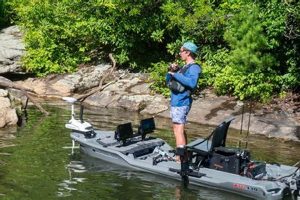
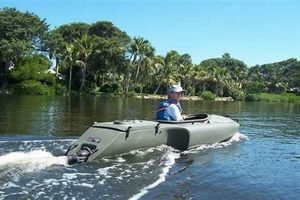
Angling from a small, human-powered vessel approximately three meters in length offers a unique blend of portability, affordability, and access to shallow or otherwise difficult-to-reach waters. This approach allows anglers to target a variety of species in diverse environments, from calm lakes and slow-moving rivers to coastal estuaries and sheltered bays. It combines the thrill of sport fishing with the tranquility and connection with nature that paddling provides.
This method’s popularity stems from its relatively low barrier to entry and the potential for highly rewarding experiences. The compact size of these vessels simplifies transportation and storage, eliminating the need for trailers or large storage spaces. Their maneuverability allows for navigation in tight spaces, granting access to secluded fishing grounds often inaccessible to larger boats. Historically, small watercraft have played a vital role in fishing cultures worldwide, and modern iterations retain the core essence of this traditional practice while incorporating advancements in materials and design.
The following sections will explore vessel selection, essential gear and tackle, effective paddling techniques, and strategies for locating and landing fish from this unique vantage point. Safety considerations and responsible angling practices will also be addressed to ensure a sustainable and enjoyable experience.
Tips for Kayak Angling
Successful kayak fishing requires careful planning and execution. These tips offer guidance for enhancing angling success and overall experience.
Tip 1: Prioritize Stability: Vessel stability is paramount. Wider hulls generally offer greater stability than narrower designs, especially for anglers new to the sport. Consider individual weight and gear when selecting a suitable watercraft.
Tip 2: Master Basic Paddle Strokes: Efficient paddling conserves energy and allows for precise boat control. Practice forward, reverse, and sweep strokes to navigate effectively and maintain position while fishing.
Tip 3: Organize Tackle and Gear: Keep essential gear within easy reach. Utilize tackle boxes, rod holders, and other storage solutions to maintain a clutter-free and efficient cockpit environment.
Tip 4: Understand Target Species: Research the preferred habitat and feeding patterns of target fish species. This knowledge informs location selection and lure or bait choices.
Tip 5: Employ Appropriate Anchoring Techniques: Anchoring prevents drift and maintains position in desired fishing locations. Utilize a lightweight anchor system suited for shallow-water applications.
Tip 6: Practice Catch and Release Best Practices: Minimize fish handling time and use appropriate tools for hook removal to ensure fish survival after release.
Tip 7: Prioritize Safety: Always wear a personal flotation device and carry essential safety equipment, including a whistle, signaling device, and first-aid kit. Check weather conditions before embarking and inform someone of planned fishing locations and return times.
By incorporating these practices, anglers can maximize their chances of success while promoting safety and responsible resource management.
The information presented equips anglers with the knowledge and skills to pursue a rewarding and enjoyable experience on the water.
1. Maneuverability

Maneuverability represents a critical advantage in kayak angling, particularly with 10-foot vessels. Their compact size and relatively light weight allow for nimble navigation through complex waterways. This characteristic enables anglers to access shallow creeks, navigate around submerged obstacles, and exploit tight pockets of water often unreachable by larger, motorized boats. The ability to precisely position the kayak for optimal casting angles and drift control significantly enhances fishing success. For instance, maneuvering a kayak silently into a secluded cove teeming with vegetation can provide a distinct advantage when targeting bass or other ambush predators. Furthermore, the inherent maneuverability of a kayak allows for quick adjustments to changing currents or wind conditions, maintaining an advantageous fishing position. This responsiveness proves invaluable when fishing in dynamic environments such as tidal creeks or river systems.
The degree of maneuverability offered by a 10-foot kayak depends on factors like hull design and paddle technique. A kayak with a shallower draft and a more streamlined hull tends to navigate shallow water and dense vegetation more effectively. Similarly, mastering various paddle strokes, such as sweep strokes and reverse strokes, grants anglers greater control over the kayak’s movement and positioning. This precision allows for subtle adjustments to maintain ideal presentation of lures or bait, maximizing the chances of attracting fish. The ability to quickly change direction or hold position against currents or wind contributes significantly to an angler’s overall efficiency and effectiveness on the water.
In summary, maneuverability stands as a defining feature of 10-foot kayak fishing. This attribute empowers anglers to explore diverse environments, access secluded fishing grounds, and maintain precise boat control. Understanding the factors influencing maneuverability, coupled with proficient paddling techniques, unlocks the full potential of these versatile vessels. This advantage translates directly into increased fishing opportunities and a more immersive experience in the natural world. While stability and portability also contribute to the appeal of kayak angling, maneuverability remains a core element that sets it apart from other fishing platforms.
2. Stability

Stability plays a crucial role in kayak fishing, particularly in 10-foot vessels where the angler’s center of gravity sits higher above the waterline. Maintaining balance is essential not only for safety and preventing capsizing but also for effectively casting, reeling, and landing fish. A stable platform allows for more confident and controlled movements, contributing significantly to a successful and enjoyable fishing experience.
- Hull Design and Stability
Hull design directly impacts stability. Wider, flatter hulls generally offer greater primary stability, resisting initial tipping. However, they may be less maneuverable. Conversely, narrower hulls enhance maneuverability but compromise primary stability. “V” shaped hulls provide better secondary stability the resistance to further tipping once the initial stability is overcome making them suitable for rougher waters. Selecting a hull design involves balancing stability needs with desired maneuverability and anticipated water conditions. A 10-foot kayak designed specifically for fishing often incorporates a wider, flatter hull for enhanced stability.
- Weight Distribution and Balance
Proper weight distribution is crucial for maintaining equilibrium. Distributing gear evenly within the kayak minimizes imbalance. Positioning heavier items lower in the hull lowers the center of gravity, improving stability. Sudden shifts in weight, such as during casting or landing a fish, can compromise stability. Anglers must anticipate and compensate for these shifts, maintaining a mindful awareness of body position and weight distribution throughout the fishing experience.
- Impact of Water Conditions
Water conditions significantly influence stability. Calm, flat water presents fewer challenges compared to choppy or windy conditions. Currents and waves can destabilize a kayak, requiring greater focus on balance and paddle control. Anglers should assess water conditions before embarking and choose locations suitable for their skill level and kayak’s stability characteristics. Adapting fishing techniques to prevailing conditions, such as using a drift sock to slow down in currents, further enhances stability.
- Stability Enhancements
Various accessories and techniques can enhance stability. Outriggers, which extend horizontally from the kayak, provide additional support and significantly increase stability. Stabilizer pontoons, attached to the sides of the hull, offer similar benefits. Proper paddling technique also contributes to stability. Using smooth, controlled strokes minimizes rocking and maintains balance. Practicing self-rescue techniques in calm water prepares anglers for potential capsizing scenarios, further contributing to a safe and confident experience.
Ultimately, prioritizing stability in 10-foot kayak fishing contributes significantly to both safety and angling success. Understanding the interplay between hull design, weight distribution, water conditions, and stability enhancements empowers anglers to make informed choices and maximize their time on the water. By carefully considering these factors, anglers can create a stable and secure platform for pursuing their passion.
3. Portability
Portability significantly contributes to the appeal of 10-foot kayak fishing. These vessels’ compact size and relatively light weight, typically between 40 and 60 pounds, facilitate easy transport and storage. Unlike larger boats requiring trailers and substantial storage space, a 10-foot kayak can often be transported on a car’s roof rack or even carried by a single individual. This ease of transport expands access to diverse fishing locations, from remote ponds and small lakes to coastal inlets and slow-moving rivers. Anglers residing in apartments or lacking dedicated boat storage benefit considerably from this portability. Consider, for example, an angler living in an urban environment. Transporting a larger boat to a local fishing spot would pose significant logistical challenges. A 10-foot kayak, however, could be easily loaded onto a vehicle and transported, expanding fishing opportunities within the urban landscape.
The portability of 10-foot kayaks also translates to greater flexibility during fishing excursions. Carrying the kayak short distances to access otherwise inaccessible launch points opens up new fishing grounds. This advantage becomes particularly relevant in areas with limited boat ramps or when seeking secluded stretches of water. Furthermore, the reduced logistical burden associated with transporting and storing a 10-foot kayak contributes to the overall simplicity and accessibility of the sport. This simplicity allows anglers to focus on the core elements of fishing, fostering a closer connection with the natural environment. For instance, an angler seeking solitude might paddle a 10-foot kayak across a shallow lake to reach a secluded cove inaccessible to motorized craft, enhancing the immersive and tranquil nature of the fishing experience.
In conclusion, portability stands as a defining characteristic and a key advantage of 10-foot kayak fishing. This attribute enhances access to diverse waterways, simplifies transport and storage, and promotes a more streamlined and immersive fishing experience. While maneuverability and stability remain crucial considerations, the portability factor contributes significantly to the broad appeal and accessibility of this increasingly popular approach to angling. It allows for exploration of a wider range of fishing environments, catering to diverse angling preferences and logistical circumstances. This factor directly influences the growth and continued popularity of the sport, attracting individuals seeking a more intimate and less logistically demanding connection with the aquatic environment.
4. Targeted Species

Species selection significantly influences equipment choices and location strategies in angling from a 10-foot kayak. These vessels excel in calm, shallow waters, making them ideal for pursuing species thriving in such environments. Large, powerful fish inhabiting open ocean or deep, swift rivers present challenges better suited to larger, more stable watercraft. Conversely, species like bass, panfish, and trout, often found in ponds, lakes, and slow-moving streams, align well with the capabilities of these smaller vessels. For example, targeting bass in a shallow, weedy lake allows anglers to leverage the kayak’s maneuverability to access tight pockets of water holding fish, while its stability provides a secure platform for casting and fighting fish. Targeting pelagic species like tuna or marlin from a 10-foot kayak would be impractical and potentially dangerous due to the vessel’s size and stability limitations relative to the target species’ size and power. The kayak’s size and maneuverability become advantageous when navigating shallow, vegetated areas favored by bass, enhancing the angler’s ability to present lures effectively. Targeting trout in a clear, flowing stream necessitates a different approach. The kayak’s maneuverability allows for precise drift control, presenting flies or lures naturally within the current. Understanding the target species’ habitat and behavior informs decisions regarding fishing locations, techniques, and tackle selection.
Matching fishing techniques and tackle to target species further optimizes success rates. Lightweight spinning or baitcasting rods and reels paired with appropriate lines and lures cater well to the scale and environment typical of 10-foot kayak fishing. For instance, when targeting panfish, using light lines, small hooks, and live bait or small jigs increases the likelihood of enticing bites. Conversely, pursuing larger species like pike or muskie may require heavier tackle and larger lures. Choosing lures that mimic the target species’ natural prey, such as crankbaits resembling small fish or topwater lures imitating insects, further enhances effectiveness. Moreover, understanding the target species’ feeding patterns influences the timing of fishing excursions. Fishing during periods of peak activity, such as dawn or dusk for many predatory species, increases the chances of encountering active fish.
Careful consideration of target species remains a critical factor in successful 10-foot kayak angling. Matching vessel capabilities to species preferences, coupled with appropriate tackle and technique selection, maximizes the potential for rewarding experiences. Recognizing the limitations of these vessels in relation to certain species promotes safety and responsible angling practices. This informed approach ensures a sustainable and enjoyable pursuit, fostering a deeper appreciation for the interplay between angler, environment, and target species.
5. Essential Gear

Appropriate gear selection significantly impacts safety and success in 10-foot kayak fishing. These relatively small, self-propelled vessels require specialized equipment tailored to their unique characteristics and the demands of the fishing environment. Careful consideration of essential gear ensures angler preparedness, enhances on-the-water efficiency, and contributes to a more rewarding and secure fishing experience. The following facets highlight key equipment categories crucial for successful kayak angling.
- Personal Flotation Device (PFD)
A properly fitted PFD stands as the single most important piece of equipment. It provides essential buoyancy in the event of capsizing or accidental immersion, significantly increasing survival chances. PFDs designed specifically for paddling offer greater comfort and mobility compared to standard life jackets, allowing for unrestricted casting and paddling motions. Inflatable PFDs, while requiring regular maintenance and inspection, provide a less cumbersome alternative for warmer climates. Regardless of type, a PFD should be worn consistently throughout any kayak fishing excursion.
- Paddle
An appropriately sized and efficiently designed paddle is crucial for maneuvering and controlling the kayak. Paddle length depends on factors like angler height, kayak width, and paddling style. Lightweight paddles constructed from materials like fiberglass or carbon fiber reduce fatigue during extended paddling sessions. A well-designed paddle allows for efficient propulsion and precise boat control, enabling anglers to reach desired fishing locations, maintain position against currents, and navigate effectively through various water conditions.
- Rod and Reel
Rod and reel selection depends on the target species and fishing techniques employed. Shorter rods, typically between 6 and 7 feet in length, are well-suited for kayak fishing due to the confined cockpit space. Spinning or baitcasting reels paired with appropriate line weight and lure selection cater to the demands of various fishing styles. Rod holders mounted on the kayak provide secure storage and quick access to rods while paddling or landing fish.
- Safety and Navigation Equipment
Essential safety equipment includes a whistle for signaling, a waterproof flashlight or headlamp for visibility in low-light conditions, a first-aid kit for addressing minor injuries, and a communication device such as a VHF radio or mobile phone in a waterproof case. A bilge pump or bailer assists in removing water from the kayak’s cockpit in the event of flooding. Navigation tools, such as a GPS unit or chartplotter, aid in route planning and location awareness, particularly in unfamiliar waters. A dry bag or waterproof container protects essential items like electronics and personal belongings from moisture.
The combination of these essential gear elements contributes significantly to a safe, efficient, and ultimately more rewarding kayak fishing experience. While specific gear choices depend on individual preferences and target species, prioritizing safety and functionality remains paramount. Proper equipment selection, coupled with appropriate paddling techniques and fishing strategies, allows anglers to fully appreciate the unique opportunities and challenges presented by this engaging and increasingly popular style of angling.
Frequently Asked Questions
This section addresses common inquiries regarding angling from a 10-foot kayak, providing concise and informative responses.
Question 1: What are the advantages of fishing from a 10-foot kayak compared to larger vessels?
Key advantages include enhanced maneuverability in shallow or confined waters, simplified transport and storage due to reduced size and weight, and generally lower acquisition and maintenance costs.
Question 2: Are 10-foot kayaks suitable for ocean fishing?
While some 10-foot kayaks can handle sheltered coastal waters or bays, they are generally not recommended for open ocean conditions due to stability limitations and susceptibility to wind and waves. Prioritizing safety and adhering to manufacturer recommendations is crucial.
Question 3: What essential safety equipment should accompany kayak anglers?
Essential safety gear includes a properly fitted personal flotation device (PFD), a whistle, a signaling device, a first-aid kit, and appropriate navigation and communication tools. Checking weather forecasts before embarking and informing someone of intended fishing locations and return times are also crucial safety practices.
Question 4: How does one choose the right paddle for a 10-foot kayak?
Paddle selection depends on factors like angler height, kayak width, and paddling style. Consulting with experienced paddlers or kayak retailers can provide personalized guidance. Lightweight, efficiently designed paddles contribute to reduced fatigue and enhanced boat control.
Question 5: What fishing techniques are most effective from a 10-foot kayak?
Effective techniques vary based on target species and environmental conditions. Common approaches include casting and retrieving lures, trolling, and drift fishing. Adapting techniques to specific locations and fish behavior maximizes success.
Question 6: What are the primary considerations for maintaining and storing a 10-foot kayak?
Proper maintenance includes regular cleaning, inspection for damage, and appropriate storage practices. Storing the kayak out of direct sunlight and extreme temperatures prolongs its lifespan. Following manufacturer guidelines for maintenance and storage ensures optimal performance and longevity.
These responses offer practical insights into common considerations surrounding 10-foot kayak angling. Prioritizing safety, appropriate gear selection, and responsible angling practices contribute to a successful and enjoyable experience on the water.
For further information and detailed guidance on specific aspects of kayak angling, consult reputable resources and experienced practitioners. Continuous learning and skill development enhance both safety and enjoyment of this rewarding outdoor pursuit.
Conclusion
Exploration of angling from a 10-foot kayak reveals distinct advantages inherent in this approach. Maneuverability within shallow, confined waterways, coupled with ease of transport and storage, expands angling opportunities. Appropriate gear selection, including personal flotation devices and specialized paddles, enhances both safety and effectiveness. Consideration of target species and corresponding fishing techniques further optimizes success. Understanding inherent limitations regarding vessel stability and suitability for specific water conditions underscores the importance of responsible angling practices.
The increasing popularity of this method reflects a growing appreciation for accessible and versatile angling experiences. Careful preparation, informed decision-making, and respect for the aquatic environment ensure the continued sustainability and enjoyment of 10-foot kayak fishing for present and future generations of anglers.