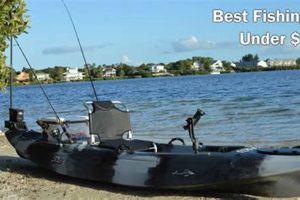
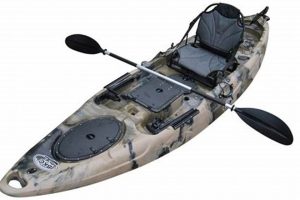
Top-performing kayaks earn their accolades through a combination of factors including durability, stability, performance, features, and user reviews. For example, a highly-rated recreational kayak might be praised for its comfortable seating, ease of use, and tracking in calm waters, while a top-rated touring kayak could be recognized for its speed, storage capacity, and seaworthiness in challenging conditions. Understanding these differentiating factors is key to selecting the appropriate vessel.
Choosing a well-regarded kayak offers several advantages. Superior construction and design contribute to a safer and more enjoyable paddling experience. Positive user feedback provides valuable insights into real-world performance and potential issues. Furthermore, researching top-ranked options often leads to discovering innovative features and technologies that enhance kayaking enjoyment and efficiency. Historically, kayak design has evolved significantly, progressing from traditional skin-on-frame constructions to modern rotomolded polyethylene and composite materials. The availability of online reviews and ratings has become instrumental in helping consumers navigate the wide array of choices.
This article will delve into specific categories of kayaks, exploring the characteristics that define top performers in each class, from recreational and touring models to whitewater and fishing kayaks. It will also provide guidance on interpreting reviews and ratings, empowering paddlers to make informed decisions aligned with their individual needs and paddling styles.
Tips for Selecting a Top-Tier Kayak
Acquiring a high-quality kayak requires careful consideration of various factors. These tips provide guidance for navigating the selection process effectively.
Tip 1: Define Paddling Needs: Clarify intended usagerecreational paddling, touring, fishing, or whitewaterto narrow the field of suitable kayak types.
Tip 2: Research Hull Designs: Understand how different hull shapes (flat, rounded, V-shaped) affect stability, speed, and maneuverability. Consider water conditions typically encountered.
Tip 3: Evaluate Construction Materials: Compare the durability, weight, and performance characteristics of polyethylene, fiberglass, and composite kayaks. Factor in transportation and storage considerations.
Tip 4: Assess Seating and Comfort: Examine seat adjustability, back support, and legroom, particularly for longer paddling trips. Adequate comfort enhances enjoyment and prevents fatigue.
Tip 5: Consider Storage Capacity: Evaluate storage options for gear, especially for camping or fishing expeditions. Dry hatches and bungee systems offer secure storage solutions.
Tip 6: Analyze User Reviews and Ratings: Consult online reviews and ratings from reputable sources. Look for consistent feedback on performance, durability, and comfort. Pay attention to any recurring issues reported by users.
Tip 7: Determine Budget: Establish a realistic budget before beginning the search. High-quality kayaks come at various price points, but investing in a durable and well-designed vessel often pays off in the long run.
Tip 8: Test Paddle if Possible: A test paddle offers invaluable firsthand experience with a kayak’s handling and comfort. It provides an opportunity to assess stability and maneuverability in real-world conditions.
By following these guidelines, individuals can make informed purchasing decisions, selecting kayaks that align with their specific needs and paddling aspirations. A carefully chosen kayak enhances on-water experiences, contributing to safety, enjoyment, and exploration.
The subsequent sections of this article will provide in-depth analyses of specific kayak categories and further elaborate on key features to consider during the selection process.
1. Stability

Stability stands as a cornerstone of highly-rated kayaks, significantly influencing user experience and safety. A stable kayak provides a secure and confidence-inspiring platform, particularly for beginners, anglers, photographers, or anyone paddling in challenging conditions. Kayak stability arises from a combination of factors including hull design, width, and length. Wider, flatter hulls generally offer greater primary stability (initial resistance to tipping), while longer, narrower hulls often provide superior secondary stability (resistance to capsizing once tilted). A well-designed kayak balances these characteristics to achieve optimal performance for its intended purpose. For instance, a recreational kayak prioritizes primary stability for a reassuring feel, whereas a sea kayak emphasizes secondary stability to handle waves and rough water. Neglecting stability can lead to discomfort, difficulty maneuvering, and increased risk of capsizing, especially in adverse conditions. Understanding the nuances of kayak stability enables informed decisions tailored to individual paddling styles and environments.
The connection between stability and top kayak ratings manifests in several ways. User reviews frequently highlight stability as a key factor in their satisfaction. Kayaks earning high marks often demonstrate a reassuring balance of primary and secondary stability, catering to their target audience. Manufacturers invest in research and design to optimize stability, employing features such as chines (edges along the hull), rocker (curvature from bow to stern), and ballast systems. For example, fishing kayaks frequently incorporate wider beams and flatter hulls to enhance stability while casting and reeling. Similarly, recreational kayaks often feature shallow V-hulls for comfortable stability in calm waters. Analyzing stability ratings and user feedback provides valuable insights into a kayak’s on-water performance and suitability for specific activities.
In summary, stability represents a critical attribute of top-rated kayaks, directly impacting user confidence, safety, and overall paddling experience. Evaluating hull design, considering intended usage, and analyzing user feedback empowers paddlers to prioritize stability appropriately. Prioritizing stability, alongside other key features, leads to selecting a kayak that optimizes performance, enhances enjoyment, and minimizes risks on the water.
2. Performance

Performance represents a critical factor in determining top-rated kayaks, encompassing speed, efficiency, tracking, and maneuverability. These elements influence how a kayak responds to paddling input and navigates various water conditions. A high-performing kayak translates paddling effort into efficient forward motion, tracks straight with minimal course correction, and maneuvers effectively in diverse environments. Cause-and-effect relationships exist between design features and performance characteristics. For instance, a longer, narrower hull typically delivers greater speed and tracking, while a shorter, wider hull provides enhanced maneuverability. Similarly, a V-shaped hull slices through water efficiently, whereas a flatter hull offers greater stability but sacrifices speed. Real-world examples illustrate these principles. A touring kayak, designed for long-distance paddling, prioritizes speed and tracking, often featuring a longer, narrower hull and a defined keel. Conversely, a whitewater kayak, built for navigating rapids and turbulent flows, emphasizes maneuverability with a shorter, rockered hull and pronounced edges. Understanding these relationships enables informed decisions based on intended usage.
The importance of performance as a component of best-rated kayaks is evident in user reviews and expert evaluations. Paddlers consistently prioritize performance characteristics aligned with their specific needs. A recreational paddler might value stability and ease of turning, while a touring enthusiast seeks efficient tracking and speed. Kayak manufacturers invest heavily in research and development to optimize performance, utilizing advanced hull designs, lightweight materials, and innovative features. Practical applications of this understanding empower paddlers to select kayaks best suited for their intended activities and water conditions. Choosing a kayak with appropriate performance characteristics enhances enjoyment, reduces fatigue, and promotes safety on the water. For example, a kayak optimized for speed and tracking minimizes effort during long-distance paddles, whereas a highly maneuverable kayak enhances control in challenging currents or confined waterways.
In summary, performance stands as a defining characteristic of top-rated kayaks. Understanding the interplay between design elements and performance outcomes empowers informed decision-making. Evaluating performance metrics alongside other key factors, such as stability and comfort, enables paddlers to select kayaks that optimize their on-water experience. Prioritizing performance contributes to efficiency, control, and enjoyment, whether navigating tranquil lakes, challenging rapids, or open coastal waters.
3. Durability

Durability represents a critical factor in the evaluation of top-tier kayaks, directly impacting lifespan, maintenance requirements, and overall value. A durable kayak withstands the rigors of regular use, including abrasion, impacts, UV exposure, and varying environmental conditions. Cause-and-effect relationships exist between construction materials and durability. For example, rotomolded polyethylene kayaks offer excellent impact resistance and affordability, while fiberglass and composite kayaks provide higher strength-to-weight ratios but may be more susceptible to scratches and cracks. The manufacturing process also plays a crucial role. High-quality construction techniques, such as proper layering and curing of composite materials, enhance a kayak’s ability to withstand stress and resist degradation over time. Real-world examples illustrate these principles. A kayak frequently used in rocky environments benefits from a robust polyethylene hull, while a lightweight composite kayak excels in situations where portability is paramount. The practical implication is that investing in a durable kayak minimizes repair costs and extends its usable life.
The importance of durability as a component of best-rated kayaks is evident in consumer feedback and expert reviews. Paddlers consistently emphasize durability as a key purchasing consideration, recognizing its long-term impact on value and performance. Manufacturers respond to this demand by employing durable materials, reinforcing high-stress areas, and implementing stringent quality control measures. Practical applications of this understanding assist paddlers in selecting kayaks appropriate for their usage patterns and environmental conditions. Choosing a kayak constructed from durable materials and employing robust manufacturing techniques reduces the likelihood of damage, minimizes maintenance needs, and ensures long-lasting performance. For example, a kayak intended for whitewater paddling demands greater impact resistance than one designed for recreational use on calm lakes.
In summary, durability constitutes a vital attribute of top-rated kayaks. Understanding the relationship between materials, construction techniques, and durability empowers informed purchasing decisions. Evaluating durability alongside other key factors, such as performance and stability, enables paddlers to select kayaks that offer long-lasting value and reliable performance. Prioritizing durability contributes to a positive ownership experience, minimizing maintenance hassles and maximizing time on the water.
4. Comfort
Comfort stands as a pivotal factor in the evaluation of top-tier kayaks, significantly impacting user experience, particularly during extended paddling sessions. A comfortable kayak reduces fatigue, enhances enjoyment, and promotes proper posture, contributing to a more positive and rewarding time on the water. Cause-and-effect relationships exist between kayak design elements and comfort levels. Key considerations include seat design, adjustability, back support, legroom, and cockpit dimensions. A well-designed seat provides adequate cushioning and conforms to the paddler’s body shape, minimizing pressure points and promoting proper posture. Adjustable features, such as foot braces and backrests, allow paddlers to customize the fit and optimize comfort based on individual preferences and body types. Ample legroom and a spacious cockpit prevent cramping and allow for comfortable movement. Real-world examples illustrate these principles. A recreational kayak intended for short leisurely paddles might prioritize a comfortable, adjustable seat, while a touring kayak designed for long-distance expeditions emphasizes ergonomic design and ample legroom to minimize fatigue during extended trips.
The importance of comfort as a component of best-rated kayaks is clearly reflected in user reviews and expert evaluations. Paddlers consistently cite comfort as a crucial purchasing consideration, recognizing its impact on enjoyment and overall satisfaction. Manufacturers invest in research and design to optimize comfort, utilizing ergonomic principles, advanced materials, and innovative features like adjustable seating systems and breathable fabrics. Practical applications of this understanding empower paddlers to select kayaks best suited for their intended usage and physical requirements. Choosing a kayak with appropriate comfort features enhances the paddling experience, reduces fatigue, and minimizes the risk of discomfort or injury. For example, a paddler with back problems benefits significantly from a kayak with adjustable lumbar support, while a taller paddler requires ample legroom and an appropriately sized cockpit.
In summary, comfort represents a vital attribute of top-rated kayaks, directly influencing user satisfaction and overall enjoyment. Understanding the relationship between design elements and comfort levels enables informed decision-making. Evaluating comfort features alongside other key factors, such as performance and durability, empowers paddlers to select kayaks that optimize their on-water experience. Prioritizing comfort contributes to reduced fatigue, enhanced enjoyment, and ultimately, a more positive and rewarding time spent paddling.
5. Features

Features play a significant role in distinguishing top-rated kayaks from average models. These added functionalities and design elements enhance performance, comfort, convenience, and overall user experience, catering to specific paddling styles and needs. Analyzing available features empowers informed purchasing decisions aligned with individual paddling aspirations.
- Storage Options
Storage capacity and accessibility are crucial for carrying gear, especially during longer expeditions or fishing trips. Top-rated kayaks often incorporate features like dry hatches, bungee systems, and recessed storage compartments to keep belongings secure and protected from the elements. Ample storage space contributes to convenience and allows paddlers to bring essential equipment, safety gear, and personal items. For example, a touring kayak benefits from large hatches for camping gear, while a fishing kayak might prioritize specialized compartments for tackle and rods. Adequate storage enhances practicality and expands the possibilities for exploration and adventure.
- Rudder and Skeg Systems
Rudders and skegs enhance tracking and control, particularly in windy or challenging conditions. A rudder, controlled by foot pedals, provides active steering assistance, while a skeg, a fixed or retractable fin, improves directional stability. These features minimize the need for constant course correction, reducing fatigue and enhancing paddling efficiency. For example, a sea kayak benefits from a rudder for navigating open water and strong currents, while a recreational kayak might utilize a skeg for improved tracking on lakes. The presence and functionality of these systems contribute significantly to a kayak’s performance and suitability for specific paddling environments.
- Seating and Comfort Enhancements
Comfort features significantly impact the overall paddling experience, especially during longer trips. Top-rated kayaks often incorporate adjustable seats, padded backrests, and thigh braces to provide ergonomic support and minimize fatigue. Features like breathable fabrics and adjustable footrests further enhance comfort and allow for customized adjustments. For example, a recreational kayak might prioritize a plush, adjustable seat for relaxed paddling, while a fishing kayak could incorporate a higher seat for improved visibility and casting. Prioritizing comfort features enhances enjoyment and allows for extended time on the water.
- Specialized Features for Specific Disciplines
Features tailored to specific paddling disciplines further distinguish top-rated kayaks. Fishing kayaks might include rod holders, tackle storage, and anchor trolleys, while whitewater kayaks often feature reinforced hulls, grab handles, and specialized outfitting for safety and performance in challenging conditions. Touring kayaks benefit from features like deck rigging, compass mounts, and GPS/fish finder compatibility. These specialized features cater to specific needs and enhance performance and enjoyment within each discipline. The availability of these features directly influences a kayak’s suitability for its intended purpose.
Careful consideration of these features, in conjunction with other key factors like performance, stability, and durability, empowers informed purchasing decisions. Selecting a kayak with features aligned with individual paddling styles and needs enhances comfort, convenience, and overall enjoyment on the water. Top-rated kayaks often excel in offering a well-rounded combination of essential and specialized features, contributing to a superior paddling experience.
Frequently Asked Questions about Top-Rated Kayaks
This section addresses common inquiries regarding the selection and use of highly-rated kayaks, providing concise and informative responses.
Question 1: What constitutes a “best-rated” kayak?
A top-rated kayak consistently receives positive feedback across various criteria, including performance, stability, durability, comfort, and features. These kayaks generally excel within their intended category (e.g., recreational, touring, fishing) and meet or exceed user expectations.
Question 2: How does one differentiate between marketing hype and genuine quality?
Consulting independent reviews from reputable sources, analyzing user feedback, and comparing specifications across different models helps discern genuine quality from marketing claims. Focusing on objective performance data and user experiences provides a more reliable assessment.
Question 3: Does a higher price tag guarantee superior quality?
While price often correlates with quality, it is not a guarantee. A higher price may reflect premium materials, advanced features, or brand recognition, but careful research is essential to ensure value for the investment. Comparing features and reviews across different price points helps identify optimal value.
Question 4: How significant is kayak weight, and how does it influence transport and handling?
Kayak weight significantly impacts portability and ease of handling. Lighter kayaks are easier to transport, load onto vehicles, and carry to launch sites. However, lighter weight sometimes comes at the expense of durability or stability. Balancing weight considerations with other performance factors is crucial based on individual needs and transport capabilities.
Question 5: What maintenance is required to ensure the longevity of a high-quality kayak?
Proper maintenance, including regular cleaning, UV protection, and appropriate storage, extends kayak lifespan. Specific maintenance requirements vary depending on the construction material (e.g., polyethylene, fiberglass, composite). Adhering to manufacturer recommendations and addressing minor damage promptly helps preserve the kayak’s integrity and performance.
Question 6: How can one determine the appropriate kayak size and type for individual needs?
Factors like intended use (recreational, touring, fishing), paddler weight and height, and anticipated water conditions influence kayak selection. Researching different kayak categories and consulting sizing charts provided by manufacturers helps determine the appropriate size and type for optimal performance and comfort.
Understanding these common inquiries provides a foundation for informed decision-making when selecting a top-rated kayak. Thorough research, careful consideration of individual needs, and objective evaluation of available options lead to a rewarding and enjoyable paddling experience.
The following section will offer a comprehensive overview of various kayak types and their suitability for different paddling activities.
Conclusion
This exploration of high-quality kayaks has emphasized the multifaceted nature of selecting the optimal vessel. Key factors including stability, performance, durability, comfort, and features contribute significantly to overall user experience and satisfaction. Understanding the interplay of these elements, coupled with careful consideration of individual paddling styles and intended usage, empowers informed purchasing decisions. Analyzing user reviews, comparing specifications, and prioritizing essential attributes leads to the acquisition of a kayak that enhances on-water adventures.
The pursuit of a top-rated kayak represents an investment in both enjoyment and safety. A well-chosen vessel enhances paddling experiences, fosters exploration, and provides a reliable platform for navigating diverse waterways. By prioritizing quality, paddlers gain access to innovative designs, durable construction, and enhanced performance characteristics that contribute to lasting satisfaction and countless hours of rewarding on-water exploration.