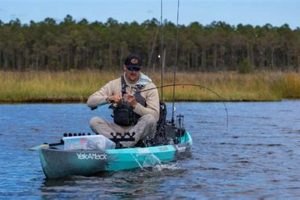
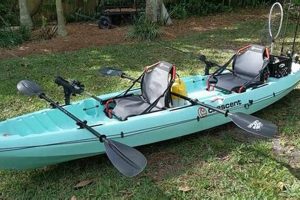
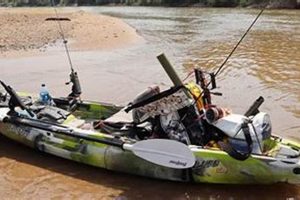
Individually crafted kayaks designed for angling offer a unique blend of form and function tailored to specific fishing styles and individual needs. These watercraft are often equipped with specialized features like rod holders, live wells, and integrated electronics, distinct from mass-produced models. For example, a kayak intended for ocean fishing might prioritize stability and storage capacity, while one for river fishing might emphasize maneuverability and a shallower draft.
Tailored design provides anglers with significant advantages. Ergonomic considerations, such as adjustable seating and customized pedal placement, enhance comfort and endurance during long fishing trips. Furthermore, specialized storage solutions ensure essential gear remains organized and readily accessible. Historically, fishing from small, personalized watercraft has been a common practice across cultures. The modern iteration, however, benefits from advanced materials and construction techniques, enabling highly durable and efficient vessels capable of navigating diverse waterways. This evolution reflects a growing appreciation for the connection between angler, equipment, and environment.
The following sections will explore the key considerations involved in commissioning a personalized fishing kayak, from hull design and material selection to outfitting choices and manufacturer selection. Understanding these elements empowers anglers to make informed decisions, ensuring the final product perfectly aligns with their individual fishing style and aspirations.
Tips for Commissioning a Personalized Fishing Kayak
Careful planning ensures a successful outcome when commissioning a personalized fishing kayak. Consideration of the following points will aid in clarifying needs and communicating effectively with builders.
Tip 1: Define Fishing Style and Environment: Clearly identify the target species, typical fishing locations (rivers, lakes, oceans), and preferred fishing methods. This foundational understanding guides subsequent decisions regarding hull design, features, and accessories.
Tip 2: Prioritize Stability and Performance: Balance stability needs with desired performance characteristics. Wider hulls offer greater stability, while narrower designs favor speed and maneuverability. Consider anticipated water conditions and personal preferences.
Tip 3: Evaluate Material Options: Research different construction materials, including polyethylene, fiberglass, and composites. Each material offers distinct advantages and disadvantages related to weight, durability, and maintenance requirements.
Tip 4: Specify Storage and Accessory Requirements: Detail specific storage needs for rods, tackle boxes, and other equipment. Consider integrated features like rod holders, live wells, and electronics mounts. Discuss placement and accessibility with the builder.
Tip 5: Focus on Comfort and Ergonomics: Pay close attention to seating, footrests, and pedal placement. A comfortable and supportive setup is essential for long hours on the water. Request adjustable features to accommodate individual preferences.
Tip 6: Research and Select a Reputable Builder: Thoroughly investigate potential builders. Review portfolios, seek testimonials, and discuss experience with specific materials and design features. A strong builder-client relationship is crucial.
Tip 7: Establish a Clear Budget and Timeline: Discuss pricing and production timelines upfront. Ensure a mutual understanding of project scope and payment schedules. A written agreement safeguards both parties involved.
By addressing these critical points, anglers can ensure the final product precisely meets their individual requirements, leading to enhanced fishing experiences and increased success on the water.
These considerations provide a solid foundation for the subsequent discussion on selecting the appropriate builder and navigating the commissioning process.
1. Hull Design

Hull design is a critical element in custom-built fishing kayaks, significantly influencing performance, stability, and overall suitability for specific fishing environments. A well-designed hull maximizes efficiency and effectiveness on the water, directly impacting the angler’s experience.
- Stability
Stability is paramount, particularly when fishing in challenging conditions or standing to cast. Wider, flatter hulls offer greater initial stability, making them suitable for calm waters and sight fishing. However, they may sacrifice maneuverability. Examples include pontoon-style hulls and wider, flatter designs common in recreational fishing kayaks. For custom builds, stability requirements should be balanced against other performance needs.
- Maneuverability
Maneuverability dictates how easily a kayak responds to paddle strokes and changes direction. Longer, narrower hulls with a defined keel track well in a straight line and offer efficient paddling, suitable for covering long distances. Shorter, wider hulls turn more quickly, making them ideal for navigating tight rivers or maneuvering around obstacles. Consider a shorter, rockered hull for enhanced maneuverability in a custom build intended for river fishing.
- Speed and Efficiency
Hull design influences speed and paddling efficiency. Displacement hulls, characterized by a longer waterline and a pointed bow, are designed for speed and efficient long-distance paddling. Planing hulls, common in sit-on-top kayaks, are designed to rise up and plane on the water’s surface at higher speeds. A custom-built kayak intended for offshore fishing might prioritize a displacement hull for efficient travel to distant fishing grounds.
- Draft and Water Access
Draft, the depth of the hull below the waterline, affects access to shallow waters. Shallower drafts allow navigation in shallow rivers, creeks, and flats, while deeper drafts offer better tracking in open water. Consider a shallow-draft hull for a custom build intended for accessing shallow fishing areas, like flats fishing or exploring small creeks.
The careful selection of a hull design tailored to specific fishing styles and environments is essential for maximizing the performance and enjoyment of a custom-built fishing kayak. Understanding the interplay between stability, maneuverability, speed, and draft empowers informed decision-making during the design process, resulting in a vessel perfectly suited to individual needs.
2. Material Selection
Material selection significantly impacts the performance, durability, and maintenance requirements of custom-built fishing kayaks. Careful consideration of material properties ensures the final product aligns with the angler’s specific needs and the intended fishing environment. The choice of material influences weight, stiffness, impact resistance, and resistance to UV degradation and other environmental factors. A clear understanding of these factors empowers informed decision-making, resulting in a kayak optimized for long-term performance and enjoyment.
Common materials used in custom kayak construction include polyethylene, fiberglass, and various composite materials. Polyethylene offers excellent impact resistance and durability, making it suitable for challenging environments, but can be heavier than other options. Fiberglass offers a good balance between weight and strength, allowing for greater design flexibility and often resulting in a lighter, more responsive kayak. However, fiberglass requires more meticulous maintenance and can be more susceptible to damage from impacts. Composite materials, such as carbon fiber or Kevlar, offer the highest strength-to-weight ratios, resulting in exceptionally lightweight and high-performance kayaks, but typically come at a higher cost. Choosing between a rotomolded polyethylene kayak for its durability in rocky river environments versus a lighter fiberglass kayak for open-water angling exemplifies the impact of material selection.
Ultimately, the optimal material choice depends on the specific requirements of the angler and the intended use of the kayak. Factors to consider include the type of fishing pursued, the typical water conditions, transportation and storage considerations, and budget constraints. A thorough evaluation of these factors, in conjunction with consultation with an experienced kayak builder, ensures a final product tailored to individual needs and preferences. This strategic approach maximizes the long-term satisfaction and performance of the custom-built fishing kayak, ensuring years of enjoyable and productive fishing experiences.
3. Customization Options

Customization options represent a defining characteristic of custom-built fishing kayaks, distinguishing them from mass-produced models. These options empower anglers to tailor their watercraft precisely to their individual fishing styles, physical requirements, and target environments. Strategic customization enhances both comfort and efficiency on the water, directly impacting the overall fishing experience.
- Rod Holders and Storage
Rod holders and storage solutions are fundamental customization options. Anglers can specify the type, quantity, and placement of rod holders to accommodate their preferred fishing techniques. Custom storage compartments, designed for tackle boxes, electronics, and safety gear, maximize organization and accessibility. For example, a fly fisherman might opt for recessed rod holders to protect delicate fly rods, while a bass angler might choose angled rod holders for easy access. Similarly, a kayak angler targeting large pelagic fish might require specialized storage for larger tackle and gear.
- Seating and Comfort
Seating and comfort features significantly impact endurance and enjoyment during long fishing trips. Custom-built kayaks offer options for adjustable seats, backrests, and footrests, allowing for personalized ergonomic adjustments. Examples include high-low seating systems, adjustable backrests with lumbar support, and customizable foot brace systems. These features accommodate individual physical characteristics and preferences, reducing fatigue and maximizing comfort.
- Electronics Integration
Integrating electronics enhances fishing effectiveness and situational awareness. Custom installations of fish finders, GPS units, and trolling motor systems require careful planning and execution. Examples include flush-mounted fish finder displays, integrated transducer mounts, and custom wiring solutions for powering electronic devices. Seamless integration ensures optimal functionality and minimizes interference with other kayak features.
- Color and Aesthetics
While often overlooked, color and aesthetic customization contribute to the overall satisfaction and pride of ownership. Anglers can choose from a variety of colors, patterns, and finishes to personalize their kayaks. Examples include camouflage patterns for blending into the environment, vibrant colors for increased visibility, and custom graphics or artwork. These options allow anglers to create a visually appealing kayak that reflects their individual style.
These customization options, when thoughtfully integrated into the design and construction process, transform a standard kayak into a highly personalized fishing platform optimized for individual needs and preferences. The result is a custom-built fishing kayak that not only enhances performance but also deepens the connection between angler and equipment, fostering a more immersive and rewarding fishing experience. The careful consideration of these options, in conjunction with a skilled builder, ensures a final product that exceeds expectations and provides years of exceptional service on the water.
4. Performance Enhancement

Performance enhancement in custom-built fishing kayaks represents the pursuit of optimized on-the-water effectiveness. This involves tailoring design elements to specific fishing styles and environmental conditions. Cause and effect relationships are central to this process. For example, a kayak designed for speed in open water will prioritize a longer, narrower hull and potentially lighter materials like fiberglass or composites. Conversely, a kayak intended for stability in rivers or surf zones will benefit from a wider, flatter hull and potentially a more robust material like polyethylene. Understanding these relationships empowers informed design choices, directly impacting performance outcomes.
The importance of performance enhancement as a component of custom-built fishing kayaks stems from its direct impact on the angler’s effectiveness and overall experience. A kayak optimized for speed and efficiency allows anglers to cover greater distances and reach fishing grounds more quickly. Enhanced stability provides a secure platform for casting, fighting fish, and navigating challenging conditions. Improved maneuverability allows for precise boat control in tight spaces and around obstacles. Practical examples include incorporating features like rudder systems for enhanced tracking in windy conditions or designing recessed pedal systems for improved hydrodynamics and reduced drag. These enhancements translate to a more efficient and enjoyable fishing experience.
A thorough understanding of performance enhancement principles is crucial for maximizing the potential of a custom-built fishing kayak. This knowledge enables anglers to articulate their specific needs and preferences to builders, facilitating a collaborative design process. While challenges such as balancing stability with speed and managing weight considerations exist, the resulting benefits, including increased efficiency, enhanced control, and improved comfort, significantly contribute to a more rewarding and productive fishing experience. Ultimately, performance enhancement elevates the custom-built fishing kayak from a simple vessel to a finely tuned instrument tailored to the angler’s individual pursuit.
5. Ergonomic Considerations

Ergonomic considerations are paramount in custom-built fishing kayaks, directly influencing angler comfort, endurance, and overall fishing experience. These considerations address the physical interface between the angler and the kayak, impacting posture, paddling efficiency, and long-term physical well-being. Cause and effect relationships are central to ergonomic design. For example, an improperly positioned seat can lead to back pain and fatigue, while poorly placed footrests can compromise paddling efficiency and stability. Conversely, a well-designed seating system with adjustable back support and strategically placed footrests promotes proper posture, reduces strain, and maximizes paddling power. The importance of ergonomics as a component of custom-built fishing kayaks stems from its direct impact on the angler’s ability to fish comfortably and effectively for extended periods. A kayak tailored to an individual’s physique reduces the risk of injury and enhances overall enjoyment on the water. Real-life examples include incorporating adjustable lumbar support in seats to accommodate different back shapes and customizing footrest placement to match leg length and paddling style. These seemingly small details have a significant impact on comfort and performance.
Further analysis reveals that ergonomic considerations extend beyond basic seating and footrests. Paddle length and blade shape also play a role in overall comfort and efficiency. A paddle that is too long or too short can strain muscles and joints, while an improperly shaped blade can compromise paddling power and control. Custom-built kayaks allow for the integration of specific paddle designs tailored to the angler’s physique and paddling style. Additional examples include adjustable thigh braces for enhanced boat control and custom-designed hatches and storage compartments that minimize awkward reaching and bending. The practical significance of understanding these ergonomic principles is evident in the enhanced performance and comfort experienced by anglers using custom-built kayaks. Reduced fatigue, improved posture, and optimized paddling efficiency contribute to a more enjoyable and productive fishing experience.
In conclusion, ergonomic considerations are integral to the design and construction of custom-built fishing kayaks. Addressing these factors enhances angler comfort, reduces the risk of injury, and maximizes on-the-water performance. While challenges such as accommodating a wide range of body types and personal preferences exist, the resulting benefits are substantial. By prioritizing ergonomics, custom kayak builders create vessels that are not only functional and efficient but also promote the long-term health and well-being of anglers. This holistic approach elevates the custom-built fishing kayak from a simple mode of transportation to a personalized fishing platform optimized for individual needs and preferences.
6. Builder Expertise
Builder expertise is paramount in the realm of custom-built fishing kayaks, representing the crucial link between design concepts and tangible, high-performance watercraft. A skilled builder possesses a deep understanding of materials, construction techniques, and design principles specific to kayak building. This expertise translates directly into the quality, performance, and longevity of the finished product. Cause and effect relationships are evident: a builder’s knowledge of hydrodynamics influences hull design, impacting speed and stability; their proficiency with composite materials affects the kayak’s weight and durability; and their understanding of ergonomics guides seating and accessory placement, influencing angler comfort and efficiency. A builder experienced in crafting kayaks for specific fishing styles, such as fly fishing in rivers or trolling offshore, can translate angler requirements into specialized features, maximizing on-the-water effectiveness. For example, a builder familiar with the demands of ocean kayaking might reinforce the hull for added durability in rough conditions or integrate specialized hatches for storing safety equipment. Similarly, a builder specializing in river kayaks might incorporate rocker and flared chines for enhanced maneuverability in whitewater.
Further analysis reveals that builder expertise extends beyond technical proficiency. Effective communication and collaboration between the builder and the angler are essential for a successful outcome. A skilled builder actively listens to the angler’s needs and preferences, offering informed guidance and translating those requirements into a tangible design. This collaborative process often involves discussions about material selection, hull design modifications, customization options, and performance enhancements. Practical examples include a builder advising an angler on the advantages of a specific composite material for reduced weight or suggesting a modified seating system for improved comfort during long fishing trips. This collaborative approach ensures the final product aligns precisely with the angler’s vision and intended use. The practical significance of this understanding lies in the angler receiving a truly custom-built kayak optimized for their individual needs, resulting in enhanced performance, increased comfort, and a deeper connection with the craft.
In conclusion, builder expertise is the cornerstone of the custom-built fishing kayak industry. It represents the culmination of knowledge, skill, and experience required to translate angler aspirations into high-performance watercraft. While challenges such as finding builders specializing in specific fishing styles or navigating complex design choices exist, the benefits of partnering with a skilled and experienced builder are undeniable. The resulting kayaks are not merely vessels, but finely tuned instruments tailored to individual needs and preferences, elevating the fishing experience and fostering a deeper connection between angler and watercraft.
Frequently Asked Questions about Custom-Built Fishing Kayaks
This section addresses common inquiries regarding custom-built fishing kayaks, providing concise and informative responses to facilitate informed decision-making.
Question 1: What are the primary advantages of a custom-built fishing kayak over a mass-produced model?
Custom-built kayaks offer unparalleled personalization, allowing anglers to tailor design elements, features, and accessories to their specific needs and preferences. This level of customization optimizes comfort, performance, and fishing effectiveness, exceeding the limitations of standardized, mass-produced options.
Question 2: How does one determine the appropriate hull design for a custom fishing kayak?
Hull design selection hinges on the intended fishing environment and style. Considerations include desired stability, maneuverability, speed, and draft. Open-water angling favors longer, narrower hulls for speed and efficiency, while river fishing often benefits from shorter, wider, more maneuverable designs. Consultation with experienced builders aids in selecting the optimal hull configuration.
Question 3: What factors influence material selection for a custom-built fishing kayak?
Material selection impacts weight, durability, maintenance requirements, and cost. Polyethylene offers robustness and impact resistance, fiberglass balances weight and strength, and composite materials provide exceptional lightweight performance. The chosen material should align with the angler’s budget, intended usage, and environmental conditions.
Question 4: How long does the custom-build process typically take?
The custom-build timeline varies depending on builder workload, design complexity, and material availability. Generally, the process can range from several weeks to several months. Clear communication with the builder ensures accurate timeline expectations and project management.
Question 5: What is the typical cost range for a custom-built fishing kayak?
Cost is influenced by factors such as material selection, design complexity, customization options, and builder reputation. Custom kayaks typically represent a higher initial investment compared to mass-produced models but offer superior performance, longevity, and personalized features that justify the investment for serious anglers.
Question 6: How does one locate a reputable and experienced custom kayak builder?
Researching builder portfolios, seeking client testimonials, and contacting builders directly to discuss project requirements aid in identifying reputable builders. Membership in professional organizations and demonstrated experience in building fishing-specific kayaks further validate builder expertise and credibility.
Careful consideration of these frequently asked questions equips prospective buyers with essential knowledge, facilitating informed decisions and fostering a successful custom-build experience.
The subsequent section will delve into the intricacies of the design process, exploring the collaborative journey between angler and builder in crafting the ideal fishing kayak.
Custom-Built Fishing Kayaks
This exploration of individually crafted fishing kayaks has highlighted the multifaceted nature of their design, construction, and ultimate purpose. From the initial consideration of hull design and material selection to the intricacies of customization options and the critical role of builder expertise, the process of commissioning a personalized fishing kayak demands careful planning and informed decision-making. Performance enhancement and ergonomic considerations further underscore the potential for optimizing these watercraft to meet individual angling styles and environmental demands. The examination of frequently asked questions offers practical guidance for navigating the complexities of the custom-build process.
The pursuit of the perfectly tailored fishing kayak represents a significant investment, not only financially but also in time and consideration. However, the resulting synergy between angler, equipment, and environment yields a fishing experience unmatched by mass-produced alternatives. As angling techniques evolve and environmental awareness grows, the demand for specialized, high-performance fishing kayaks will likely continue to rise. The future of custom-built fishing kayaks rests on the continued collaboration between passionate anglers and skilled builders, pushing the boundaries of design and innovation to create ever more effective and personalized watercraft.