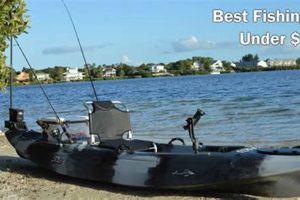
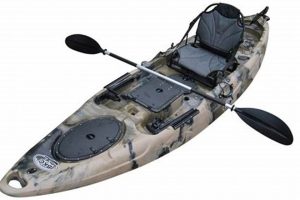
A sturdy, well-equipped container offers kayak anglers a practical solution for organizing gear and maximizing limited space. This customized storage system typically involves a durable plastic crate, often repurposed from its original dairy function, outfitted with accessories like rod holders, tackle trays, and anchor trolleys. Such systems allow anglers to keep essential equipment within easy reach, promoting efficiency and safety on the water.
Efficient organization is paramount in kayak fishing, where space is at a premium. A thoughtfully arranged container keeps essential tools and tackle readily accessible, minimizing clutter and maximizing fishing time. This also enhances safety by preventing loose items from shifting during movement or capsizing. The adaptable nature of these systems allows for customization based on individual fishing styles and target species, further enhancing their utility. Historically, anglers have improvised storage solutions; however, the growing popularity of kayak fishing has led to the development of specialized accessories and modifications specifically designed for this purpose.
The following sections will explore key factors to consider when selecting a suitable crate, popular modifications and accessories, and best practices for creating a personalized kayak fishing storage system.
Tips for Optimizing Crate Storage in Kayak Fishing
Effective crate organization is crucial for a successful and enjoyable kayak fishing experience. These tips offer guidance on maximizing storage potential and ensuring efficient access to essential gear.
Tip 1: Prioritize Stability. Securely fastening the crate to the kayak is paramount. Loose crates can shift during movement, compromising balance and potentially causing equipment loss. Utilize straps, bungee cords, or dedicated mounting systems for optimal stability.
Tip 2: Customize for Target Species. Adapt crate configurations based on specific fishing needs. Bass anglers might prioritize lure storage, while fly fishermen might require specialized compartments for flies and lines.
Tip 3: Maximize Vertical Space. Incorporate vertical storage solutions like rod holders and tool mounts affixed to the crate’s sides. This maximizes available space and keeps frequently used items within easy reach.
Tip 4: Employ Dry Bags for Essentials. Protect vulnerable items like phones, wallets, and electronics by storing them in waterproof dry bags within the crate.
Tip 5: Balance Weight Distribution. Distribute weight evenly within the crate and across the kayak to maintain stability. Heavier items should be positioned lower and centrally to prevent tipping.
Tip 6: Consider Accessibility. Place frequently accessed items, such as pliers, cutters, and lures, in easily accessible locations on the crate’s top or sides. Less frequently used gear can be stored lower or in less accessible compartments.
Tip 7: Label and Organize. Clearly label compartments and storage containers within the crate to facilitate quick and efficient retrieval of specific items.
By following these tips, anglers can transform a simple crate into a highly effective and personalized kayak fishing storage system, enhancing both efficiency and enjoyment on the water.
Through careful planning and execution, anglers can create a tailored system that optimizes their kayak fishing experience.
1. Durability

Durability is a critical factor in selecting a crate for kayak fishing. The crate will be exposed to a harsh environment, including saltwater, UV radiation, and physical impacts. A durable crate resists cracking, fading, and warping, ensuring long-term functionality and preserving its structural integrity. This translates to a reliable platform for storing and organizing essential fishing gear, minimizing the risk of equipment loss or damage due to crate failure. For instance, a crate constructed from high-density polyethylene (HDPE) offers superior durability compared to one made from lower-grade plastics, withstanding significant stress and impacts without compromising its structural integrity. Choosing a durable crate minimizes replacement costs and ensures a dependable storage solution throughout numerous fishing trips.
The practical significance of a durable crate extends beyond simply protecting stored gear. A robust crate contributes to overall safety on the water. A crate that fails structurally during use could create a hazardous situation, potentially leading to instability or entanglement. Furthermore, a durable crate provides a stable platform for mounting accessories like rod holders and fish finders, ensuring these valuable tools remain securely attached even in challenging conditions. The long-term cost-effectiveness of a durable crate further underscores its importance. While a higher initial investment might be required for a robust crate, its extended lifespan and reduced need for replacement ultimately represent a more economical choice.
In summary, prioritizing durability when selecting a crate for kayak fishing is essential for preserving equipment, ensuring angler safety, and maximizing long-term value. Choosing materials specifically designed for harsh marine environments, such as HDPE, and inspecting the crate’s construction for robust features like reinforced corners and thick walls, contribute significantly to its overall durability and longevity. This informed approach to crate selection directly impacts the overall success and enjoyment of kayak fishing excursions.
2. Size and Fit

Appropriate size and fit are paramount when selecting a crate for kayak fishing. Crate dimensions must align with the kayak’s available space, ensuring secure placement without hindering paddling or access to other essential equipment. A crate that is too large may obstruct movement or interfere with rod placement, while a crate that is too small may not provide adequate storage capacity. The crate’s shape also plays a role; rectangular crates often fit better in the rear well of a kayak, while square crates might be more suitable for placement between the legs. For example, a standard milk crate, approximately 13x13x11 inches, generally fits well in many sit-on-top kayaks, providing ample storage without compromising stability.
Careful consideration of size and fit optimizes weight distribution and stability. A properly sized crate allows for balanced placement of gear, preventing uneven weight distribution that can affect the kayak’s handling and increase the risk of capsizing. Furthermore, a well-fitted crate contributes to a more organized and efficient fishing experience. Gear can be strategically placed within the crate, maximizing accessibility and minimizing clutter. This contributes to a safer and more enjoyable fishing experience, allowing anglers to focus on fishing rather than managing precarious gear. For instance, a crate designed to fit snugly within a specific kayak model’s recessed area enhances stability and reduces the likelihood of the crate shifting during movement.
In conclusion, selecting a crate with appropriate dimensions and a shape compatible with the kayak’s design is crucial for maximizing storage capacity, maintaining stability, and optimizing the overall fishing experience. Neglecting these aspects can lead to instability, reduced fishing efficiency, and potential safety hazards. Careful measurement of the kayak’s available space and consideration of individual fishing needs are essential steps in determining the optimal crate size and fit, contributing significantly to a successful and enjoyable outing on the water.
3. Customization Options

Customization options are integral to achieving the best milk crate setup for kayak fishing. A standard crate, while functional, often requires modification to meet the specific needs and preferences of individual anglers. Adaptability transforms a simple storage container into a personalized and highly efficient fishing platform.
- Rod Holders
Integrated rod holders are essential for securing rods while paddling, changing lures, or landing fish. Various rod holder designs exist, including flush-mount, adjustable, and rotating options. Selecting the appropriate type depends on fishing style and target species. For example, a fly fisherman might prefer a rotating rod holder for easy access, while a trolling angler might opt for multiple flush-mount holders for secure rod storage. This customization directly impacts fishing efficiency and safety by keeping rods organized and readily accessible.
- Tackle Storage
Internal dividers, trays, and boxes create organized compartments for lures, hooks, weights, and other small tackle items. Modular systems offer flexibility, allowing anglers to configure storage based on the type of fishing they pursue. A bass angler might dedicate compartments to different lure types, while a saltwater angler might prioritize storage for various leader materials and hooks. Effective tackle organization within the crate streamlines lure selection and prevents tangled lines, maximizing fishing time.
- Accessory Mounting
External attachment points facilitate the addition of accessories such as fish finders, GPS units, cutting boards, and anchor trolleys. These additions further enhance the functionality of the crate and improve the overall fishing experience. Securing these items to the crate ensures they are readily available and prevents loss or damage. For instance, mounting a fish finder directly to the crate provides convenient access to crucial underwater information without cluttering the kayak’s deck.
- Crate Security
Securing the crate itself to the kayak is paramount for stability and safety. Straps, bungee cords, or dedicated mounting systems ensure the crate remains firmly in place, even in rough conditions. Various attachment methods exist, each offering different levels of security and convenience. For example, using adjustable straps allows for quick release and removal of the crate, while a permanent mounting system offers maximum stability. Secure attachment prevents accidental displacement of the crate and its contents, protecting valuable equipment and maintaining kayak stability.
These customization options collectively contribute to a highly personalized and efficient kayak fishing setup. By tailoring the crate to individual needs and preferences, anglers optimize their time on the water, enhance safety, and maximize their chances of success. The ability to adapt and modify the crate ensures its relevance across diverse fishing styles and environments, solidifying its position as a cornerstone of the kayak fishing experience.
4. Secure Mounting
Secure mounting is a critical aspect of optimizing a milk crate for kayak fishing. A stable crate ensures angler safety and efficient gear management, directly impacting the overall fishing experience. Inadequate mounting can lead to crate movement, compromising stability and potentially causing equipment loss or damage. This section explores key facets of secure mounting, highlighting their importance in creating a reliable and efficient kayak fishing platform.
- Attachment Methods
Various methods exist for securing a crate to a kayak, each offering distinct advantages and disadvantages. Straps, bungee cords, and dedicated mounting systems provide varying degrees of security and convenience. Straps offer flexibility and adjustability, while bungee cords provide quick attachment and detachment. Dedicated mounting systems, often involving hardware installed on the kayak, offer the most secure option but may limit crate portability. Selecting the appropriate method depends on individual needs and kayak configuration. For example, an angler frequently changing fishing locations might prioritize the convenience of straps, while an angler prioritizing stability in rough conditions might opt for a dedicated mounting system.
- Kayak Compatibility
Kayak design significantly influences mounting options. Sit-on-top kayaks offer numerous attachment points, including deck rigging, side rails, and recessed areas. Sit-inside kayaks present more limited options, often requiring creative solutions or specialized mounting hardware. Understanding the kayak’s structure and available attachment points is crucial for selecting a compatible and secure mounting method. An angler with a sit-on-top kayak equipped with ample deck rigging has greater flexibility in crate placement and attachment compared to an angler with a sit-inside kayak.
- Weight Distribution
Crate placement and mounting directly impact kayak stability. Weight should be distributed evenly to prevent tipping or affecting maneuverability. Securing the crate near the kayak’s center of gravity optimizes balance. Heavy items within the crate should be positioned low to further enhance stability. For example, placing a fully loaded crate towards the stern of a kayak can negatively impact tracking and increase the risk of capsizing, especially in windy conditions.
- Environmental Considerations
The marine environment presents unique challenges to secure mounting. Saltwater, UV radiation, and constant movement can degrade mounting hardware and materials over time. Selecting corrosion-resistant hardware and UV-stabilized straps or cords ensures long-term durability and reliability. Regular inspection and maintenance of mounting components are essential for preventing failure and ensuring continued crate security. An angler fishing in saltwater should prioritize stainless steel hardware and UV-resistant straps to withstand the corrosive and degrading effects of the marine environment.
Secure mounting is fundamental to a successful kayak fishing experience. A stable crate protects valuable equipment, enhances angler safety, and contributes to efficient gear management. Careful consideration of attachment methods, kayak compatibility, weight distribution, and environmental factors ensures optimal crate security, allowing anglers to focus on fishing without the distraction and potential hazards of a shifting or unstable crate. By prioritizing secure mounting, anglers transform their milk crate from a simple container into a reliable and integrated component of their kayak fishing system.
5. Drainage

Effective drainage is a crucial characteristic of a well-optimized milk crate system for kayak fishing. Water accumulation within the crate, whether from rain, splashing waves, or submerged equipment, presents several potential issues. Standing water adds unnecessary weight, reducing the kayak’s efficiency and potentially affecting stability. Prolonged exposure to moisture can damage stored gear, particularly electronics, tackle boxes, and fishing lines. Furthermore, stagnant water can promote mildew and unpleasant odors, detracting from the overall fishing experience. Therefore, incorporating drainage solutions is essential for maintaining a dry, organized, and functional storage system. For example, a crate with pre-existing drainage holes or strategically drilled holes allows water to escape, preventing these potential problems.
Several practical methods exist for enhancing crate drainage. Drilling holes in the crate’s bottom and sides facilitates water outflow. The size and number of holes should balance drainage efficiency with structural integrity. Alternatively, incorporating a raised platform or grid within the crate elevates stored items above any accumulated water, providing further protection. Additionally, using mesh or open-weave bags for storing items like lures and tackle allows for water flow-through, preventing moisture retention within individual containers. Combining these methods provides a comprehensive drainage solution, ensuring equipment remains dry and functional even in wet conditions. An angler fishing in frequently rainy conditions might opt for a crate with numerous large drainage holes, while an angler primarily fishing in calmer waters might choose a smaller number of strategically placed holes.
Addressing drainage proactively is vital for preserving equipment, maintaining kayak stability, and ensuring an enjoyable fishing experience. Neglecting this aspect can lead to gear damage, reduced kayak performance, and an unpleasant environment within the crate itself. By implementing effective drainage solutions, anglers safeguard their investment in fishing equipment, optimize kayak performance, and enhance their overall comfort and enjoyment on the water. This attention to detail contributes significantly to a successful and well-organized kayak fishing outing, demonstrating the importance of considering even seemingly minor aspects of crate design and setup.
Frequently Asked Questions
This section addresses common inquiries regarding the utilization of crates in kayak fishing, providing concise and informative responses to facilitate informed decision-making and optimize crate setup.
Question 1: What type of milk crate is best suited for kayak fishing?
High-density polyethylene (HDPE) crates are generally preferred due to their durability, resistance to UV degradation, and ability to withstand harsh marine environments. Crates with thicker walls and reinforced corners offer enhanced structural integrity.
Question 2: How can crate movement be prevented during paddling and fishing?
Secure mounting is essential. Options include adjustable straps, bungee cords, or dedicated mounting systems designed for kayaks. Proper weight distribution within the crate and across the kayak also contributes to stability.
Question 3: What are effective strategies for organizing tackle and gear within a crate?
Utilizing internal dividers, trays, and small containers creates organized compartments for various items. Labeling compartments and employing clear storage bags enhances visibility and accessibility.
Question 4: How can water accumulation within the crate be minimized?
Drilling drainage holes in the bottom and sides of the crate allows water to escape. Using waterproof bags for sensitive items provides additional protection.
Question 5: What safety precautions should be considered when using a crate on a kayak?
Ensure the crate is securely fastened to the kayak to prevent shifting during movement. Distribute weight evenly within the crate and across the kayak to maintain stability and prevent tipping. Avoid overloading the crate or the kayak beyond its recommended capacity.
Question 6: Are there specific regulations regarding the use of crates in kayak fishing?
Regulations vary by location. Some areas may have restrictions on the types of modifications allowed or require specific safety equipment. Consulting local fishing regulations before embarking on a fishing trip is recommended.
Understanding these key considerations ensures safe and effective crate utilization, maximizing enjoyment and efficiency during kayak fishing excursions.
The subsequent section offers practical tips for customizing crate systems based on individual fishing styles and preferences.
Conclusion
Optimizing a milk crate system for kayak fishing involves careful consideration of several factors. Durability, size, customization options, secure mounting, and drainage all contribute significantly to the system’s overall effectiveness. Selecting a robust crate constructed from durable materials ensures long-term performance in harsh marine environments. Proper sizing and fit maximize storage capacity without compromising kayak stability or maneuverability. Customization through the addition of rod holders, tackle storage solutions, and accessory mounts tailors the system to individual fishing styles and preferences. Secure mounting prevents crate movement and potential equipment loss, while adequate drainage protects stored gear from water damage. Addressing each of these elements transforms a standard crate into a highly functional and personalized fishing platform.
Strategic crate selection and customization enhance both the efficiency and enjoyment of kayak fishing. A well-designed system streamlines gear access, maximizes storage capacity, and contributes to overall safety on the water. By prioritizing these key considerations, anglers can create a customized setup that elevates their kayak fishing experience, allowing for a more organized, productive, and ultimately more rewarding time on the water. The ability to tailor a simple crate into a personalized fishing hub underscores the ingenuity and adaptability inherent in the sport of kayak fishing.