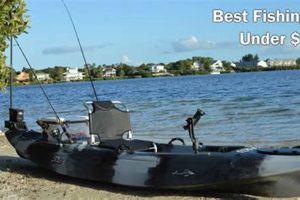
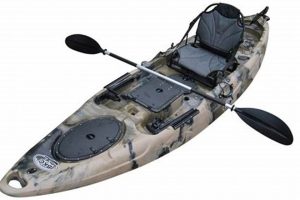
A high-quality, purpose-selected casting reel designed for use in a kayak presents distinct advantages for anglers. Such a reel balances performance with the specific constraints of kayak fishing, including limited space, the need for durability against the elements, and the potential for frequent casting in various conditions. An ideal reel for this application offers a compact profile, corrosion resistance, and smooth, reliable operation. For instance, a low-profile baitcasting reel with a sealed drag system and lightweight yet strong construction would be well-suited to the demands of kayak angling.
Selecting appropriate fishing gear significantly impacts an angler’s success and enjoyment on the water. Kayak fishing necessitates specialized equipment due to the close proximity to the water and the dynamic nature of the fishing environment. A suitable reel minimizes backlashes, facilitates accurate casts in tight spaces, and withstands the rigors of constant exposure to freshwater or saltwater. Historically, advancements in materials science and reel design have led to increasingly refined options for kayak anglers, enabling them to target a broader range of species with greater precision and efficiency.
The following sections will explore key features to consider when selecting a casting reel optimized for kayak use, including gear ratios, drag systems, and construction materials. Recommendations for various fishing styles and target species will also be provided.
Tips for Selecting a Baitcasting Reel for Kayak Fishing
Choosing the right baitcasting reel significantly enhances kayak angling effectiveness. Consider these essential factors to optimize equipment selection.
Tip 1: Prioritize a Compact, Low-Profile Design: Reduced size minimizes interference with paddling and other onboard activities. Low-profile reels offer increased comfort and maneuverability in the confined space of a kayak.
Tip 2: Select a Corrosion-Resistant Model: Constant exposure to freshwater or saltwater necessitates robust corrosion resistance. Sealed bearings and components extend reel lifespan and maintain smooth operation.
Tip 3: Consider a Moderate Gear Ratio: A versatile gear ratio (around 6.3:1 to 7.1:1) balances speed and power, accommodating various fishing techniques and target species.
Tip 4: Evaluate Drag System Performance: A smooth, reliable drag system is crucial for controlling strong fish in a kayak. Look for a drag with consistent performance under pressure.
Tip 5: Choose a Comfortable Handle and Grip: Extended fishing sessions require ergonomic design. A comfortable handle and secure grip reduce fatigue and improve handling.
Tip 6: Match Line Capacity to Target Species: Ensure the reel’s spool accommodates sufficient line capacity for the intended fishing style and target species.
Tip 7: Consider Braided Line Compatibility: Braided fishing line offers advantages in strength and sensitivity. Verify the reel’s suitability for use with braided line.
Careful consideration of these factors ensures selection of a reel that maximizes performance and enjoyment on the water. A properly chosen reel contributes significantly to successful kayak fishing excursions.
By understanding these tips and applying them to reel selection, anglers can significantly enhance their kayak fishing experience. The subsequent section will offer specific reel recommendations based on common fishing styles.
1. Compact Design

In the context of kayak fishing, a compact baitcasting reel design is paramount. The limited space and mobility inherent to kayak angling necessitate equipment that minimizes interference with paddling, casting, and other onboard activities. A smaller reel profile translates to enhanced maneuverability and overall fishing experience.
- Reduced Physical Footprint:
A smaller reel minimizes clashes with the kayak’s structure, fishing gear, and the angler’s body. This is particularly important during casting and retrieving, where free movement is essential. Low-profile baitcasting reels exemplify this principle, offering a streamlined form factor that enhances freedom of movement within the kayak.
- Enhanced Ergonomics:
Compactness contributes to improved ergonomics, allowing for more comfortable and natural hand placement during prolonged fishing sessions. A smaller reel reduces strain on the wrist and forearm, particularly when fighting larger fish. This contributes to a more enjoyable and less fatiguing experience, especially during extended outings.
- Improved Balance and Stability:
A smaller, lighter reel can improve the overall balance of the kayak setup. This is particularly important in smaller kayaks or those with limited stability. Reduced weight at the rod tip improves handling and responsiveness, facilitating more precise casting and retrieves. This translates to greater control and efficiency while fishing from a kayak.
- Facilitated Storage and Transport:
The compact size simplifies storage and transport of the fishing gear. This is particularly beneficial for kayak anglers who often need to pack and transport their equipment efficiently. Smaller reels take up less space in tackle boxes and are easier to secure during transport, minimizing the risk of damage.
The compact design of a baitcasting reel directly impacts the practicality and enjoyment of kayak fishing. By minimizing interference, improving ergonomics, and enhancing overall balance, a compact reel contributes significantly to a more efficient and comfortable fishing experience. Anglers prioritizing maneuverability and ease of use in a kayak should prioritize reels designed with a compact form factor.
2. Corrosion Resistance

Corrosion resistance represents a critical factor in determining the longevity and performance of a baitcasting reel, particularly in the demanding environment of kayak fishing. Constant exposure to freshwater, saltwater, and airborne moisture necessitates a reel built to withstand the corrosive effects of these elements. A reel lacking adequate corrosion resistance will degrade over time, leading to performance issues and ultimately premature failure. Selecting a corrosion-resistant reel ensures reliable operation and extended lifespan, maximizing the return on investment for kayak anglers.
- Sealed Components:
Sealed bearings, gears, and drag systems prevent water and debris intrusion, mitigating corrosion and maintaining smooth operation. Shielded components, such as those found in high-quality baitcasting reels designed for saltwater use, provide an additional layer of protection against the harsh marine environment. This extends the reel’s lifespan and ensures consistent performance even under challenging conditions.
- Marine-Grade Materials:
Reels constructed from marine-grade aluminum alloys, stainless steel, or specialized composite materials exhibit superior resistance to corrosion. These materials are engineered to withstand prolonged exposure to saltwater and other corrosive elements. For example, anodized aluminum provides a hard, protective layer against oxidation, while stainless steel components resist rust and maintain structural integrity. Choosing a reel made from these materials ensures long-term durability and reliable performance in demanding kayak fishing environments.
- Protective Coatings:
Protective coatings, such as specialized paints or surface treatments, create a barrier against corrosive elements. These coatings can enhance the corrosion resistance of various reel components, including the frame, spool, and handle. For instance, a multi-layer coating process can provide superior protection compared to a single layer, ensuring greater longevity and resistance to wear and tear. These coatings help preserve the reel’s appearance and functionality, even with frequent exposure to harsh conditions.
- Maintenance Practices:
Regular rinsing with freshwater after each use, especially after saltwater exposure, removes corrosive residues and prolongs reel lifespan. Periodic lubrication of critical components further inhibits corrosion and maintains smooth operation. Proper maintenance, including regular inspection and cleaning, significantly enhances the longevity and performance of any fishing reel, regardless of its inherent corrosion resistance. Diligent care maximizes the reel’s lifespan and ensures consistent performance over time.
Investing in a baitcasting reel with robust corrosion resistance is essential for kayak anglers. The combination of sealed components, marine-grade materials, protective coatings, and proper maintenance practices ensures long-term performance and reliability. By prioritizing corrosion resistance, anglers can focus on the fishing experience rather than equipment concerns, maximizing enjoyment on the water. This allows for greater peace of mind and ensures that the reel remains a dependable tool for years to come.
3. Smooth Drag System
A smooth drag system is integral to a high-performing baitcasting reel, especially for kayak fishing. The ability to apply consistent pressure to a hooked fish is crucial, particularly in the dynamic environment of a kayak. A jerky or inconsistent drag can result in line breakage, especially with strong fish or near obstacles like submerged logs or vegetation. Furthermore, a smooth drag facilitates controlled release of line, preventing the fish from gaining excessive leverage and potentially throwing the hook. Consider a scenario where a large fish makes a sudden run toward a snag; a smooth drag allows the angler to manage the line tension effectively, minimizing the risk of losing both fish and tackle.
The practical implications of a smooth drag system extend beyond simply landing fish. In kayak fishing, where space and stability are often limited, a consistent drag becomes even more critical. It allows the angler to maintain control during the fight, minimizing the risk of capsizing or losing balance. This stability is crucial when handling larger, more powerful fish. Moreover, a smooth drag reduces stress on the line, rod, and reel, promoting longevity and minimizing the need for frequent replacements. This contributes to a more enjoyable and efficient fishing experience, allowing the angler to focus on technique and strategy rather than equipment limitations.
In summary, a smooth, reliable drag system is a defining feature of a quality baitcasting reel suitable for kayak fishing. It provides the necessary control and consistency for effectively managing hooked fish in challenging environments. This translates not only to increased landing rates but also enhanced safety and overall enjoyment. The drag system’s performance directly impacts the angler’s ability to manage strong fish, preserve tackle, and maintain stability, reinforcing its significance in the selection process.
4. Appropriate Gear Ratio

Gear ratio, a numerical representation of how many times the spool rotates with a single handle turn, significantly influences a baitcasting reel’s performance in kayak fishing. Selecting an appropriate gear ratio optimizes retrieval speed and power, aligning with specific fishing techniques and target species. Understanding the nuances of gear ratios enables anglers to choose a reel that maximizes efficiency and effectiveness on the water.
- Retrieval Speed:
Higher gear ratios (e.g., 7.1:1, 8.1:1) facilitate faster retrieval, beneficial for techniques like topwater fishing or reaction baits where quick lure presentations are essential. Conversely, lower gear ratios (e.g., 5.4:1, 6.3:1) provide slower, more powerful retrieves, advantageous for deep cranking or bottom fishing where consistent lure presentation and increased torque are needed. Matching the gear ratio to the intended fishing style improves lure control and enhances overall effectiveness. For instance, a high gear ratio reel excels at quickly covering water with topwater lures, while a low gear ratio reel offers the power needed to pull deep-diving crankbaits effectively.
- Torque and Power:
Lower gear ratios deliver increased torque, enabling anglers to effectively retrieve larger lures or fight strong fish. This is particularly beneficial when targeting species known for their powerful runs or when using lures that create significant resistance in the water. Higher gear ratios, while offering speed, sacrifice some torque. This balance between speed and power is crucial for kayak anglers who often encounter diverse fishing scenarios. A low gear ratio reel provides the necessary power to wrestle a large catfish from deep cover, whereas a high gear ratio reel may lack the torque needed for such a task.
- Target Species and Fishing Style:
The appropriate gear ratio depends largely on the target species and preferred fishing style. Fast-moving species like bass or pike often respond well to lures retrieved at higher speeds, making higher gear ratios suitable. Slower-moving species or bottom dwellers, on the other hand, may require slower, more methodical presentations, favoring lower gear ratios. Matching the reel’s gear ratio to the target species and preferred techniques optimizes presentations and increases the chances of success. Anglers targeting bass with spinnerbaits might opt for a higher gear ratio, while those pursuing catfish with bottom rigs may prefer a lower gear ratio for better control and power.
- Line Recovery Per Turn:
Gear ratio directly affects the amount of line retrieved with each handle turn. This is an important consideration for kayak anglers who may need to quickly retrieve line to avoid obstacles or keep up with a moving fish. High gear ratios offer greater line recovery per turn, while lower gear ratios retrieve less line per turn. Understanding this relationship allows anglers to choose a reel that aligns with their specific needs and preferences. A reel with a 7.1:1 gear ratio might retrieve 30 inches of line per handle turn, compared to a 5.4:1 gear ratio reel retrieving around 22 inches, highlighting the impact of gear ratio on retrieval efficiency.
Selecting the appropriate gear ratio contributes significantly to a positive kayak fishing experience. By carefully considering retrieval speed, torque requirements, target species, and line recovery needs, anglers can choose a baitcasting reel that maximizes their efficiency and effectiveness on the water. A well-matched gear ratio ensures optimal lure presentation, enhances fish-fighting capabilities, and ultimately increases the likelihood of success. The nuanced understanding of how gear ratio impacts performance empowers anglers to make informed decisions that elevate their kayak fishing endeavors.
5. Lightweight Construction

Lightweight construction is a significant factor when choosing a baitcasting reel for kayak fishing. Reduced weight minimizes fatigue during long fishing sessions, a crucial consideration given the physical demands of kayak angling, which often involves paddling and repetitive casting motions. A lighter reel also contributes to better overall balance and maneuverability within the confined space of a kayak. For example, a reel crafted from lightweight materials like magnesium or carbon fiber significantly reduces strain on the angler’s wrist and forearm, allowing for more comfortable and prolonged fishing. This is particularly important when engaging in techniques requiring frequent casting or when fighting strong fish, where a heavier reel could quickly lead to fatigue and compromised performance.
The benefits of a lightweight reel extend beyond physical comfort. Improved balance translates to greater casting accuracy and responsiveness, allowing for more precise lure presentations and quicker reactions to strikes. This enhanced sensitivity enables anglers to detect subtle bites and react accordingly, increasing hookup rates. Moreover, a lighter setup can improve the overall handling and stability of the kayak, especially in challenging conditions or when navigating tight spaces. Consider a scenario where an angler needs to make a quick cast to a fleeting target; a lightweight reel facilitates rapid, accurate presentations, maximizing the chances of success. Conversely, a heavier reel can hinder responsiveness, leading to missed opportunities.
In summary, lightweight construction plays a vital role in determining the suitability of a baitcasting reel for kayak fishing. It directly impacts angler comfort, casting performance, and overall kayak control. Choosing a lightweight reel enhances endurance, improves accuracy, and contributes to a more enjoyable and efficient fishing experience. While durability remains a crucial consideration, advancements in materials science allow manufacturers to produce lightweight reels without compromising structural integrity. Therefore, prioritizing lightweight construction, within the context of overall reel performance and durability, offers significant advantages for kayak anglers.
6. Line Capacity
Line capacity, the amount of fishing line a reel’s spool can hold, is a crucial factor influencing a baitcaster’s suitability for kayak fishing. Adequate line capacity is essential for handling strong fish, particularly in kayak angling where maneuverability is limited. Sufficient line allows anglers to effectively manage long runs and reduces the risk of being spooled, a situation where the fish pulls out all the line, resulting in a lost fish and potentially damaged tackle. Consider a scenario involving a powerful fish like a striped bass making a prolonged run; insufficient line capacity could lead to the angler being spooled, while ample capacity provides the necessary buffer to successfully land the fish. This is especially important near structures like submerged logs or rocks, where a fish can quickly take advantage of limited line.
The choice of line capacity should align with the target species and fishing environment. Targeting larger, stronger fish necessitates greater line capacity. Fishing in areas with heavy cover or structure also requires ample line to prevent break-offs. Conversely, targeting smaller species in open water may not require as much line capacity. Using braided line, with its smaller diameter and higher strength, allows for greater line capacity on a given spool size compared to monofilament or fluorocarbon. This can be advantageous in kayak fishing where space and weight are often at a premium. For example, a 300-yard capacity of 50-pound braided line offers a significant advantage over a 100-yard capacity of 12-pound monofilament when targeting large, powerful fish near heavy cover.
Appropriate line capacity contributes significantly to successful kayak fishing outcomes. It provides the necessary reserves to manage strong fish, navigate challenging environments, and minimize the risk of lost fish and tackle. Understanding the relationship between line capacity, target species, and fishing environment allows anglers to make informed decisions, optimizing their setup for specific conditions and maximizing their chances of success. Balancing line capacity with other factors like reel size and weight ensures a well-rounded setup tailored to the demands of kayak angling. This ultimately translates to a more confident and productive fishing experience on the water.
Frequently Asked Questions
This section addresses common inquiries regarding the selection and use of baitcasting reels for kayak fishing.
Question 1: How does a baitcaster’s size influence its suitability for kayak fishing?
Smaller, low-profile baitcasting reels generally offer greater maneuverability and comfort in a kayak’s confined space. Larger reels can be cumbersome and interfere with paddling or other onboard activities.
Question 2: What drag system characteristics are most important for kayak fishing?
A smooth, consistent drag is crucial for managing strong fish from a kayak, where limited space and stability necessitate controlled line release. A jerky or unpredictable drag can increase the risk of line breakage or even capsizing.
Question 3: How does gear ratio affect lure presentation and fish-fighting capabilities in a kayak?
Higher gear ratios facilitate faster retrieves, beneficial for techniques like topwater fishing, while lower gear ratios provide greater torque for deep cranking or fighting strong fish near cover. The optimal gear ratio depends on the target species and fishing style.
Question 4: Why is corrosion resistance so important for kayak fishing reels?
Kayak fishing exposes reels to constant moisture and potentially saltwater. Corrosion-resistant materials and sealed components ensure longevity and reliable performance, preventing premature failure due to rust or other damage.
Question 5: How does line capacity factor into reel selection for kayak fishing?
Adequate line capacity is crucial for handling strong fish and preventing being spooled, especially in environments with heavy cover or structure. Sufficient line provides the necessary margin for managing long runs and avoiding break-offs.
Question 6: Are there specific maintenance recommendations for baitcasting reels used in kayak fishing?
Regular rinsing with freshwater after each use, especially after saltwater exposure, is essential. Periodic lubrication of critical components also helps maintain smooth operation and prevent corrosion.
Careful consideration of these factors contributes significantly to successful and enjoyable kayak fishing experiences. Selecting equipment optimized for the specific demands of this environment enhances performance, efficiency, and overall satisfaction on the water.
The next section will provide specific product recommendations categorized by target species and fishing style.
Conclusion
Optimal baitcaster selection for kayak fishing hinges on a nuanced understanding of several key factors. Prioritizing a compact, lightweight design enhances maneuverability and reduces angler fatigue. Robust corrosion resistance ensures longevity and reliable performance in harsh aquatic environments. A smooth, consistent drag system is crucial for managing strong fish, while an appropriate gear ratio balances retrieval speed and power based on target species and fishing techniques. Finally, adequate line capacity provides the necessary reserves for handling long runs and navigating challenging underwater structures.
Careful consideration of these interconnected elements empowers anglers to make informed decisions, equipping them with a high-performing, purpose-suited baitcaster. A well-chosen reel elevates the kayak fishing experience, contributing not only to increased success on the water but also enhanced enjoyment and overall satisfaction. The right equipment transforms a simple fishing trip into a seamless blend of performance, durability, and connection with the aquatic environment.