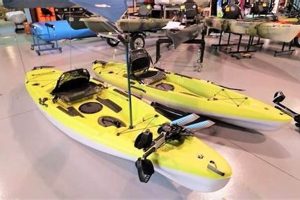
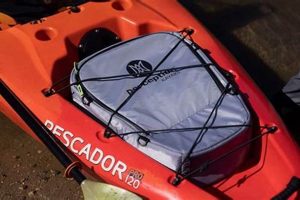
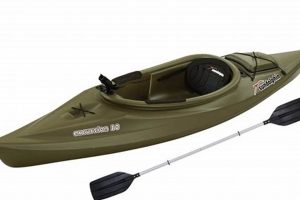
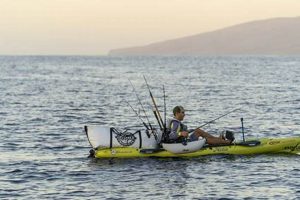
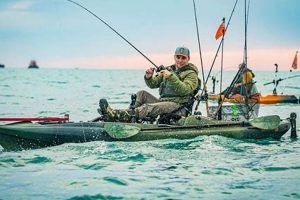
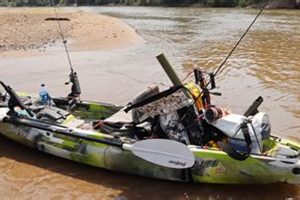
This sit-on-top style vessel, typically constructed from durable, lightweight polyethylene, offers a stable and accessible platform for anglers. Generally measuring approximately 12 feet in length, this type of watercraft provides sufficient storage for fishing gear and adequate space for comfortable paddling and casting. Its design often includes features such as built-in rod holders, paddle holders, and adjustable seating.
Affordable and user-friendly, this style of recreational watercraft opens up opportunities for fishing in various environments, from calm lakes and slow-moving rivers to sheltered coastal waters. The relatively compact size allows for easy transport and storage, making it a practical choice for individuals with limited space. Its increasing popularity reflects a growing interest in accessible and budget-friendly outdoor recreation.
Further exploration will cover topics such as specific features, performance characteristics, user experiences, and comparisons with similar products on the market. This information will assist potential users in making informed decisions and understanding the potential of this type of watercraft for recreational fishing.
Tips for Utilizing a 12-Foot Sit-On-Top Fishing Kayak
Proper preparation and technique enhance safety and enjoyment on the water. The following tips offer guidance for maximizing the utility of this type of recreational fishing vessel.
Tip 1: Prioritize Safety Gear. Always wear a personal flotation device (PFD) and carry essential safety equipment, including a whistle, signaling device, and first-aid kit. Check local regulations for additional safety requirements.
Tip 2: Plan and Research. Before launching, research the intended fishing location. Check weather forecasts, water conditions, and local regulations. Inform someone of your plans and estimated return time.
Tip 3: Practice Paddling Technique. Efficient paddling conserves energy and improves maneuverability. Practice basic paddle strokes and learn how to adjust for wind and current.
Tip 4: Distribute Weight Evenly. Proper weight distribution enhances stability. Distribute gear evenly within the kayak, avoiding overloading. Secure loose items to prevent shifting during movement.
Tip 5: Master Anchor Usage. Proper anchoring technique is crucial for maintaining position in desired fishing spots. Learn how to deploy and retrieve the anchor effectively in various water conditions.
Tip 6: Respect Wildlife and the Environment. Observe wildlife from a safe distance and avoid disturbing natural habitats. Pack out all trash and fishing line to minimize environmental impact.
Tip 7: Regularly Inspect and Maintain Equipment. Periodic inspection and maintenance prolong the lifespan of the kayak and ensure optimal performance. Check for wear and tear, clean the hull, and lubricate moving parts.
Adherence to these guidelines promotes safe and successful fishing excursions. Careful planning and responsible practices contribute to a positive experience on the water.
This information provides a foundation for successful kayak fishing. Further exploration of specific techniques and equipment choices will further enhance angling proficiency.
1. Sit-on-Top Design
The sit-on-top design is a defining characteristic of the Ozark Trail 12-foot fishing kayak, significantly influencing its suitability for angling. This design distinguishes it from traditional sit-inside kayaks, offering distinct advantages and disadvantages for anglers.
- Stability and Accessibility:
Sit-on-top kayaks offer inherent stability due to their wider beam and higher center of gravity. This design element makes them less prone to tipping, particularly beneficial for anglers who frequently shift their weight while casting or reeling. The open cockpit allows for easy entry and exit, simplifying launching and landing, especially in shallow water or unexpected situations. This ease of access also facilitates quick adjustments and retrieval of dropped items.
- Self-Bailing System:
Scupper holes, strategically positioned within the hull of sit-on-top kayaks, allow water to drain continuously. This self-bailing mechanism prevents water accumulation from rain or splashing waves, maintaining buoyancy and preventing the kayak from becoming swamped. This feature enhances safety and simplifies water management, allowing anglers to focus on fishing.
- Storage and Gear Accessibility:
The open deck of a sit-on-top design provides ample storage space for fishing gear, tackle boxes, and other essentials. This accessibility simplifies gear management and allows for quick adjustments during fishing. Dedicated storage compartments, often integrated into sit-on-top fishing kayaks, further enhance organization and security of equipment.
- Comfort and Freedom of Movement:
While lacking the enclosed cockpit of a sit-inside kayak, sit-on-top designs offer greater freedom of movement. Anglers can easily adjust their position, stand up for casting (in models designed for this), and re-enter the kayak after a swim. This increased mobility enhances comfort during long fishing trips and allows for a more dynamic angling experience.
These facets of the sit-on-top design contribute significantly to the Ozark Trail 12-foot fishing kayak’s practicality and popularity among anglers. The enhanced stability, self-bailing capability, accessible storage, and freedom of movement make it a versatile platform for various fishing environments and techniques. While considerations like reduced protection from the elements and potentially less efficient paddling in certain conditions exist, the benefits of the sit-on-top design generally outweigh the drawbacks for recreational fishing purposes.
2. Twelve-foot length

The 12-foot length of the Ozark Trail fishing kayak represents a design choice balancing several critical performance characteristics. This length influences maneuverability, tracking, speed, and portability, impacting the kayak’s suitability for various fishing environments and user preferences.
- Maneuverability:
Compared to shorter kayaks, a 12-foot length typically requires a wider turning radius. This characteristic makes it less agile in tight spaces, such as narrow creeks or densely vegetated areas. However, the increased length contributes to better tracking, maintaining a straighter course with less effort, beneficial for paddling across open water or covering longer distances.
- Tracking and Speed:
The longer hull of a 12-foot kayak generally allows it to track more efficiently than shorter models, requiring fewer corrective strokes to maintain a desired course. While not a racing kayak, this length offers reasonable speed, enabling anglers to cover water efficiently and reach fishing spots expeditiously. The increased waterline length contributes to improved glide and reduces drag, maximizing paddling efficiency.
- Portability and Storage:
A 12-foot kayak presents certain challenges regarding portability and storage. It requires more space for transport and storage compared to shorter models. Transporting a 12-foot kayak typically necessitates a roof rack or trailer, and storage requires sufficient space in a garage or shed. While manageable, these logistical considerations are essential for potential owners.
- Capacity and Stability:
The 12-foot length typically provides adequate capacity for a single angler and their fishing gear. This length allows for sufficient storage space within the hull and on deck for tackle boxes, rods, and other equipment. While stability is influenced by factors beyond length, the 12-foot design generally offers a stable platform for fishing activities, accommodating angler movement and weight shifts.
The 12-foot length of the Ozark Trail fishing kayak reflects a compromise aimed at versatility. It provides adequate tracking and speed for open water, while remaining manageable for transport and storage. Understanding these length-related characteristics clarifies the kayak’s suitability for specific fishing environments and user preferences. Anglers seeking greater maneuverability in tight spaces might consider shorter models, while those prioritizing speed and tracking over portability might opt for longer kayaks.
3. Fishing-Specific Features
Dedicated features differentiate a fishing kayak from recreational models. The Ozark Trail 12-foot fishing kayak incorporates several such features, enhancing its utility and appeal for anglers. These features directly impact functionality, angler convenience, and overall fishing success. Analyzing these features provides insight into the kayak’s design and its intended usage.
Common fishing-specific features include built-in rod holders, often multiple and strategically positioned for easy access and various fishing techniques. Flush-mounted rod holders allow for trolling and hands-free fishing, while adjustable rod holders accommodate different rod angles and fishing styles. Tackle storage compartments, often integrated into the kayak’s design, provide organized storage for lures, hooks, and other essential gear. These compartments keep equipment secure and readily accessible, minimizing clutter and maximizing fishing efficiency. Some models offer specialized storage for larger items like tackle boxes or fish finders.
Additional features might include paddle parks or clips, securing the paddle when not in use, freeing hands for fishing. Anchor trolleys facilitate controlled drifting and precise positioning in current, enhancing fishing effectiveness in rivers or streams. Adjustable seating systems contribute to angler comfort during extended fishing trips, reducing fatigue and maximizing enjoyment. Footrests, either adjustable or molded into the hull, provide essential leverage for paddling and stability while casting. These features collectively enhance the kayak’s suitability for fishing, transforming a basic watercraft into a specialized angling platform. Understanding these fishing-specific features allows for informed purchasing decisions and optimal utilization of the kayak’s capabilities. Consideration of individual fishing styles and target species influences the importance of specific features. Prioritizing essential features ensures a productive and enjoyable fishing experience.
4. Durable Construction

Durable construction is a critical aspect of the Ozark Trail 12-foot fishing kayak, directly influencing its lifespan, performance, and overall value. This kayak typically utilizes high-density polyethylene (HDPE), a thermoplastic known for its impact resistance, UV stability, and resistance to abrasion. HDPE’s inherent durability makes it well-suited for the demands of recreational kayaking, including navigating shallow waters, encountering submerged obstacles, and withstanding general wear and tear. This material choice contributes significantly to the kayak’s ability to withstand impacts from rocks, logs, and other potential hazards encountered in various aquatic environments. The robust construction enables the kayak to maintain structural integrity over time, minimizing the risk of cracks, leaks, and other damage that could compromise its performance and safety.
The practical significance of durable construction manifests in several ways. A robust kayak provides a reliable platform for fishing, ensuring stability and safety in diverse conditions. Resistance to UV degradation prolongs the kayak’s lifespan, protecting it from the sun’s harmful rays and preserving its structural integrity. The ability to withstand abrasion from dragging, loading, and general use minimizes cosmetic damage and maintains the kayak’s appearance over time. For example, an angler navigating a rocky riverbed benefits from the impact resistance of HDPE, preventing damage from potential collisions. Similarly, the UV stability ensures the kayak remains structurally sound even after prolonged exposure to sunlight during extended fishing trips. This durability translates to a longer-lasting product, reducing the need for frequent replacements and representing a cost-effective investment for users.
Durability contributes significantly to the overall value proposition of the Ozark Trail 12-foot fishing kayak. By withstanding the rigors of recreational use, the kayak provides reliable performance and extended lifespan, enhancing user satisfaction and minimizing long-term costs. While other factors like design and features contribute to the kayak’s overall performance, durable construction provides a foundation for a positive user experience. Addressing potential challenges like weight and potential susceptibility to extreme temperatures reinforces the importance of informed usage and proper storage to maximize the benefits of the kayaks durable construction. Ultimately, a durable kayak enhances user confidence and promotes enjoyable, worry-free fishing experiences.
5. Affordable Price Point

The Ozark Trail 12-foot fishing kayak occupies a specific market segment characterized by affordability. This pricing strategy directly influences market accessibility, impacting potential buyer demographics and overall market penetration. Offering a lower price point compared to many competing fishing kayaks positions this model as an entry-level option, attracting budget-conscious consumers or those new to the sport. This affordability expands the potential user base, making kayak fishing accessible to individuals who might otherwise find the initial investment prohibitive. The cost-effectiveness of this kayak can be a deciding factor for individuals exploring the sport or seeking a secondary vessel without a substantial financial commitment.
The affordability of the Ozark Trail 12-foot fishing kayak derives from several factors. Utilizing readily available materials like high-density polyethylene (HDPE) contributes to lower manufacturing costs. Streamlined production processes and efficient distribution networks further optimize cost-effectiveness. While this affordability may entail certain trade-offs in terms of features or performance compared to higher-priced models, it fulfills a specific market need for a functional and accessible fishing platform. For instance, an angler seeking basic functionality for calm-water fishing might prioritize affordability over advanced features found in more expensive kayaks. This value proposition resonates with a broad audience, driving sales and solidifying the kayak’s market position.
Understanding the relationship between affordability and the Ozark Trail 12-foot fishing kayak clarifies its market positioning and target demographic. This price point plays a significant role in its popularity, enabling greater access to the sport of kayak fishing. While acknowledging potential limitations associated with budget-friendly products, the affordability of this kayak remains a key driver of its market success. This analysis reinforces the importance of considering value in relation to intended use and individual budget constraints when evaluating fishing kayaks.
6. Stability and Maneuverability
Stability and maneuverability are critical performance characteristics influencing the suitability of the Ozark Trail 12-foot fishing kayak for various on-the-water activities. These attributes directly impact angler comfort, safety, and overall fishing effectiveness. An analysis of these interconnected factors provides a comprehensive understanding of the kayak’s performance capabilities and limitations.
- Primary Stability:
Primary stability refers to the kayak’s resistance to tipping when at rest. The Ozark Trail 12-foot fishing kayak, with its relatively wide beam and sit-on-top design, generally exhibits good primary stability. This characteristic provides a secure platform for anglers while casting, reeling, or making adjustments to gear. Enhanced primary stability is particularly important for novice kayakers or those fishing in calm conditions.
- Secondary Stability:
Secondary stability describes the kayak’s ability to resist tipping when leaned or tilted. While the Ozark Trail 12-foot fishing kayak offers decent primary stability, its secondary stability may be less pronounced due to its hull design. This characteristic means the kayak may feel less stable when leaned to the side, potentially requiring more effort to maintain balance during maneuvers like turning or bracing against waves. Understanding the nuances of secondary stability informs paddling technique and safe operational limits.
- Maneuverability in Calm Water:
In calm conditions, the Ozark Trail 12-foot fishing kayak offers reasonable maneuverability. The kayak’s length contributes to decent tracking, allowing for efficient straight-line paddling. While turning requires more effort compared to shorter kayaks, it remains manageable for navigating open water or making gradual course adjustments. This level of maneuverability is generally adequate for recreational fishing in lakes or slow-moving rivers.
- Maneuverability in Windy or Choppy Conditions:
The Ozark Trail 12-foot fishing kayak may exhibit reduced maneuverability in challenging conditions like wind or choppy water. The relatively high profile and flat bottom can make it susceptible to wind drift, requiring more effort to maintain a desired course. In choppy water, the kayak may feel less stable, necessitating careful paddling and weight management. Understanding these limitations informs appropriate usage and safe operating conditions.
The interplay of stability and maneuverability directly influences the Ozark Trail 12-foot fishing kayak’s suitability for specific environments and fishing styles. Recognizing the kayak’s strengths and limitations in terms of stability and maneuverability allows anglers to make informed decisions regarding appropriate usage and safety precautions. Consideration of these factors contributes to a positive and productive on-the-water experience, maximizing both enjoyment and angler safety.
Frequently Asked Questions
This section addresses common inquiries regarding the Ozark Trail 12-foot fishing kayak, providing concise and informative responses to assist potential buyers and current owners.
Question 1: What is the weight capacity of this kayak?
The weight capacity typically ranges from 250 to 300 pounds, depending on the specific model year. Consulting the manufacturer’s specifications for the particular model is recommended.
Question 2: Is this kayak suitable for ocean use?
While designed primarily for calm waters and slow-moving rivers, it can handle sheltered coastal areas in calm conditions. Open ocean use is generally not recommended due to limited stability in rougher waters.
Question 3: What materials are used in its construction?
The Ozark Trail 12-foot fishing kayak is typically constructed from high-density polyethylene (HDPE), a durable and UV-resistant thermoplastic.
Question 4: How many rod holders does the kayak have?
Most models feature two or more built-in rod holders, strategically placed for convenient access during fishing. Specific configurations vary depending on the model year.
Question 5: Is it difficult to transport?
Its 12-foot length necessitates appropriate transport methods, such as a roof rack or trailer. While manageable, transport requires planning and appropriate equipment.
Question 6: What maintenance is required?
Regular rinsing with fresh water after each use and periodic inspection for damage are recommended. Storage in a sheltered location away from direct sunlight prolongs its lifespan.
Understanding these frequently asked questions contributes to informed purchasing decisions and responsible kayak ownership. Consulting additional resources or contacting the manufacturer directly may address specific inquiries not covered in this section.
This FAQ section concludes the general overview. The following sections delve into more specific aspects of the Ozark Trail 12-foot fishing kayak, including detailed reviews, user experiences, and comparative analyses with similar products.
Ozark Trail 12 Fishing Kayak
This exploration examined the Ozark Trail 12 fishing kayak, encompassing its design, features, performance characteristics, and market positioning. Key aspects discussed include the sit-on-top configuration, the implications of its twelve-foot length, integrated fishing-specific features, durable HDPE construction, affordability, and the interplay of stability and maneuverability. Its suitability for calm-water fishing and limitations in challenging conditions were also addressed.
The Ozark Trail 12 fishing kayak represents a readily accessible entry point into the sport of kayak angling. Careful consideration of its capabilities and limitations, informed by individual needs and intended usage, empowers informed purchasing decisions and fosters rewarding on-the-water experiences. Continued exploration of evolving kayak design and emerging technologies promises further advancements in angling accessibility and performance.