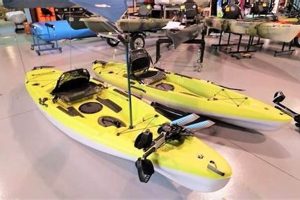
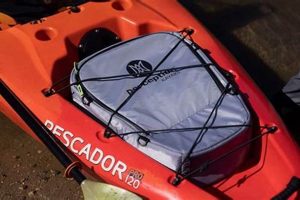
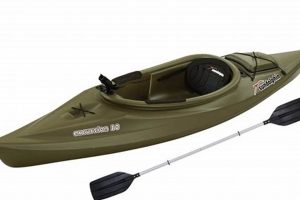
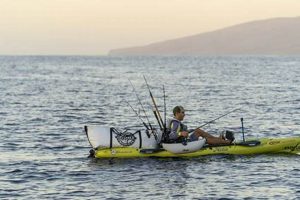
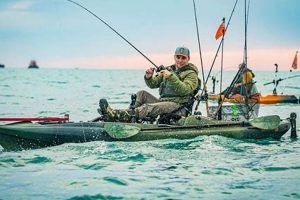
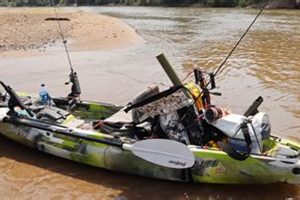
This specific model is a sit-on-top kayak designed for angling. Generally, such kayaks are constructed from durable, lightweight materials like polyethylene and feature specialized design elements. These features often include rod holders, tackle storage compartments, and comfortable seating designed for extended periods on the water. They frequently incorporate a stable hull design for easier casting and reeling.
Angling kayaks offer significant advantages for fishing enthusiasts. The elevated vantage point provides improved visibility for spotting fish, while the quiet operation allows anglers to approach fish without disturbing them. Their compact size allows access to shallow water and areas inaccessible to larger boats, expanding fishing opportunities. The evolution of specialized fishing kayaks reflects the growing popularity of kayak fishing, a sport that combines the tranquility of paddling with the excitement of angling.
Further exploration of this model’s specifications, features, and performance characteristics will provide a more comprehensive understanding of its suitability for various fishing environments and angler preferences. Topics such as stability, maneuverability, tracking, and load capacity are crucial considerations for prospective buyers.
Tips for Kayak Fishing
Effective kayak fishing requires preparation and understanding of specific techniques. These tips offer guidance for enhancing on-the-water experiences.
Tip 1: Prioritize Safety Equipment. Always wear a personal flotation device (PFD). Carry a whistle for signaling, a first-aid kit for emergencies, and communication devices like a waterproof cell phone or VHF radio. Check weather forecasts before departure and be aware of changing conditions.
Tip 2: Master Paddle Strokes. Efficient paddling conserves energy and improves boat control. Practice forward, reverse, and turning strokes before venturing into challenging waters. Consider learning advanced strokes for maneuvering in wind or current.
Tip 3: Organize Tackle and Gear. Utilize tackle boxes and storage compartments to keep essential gear readily accessible. Secure rods and reels to prevent loss or damage. Consider a dry bag for electronics and other valuables.
Tip 4: Understand Water Conditions. Research fishing areas beforehand, noting potential hazards like currents, tides, and underwater obstacles. Adapt fishing techniques to the specific water conditions. Exercise caution in strong winds or rough seas.
Tip 5: Practice Catch and Release Techniques. Handle fish carefully to minimize stress and ensure their survival upon release. Use appropriate hooks and landing nets. Wet hands before handling fish and revive them in the water if necessary.
Tip 6: Respect Wildlife and the Environment. Avoid disturbing wildlife and nesting areas. Properly dispose of fishing line and other waste. Adhere to local fishing regulations and licensing requirements.
Tip 7: Dress Appropriately. Wear clothing suitable for the weather conditions, including layers for changing temperatures. Consider quick-drying fabrics and water-resistant outerwear. Protect skin from sun exposure with sunscreen and a hat.
Following these guidelines will enhance safety, improve fishing success, and contribute to responsible enjoyment of the sport.
By combining preparation, knowledge, and respect for the environment, individuals can create memorable and rewarding kayak fishing experiences.
1. Stability

Stability represents a critical performance attribute in fishing kayaks, directly influencing angler safety, comfort, and fishing effectiveness. For the Old Town Fishing Kayak 106, stability derives from a combination of design elements, including hull shape, width, and center of gravity. A wider hull generally provides greater initial stability, resisting tipping during casting, reeling, or landing fish. The 106’s hull design aims to balance stability with maneuverability, providing a platform suitable for various fishing environments. Enhanced stability allows anglers to stand and fish, increasing visibility and casting range. This feature proves particularly advantageous in calm waters and shallow flats. Conversely, in rougher conditions, the 106’s stability contributes to a secure and predictable ride, minimizing the risk of capsizing.
Consider an angler fishing from an unstable kayak in windy conditions. Casting accuracy and line control become challenging, potentially leading to snags or lost fish. Retrieving a struggling fish requires careful balance, further increasing the risk of tipping. In contrast, the enhanced stability of the 106 allows anglers to focus on fishing techniques rather than maintaining balance. This stability contributes to a more comfortable and enjoyable fishing experience, even in challenging conditions. For example, an angler sight-fishing in shallow water can stand confidently to spot fish and make accurate casts, a maneuver difficult or impossible in a less stable kayak.
The inherent stability of the 106 contributes significantly to angler confidence and safety, particularly for less experienced kayakers. This stability translates to increased fishing efficiency and enjoyment, enabling anglers to focus on their technique and the pursuit of fish. Understanding the stability characteristics of the 106 and how they contribute to overall performance provides valuable insights for prospective buyers. Evaluating stability alongside other key features like maneuverability and load capacity enables informed purchasing decisions aligned with individual fishing needs and preferences.
2. Hull Design

Hull design significantly influences a kayak’s performance characteristics, impacting speed, stability, maneuverability, and tracking. The Old Town Fishing Kayak 106’s hull design reflects a balance of these attributes, catering to the specific demands of angling. Understanding the interplay of these factors provides valuable insight into the 106’s suitability for various fishing environments.
- Stability
The 106’s hull incorporates design elements that prioritize stability, a crucial attribute for fishing kayaks. A wider beam and a relatively flat bottom contribute to initial stability, resisting tipping during casting, reeling, or landing fish. This stability allows anglers to stand and fish comfortably, enhancing visibility and casting range. The 106’s stable platform inspires confidence, particularly for less experienced kayakers or those fishing in challenging conditions.
- Maneuverability
While stability remains paramount, the 106’s hull also considers maneuverability. A moderate hull length and defined chines (edges where the hull sides meet the bottom) allow for responsive turning and navigation through tight spaces. This maneuverability proves advantageous in navigating complex shorelines, maneuvering through vegetation, or positioning the kayak precisely for optimal casting angles. The 106’s balance of stability and maneuverability allows anglers to explore diverse fishing locations effectively.
- Tracking
Tracking, the ability of a kayak to maintain a straight course, impacts paddling efficiency and long-distance performance. The 106’s hull design incorporates features that promote reasonable tracking, allowing anglers to cover water efficiently and reach desired fishing spots with minimal effort. While not a specialized touring kayak, the 106’s tracking capabilities suffice for typical fishing excursions, balancing straight-line performance with the need for maneuverability in fishing scenarios.
- Draft and Shallow Water Access
The 106’s hull design considers draft, the depth of the hull below the waterline. A relatively shallow draft allows access to shallow water areas often inaccessible to larger boats. This capability expands fishing opportunities, allowing anglers to target species inhabiting shallow flats, creeks, and backwater areas. The 106’s shallow draft, combined with its stability and maneuverability, makes it well-suited for exploring diverse inshore fishing environments.
The Old Town Fishing Kayak 106’s hull design represents a considered balance of stability, maneuverability, tracking, and shallow water access. This combination of attributes creates a versatile platform suitable for a range of fishing styles and environments. Understanding these design elements and their influence on performance provides valuable insights for anglers evaluating the 106’s suitability for their individual fishing needs.
3. Fishing Features
Dedicated fishing features distinguish specialized fishing kayaks from recreational models. These features enhance angling efficiency, organization, and overall on-the-water experience. The Old Town Fishing Kayak 106 incorporates several key fishing features designed to cater to the needs of anglers.
- Rod Holders
Integrated rod holders provide secure storage and convenient access to fishing rods. Flush-mounted rod holders allow anglers to troll or position rods while paddling. Adjustable rod holders offer flexibility for different fishing techniques and rod types. The 106 typically includes multiple rod holders, enabling anglers to carry several rigged rods ready for action. This eliminates the need to constantly rig and unrig rods, maximizing fishing time.
- Tackle Storage
Dedicated tackle storage compartments keep essential gear organized and within easy reach. Dry storage compartments protect sensitive items from water damage. Open storage areas accommodate larger tackle boxes or other equipment. The 106’s tackle storage system facilitates efficient tackle management, minimizing time spent searching for lures, hooks, and other necessities. This organized approach allows anglers to focus on fishing rather than equipment logistics.
- Mounting Options for Accessories
Mounting options, such as tracks, rails, and inserts, allow anglers to customize their kayak with additional accessories. These accessories might include fish finders, GPS units, cameras, or extra rod holders. The 106’s mounting options provide flexibility for tailoring the kayak to specific fishing styles and preferences. This adaptability allows anglers to create a personalized fishing platform optimized for their individual needs.
- Other Specialized Features
The 106 may also include other specialized features like anchor trolleys, paddle parks, and measuring scales. Anchor trolleys facilitate controlled drifting and precise boat positioning. Paddle parks secure the paddle when not in use, preventing loss or interference with fishing lines. Measuring scales provide convenient on-the-water measurement of fish. These features further enhance the 106’s utility as a dedicated fishing platform.
The integration of these fishing-specific features positions the Old Town Fishing Kayak 106 as a purpose-built angling platform. These features contribute to improved fishing efficiency, organization, and overall enjoyment on the water. Consideration of these features, alongside other key attributes like stability and hull design, provides a comprehensive understanding of the 106’s suitability for various fishing styles and environments.
4. Comfort and Seating

Comfort and seating directly influence the overall fishing experience, particularly during extended trips. An uncomfortable seating arrangement can lead to fatigue, discomfort, and ultimately detract from fishing enjoyment and effectiveness. The Old Town Fishing Kayak 106 addresses these considerations with specific design features aimed at enhancing angler comfort.
- Seat Design and Adjustability
The seat design plays a crucial role in providing support and comfort. Features like adjustable backrests, lumbar support, and contoured seating surfaces contribute to proper posture and pressure distribution. The ability to adjust the seat position allows anglers to customize the fit for individual body types and preferences. Proper seat adjustment contributes to reduced fatigue and increased comfort during long hours on the water. For example, an angler with back problems benefits significantly from adjustable lumbar support, enabling a more comfortable and supported fishing posture.
- Seat Material and Breathability
The seat material impacts comfort, particularly in warm weather. Breathable fabrics promote airflow, reducing heat buildup and perspiration. Durable, weather-resistant materials ensure longevity and withstand the rigors of the marine environment. A comfortable, breathable seat enhances overall fishing enjoyment, especially during hot summer days. Anglers fishing in tropical climates particularly appreciate breathable seat materials that minimize discomfort from heat and humidity.
- Legroom and Cockpit Design
Adequate legroom and a well-designed cockpit contribute to overall comfort and freedom of movement. Sufficient space allows anglers to change positions, stretch their legs, and maintain comfortable posture throughout the fishing trip. A spacious cockpit also facilitates entry and exit from the kayak. Ample legroom proves especially important for taller anglers or those who prefer to fish while standing. For instance, an angler who frequently stands to cast or sight fish benefits from a spacious cockpit that allows for comfortable weight shifts and balance adjustments.
- Seat Height and Stability
Seat height influences visibility and casting angles. A higher seat position improves sight lines, allowing anglers to spot fish more easily. Stable seat design minimizes rocking or shifting, enhancing casting accuracy and overall balance. A secure and stable seating platform contributes to angler confidence and safety. An angler fishing in shallow, clear water can benefit from a higher seat position, gaining improved visibility for sight fishing.
The Old Town Fishing Kayak 106’s comfort and seating features contribute significantly to the overall fishing experience. A comfortable and supportive seating arrangement reduces fatigue and enhances enjoyment, allowing anglers to focus on fishing rather than physical discomfort. By considering these elements, prospective buyers can gain a comprehensive understanding of the 106’s suitability for their individual needs and preferences, especially regarding long fishing trips and varying weather conditions.
5. Portability and Weight

Portability and weight significantly influence the transportation, launch, and overall usability of a kayak, particularly for individuals without specialized equipment or assistance. These factors become crucial considerations when evaluating the Old Town Fishing Kayak 106, especially concerning diverse access points and individual physical capabilities.
- Carrying and Transport
The 106’s weight and dimensions directly impact carrying ease. Heavier kayaks require greater physical exertion, limiting transport distance and accessibility. Rooftop transport requires compatible roof racks and the ability to lift the kayak. The 106’s weight influences loading, unloading, and carrying to and from launch sites. Consider an individual transporting a kayak across uneven terrain to a remote fishing spot. A lighter kayak proves significantly easier to manage, reducing strain and fatigue. The 106’s portability influences accessibility to various fishing locations.
- Launch and Retrieval
Launching and retrieving a kayak involves maneuvering it from a vehicle or storage location to the water’s edge. Weight and hull design affect the ease of this process. Heavier kayaks require greater effort to slide or carry, especially across sandy or muddy surfaces. The 106’s weight and hull shape influence launching ease from various shoreline types. For example, launching from a steep, rocky bank presents different challenges than launching from a sandy beach. The 106’s design considerations influence usability in diverse launch scenarios.
- Car Topping and Storage
Car topping and storage considerations depend on vehicle type and available storage space. The 106’s dimensions and weight determine roof rack compatibility and lifting requirements. Storage space limitations necessitate consideration of kayak dimensions and storage solutions. Individuals with limited storage space benefit from kayaks that can be easily disassembled or stored vertically. The 106’s dimensions influence storage options and transport practicality for individuals with specific vehicle or storage constraints.
- Solo Handling
The ability to handle a kayak independently significantly impacts usability for solo anglers. Loading, unloading, and carrying a heavy kayak can prove challenging for individuals without assistance. The 106’s weight and design influence solo handling ease. Consider an angler transporting a kayak from a vehicle to the water without assistance. A manageable weight and design facilitate independent handling, expanding fishing opportunities for solo adventurers. The 106’s portability enhances independent usability, reducing reliance on assistance.
The portability and weight of the Old Town Fishing Kayak 106 influence its overall practicality and accessibility. Consideration of these factors, alongside individual physical capabilities and transport logistics, provides a comprehensive understanding of the 106’s suitability for diverse fishing environments and user needs. Balancing performance characteristics with portability considerations allows for informed decisions aligned with individual circumstances and fishing preferences.
6. Durability and Construction

Durability and construction represent critical aspects of kayak selection, particularly for fishing kayaks subjected to diverse environmental conditions and potential impacts. A robust construction ensures longevity and reliable performance, contributing to angler safety and overall enjoyment. Understanding the construction methods and materials employed in the Old Town Fishing Kayak 106 provides insights into its durability and suitability for various fishing environments.
- Material Selection
The primary material used in kayak construction significantly influences durability. Polyethylene kayaks offer a balance of impact resistance, affordability, and UV resistance. Higher-density polyethylene generally provides greater durability and stiffness. The 106 typically utilizes single-piece, rotomolded polyethylene construction, known for its impact resistance and ability to withstand harsh conditions. For instance, a polyethylene kayak can withstand minor collisions with rocks or submerged obstacles with minimal damage, ensuring continued functionality. Material selection directly impacts the kayak’s longevity and resistance to wear and tear.
- Construction Methods
Rotomolding, a common construction method for polyethylene kayaks, creates a seamless, one-piece hull. This eliminates potential leak points and enhances overall structural integrity. The rotomolding process produces a consistent hull thickness, contributing to uniform strength and durability. Alternative construction methods, like thermoforming, offer different performance characteristics and durability profiles. The 106’s rotomolded construction contributes to its ruggedness and resistance to leaks. This construction method proves advantageous in demanding fishing environments.
- UV Resistance and Color Fading
Exposure to ultraviolet radiation from sunlight can degrade kayak materials over time, leading to color fading and reduced structural integrity. UV-resistant additives incorporated into the polyethylene during manufacturing mitigate these effects. Darker colored kayaks tend to absorb more heat, potentially accelerating material degradation in extreme sun exposure. The 106’s UV resistance influences its long-term appearance and structural integrity, particularly in regions with intense sunlight. Proper storage and maintenance practices further contribute to minimizing UV damage.
- Impact Resistance and Hull Integrity
Fishing kayaks often encounter submerged obstacles, rocks, or other potential impact hazards. The hull’s ability to withstand these impacts without significant damage directly impacts safety and longevity. The 106’s polyethylene construction provides inherent impact resistance, safeguarding against punctures or cracks. This durability proves valuable in rocky or shallow water environments where impacts are more likely. A robust hull ensures the kayak’s continued functionality even after encountering unforeseen obstacles.
The durability and construction of the Old Town Fishing Kayak 106 directly influence its longevity, performance, and overall value. The selection of materials, construction methods, and design considerations contribute to a kayak capable of withstanding the rigors of the fishing environment. Understanding these elements allows for informed purchasing decisions and ensures angler safety and satisfaction over the long term. These factors contribute to the 106’s reputation for reliability and performance in diverse fishing environments, making it a popular choice among anglers.
7. Target User and Experience

The Old Town Fishing Kayak 106 targets a specific user demographic seeking a balance of stability, features, and performance in a fishing kayak. This demographic typically includes anglers prioritizing stability for casting and reeling, especially in calm or slow-moving waters. The integrated fishing features, such as rod holders and tackle storage, cater to anglers who value convenience and organization on the water. The 106’s maneuverability and relatively shallow draft suit anglers targeting shallow water environments like flats, creeks, and ponds. Less experienced kayakers benefit from the 106’s inherent stability, promoting confidence and facilitating skill development. The kayak’s portability and weight accommodate anglers seeking convenient transport and launch options, especially those without specialized equipment or assistance. Consider an angler targeting bass in a small pond. The 106’s stability allows comfortable standing for sight fishing, while its maneuverability facilitates navigation through tight spaces. The integrated rod holders and tackle storage keep essential gear organized and readily accessible. This tailored design enhances the fishing experience for this specific scenario.
Understanding the target user informs design choices and feature prioritization. The 106’s design reflects a focus on stability, fishing-specific features, and ease of use. This focus shapes user experience, impacting angler satisfaction and overall enjoyment. For example, an angler prioritizing long fishing trips benefits from the 106’s comfortable seating and ample storage. The stable platform contributes to reduced fatigue, allowing extended periods on the water. The integrated features streamline the fishing process, minimizing distractions and maximizing time spent fishing. Conversely, an angler seeking high-speed performance or open-water capabilities might find the 106’s design less suitable. Understanding target user needs ensures alignment between product design and user expectations, resulting in a positive and fulfilling fishing experience.
Matching user needs with kayak characteristics represents a critical aspect of informed decision-making. The 106’s target user profile clarifies its strengths and limitations, guiding potential buyers towards a kayak aligned with their individual preferences and fishing styles. Evaluating user experience alongside technical specifications provides a comprehensive perspective, ensuring a suitable match between angler and kayak. Recognizing the interplay between design choices, target user, and resulting fishing experience fosters informed purchasing decisions and ultimately contributes to greater satisfaction on the water. Ultimately, the 106 offers a balanced platform for anglers prioritizing stability, features, and ease of use in a variety of calm-water fishing environments.
Frequently Asked Questions
This section addresses common inquiries regarding the Old Town Fishing Kayak 106, providing concise and informative responses to facilitate informed purchasing decisions and enhance user understanding.
Question 1: What is the weight capacity of the Old Town Fishing Kayak 106?
The weight capacity typically ranges between 325 and 375 pounds, encompassing angler weight, gear, and any additional cargo. Exceeding this capacity can compromise stability and performance.
Question 2: Is the Old Town Fishing Kayak 106 suitable for use in saltwater environments?
Yes, the kayak’s polyethylene construction withstands saltwater exposure. However, rinsing the kayak with fresh water after each use helps prevent corrosion of metal components and prolongs its lifespan.
Question 3: How does the Old Town Fishing Kayak 106 perform in windy conditions?
While stable, wind can impact tracking and maneuverability. Utilizing a rudder or drift sock can improve control in windy conditions. Anglers should always consider weather forecasts and water conditions before venturing out.
Question 4: Can the Old Town Fishing Kayak 106 accommodate a trolling motor?
While not specifically designed for motor integration, some users add trolling motors. Compatibility varies based on model year and specific motor mounts. Consulting Old Town’s official documentation or authorized dealers provides accurate compatibility information.
Question 5: What maintenance is required for the Old Town Fishing Kayak 106?
Regular rinsing with fresh water, especially after saltwater use, helps prevent corrosion and prolongs lifespan. Periodic inspection of hardware and hull integrity ensures continued safe operation. Storing the kayak out of direct sunlight minimizes UV damage.
Question 6: Where can replacement parts be obtained for the Old Town Fishing Kayak 106?
Replacement parts can typically be obtained through authorized Old Town dealers or directly from the manufacturer. Consulting Old Town’s website or contacting customer support provides information on parts availability and ordering procedures.
Addressing these common inquiries provides valuable information for prospective buyers and current owners of the Old Town Fishing Kayak 106. Understanding these aspects contributes to informed decisions and responsible kayak usage.
Further research into specific features, user reviews, and expert opinions enhances understanding and facilitates selection of the optimal fishing kayak for individual needs and preferences.
Conclusion
The Old Town Fishing Kayak 106 presents a compelling option for anglers seeking a stable and feature-rich platform designed for diverse fishing environments. Its hull design balances stability with maneuverability, while integrated features like rod holders and tackle storage enhance angling practicality. Comfort considerations, including adjustable seating and ample legroom, contribute to extended fishing trips. Portability and durable construction ensure convenient transport and long-term reliability. Understanding these attributes allows for informed evaluation of the 106’s suitability for individual angler needs and preferences.
Careful consideration of kayak characteristics alongside specific fishing requirements empowers informed purchasing decisions. Evaluating stability, maneuverability, features, and portability relative to target fishing environments and individual preferences ensures a harmonious balance between angler and kayak. This informed approach maximizes on-the-water enjoyment and contributes to successful fishing experiences.