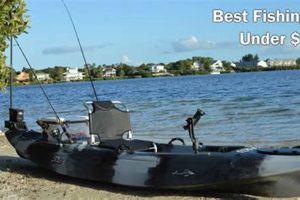
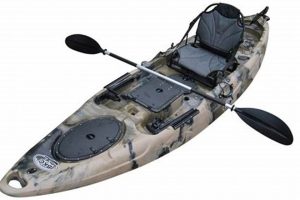
A high-quality, seaworthy kayak designed specifically for angling offers stability, storage for gear, and features like rod holders and anchor trolleys. Such a vessel allows anglers to access fishing grounds unreachable from shore, presenting opportunities to target a wider variety of species. A well-equipped fishing kayak might include features like a fish finder, live well, and specialized seating for comfort during long hours on the water.
Choosing the right watercraft for offshore angling significantly enhances fishing success and safety. It enables anglers to explore diverse environments, from shallow estuaries to open ocean waters, increasing the chances of a productive catch. Historically, kayaks have been employed for fishing for millennia, but modern designs incorporating advanced materials and technology provide anglers with unparalleled stability, speed, and comfort. This evolution allows individuals to venture further offshore with confidence and pursue larger game fish.
Factors influencing the selection of an appropriate fishing kayak include hull design, length, width, weight capacity, and storage options. Subsequent sections will delve into these considerations, offering guidance on various kayak types, materials, essential features, and safety precautions for offshore fishing.
Tips for Selecting a Sea Fishing Kayak
Choosing a kayak for offshore angling requires careful consideration of several factors to ensure safety and maximize fishing success. The following tips provide guidance for selecting the appropriate vessel.
Tip 1: Prioritize Stability: A wider, flatter hull design offers greater stability, particularly important in choppy waters or when landing a large fish. Consider kayaks specifically designed for stability in offshore conditions.
Tip 2: Evaluate Length and Width: Longer kayaks generally track better in open water, while shorter kayaks offer greater maneuverability in tight spaces. Wider kayaks provide more stability, but may be slower. Balance speed and stability based on individual fishing preferences and target locations.
Tip 3: Assess Weight Capacity: Ensure the kayak’s weight capacity accommodates the angler’s weight, fishing gear, and potential catch. Exceeding the weight limit can compromise stability and safety.
Tip 4: Consider Storage Options: Ample storage space is crucial for carrying fishing rods, tackle boxes, safety equipment, and potential catches. Look for kayaks with dedicated storage compartments and bungee systems for securing gear.
Tip 5: Examine Hull Design: Different hull designs offer varying performance characteristics. A sit-on-top kayak offers enhanced stability and self-bailing capabilities, ideal for warmer climates. Sit-in kayaks provide greater protection from the elements and offer a drier ride in colder conditions.
Tip 6: Check for Fishing-Specific Features: Look for features such as rod holders, anchor trolleys, fish finders, and live wells, which enhance angling convenience and efficiency.
Tip 7: Choose Appropriate Materials: Kayaks are constructed from various materials, each with its own advantages and disadvantages. Polyethylene kayaks offer durability and affordability, while fiberglass and composite kayaks provide lighter weight and enhanced performance.
Careful consideration of these factors will lead to the selection of a kayak well-suited for offshore fishing adventures. A properly equipped vessel enhances both safety and the potential for a successful fishing experience.
By understanding these essential tips, anglers can confidently choose a kayak that meets their specific needs and enhances their fishing experience. This informed decision will contribute to both enjoyable and productive time on the water.
1. Stability

Stability represents a critical factor in selecting a kayak for sea fishing. A stable platform is essential for casting, reeling, and landing fish, especially in challenging offshore conditions. Compromised stability can lead to capsizing, jeopardizing both safety and fishing success. Understanding the elements contributing to kayak stability is crucial for informed decision-making.
- Hull Design:
Hull design significantly influences stability. Wider, flatter hulls provide primary stability, resisting initial tipping. A pontoon-style hull offers maximum initial stability. Longer kayaks generally offer better secondary stability, recovering from larger leans. A “V” shaped hull, while efficient for paddling, may feel less stable initially.
- Center of Gravity:
A lower center of gravity contributes to greater stability. Keeping weight low in the kayak, avoiding top-heavy loading, enhances stability. Anglers seated lower in the kayak experience a more stable feel. Adding weight strategically, like using a ballast tank, can improve stability in certain conditions.
- Water Conditions:
Calm waters allow for greater stability across a wider range of kayak designs. In rough seas or strong currents, stability becomes paramount, favoring wider, more stable hulls. Wind also affects stability, requiring kayaks with sufficient wind resistance to avoid excessive drifting or tipping.
- Angler Behavior:
Sudden movements, leaning over the side, or standing up in the kayak compromises stability. Smooth, deliberate movements maintain balance. Proper paddling technique also contributes to stability, minimizing rocking and swaying.
Ultimately, achieving optimal stability in a sea fishing kayak requires careful consideration of hull design, weight distribution, water conditions, and angler behavior. Selecting a kayak with appropriate stability characteristics for the intended fishing environment ensures safety and enhances the overall fishing experience. Prioritizing stability enables anglers to focus on fishing, rather than constantly battling to maintain balance.
2. Durability

Durability represents a critical factor in determining a kayak’s suitability for the demanding environment of sea fishing. Offshore conditions present significant challenges, including exposure to saltwater, UV radiation, and potential impacts with rocks, reefs, or other submerged obstacles. A durable kayak withstands these rigors, ensuring longevity and maintaining performance over time. Compromised durability leads to leaks, cracks, and structural weakening, potentially jeopardizing safety and necessitating costly repairs or replacements. Choosing a durable kayak minimizes these risks, contributing to a more reliable and cost-effective fishing platform.
Several factors contribute to kayak durability. Material selection plays a crucial role; high-density polyethylene (HDPE) offers excellent impact resistance and UV resistance, while fiberglass and composite constructions provide high strength-to-weight ratios. Construction quality, including seam strength and hull integrity, also influences overall durability. Proper care and maintenance, including regular cleaning and storage out of direct sunlight, further extend a kayak’s lifespan. Investing in a durable kayak, constructed from robust materials and built to withstand the rigors of sea fishing, minimizes downtime and maximizes time on the water. For example, a well-maintained HDPE kayak can withstand years of heavy use in harsh marine environments, offering a reliable platform for anglers.
The practical significance of durability in a sea fishing kayak cannot be overstated. A durable vessel provides anglers with confidence and peace of mind, allowing them to focus on fishing rather than worrying about potential damage. Durability translates to a safer, more reliable, and ultimately more enjoyable fishing experience. While initial costs might be higher for more durable kayaks, the long-term benefits of reduced maintenance and replacement costs, coupled with enhanced safety and reliability, make the investment worthwhile. Ultimately, prioritizing durability in a sea fishing kayak is an investment in both safety and long-term enjoyment on the water.
3. Storage Capacity
Adequate storage capacity directly influences the effectiveness and enjoyment of sea fishing kayak excursions. Offshore fishing necessitates carrying various equipment, including rods, reels, tackle boxes, safety gear, and potentially harvested fish. Insufficient storage leads to compromised organization, reduced accessibility, and potential gear damage, negatively impacting both fishing success and safety. A well-designed storage system enables anglers to carry essential gear efficiently, maximizing fishing time and minimizing distractions caused by searching for misplaced items. For instance, dedicated rod holders secure rods while paddling or fighting fish, preventing loss or damage. Similarly, dry storage compartments protect sensitive electronics and personal items from saltwater exposure, ensuring functionality and longevity.
Practical examples illustrate the significance of storage capacity. Consider a scenario where an angler hooks a large fish far offshore. Without sufficient storage for the catch, the angler faces a difficult decision: release the fish or curtail the fishing trip prematurely. Adequate storage eliminates this dilemma, allowing anglers to maximize their catch potential. Furthermore, ample storage facilitates carrying safety equipment, such as flares, a first-aid kit, and a VHF radio, crucial for responding to unforeseen emergencies in offshore environments. A kayak equipped with dedicated compartments for these items ensures accessibility in critical situations, enhancing overall safety.
In summary, optimizing storage capacity significantly contributes to a positive sea fishing kayak experience. Sufficient storage facilitates efficient gear organization, enhances safety by accommodating essential safety equipment, and maximizes fishing potential by allowing anglers to transport their catch. Selecting a kayak with thoughtfully designed and ample storage solutions proves essential for maximizing both the effectiveness and enjoyment of sea fishing adventures. This consideration ultimately enhances the overall fishing experience, transforming potential challenges into opportunities for a successful and rewarding day on the water.
4. Maneuverability

Maneuverability represents a critical performance attribute influencing a kayak’s suitability for sea fishing. Efficient navigation through varied offshore environments, including open water, tight channels, and areas with submerged obstacles, demands a kayak capable of responsive handling. Superior maneuverability enables anglers to position themselves effectively for casting, follow schooling fish, and navigate challenging conditions safely. This characteristic directly impacts fishing success and overall safety in the dynamic offshore environment.
- Hull Design:
Hull design significantly impacts maneuverability. Shorter kayaks with a more rounded or “V” shaped hull generally offer greater agility and responsiveness, facilitating quick turns and precise positioning. Longer kayaks, while offering superior tracking in open water, may exhibit reduced maneuverability in confined spaces or complex currents. For example, a shorter, more agile kayak excels in navigating mangrove forests or rocky coastlines, while a longer kayak performs better in open ocean conditions.
- Water Conditions:
Maneuverability requirements vary based on prevailing water conditions. Calm, open water permits utilization of kayaks with varying maneuverability characteristics. However, strong currents, tidal flows, and wind conditions necessitate kayaks with enhanced maneuverability for maintaining precise control and avoiding hazardous situations. A highly maneuverable kayak proves crucial for navigating turbulent waters or swiftly changing currents, enabling anglers to maintain position and avoid drifting into dangerous areas.
- Paddle Length and Design:
Paddle length and blade design influence maneuverability. Shorter paddles provide quicker, more responsive strokes, facilitating rapid turns and adjustments. Asymmetrical paddle blades enhance stroke efficiency and reduce flutter, particularly beneficial in challenging conditions. Choosing an appropriate paddle length and blade design complements the kayak’s inherent maneuverability, optimizing performance and control.
- Rudder or Skeg:
The presence of a rudder or skeg significantly enhances directional control, particularly in windy conditions or strong currents. A rudder provides active control over steering, allowing for precise course adjustments. A skeg enhances tracking, minimizing yaw and maintaining a straight course in challenging conditions. These features augment maneuverability by improving directional stability and reducing the need for constant corrective strokes.
Optimizing maneuverability requires considering the interplay between hull design, water conditions, paddle characteristics, and control features like rudders or skegs. Selecting a kayak with appropriate maneuverability characteristics for the intended fishing environment enhances both fishing effectiveness and safety. A highly maneuverable kayak allows anglers to exploit diverse fishing opportunities and navigate challenging offshore environments confidently, maximizing both safety and the potential for a successful fishing experience. This informed decision empowers anglers to confidently explore a wider range of fishing locations and conditions, contributing to a more rewarding and enriching time on the water.
5. Comfort
Comfort plays a crucial role in the overall experience of sea fishing kayaking. Extended periods on the water, often in challenging conditions, necessitate a comfortable and supportive environment to minimize fatigue and maximize fishing effectiveness. Discomfort can detract from focus, hinder performance, and potentially curtail fishing trips prematurely. Prioritizing comfort features in kayak selection contributes significantly to both enjoyment and endurance during offshore fishing excursions.
- Seating System:
A well-designed seating system provides essential support and cushioning, reducing strain on the back, legs, and buttocks. Adjustable features, such as backrest angle and seat height, allow customization for individual body types and preferences. High-quality padding and breathable materials enhance comfort, particularly during long hours on the water. A comfortable seating system allows anglers to maintain focus on fishing, rather than battling discomfort. For example, a kayak with adjustable lumbar support and a breathable mesh seat back enhances comfort and reduces fatigue during extended fishing trips.
- Legroom and Footrests:
Adequate legroom and adjustable footrests contribute significantly to comfort and paddling efficiency. Sufficient legroom prevents cramping and allows for comfortable changes in posture. Adjustable footrests provide essential leverage for efficient paddling and contribute to overall stability. Proper leg positioning enhances circulation and reduces fatigue. For example, a kayak with adjustable foot braces accommodates anglers of varying heights, promoting efficient paddling and reducing leg strain.
- Stability and Deck Space:
Kayak stability and deck space indirectly influence comfort. A stable platform minimizes the need for constant adjustments and reduces anxiety, promoting relaxation and focus. Ample deck space allows for comfortable movement and easy access to gear, enhancing overall convenience. A stable and spacious kayak provides a more secure and comfortable fishing platform. For example, a wider kayak with a flat deck offers greater stability and more space for gear and movement, enhancing comfort and reducing the risk of tipping.
- Backrests and Padding:
Supportive backrests and strategically placed padding contribute significantly to comfort, particularly during long fishing trips. Adjustable backrests provide customized support for individual preferences and help maintain proper posture, reducing back strain. Padded seating areas and armrests enhance comfort and minimize pressure points. Investing in a kayak with a comfortable and supportive backrest can significantly enhance enjoyment and reduce fatigue during extended fishing excursions.
Selecting a kayak optimized for comfort significantly enhances the overall sea fishing experience. By prioritizing features like adjustable seating systems, ample legroom, and supportive backrests, anglers can minimize fatigue, maximize fishing time, and enhance overall enjoyment on the water. Ultimately, comfort translates to a more productive and rewarding fishing experience, enabling anglers to fully immerse themselves in the pursuit of their catch without the distraction of physical discomfort. Investing in a comfortable kayak is an investment in the long-term enjoyment and success of sea fishing adventures.
6. Specialized Features

Specialized features distinguish sea fishing kayaks from recreational models, enhancing functionality, efficiency, and safety in demanding offshore environments. These features cater specifically to the needs of anglers, addressing challenges and maximizing opportunities unique to offshore fishing. Careful consideration of these features proves crucial in selecting a kayak optimized for both performance and enjoyment.
- Rod Holders:
Rod holders secure fishing rods, freeing hands for paddling, navigating, and handling other equipment. Flush-mounted, adjustable, and rotating rod holders accommodate various fishing styles and rod types. Multiple rod holders enable anglers to troll multiple lines or quickly switch between different setups. For example, adjustable rod holders facilitate trolling at varying depths or angles, optimizing lure presentation. Securely stored rods minimize the risk of loss or damage in rough conditions, preserving valuable equipment.
- Anchor Trolley System:
Anchor trolley systems allow controlled anchoring from various points along the kayak, optimizing positioning in relation to currents, structure, or target fish. This system facilitates maintaining position in wind or current, crucial for effective drift fishing or staying on a productive fishing spot. Positioning the anchor at the bow, stern, or side alters the kayak’s orientation to the current or wind, maximizing fishing effectiveness. For example, anchoring from the bow positions the kayak facing into the current, presenting lures or bait naturally. This feature enhances fishing precision and reduces anchor retrieval challenges.
- Fish Finders and Electronics Mounts:
Fish finders and GPS units provide crucial information about water depth, bottom structure, and fish location, significantly enhancing fishing success. Dedicated mounts securely attach these electronics to the kayak, ensuring visibility and accessibility while maintaining a clutter-free deck. Integrating electronics enhances situational awareness and strategic decision-making. For instance, a fish finder reveals underwater structures holding fish, enabling targeted casting and maximizing catch potential. Secure mounts protect expensive electronics from saltwater and impacts, ensuring longevity and reliable performance.
- Storage for Tackle and Gear:
Specialized storage solutions, such as tackle boxes, dry hatches, and bungee systems, organize and protect essential fishing gear. Dry storage safeguards sensitive electronics and personal items from saltwater damage, while readily accessible tackle compartments streamline lure and bait changes. Efficient storage maximizes fishing time and minimizes distractions caused by searching for misplaced equipment. For example, a dedicated tackle box within easy reach facilitates quick lure changes, adapting to changing fish behavior or water conditions. Secure storage prevents gear loss and damage, preserving valuable equipment and enhancing overall fishing efficiency.
These specialized features contribute significantly to a kayak’s effectiveness as a sea fishing platform. By enhancing functionality, optimizing organization, and improving safety, these features empower anglers to focus on the core elements of fishing. Investing in a kayak equipped with these specialized features elevates the sea fishing experience, maximizing both efficiency and enjoyment on the water. The strategic integration of these features translates directly to increased fishing success and a more rewarding time on the water.
Frequently Asked Questions
This section addresses common inquiries regarding kayak selection for sea fishing, providing concise and informative responses to facilitate informed decision-making.
Question 1: What hull design is most suitable for offshore fishing?
Wider, flatter hulls generally offer superior stability in offshore conditions, while longer hulls provide better tracking in open water. Specific hull designs, such as those incorporating a shallow-V or pontoon shape, balance stability and tracking performance for optimal offshore handling. The best choice depends on individual preferences and the typical fishing environment.
Question 2: What materials are commonly used in sea fishing kayaks?
High-density polyethylene (HDPE) offers durability and affordability. Fiberglass kayaks provide lighter weight and enhanced performance. Composite constructions, combining various materials, offer further performance advantages. Material selection involves trade-offs between cost, durability, performance, and maintenance requirements.
Question 3: How important are specialized features like rod holders and anchor trolleys?
Specialized features significantly enhance fishing effectiveness and convenience. Rod holders secure rods, freeing hands for paddling and other tasks. Anchor trolleys enable controlled anchoring from various points along the kayak, optimizing positioning in relation to currents or structure. These features contribute significantly to efficient and successful fishing trips.
Question 4: How does kayak length affect performance in offshore conditions?
Longer kayaks typically track better in open water and offer greater speed potential. Shorter kayaks provide enhanced maneuverability in tight spaces or complex environments like rocky shorelines or mangrove forests. The optimal length depends on the intended fishing locations and individual paddling preferences.
Question 5: What safety precautions should be taken when kayak fishing offshore?
Essential safety precautions include wearing a personal flotation device (PFD), carrying a VHF radio, informing someone of the fishing plan, checking weather forecasts, and carrying essential safety gear such as flares and a first-aid kit. Prioritizing safety enhances preparedness for unforeseen circumstances and mitigates potential risks in the offshore environment.
Question 6: What is the typical price range for a seaworthy fishing kayak?
Prices vary significantly depending on material, features, and brand. Entry-level fishing kayaks may start around $500, while high-end models can exceed $3000. Researching various brands and models within the desired budget range enables identification of a kayak offering the best balance of features, performance, and affordability.
Careful consideration of these frequently asked questions, alongside thorough research and evaluation of individual needs and preferences, empowers informed decision-making and contributes to a successful and enjoyable sea fishing kayak experience.
The subsequent section will delve into specific kayak recommendations categorized by different fishing styles and budgets, providing further guidance for selecting the optimal vessel.
Best Kayak for Sea Fishing
Selecting the optimal kayak for sea fishing requires careful evaluation of various factors, including stability, durability, storage capacity, maneuverability, comfort, and specialized features. Each characteristic contributes significantly to both safety and fishing success in the demanding offshore environment. Understanding the interplay of these factors empowers informed decision-making, ensuring the chosen vessel aligns precisely with individual angling needs and preferences. Prioritizing stability enhances safety and fishing effectiveness, while durability ensures long-term performance and reliability. Ample storage accommodates essential gear and potential catches, while maneuverability enables efficient navigation through diverse water conditions. Comfort promotes endurance and enjoyment during extended fishing trips, and specialized features optimize fishing performance and efficiency.
Ultimately, the “best” kayak reflects a careful balance of these essential elements, tailored to individual fishing styles, target species, and prevailing environmental conditions. Diligent research and consideration of these crucial factors pave the way for a rewarding and successful offshore fishing experience. A well-chosen kayak becomes an invaluable tool, extending angling horizons and providing access to a wealth of fishing opportunities. Such an investment promises not only enhanced fishing success but also countless memorable experiences on the water.