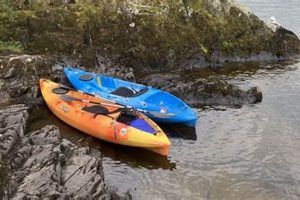
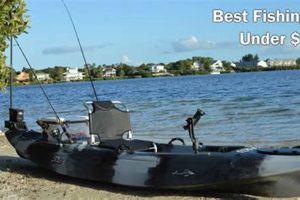
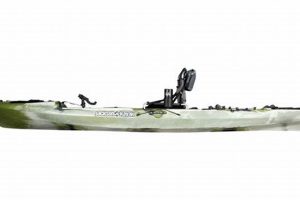
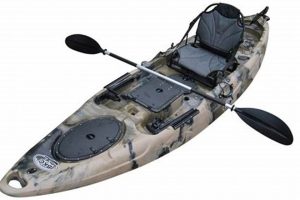
Top-tier ocean fishing kayaks are designed for stability, performance, and angler-specific features in open-water environments. These vessels typically incorporate specialized storage for fishing gear, rod holders, and often feature higher weight capacities compared to recreational kayaks. A longer hull length contributes to speed and efficient paddling over distances, while a wider beam enhances stability in choppy conditions. Examples include sit-on-top models for easy re-entry after a water landing and sit-in models for drier, warmer paddling in cooler climates.
Choosing appropriate watercraft is crucial for successful and safe ocean angling. Kayaks tailored for this purpose offer anglers the ability to reach fishing grounds inaccessible from shore, offering a distinct advantage over shore-based fishing. Increased stability and specialized features minimize risk in challenging conditions, maximizing fishing opportunities. Historically, ocean fishing relied heavily on larger vessels. However, the evolution of specialized kayak designs provides a more affordable and maneuverable option, opening this pursuit to a wider audience.
Key considerations for selecting an ocean fishing kayak include hull design (sit-on-top vs. sit-in), length, width, weight capacity, storage options, and integrated features like rod holders and fish finders. Subsequent sections will delve into these factors in detail, providing a comprehensive guide for choosing the ideal vessel for individual needs and preferences.
Tips for Choosing Ocean Fishing Kayaks
Selecting an appropriate kayak for ocean fishing requires careful consideration of various factors. The following tips offer guidance for making informed decisions.
Tip 1: Prioritize Stability: Ocean conditions can be unpredictable. A wider, stable hull is essential for navigating waves and chop, minimizing the risk of capsizing.
Tip 2: Consider Length and Speed: Longer kayaks track better and cover distances more efficiently, crucial for reaching offshore fishing grounds. However, maneuverability may be slightly reduced.
Tip 3: Evaluate Weight Capacity: Ensure the kayak’s weight capacity accommodates angler weight, fishing gear, and potential catch. Exceeding capacity compromises stability and performance.
Tip 4: Assess Storage Options: Ample, secure storage is crucial for carrying tackle, safety equipment, and personal belongings. Consider dedicated compartments for specific items.
Tip 5: Examine Integrated Features: Rod holders, fish finders, and anchor trolleys enhance fishing efficiency and convenience. Evaluate which features align with individual fishing styles.
Tip 6: Choose Appropriate Hull Design: Sit-on-top kayaks offer self-bailing and ease of re-entry, advantageous in rough conditions. Sit-in kayaks provide a drier ride and better protection from the elements.
Tip 7: Test Before Purchasing (If Possible): Testing different models provides firsthand experience with stability, maneuverability, and overall comfort. This allows for informed decisions aligned with individual needs and preferences.
Careful consideration of these factors contributes significantly to angler safety, comfort, and overall fishing success in the demanding ocean environment.
By understanding these core elements, individuals can make informed decisions, optimizing their ocean fishing experience.
1. Stability

Stability represents a critical factor in ocean kayak fishing, directly impacting safety and angling effectiveness. A stable platform enables anglers to cast, reel, and land fish without compromising balance, even in challenging conditions. This characteristic becomes paramount in open water, where unpredictable waves and currents can easily destabilize less stable crafts.
- Hull Design and Stability
Hull design significantly influences stability. Wider hulls generally offer greater primary stability (initial resistance to tipping), while longer hulls contribute to secondary stability (ability to recover from tipping). A kayak with a flatter hull bottom provides excellent primary stability, suitable for calm waters, while a V-shaped hull enhances secondary stability, performing better in rougher conditions. For ocean fishing, a balanced approach considering both primary and secondary stability is essential.
- Impact of Weight Distribution on Stability
Proper weight distribution plays a crucial role in maintaining stability. Evenly distributing gear and maintaining a low center of gravity enhances balance. Positioning heavier items closer to the kayak’s center improves stability, while uneven weight distribution can compromise balance and increase the risk of capsizing. Understanding weight distribution principles is crucial for safe and efficient ocean kayaking.
- Stability and Angling Activities
Stability directly influences angling activities. A stable platform allows anglers to cast, fight, and land fish efficiently, minimizing the risk of losing balance during critical moments. Casting large lures or battling strong currents requires a stable kayak to maintain control and avoid capsizing. A kayak designed for stability significantly improves the overall fishing experience.
- The Role of Stability in Different Ocean Conditions
Ocean conditions vary significantly, influencing the importance of stability. Calm waters require less inherent stability, allowing anglers to prioritize speed and maneuverability. However, rough seas or strong currents necessitate a kayak with exceptional stability to ensure angler safety and maintain a fishing platform. Choosing a kayak with appropriate stability for anticipated conditions is paramount.
Prioritizing stability when selecting an ocean fishing kayak significantly enhances safety and fishing effectiveness. Understanding the interplay between hull design, weight distribution, and anticipated conditions allows anglers to choose a vessel optimized for their specific needs, ultimately contributing to a more enjoyable and productive fishing experience.
2. Durability

Durability is paramount for ocean fishing kayaks due to the harsh marine environment. Constant exposure to saltwater, UV radiation, and potential impacts with rocks or debris necessitates robust construction. A durable kayak resists wear and tear, minimizing maintenance and extending lifespan. This translates to consistent performance and angler safety over time. For example, high-quality polyethylene kayaks offer excellent impact resistance, crucial for navigating rocky coastlines or encountering submerged obstacles.
Material selection significantly influences kayak durability. High-density polyethylene (HDPE) is a common choice, offering a balance of impact resistance, UV resistance, and affordability. Higher-end kayaks may utilize cross-linked polyethylene or composites like fiberglass or carbon fiber for increased stiffness and lighter weight. Reinforced areas, particularly in high-impact zones like the keel and bow, further enhance durability. Proper maintenance, including rinsing with freshwater after each use and storing the kayak out of direct sunlight, also plays a crucial role in preserving its integrity.
Investing in a durable kayak ensures long-term reliability and safety in challenging ocean conditions. While initial costs may be higher for more durable materials and construction techniques, the reduced need for repairs and replacements ultimately provides value over time. Careful consideration of materials, construction, and maintenance practices allows anglers to choose a kayak that withstands the rigors of ocean fishing, contributing to a safe and enjoyable experience for years to come.
3. Storage Capacity
Ample storage capacity is a defining characteristic of top-tier ocean fishing kayaks. The demanding nature of offshore angling necessitates carrying a variety of equipment, including tackle boxes, rods, safety gear, and potentially food and water for extended trips. Insufficient storage compromises organization, accessibility, and ultimately, fishing effectiveness. Dedicated compartments for specific items, such as tackle boxes or rods, enhance efficiency by minimizing time spent searching for gear. Dry storage compartments safeguard essential items from saltwater damage, preserving their functionality and extending their lifespan. For example, a kayak with a large rear tank well can accommodate a substantial cooler for keeping catches fresh, while smaller, sealed hatches protect electronics and personal belongings.
Practical implications of inadequate storage extend beyond mere inconvenience. Overcrowded decks or cockpits impede movement and compromise stability, potentially creating safety hazards in challenging ocean conditions. Difficulty accessing essential safety equipment, such as flares or a bilge pump, can have serious consequences in emergency situations. Well-designed storage solutions contribute directly to angler safety and enhance the overall fishing experience. For instance, integrated rod holders allow anglers to keep multiple rods rigged and ready, maximizing fishing time and responsiveness to changing conditions. Similarly, dedicated storage for anchor trolleys and other accessories streamlines deployment and retrieval, improving efficiency and minimizing disruptions to the fishing process.
Prioritizing storage capacity when selecting an ocean fishing kayak is crucial for both safety and effectiveness. Evaluating storage options based on individual fishing styles and anticipated needs ensures optimal organization, accessibility, and efficient use of space. This, in turn, contributes to a more streamlined, productive, and ultimately, safer ocean fishing experience. Careful consideration of storage solutions goes beyond simple convenience; it represents a critical component of responsible and successful ocean angling.
4. Maneuverability

Maneuverability represents a critical performance attribute in ocean fishing kayaks, directly influencing angling effectiveness and safety. Navigating dynamic coastal environments, characterized by currents, tides, and varying wave conditions, demands precise boat control. Efficient maneuverability enables anglers to position themselves strategically for optimal casting angles, navigate complex shorelines, and respond effectively to changing conditions. This attribute becomes paramount when pursuing target species in specific locations or maneuvering in tight spaces, such as rocky outcrops or kelp forests.
- Hull Design and Turning Performance
Hull design significantly impacts turning performance. Shorter kayaks generally offer greater maneuverability, enabling tighter turns and quicker directional changes. Longer kayaks, while offering superior tracking and speed, may sacrifice some turning agility. Specific hull designs, such as those incorporating a pronounced rocker (upward curve of the hull), can enhance maneuverability in surf zones and tight spaces. Understanding the relationship between hull design and turning performance is crucial for selecting a kayak suited to specific fishing environments.
- Influence of Rudders and Skegs
Rudders and skegs play distinct roles in enhancing kayak control. Rudders, controlled by foot pedals, provide directional control and assist in tracking straight lines, particularly in windy conditions or strong currents. Skegs, fixed or retractable fins, enhance directional stability and tracking, minimizing the need for constant course correction. The choice between a rudder and a skeg depends on individual paddling style and anticipated conditions. For example, a rudder offers greater control in dynamic environments, while a skeg may suffice for calmer waters.
- Maneuverability in Varying Water Conditions
Water conditions significantly influence maneuverability requirements. Calm, open water necessitates less maneuverability, allowing anglers to prioritize speed and stability. However, navigating surf zones, kelp beds, or rocky coastlines demands exceptional agility and precise control. Choosing a kayak with appropriate maneuverability for anticipated conditions is crucial for both fishing effectiveness and angler safety.
- Impact of Kayak Weight and Payload on Maneuverability
Kayak weight and payload impact maneuverability. Heavier kayaks require more effort to turn and accelerate, potentially hindering responsiveness in dynamic situations. Similarly, excessive payloads can reduce maneuverability, making it challenging to navigate complex environments or respond quickly to changing conditions. Considering kayak weight and payload capacity is essential for selecting a vessel that balances performance with practical carrying needs.
Prioritizing maneuverability when selecting an ocean fishing kayak is essential for optimizing fishing effectiveness and ensuring angler safety in dynamic coastal environments. Understanding the interplay between hull design, control systems, anticipated conditions, and kayak weight allows anglers to choose a vessel that balances agility with stability and performance, contributing to a more successful and enjoyable fishing experience.
5. Specialized Features
Specialized features distinguish top-tier ocean fishing kayaks from recreational models, directly contributing to angler effectiveness, safety, and overall experience. These features, often integrated into the kayak’s design, cater specifically to the demands of offshore angling. Cause and effect relationships exist between these features and successful ocean fishing. For example, integrated rod holders allow hands-free fishing, crucial when battling strong currents or landing larger fish. Similarly, strategically placed gear tracks facilitate customization, allowing anglers to mount fish finders, GPS units, and other accessories that enhance navigation and fish-finding capabilities.
Consider the practical significance of features like anchor trolleys. These systems allow controlled anchor deployment from the kayak’s cockpit, crucial for maintaining position in currents or wind. Without such a feature, anchoring becomes cumbersome, potentially disrupting fishing flow and compromising safety. Similarly, specialized storage compartments designed for tackle boxes, fishing rods, and safety equipment maintain organization, accessibility, and efficiency in demanding offshore environments. Real-life examples abound. A well-placed rod holder prevents rod loss during a sudden strike, while readily accessible safety gear can be crucial in unexpected situations. The absence of these specialized features can compromise not only fishing success but also angler safety.
Effective ocean fishing requires specialized equipment. Integrated features in best-in-class ocean fishing kayaks directly contribute to angling success and safety. Understanding the practical implications of these features allows for informed decision-making, ultimately leading to a more productive and secure offshore fishing experience. Selecting a kayak equipped with features tailored to specific fishing styles and anticipated conditions optimizes performance and enhances overall enjoyment. The integration of these specialized features represents a key differentiator in the evolution of ocean fishing kayaks, reflecting a focused approach to addressing the unique challenges and opportunities of this demanding pursuit.
Frequently Asked Questions about Ocean Fishing Kayaks
This section addresses common inquiries regarding kayaks designed for ocean fishing, providing concise and informative responses.
Question 1: What differentiates ocean fishing kayaks from recreational models?
Ocean fishing kayaks prioritize stability, durability, and specialized features like rod holders, storage compartments for tackle and gear, and anchor trolleys. These features enhance fishing effectiveness and safety in demanding offshore conditions, distinguishing them from recreational kayaks designed for calmer waters.
Question 2: How crucial is stability in an ocean fishing kayak?
Stability is paramount. It ensures angler safety and efficient fishing by providing a stable platform for casting, reeling, and landing fish, even in challenging conditions like waves and currents. A stable kayak minimizes the risk of capsizing, enhancing overall safety.
Question 3: What materials are typically used in constructing ocean fishing kayaks?
High-density polyethylene (HDPE) is a common choice due to its durability, impact resistance, and affordability. Higher-end models may utilize cross-linked polyethylene or composites like fiberglass or carbon fiber for increased stiffness and lighter weight, often at a higher price point.
Question 4: How important is storage capacity in an ocean fishing kayak?
Ample storage is crucial for accommodating essential gear like tackle boxes, rods, safety equipment, and potentially food and water for extended trips. Adequate storage ensures organization, accessibility, and efficient use of space, contributing to a more productive and enjoyable fishing experience.
Question 5: What role does maneuverability play in ocean fishing?
Maneuverability enables anglers to navigate dynamic coastal environments, position themselves strategically for optimal casting, and respond effectively to changing conditions. It’s crucial for reaching specific fishing spots and maneuvering in tight spaces, contributing to both effectiveness and safety.
Question 6: Are there specific safety considerations for ocean kayaking?
Ocean kayaking presents inherent risks. Essential safety precautions include wearing a personal flotation device (PFD), carrying communication devices (e.g., VHF radio, cell phone), informing someone of trip plans, checking weather forecasts, and understanding local regulations and navigation hazards.
Careful consideration of these factors contributes significantly to informed decision-making when selecting an ocean fishing kayak, ensuring both safety and a successful angling experience.
This information serves as a foundation for making informed decisions about selecting and utilizing an ocean fishing kayak. Consult additional resources and expert advice for comprehensive guidance tailored to individual needs and preferences.
Best Fishing Kayaks for the Ocean
Optimal ocean fishing kayaks represent a confluence of design, features, and performance characteristics tailored to the demanding offshore environment. This exploration has highlighted the critical importance of stability, durability, storage capacity, maneuverability, and specialized features in selecting appropriate vessels. Understanding the interplay of these factors empowers informed decision-making, enabling anglers to choose kayaks that enhance both safety and fishing effectiveness. Key takeaways include the significance of hull design in balancing stability and maneuverability, the importance of ample storage for gear and supplies, and the practical benefits of specialized features like rod holders and anchor trolleys.
The evolution of kayak design continues to refine the ocean angling experience. Careful consideration of individual needs, fishing styles, and anticipated conditions remains paramount. Investing in a well-equipped, appropriately designed ocean fishing kayak not only enhances immediate fishing success but also represents an investment in long-term enjoyment and safety on the water. Further research and consultation with experienced anglers or outfitters can provide valuable insights, ensuring informed choices aligned with specific requirements and aspirations within this dynamic and rewarding pursuit.