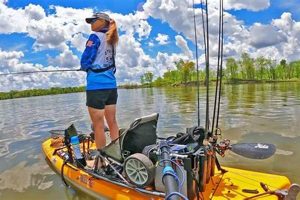
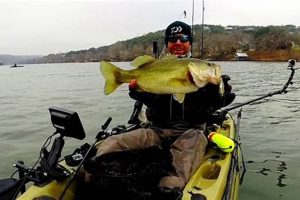
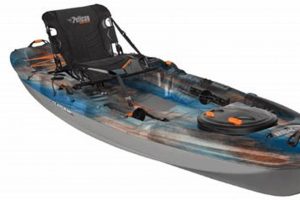
Pursuing these anadromous fish from a small, human-powered vessel offers a unique blend of angling challenge and intimate connection with nature. This approach typically involves specialized tackle and techniques adapted to the maneuverability and stability limitations inherent in kayak angling. Anglers often employ trolling, casting, or drifting methods depending on the specific environment and target species behavior.
This method provides an accessible and environmentally conscious approach to sport fishing. Its growing popularity stems from the ability to reach secluded waters inaccessible to larger boats, offering potentially greater fishing opportunities. Furthermore, the quiet, non-motorized approach minimizes disturbance to the aquatic environment and enhances the overall wilderness experience. This pursuit builds upon a long historical tradition of small boat fishing, modernized through advances in kayak design, materials, and fishing equipment.
The following sections will explore specific equipment recommendations, effective techniques for various salmon species and water conditions, and essential safety considerations for anglers embarking on this exciting and rewarding pursuit.
Tips for Kayak Angling for Salmon
Successful salmon fishing from a kayak requires careful planning and execution. The following tips offer guidance for a productive and enjoyable experience.
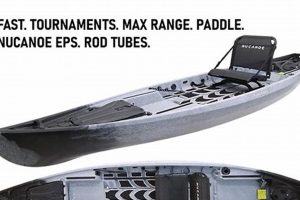
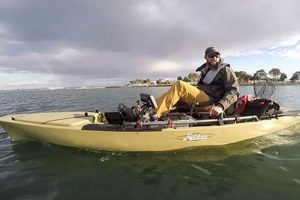
Tip 1: Choose the Right Kayak: Select a kayak designed for stability and ample storage. Sit-on-top models offer easier access to gear and re-entry after a potential capsize. Longer kayaks track better in currents, while shorter models offer enhanced maneuverability in tight spaces.
Tip 2: Utilize Specialized Gear: Rod holders, fish finders, and downriggers tailored for kayak fishing improve efficiency and success rates. Compact tackle storage solutions are essential for maintaining a clutter-free and stable platform.
Tip 3: Prioritize Safety: Always wear a personal flotation device (PFD). Carry a signaling device, such as a whistle or VHF radio, and inform someone of the planned fishing location and expected return time. Check weather forecasts before embarking and be prepared for changing conditions.
Tip 4: Understand Salmon Behavior: Research target species’ migratory patterns, preferred feeding depths, and seasonal behaviors. This knowledge informs effective lure selection and fishing techniques. Consult local fishing reports for up-to-date information on salmon activity.
Tip 5: Master Kayak Control: Practice maneuvering the kayak effectively in various water conditions. Learn to position the kayak for optimal casting and retrieval angles while maintaining balance and stability.
Tip 6: Employ Appropriate Fishing Techniques: Adapt fishing methods to the specific environment. Trolling, casting, and drifting each offer unique advantages depending on water depth, current, and salmon behavior.
Tip 7: Respect the Environment: Practice catch-and-release principles whenever possible to conserve salmon populations. Properly dispose of fishing line and other waste to minimize environmental impact.
By adhering to these guidelines, anglers can maximize their chances of a rewarding fishing experience while prioritizing safety and environmental responsibility.
These tips provide a foundation for successful salmon fishing from a kayak. The concluding section will offer additional resources and further insights into this exciting pursuit.
1. Stable Kayak Platform

A stable kayak platform is fundamental to successful salmon fishing from a kayak. It provides the necessary foundation for casting, retrieving, and ultimately landing these powerful fish. Without adequate stability, anglers compromise their effectiveness and potentially their safety. This section explores the key facets of a stable kayak platform within the context of salmon fishing.
- Kayak Design and Selection
Kayak design significantly influences stability. Wider kayaks with flatter hulls generally offer greater initial stability, making them suitable for calmer waters and less experienced anglers. Longer, narrower kayaks, while potentially less stable initially, offer superior tracking and speed, advantageous in moving water or when covering greater distances. Choosing the right kayak design depends on the intended fishing environment and individual skill level. For example, a wider, sit-on-top kayak is often preferred by beginners fishing in sheltered bays, while experienced anglers might opt for a longer, sit-inside model for river fishing.
- Weight Distribution and Balance
Proper weight distribution is crucial for maintaining stability. Gear should be evenly distributed within the kayak, avoiding excessive weight at either end. The angler’s center of gravity should be kept low, and sudden movements should be minimized. Correct weight distribution enhances stability and maneuverability, crucial when fighting a strong salmon. For example, placing heavier items like tackle boxes near the center of the kayak and using dry bags to distribute weight evenly enhances stability.
- Environmental Factors
Environmental conditions like wind, waves, and currents directly impact stability. Understanding how these factors affect kayak behavior is essential for maintaining a stable platform. Adjusting paddling technique and positioning the kayak relative to wind and waves are vital skills. For example, paddling into waves at a slight angle minimizes the risk of capsizing, while drifting with the current requires careful positioning to avoid obstacles.
- Angler Experience and Skill
Experience plays a crucial role in maintaining stability. Practicing basic paddling strokes, maneuvering in various conditions, and learning to brace and recover from near capsizes builds confidence and enhances stability. Experience also informs the choice of kayak and fishing techniques best suited to individual skill levels. For example, an experienced angler might comfortably stand and cast in a specialized fishing kayak, while a beginner would benefit from the stability of a seated position.
By considering these facets, anglers can select and effectively utilize a kayak that provides the necessary stable platform for successful and safe salmon fishing. A stable platform allows anglers to focus on fishing technique and enhances their ability to handle the powerful runs and fights characteristic of salmon, maximizing the chances of a successful catch.
2. Specialized Tackle

Specialized tackle plays a crucial role in successful salmon fishing from a kayak. The inherent limitations of kayak fishing, such as limited space and the need for efficient maneuverability, necessitate gear tailored to this specific environment. Appropriate tackle enhances effectiveness and contributes significantly to a positive angling experience. The connection between specialized tackle and kayak-based salmon fishing lies in optimizing performance within the constraints of a small vessel.
Rods designed for kayak fishing are typically shorter and more robust than those used from larger boats. This allows for easier casting and maneuvering within the confines of the kayak. Shorter rods also offer greater control when fighting powerful salmon in close proximity. Reels chosen for kayak fishing should be durable and corrosion-resistant, capable of handling braided lines often preferred for their strength and sensitivity. Compact, waterproof tackle boxes maximize storage efficiency within the limited space available. Specialized kayak fishing lures, often designed for trolling or casting in specific water conditions, further enhance the angler’s effectiveness. For example, downriggers, specifically designed for kayak use, allow precise depth control of lures, crucial for targeting salmon at specific depths. Similarly, rod holders designed to securely mount on kayaks free the angler’s hands for paddling, landing fish, or other tasks.
The selection and effective utilization of specialized tackle directly impacts success rates in kayak salmon fishing. Appropriate gear enables anglers to adapt to the unique challenges and opportunities presented by this specialized angling method. Investing in and understanding the function of specialized tackle contributes to a more productive and enjoyable experience. Furthermore, specialized tackle often incorporates safety features, such as integrated line cutters or lanyards for essential tools, further enhancing angler safety. Challenges can include the initial investment in specialized equipment, but the long-term benefits in terms of effectiveness and enjoyment outweigh the initial costs. Ultimately, the correct choice of specialized tackle optimizes performance and safety within the specific context of salmon fishing from a kayak.
3. Safety Equipment
Safety equipment is paramount when salmon fishing from a kayak. The inherent risks associated with this activity, including cold water immersion, changing weather conditions, and the potential for capsizing, necessitate a comprehensive approach to safety. Understanding the connection between appropriate safety equipment and a positive outcome is crucial for mitigating these risks. This connection lies in the equipment’s ability to prevent accidents, facilitate rescue, and enhance overall preparedness. For instance, a personal flotation device (PFD) is essential for survival in the event of a capsize, particularly in cold water environments where hypothermia can rapidly set in. A VHF radio enables communication with emergency services or other boaters should assistance be required. A first-aid kit provides the means to address minor injuries and stabilize more serious conditions until professional medical help arrives.
Furthermore, safety equipment extends beyond the essentials. A signaling device, such as a whistle or flares, increases visibility and aids in locating a kayaker in distress. Carrying a bilge pump or bailing device helps manage water accumulation in the kayak, reducing the risk of capsizing. A paddle leash prevents the loss of a paddle, a critical piece of equipment for maneuvering and self-rescue. Even a simple dry bag containing extra clothing can provide vital protection against hypothermia in the event of immersion. These seemingly small precautions can significantly impact the outcome of an unforeseen event. Consider the scenario of an angler encountering unexpected rough water. A PFD keeps the angler afloat, a VHF radio allows communication for assistance, and a dry bag provides a degree of warmth, significantly increasing the chances of a safe return.
Ultimately, the connection between safety equipment and salmon fishing from a kayak is a direct correlation between preparedness and a positive outcome. While inherent risks exist, appropriate safety equipment empowers anglers to mitigate these risks and respond effectively to emergencies. Challenges include the potential cost and inconvenience of carrying certain safety items, but these are significantly outweighed by the potential life-saving benefits. A comprehensive understanding of safety requirements, combined with diligent preparation and proper equipment usage, empowers anglers to enjoy this rewarding pursuit safely and responsibly. This understanding transforms safety equipment from a perceived burden to an essential enabler of a safe and enjoyable fishing experience.
4. Salmon Behavior Knowledge

A comprehensive understanding of salmon behavior is fundamental to successful kayak angling. This knowledge directly influences strategic decision-making, from selecting appropriate fishing locations and techniques to optimizing lure presentation and retrieval. Effective angling hinges on aligning techniques with the natural behaviors of the target species. This section explores key facets of salmon behavior knowledge and their direct implications for kayak-based fishing.
- Migration Patterns
Salmon exhibit predictable migration patterns, returning from the ocean to their natal rivers to spawn. Understanding these patterns, including timing and specific river systems utilized, is crucial for intercepting migrating salmon. Local resources, such as fishing reports and biological studies, provide valuable insights into regional migration timing and routes. For example, knowing when Chinook salmon typically enter a specific river system allows anglers to plan kayak fishing trips to coincide with peak migration periods. This knowledge maximizes opportunities for encountering and targeting these fish from a kayak.
- Feeding Habits
Salmon feeding habits vary depending on life stage and environmental conditions. While in the ocean, they primarily prey on smaller fish and crustaceans. During river migration, their feeding behavior changes, and they may become less focused on foraging. However, understanding their preferred prey and feeding depths remains relevant for effective lure selection and presentation. For example, using lures that mimic the appearance and movement of common prey species can entice strikes, even from salmon primarily focused on migration. Knowledge of preferred feeding depths informs decisions regarding lure depth control techniques, such as downrigging or specific retrieval patterns.
- Water Temperature Preferences
Salmon exhibit specific water temperature preferences. They thrive within a relatively narrow temperature range and may seek out areas with optimal thermal conditions. Understanding these preferences helps anglers locate salmon holding zones within a river system. For example, during warmer periods, salmon might congregate in cooler, deeper pools or near tributary confluences where colder water enters the main river. Kayak anglers can use this knowledge to target these specific areas, increasing their chances of encountering salmon.
- Response to Currents and Tides
Salmon utilize currents and tides to aid their migration and conserve energy. They often hold in areas where currents create eddies or slack water, providing respite from the main flow. Understanding how salmon position themselves relative to currents and tides allows anglers to effectively present lures within these holding zones. For example, drifting a lure through a slack water area adjacent to a strong current can effectively mimic the natural drift of prey items, increasing the likelihood of a salmon strike. Knowledge of tidal influences in estuaries can similarly inform optimal fishing times and locations from a kayak.
By integrating these facets of salmon behavior knowledge into their angling strategies, kayak anglers significantly enhance their effectiveness. This knowledge informs decisions regarding location selection, timing, lure presentation, and overall fishing approach, ultimately increasing the likelihood of a successful and rewarding experience. A deep understanding of salmon behavior transforms kayak angling from a passive pursuit into an active engagement with the natural world, fostering a more connected and fulfilling fishing experience. Furthermore, this knowledge contributes to responsible angling practices by allowing for more targeted fishing, minimizing disturbance to non-target species and habitats.
5. Efficient Paddling Technique
Efficient paddling technique is integral to successful salmon fishing from a kayak. It directly impacts an angler’s ability to position the vessel effectively, cover water strategically, and maintain stealth. A direct causal relationship exists between paddling efficiency and fishing success. Proficient paddling minimizes noise and disturbance, allowing closer approaches to target areas without spooking wary salmon. Furthermore, it conserves energy, enabling longer fishing sessions and enhancing responsiveness to changing fishing conditions or opportunities. Consider a scenario where an angler spots a promising salmon holding zone near a riverbank. Efficient, quiet paddling allows a close approach without alarming the fish, maximizing casting opportunities. Conversely, inefficient paddling creates excessive noise and water disturbance, potentially driving salmon away before the angler reaches a suitable casting position.
The practical significance of efficient paddling technique extends beyond simply reaching desired fishing locations. Precise boat control, facilitated by skilled paddling, allows anglers to maintain optimal casting angles and present lures effectively in currents or structure. Maneuvering quietly within a specific area, such as an eddy or along a seam, maximizes fishing time within productive zones. Furthermore, efficient paddling is crucial for adjusting to changing environmental conditions, such as wind or current shifts. The ability to quickly and effectively reposition the kayak based on these changes directly impacts fishing success. For example, an angler proficient in paddling techniques can effectively hold position in a current seam, maximizing lure presentation time within the most productive feeding zone. This level of control enhances the likelihood of enticing a strike and successfully landing a salmon.
In summary, efficient paddling technique is not merely a means of transportation in kayak salmon fishing; it is a fundamental skill directly influencing success. Challenges include the time and practice required to develop proficient paddling skills, but the rewards in terms of increased fishing opportunities, enhanced stealth, and improved boat control significantly outweigh the effort. Mastery of paddling technique empowers anglers to navigate the aquatic environment effectively, maximize fishing time within productive zones, and respond adaptively to changing conditions. This translates directly to increased opportunities for success and a more rewarding overall fishing experience.
6. Environmental Stewardship

Environmental stewardship represents a crucial aspect of salmon fishing from a kayak. The intimate connection with the natural environment inherent in this activity necessitates a responsible approach to minimize impact and ensure the sustainability of the resource. This connection lies in the direct interaction anglers have with the aquatic ecosystem and the potential consequences of their actions. Understanding this interconnectedness fosters a sense of responsibility and promotes practices that protect both the salmon population and the broader environment. This section explores the key facets of environmental stewardship within the context of kayak-based salmon fishing.
- Catch-and-Release Practices
Catch-and-release fishing is a cornerstone of responsible salmon management. Proper handling techniques, including minimizing air exposure and using barbless hooks, maximize post-release survival rates. This practice allows anglers to enjoy the thrill of the catch while contributing to the long-term health of salmon populations. For example, using a rubberized landing net minimizes scale damage, and promptly releasing the fish with minimal handling reduces stress and improves its chances of survival.
- Minimizing Disturbance to Habitats
Kayak anglers have a responsibility to minimize their impact on sensitive aquatic habitats. Avoiding shallow spawning areas, refraining from anchoring in vegetated zones, and paddling quietly through sensitive areas minimize disturbance to salmon and other aquatic organisms. For example, choosing designated launch and landing sites minimizes bank erosion and protects riparian vegetation. Careful navigation around submerged structures, such as logs or rocks, prevents damage to these important habitat features.
- Responsible Waste Disposal
Proper disposal of fishing line, discarded tackle, and other waste is essential for preserving the pristine nature of fishing environments. Discarded fishing line poses a significant entanglement hazard to wildlife, while other debris degrades water quality and detracts from the aesthetic value of the natural environment. For example, carrying a small trash bag or utilizing designated disposal receptacles at launch sites prevents the accumulation of litter in and around waterways.
- Respecting Other Users and Wildlife
Respectful interaction with other anglers, boaters, and wildlife enhances the overall experience and contributes to a positive environment for all. Maintaining appropriate distances, minimizing noise pollution, and respecting wildlife viewing guidelines ensures a harmonious coexistence. For example, giving other anglers ample space while fishing and avoiding loud conversations or music contributes to a more peaceful and enjoyable environment for everyone. Observing wildlife from a distance and refraining from disturbing nesting areas or other sensitive habitats promotes the well-being of the local fauna.
By embracing these facets of environmental stewardship, kayak anglers contribute directly to the long-term health and sustainability of salmon populations and the aquatic ecosystems they inhabit. These practices not only protect the environment but also enhance the overall fishing experience. A pristine environment, healthy fish populations, and a sense of shared responsibility among anglers create a more rewarding and sustainable future for this cherished recreational pursuit. This interconnectivity emphasizes the crucial role kayak anglers play as stewards of the environment, ensuring that future generations can continue to enjoy the thrill of salmon fishing.
Frequently Asked Questions
This section addresses common inquiries regarding salmon fishing from a kayak, providing concise and informative responses to facilitate a deeper understanding of this specialized angling method.
Question 1: What type of kayak is best suited for salmon fishing?
Kayaks designed specifically for fishing, characterized by stability, ample storage, and specialized features like rod holders and anchor trolleys, are generally recommended. Sit-on-top models offer advantages in terms of accessibility and self-rescue, while longer kayaks provide superior tracking in currents. The optimal choice depends on individual angler preferences, fishing style, and the specific environment.
Question 2: What essential safety equipment is required?
A personal flotation device (PFD) is paramount. Additional safety equipment includes a signaling device (whistle, VHF radio, or flares), a first-aid kit, a bilge pump or bailing device, and a paddle leash. Navigation lights are recommended for low-light conditions. Checking weather forecasts and informing someone of the planned fishing location and estimated return time are essential safety precautions.
Question 3: What fishing techniques are most effective from a kayak?
Effective techniques include trolling, casting, and drifting. Trolling involves dragging lures behind the moving kayak. Casting allows targeted presentation of lures to specific locations. Drifting presents bait or lures naturally within the current. The optimal technique depends on the target species’ behavior, water conditions, and the specific fishing environment.
Question 4: How does one locate salmon from a kayak?
Locating salmon involves understanding their behavior and preferred habitats. Consult local fishing reports, observe bird activity and surface disturbances, and utilize fish finders to identify potential holding zones. Salmon often congregate near river structure, current seams, drop-offs, and areas with cooler water temperatures. Knowledge of migration patterns and seasonal behavior enhances location effectiveness.
Question 5: What are the legal requirements for kayak fishing for salmon?
Specific regulations vary by jurisdiction. Obtaining the necessary fishing licenses and permits is mandatory. Regulations may also dictate catch limits, size restrictions, permitted fishing methods, and seasonal closures. Consulting local fishery management agencies provides detailed information on current regulations and ensures compliance.
Question 6: How should one handle a hooked salmon from a kayak?
Careful handling minimizes stress on the fish and ensures its survival, particularly when practicing catch and release. Using a landing net minimizes handling time and reduces the risk of injury to both the fish and the angler. Barbless hooks facilitate quick and easy release. Minimizing air exposure and handling the fish gently are crucial for maximizing post-release survival.
Understanding these key aspects enhances preparedness and contributes to a safer, more productive, and environmentally responsible fishing experience.
The following resources offer further information and guidance on kayak salmon fishing techniques, safety practices, and regional regulations.
Conclusion
This exploration has provided a comprehensive overview of the multifaceted nature of salmon fishing from a kayak. Key elements highlighted include the importance of a stable kayak platform, the selection and utilization of specialized tackle, prioritizing safety equipment, understanding salmon behavior, developing efficient paddling techniques, and embracing environmental stewardship. Each of these facets contributes significantly to a successful, safe, and sustainable angling experience. The examination underscores the interconnectedness of these elements, demonstrating that responsible angling practices enhance not only individual success but also the long-term health of salmon populations and the aquatic ecosystems they inhabit.
The pursuit of salmon from a kayak offers a unique blend of challenge, reward, and connection with nature. Continued learning, adaptation of techniques, and a commitment to responsible angling practices will ensure the enduring appeal and sustainability of this rewarding pursuit for generations to come. Through informed decision-making and respect for the environment, anglers can contribute to the preservation of this valuable resource and the enduring legacy of salmon fishing.