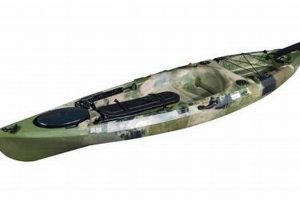
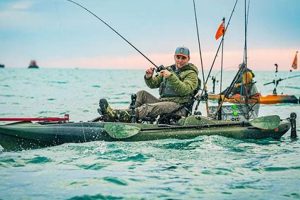
Hands-free kayak propulsion, utilizing a foot-pedal driven MirageDrive system, allows anglers to maintain position and navigate efficiently while simultaneously casting lines and handling fish. This leaves both hands free for fishing activities, a significant advantage over traditional paddle kayaks. The approach provides a unique and efficient platform for angling in diverse aquatic environments, from open ocean to calm lakes and rivers.
This style of fishing offers anglers several advantages, including increased maneuverability, stealth, and stability. The ability to maintain position without paddling is particularly useful in currents or windy conditions. The quiet nature of the MirageDrive system minimizes disturbance to fish, increasing chances of a successful catch. The inherent stability of these watercraft provides a comfortable and secure platform for casting, reeling, and landing fish. This type of hands-free fishing has gained popularity among anglers looking to maximize their time on the water and enhance their fishing experience.
This article will explore the advantages of this specialized fishing technique further, covering specific models designed for angling, recommended accessories, and tips for maximizing success on the water. Discussions will include topics such as choosing the right hull design for specific fishing environments, selecting appropriate fishing gear, and mastering techniques unique to this style of kayak fishing.
Tips for Hobie Kayak Fishing
Optimizing the angling experience with a pedal-driven kayak requires careful consideration of various factors. These tips provide valuable insights for enhancing fishing success and overall enjoyment on the water.
Tip 1: Choose the Right Hull Design: Kayak hull design significantly impacts stability and maneuverability. Wider hulls offer enhanced stability, ideal for calm waters and stand-up fishing, while narrower hulls provide increased speed and efficiency for covering longer distances.
Tip 2: Utilize the MirageDrive Effectively: Mastering the pedal drive system allows for precise positioning and effortless navigation. Practice maneuvering in various conditions to develop proficiency.
Tip 3: Maximize Gear Storage and Organization: Efficient organization is essential for a streamlined fishing experience. Utilize onboard storage compartments and consider aftermarket accessories for optimal gear management.
Tip 4: Select Appropriate Fishing Gear: Rod holders, tackle boxes, and fish finders designed specifically for kayaks enhance convenience and effectiveness. Choosing appropriate rods and reels depends on the target species.
Tip 5: Prioritize Safety Equipment: A personal flotation device (PFD) is crucial. Additional safety gear, including a whistle, signaling device, and first-aid kit, should always be carried onboard.
Tip 6: Understand Local Regulations: Familiarize oneself with fishing licenses, catch limits, and any specific regulations related to kayak fishing in the chosen area.
Tip 7: Practice Stealth and Patience: Avoid sudden movements and excessive noise, which can spook fish. Patience and observation are key to a successful fishing trip.
By implementing these strategies, anglers can significantly enhance their kayak fishing experience. Effective preparation and mindful execution contribute to greater efficiency, enjoyment, and ultimately, fishing success.
This information provides a foundation for successful kayak angling. Subsequent sections will delve deeper into specific techniques and equipment choices.
1. Hands-Free Fishing

Hands-free fishing represents a core advantage of the Hobie kayak fishing experience. The patented MirageDrive pedal system allows anglers to propel and steer the kayak using leg power, leaving hands free for casting, retrieving, and handling fish. This fundamental difference distinguishes it from traditional paddle kayaks, where anglers must constantly switch between paddling and fishing. This advantage becomes particularly significant in situations requiring precise boat control, such as navigating currents, maintaining position in windy conditions, or following schools of fish. Consider a scenario where an angler hooks a large fish. In a traditional kayak, maneuvering the kayak and simultaneously fighting the fish presents a considerable challenge. With a Hobie, however, the angler can maintain control of the kayak and focus entirely on landing the fish, significantly increasing the chances of success.
The practical implications of hands-free fishing extend beyond simply fighting fish. It allows for more efficient lure presentation and retrieval. Anglers can troll multiple lines simultaneously, adjust lure depth and speed with greater precision, and react quickly to strikes without having to reposition paddles. Additionally, hands-free operation allows for easier use of fish finders, GPS, and other electronic equipment, further enhancing the fishing experience. For example, an angler targeting specific structures on the bottom can use the MirageDrive to maintain position while using a fish finder to identify fish holding near the structure and then cast directly to them without repositioning the kayak.
In summary, hands-free fishing, enabled by the MirageDrive system, is integral to the Hobie kayak fishing experience. This unique capability enhances maneuverability, increases fishing efficiency, and improves an angler’s ability to land fish, particularly in challenging conditions. Understanding the significance of this feature provides anglers with a foundation for maximizing their success and enjoyment on the water.
2. MirageDrive Propulsion

MirageDrive propulsion forms the cornerstone of the Hobie kayak fishing experience, differentiating it significantly from traditional paddle-powered kayaks. This unique propulsion system utilizes a set of underwater fins, resembling a penguin’s flippers, powered by a reciprocating pedal motion. This design allows for efficient and near-silent movement through the water, offering several advantages specifically for anglers. The hands-free nature of MirageDrive propulsion allows anglers to focus entirely on fishingcasting, retrieving, and handling fishwithout the need to switch between paddling and fishing. This is particularly advantageous in dynamic fishing situations, such as navigating currents or following schools of fish. For instance, an angler sight-fishing for redfish in shallow flats can quietly stalk their target using the MirageDrive, maintaining precise control while keeping both hands free to make accurate casts.
Beyond hands-free operation, MirageDrive propulsion offers exceptional maneuverability. The ability to pedal forward and backward, coupled with the rudder control, allows for precise adjustments in position and direction. This is particularly beneficial in tight spaces, such as maneuvering through mangrove tunnels or around submerged structures. Furthermore, the system’s quiet operation minimizes disturbance to fish, a crucial factor in shallow water or when targeting spooky species like bonefish or permit. The efficiency of the MirageDrive also extends to long-distance travel, enabling anglers to cover more ground and reach distant fishing spots, an advantage over paddle kayaks, especially in windy or challenging conditions. Imagine an angler fishing a large lake; the MirageDrive enables efficient travel to distant shorelines, conserving energy for fishing rather than paddling.
In summary, MirageDrive propulsion is integral to the effectiveness of Hobie kayaks for fishing. Its hands-free operation, exceptional maneuverability, and quiet performance offer significant advantages over traditional paddle kayaks, allowing anglers to focus on fishing, access diverse locations, and increase their chances of success. Understanding the intricacies of this propulsion system and its practical implications provides a foundation for maximizing the Hobie kayak fishing experience.
3. Stability and Maneuverability

Stability and maneuverability are critical performance characteristics directly impacting the effectiveness and enjoyment of kayak fishing, particularly when using pedal-driven systems. A stable platform is essential for casting accuracy, fighting fish, and landing catches, especially in challenging conditions or when standing to gain a better vantage point. Maneuverability, on the other hand, dictates the angler’s ability to navigate diverse environments, access tight spots, and position the kayak effectively for optimal fishing presentations. The interplay of these two attributes contributes significantly to the overall fishing experience. Consider a scenario where an angler encounters a strong current or gusty winds. A stable kayak platform maintains its composure, allowing the angler to maintain balance and focus on fishing, while the maneuverability enables precise adjustments to hold position or navigate the changing conditions. Conversely, a less stable kayak might require constant adjustments and corrections, hindering the angler’s ability to fish effectively. A kayak’s stability often comes at the expense of maneuverability, and vice versa. Wider hulls generally offer greater stability but sacrifice maneuverability, while narrower hulls prioritize maneuverability at the cost of stability. Therefore, selecting a kayak with the right balance of these attributes is crucial, depending on the intended fishing environment and style.
The design of Hobie kayaks addresses the balance between stability and maneuverability through various hull designs and features. Outrigger-style amas, available on select models, provide exceptional stability, allowing anglers to stand and fish with confidence, even in rough conditions. This stability is particularly advantageous for sight fishing or fly fishing, where maintaining balance and a clear view are essential. Other models feature wider, flatter hulls optimized for stability in calm waters, making them ideal for fishing in lakes, ponds, or slow-moving rivers. For anglers prioritizing maneuverability, Hobie offers kayaks with narrower hulls and streamlined designs, allowing for quick turns and efficient paddling in tighter environments like mangrove forests or rocky coastlines. Furthermore, the MirageDrive system itself contributes to stability by providing a lower center of gravity compared to traditional paddle kayaks. The pedal-driven fins also enhance maneuverability, allowing for precise control and quick changes in direction.
In conclusion, the relationship between stability and maneuverability in Hobie kayaks is a crucial consideration for anglers. Choosing the right balance depends on individual fishing styles and the target environment. Understanding how these characteristics influence performance enables anglers to select the most appropriate kayak and maximize their fishing success. The range of Hobie kayak models caters to diverse needs, offering options that prioritize stability for stand-up fishing or maneuverability for navigating complex waterways. Ultimately, selecting the right combination of stability and maneuverability is paramount for enhancing the overall kayak fishing experience.
4. Specialized Fishing Models
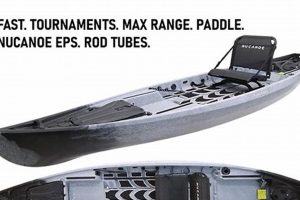
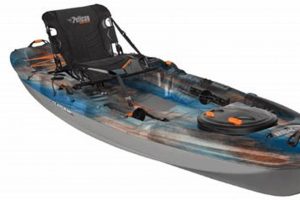
Specialized fishing models play a crucial role within the Hobie kayak fishing ecosystem. Recognizing the diverse needs of anglers targeting various species and environments, Hobie has developed a range of kayaks specifically designed and equipped for angling. These models incorporate features not typically found in recreational kayaks, enhancing fishing effectiveness and overall experience. Cause and effect relationships exist between these specialized designs and fishing outcomes. For example, a kayak designed for offshore fishing incorporates a longer, narrower hull for speed and efficiency in open water, directly impacting an angler’s ability to reach distant fishing grounds. Conversely, a kayak designed for inshore fishing might prioritize stability and maneuverability, featuring a wider, flatter hull more suitable for navigating shallow flats and tight creeks. These design choices directly affect the angler’s ability to approach fish stealthily and maintain position in challenging conditions.
The importance of specialized fishing models as a component of Hobie kayak fishing is evident in the variety of features they offer. Integrated rod holders, tackle storage compartments, and mounting points for fish finders and other electronics streamline the fishing experience, eliminating the need for aftermarket modifications. Consider a kayak equipped with a livewell. This specialized feature allows anglers to keep their catch fresh throughout the day, a significant advantage for tournament anglers or those fishing in remote locations. Other models incorporate features like pedal-powered steering systems, enabling precise boat control and hands-free fishing, which is particularly advantageous in challenging conditions such as strong currents or wind. Practical examples further illustrate this importance. An angler targeting large pelagic fish offshore benefits from a kayak designed for speed, stability, and long-distance paddling, while an angler fishing shallow flats for bonefish requires a kayak that is stable, stealthy, and easily maneuverable in shallow water.
A clear understanding of the role and significance of specialized fishing models is essential for anglers seeking to optimize their Hobie kayak fishing experience. Selecting the appropriate model based on individual fishing styles, target species, and the intended fishing environment directly contributes to increased efficiency, enjoyment, and overall success on the water. While cost can be a factor in selecting a specialized model, the long-term benefits in terms of enhanced fishing performance and comfort often outweigh the initial investment. Further research into specific models and their features will empower anglers to make informed decisions tailored to their specific needs and goals.
5. Accessory Integration

Accessory integration plays a crucial role in optimizing Hobie kayaks for fishing. The ability to seamlessly incorporate various accessories enhances functionality, improves efficiency, and customizes the kayak to suit individual angling styles and target species. Cause-and-effect relationships exist between accessory choices and fishing outcomes. For example, integrating a fish finder provides real-time data on water depth, temperature, and fish location, directly influencing decisions about where to fish and what techniques to employ. Similarly, incorporating rod holders and tackle storage systems streamlines fishing activities, allowing anglers to maintain focus and react quickly to changing conditions. The importance of accessory integration as a component of Hobie kayak fishing stems from its ability to transform a general-purpose platform into a specialized fishing machine. Consider the impact of adding a power source and transducer to a Hobie kayak. This seemingly simple integration opens up a world of possibilities for electronic accessories, including fish finders, GPS units, and even trolling motors. This customization dramatically expands the kayak’s capabilities and allows anglers to tailor their setup to specific fishing needs.
Practical examples further illustrate this importance. An angler targeting offshore species might integrate a GPS and VHF radio for navigation and safety, while an angler fishing in shallow, vegetated areas might choose to add a trolling motor for navigating tight spaces. These examples demonstrate how accessory integration directly influences an angler’s ability to access different fishing grounds and employ specific fishing techniques. The challenges associated with accessory integration primarily revolve around compatibility, installation, and weight distribution. Ensuring chosen accessories are compatible with the specific Hobie kayak model is crucial. Improper installation can compromise the kayak’s structural integrity and stability, while improper weight distribution can negatively affect performance and maneuverability. Careful planning and attention to detail during installation mitigate these challenges.
In conclusion, accessory integration represents a key element of Hobie kayak fishing. Understanding the potential benefits and challenges associated with customizing a Hobie kayak with specialized accessories allows anglers to maximize its effectiveness and create a fishing platform tailored to their specific needs and objectives. The ability to seamlessly integrate electronics, storage solutions, and other fishing-specific gear directly contributes to an enhanced fishing experience and increases the likelihood of success on the water. Further research into specific accessories and their compatibility with different Hobie kayak models will empower anglers to make informed decisions about customizing their setups.
6. Diverse Fishing Environments
The adaptability of Hobie kayaks to diverse fishing environments represents a significant advantage for anglers. These kayaks, with their unique propulsion system and design features, enable access to a wider range of aquatic habitats compared to traditional fishing methods. Cause-and-effect relationships exist between kayak selection and fishing location. For instance, a kayak designed for open ocean fishing, with its focus on speed and stability in rough conditions, allows anglers to target pelagic species far from shore. This would not be feasible in a smaller, less stable kayak designed for calm inland waters. Conversely, a smaller, more maneuverable kayak excels in navigating shallow estuaries and tight creeks, allowing access to species and habitats unreachable by larger boats. This adaptability directly impacts the variety of fish species anglers can target and the overall fishing experience.
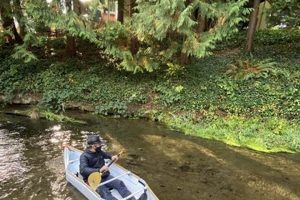
The importance of diverse fishing environments as a component of Hobie kayak fishing stems from the ability to match specific kayak models and configurations to the unique challenges and opportunities presented by each environment. Consider the differences between fishing a fast-flowing river, a calm lake, and a saltwater bay. Each environment requires a different approach, and Hobie offers kayaks designed to excel in each. A river kayak prioritizes maneuverability and stability in currents, while a lake kayak might emphasize stability for stand-up fishing. A saltwater kayak, on the other hand, needs to handle chop and waves effectively. Practical examples further underscore this point. An angler pursuing trout in a mountain stream benefits from a lightweight, maneuverable kayak capable of navigating shallow, rocky waters. An angler targeting redfish in coastal marshes requires a stable platform with shallow draft capabilities. An angler chasing tuna offshore needs a fast, seaworthy kayak capable of handling rough conditions. Each scenario showcases the versatility of Hobie kayaks and their suitability for diverse fishing environments.
In summary, the adaptability of Hobie kayaks to diverse fishing environments is a key factor contributing to their popularity and effectiveness. Understanding the relationship between kayak selection, environment, and fishing outcomes allows anglers to maximize their success and explore a broader range of fishing opportunities. While challenges such as transporting kayaks to different locations and adapting fishing techniques to specific environments exist, the versatility and specialized designs of Hobie kayaks provide solutions for a wide range of angling pursuits. This understanding enhances the overall experience and opens doors to new and exciting fishing adventures.
7. Enhanced Angling Experience

Enhanced angling experiences represent a central theme within Hobie kayak fishing, directly linked to the unique capabilities and design features of these specialized watercraft. The combination of hands-free propulsion, maneuverability, stability, and specialized design elements contributes to a more efficient, engaging, and ultimately, more rewarding fishing experience. This exploration delves into specific facets of this enhanced experience, providing concrete examples and analyzing their implications.
- Increased Access and Stealth
Hobie kayaks provide access to shallow water, secluded coves, and protected areas often inaccessible to larger, motorized boats. This expanded reach opens up new fishing opportunities and allows anglers to target species in their preferred habitats. The quiet operation of the MirageDrive system further enhances stealth, minimizing disturbance to fish and increasing the likelihood of successful approaches. For example, navigating a shallow, weedy flat in pursuit of bonefish becomes significantly more effective and less disruptive in a Hobie kayak compared to a traditional motorized boat.
- Improved Fishing Efficiency
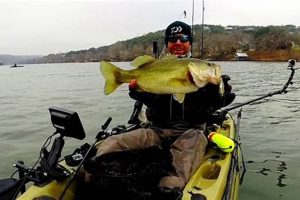
Hands-free fishing, enabled by the MirageDrive, allows anglers to dedicate their full attention to the task at hand. This translates to more efficient lure presentations, quicker reactions to strikes, and improved fish-fighting capabilities. Consider a scenario where an angler hooks a large fish in a strong current. The ability to maintain position and control the kayak with leg power while simultaneously fighting the fish represents a significant advantage over having to manage a paddle and fishing rod simultaneously.
- Closer Connection with Nature
Kayak fishing inherently offers a closer connection with the natural environment. The quiet, non-motorized approach allows anglers to immerse themselves in the sights and sounds of nature, enhancing the overall experience beyond simply catching fish. Paddling through tranquil waters, observing wildlife, and experiencing the serenity of a secluded cove contribute to a more holistic and rewarding outdoor experience.
- Customization and Personalization
The modular design of Hobie kayaks allows for extensive customization. Anglers can tailor their setup with a wide range of accessories, from rod holders and fish finders to livewells and even trolling motors. This level of personalization creates a truly customized fishing platform optimized for individual preferences, target species, and specific fishing environments.
These interconnected facets contribute to a significantly enhanced angling experience distinct from traditional boat-based or shore-based fishing. The combination of increased access, improved efficiency, a deeper connection with nature, and customization options positions Hobie kayaks as versatile and effective tools for anglers of all skill levels. This heightened engagement translates to not only increased fishing success but also a more enriching and fulfilling outdoor experience.
Frequently Asked Questions about Hobie Kayak Fishing
This section addresses common inquiries regarding Hobie kayaks specifically for fishing applications. Clear and concise answers provide practical insights for prospective buyers and current owners alike.
Question 1: What are the primary advantages of using a Hobie kayak for fishing?
The primary advantages include hands-free propulsion and steering via the MirageDrive system, increased stability compared to traditional kayaks, enhanced maneuverability for navigating diverse environments, and the availability of specialized fishing models equipped with integrated features like rod holders and tackle storage.
Question 2: How does the MirageDrive system impact fishing effectiveness?
The MirageDrive system allows anglers to maintain position and navigate without using their hands, enabling simultaneous casting, retrieving, and fish fighting. This hands-free operation increases efficiency and responsiveness in dynamic fishing situations.
Question 3: Are Hobie kayaks suitable for both freshwater and saltwater fishing?
Yes, Hobie offers kayaks designed for both freshwater and saltwater environments. Specific models cater to different water conditions, from calm lakes and rivers to open ocean and surf zones.
Question 4: What maintenance is required for a Hobie MirageDrive?
Regular rinsing with fresh water after each use, especially in saltwater, is crucial. Periodic lubrication and inspection of moving parts are also recommended to ensure optimal performance and longevity.
Question 5: How stable are Hobie kayaks compared to traditional paddle kayaks?
Hobie kayaks, particularly those with wider hulls or outrigger designs, offer increased stability compared to traditional paddle kayaks. This stability is advantageous for stand-up fishing, casting in challenging conditions, and handling larger fish.
Question 6: What factors should be considered when choosing a Hobie kayak for fishing?
Key factors include the intended fishing environment (e.g., open ocean, rivers, lakes), target species, preferred fishing style (e.g., spin fishing, fly fishing), storage needs, and budget. Analyzing these factors helps determine the most suitable hull design, features, and accessories.
This FAQ section provides a foundational understanding of key considerations for Hobie kayak fishing. Consulting authorized dealers or experienced anglers can offer further insights and personalized recommendations.
The subsequent sections delve deeper into specific Hobie kayak models, accessories, and fishing techniques.
Conclusion
This exploration of specialized kayak fishing has highlighted the advantages afforded by the hands-free propulsion system, maneuverability, and specialized designs. Key benefits, including increased access to diverse fishing environments, enhanced stability, and improved fishing efficiency, contribute to a more productive and engaging angling experience. The analysis of specific features, such as the MirageDrive system and the range of available fishing models, underscores the versatility and adaptability of these kayaks to various fishing styles and target species. Furthermore, the integration of accessories and the consideration of stability and maneuverability in different environments emphasize the potential for customization and optimization based on individual angler needs and preferences.
The future of this specialized fishing approach appears promising, driven by continued innovation in kayak design and technology. Further exploration of advanced techniques and specialized accessories promises to unlock even greater potential and enhance the angling experience further. Ultimately, this specialized fishing style offers a unique and effective way to connect with nature and pursue a passion for angling, empowering anglers to explore new waters and achieve greater success on the water.