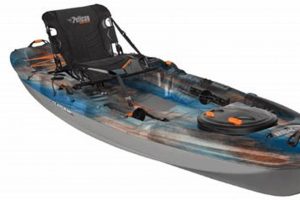
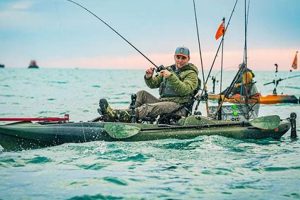
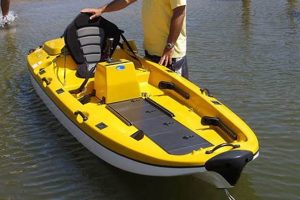
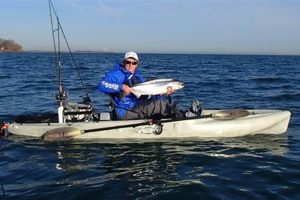
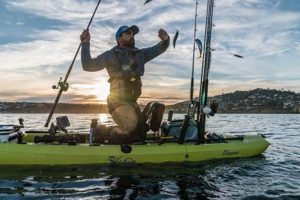
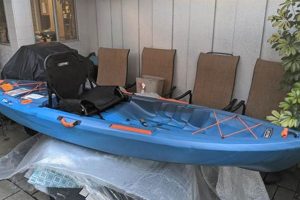
This specific type of watercraft is designed for anglers seeking efficient and stealthy movement on the water. These vessels are characterized by a streamlined hull shape that minimizes drag, allowing for effortless paddling and longer distances covered with each stroke. This design facilitates quiet movement, crucial for approaching fish without disturbing them, particularly in shallow waters. They typically feature specialized seating arrangements and ample storage for fishing gear.
The smooth, quiet operation inherent in these specialized kayaks offers significant advantages for the sport fisherman. Reduced paddling effort conserves energy, enabling longer fishing trips and exploration of wider areas. The quiet approach allows anglers to get closer to fish, increasing the chances of a successful catch. Historically, fishing from small, maneuverable boats has been a common practice, but the development of specialized kayaks tailored to the needs of anglers represents a significant advancement in the sport. These boats offer a blend of stability, portability, and stealth unmatched by traditional fishing boats.
Understanding the design and benefits of these specialized watercraft is crucial for appreciating their role in modern fishing. Topics such as hull design, propulsion systems, and specific fishing techniques relevant to these vessels will be explored further in the following sections.
Tips for Effective Kayak Fishing
Maximizing success on the water requires careful consideration of several key factors. The following tips offer guidance for enhancing fishing performance from a kayak.
Tip 1: Stability is Paramount: Prioritize stability when selecting a watercraft. A wider hull offers increased stability, essential for casting, reeling, and landing fish without compromising safety.
Tip 2: Paddle Choice Matters: Opt for a paddle designed for fishing kayaks. These paddles are typically shorter and feature blades designed for efficient, quiet strokes, minimizing disturbance to the water.
Tip 3: Strategic Gear Placement: Organize gear within easy reach, ensuring essential items like pliers, line cutters, and lures are readily accessible while maintaining balance and stability.
Tip 4: Stealth is Key: Approach fishing spots quietly, utilizing the kayak’s inherent maneuverability and low profile to avoid spooking fish.
Tip 5: Anchor Wisely: Employ an appropriate anchoring system suited for the specific fishing environment. A stake-out pole can be effective in shallow water, while a drift sock or traditional anchor is better suited for deeper areas or current.
Tip 6: Dress for Success: Wear appropriate attire for the weather conditions and water temperature, including a personal flotation device (PFD) for safety.
Tip 7: Respect the Environment: Practice catch-and-release whenever possible and adhere to all local fishing regulations. Pack out any trash and minimize disturbance to the natural environment.
By adhering to these guidelines, anglers can significantly improve their chances of success and enjoy a more rewarding experience on the water. These preparations contribute to a safe and productive outing.
These tips serve as a starting point for enhancing one’s kayak fishing skills. Further exploration of advanced techniques and specific fishing strategies can lead to even greater success on the water.
1. Smooth, efficient movement

A defining characteristic of a glide fishing kayak is its ability to move through the water with minimal effort and maximum efficiency. This characteristic is fundamental to the kayak’s effectiveness as a fishing platform, enabling anglers to cover greater distances, conserve energy, and approach fish stealthily. The following facets explore the components contributing to smooth, efficient movement.
- Hydrodynamic Hull Design
The hull shape plays a crucial role in reducing water resistance. A well-designed hull minimizes drag, allowing the kayak to glide effortlessly through the water with each paddle stroke. Features like a streamlined profile and minimized surface area interacting with the water contribute to a smooth, efficient glide. This efficiency translates to less effort exerted by the paddler, enabling longer fishing trips and easier navigation through various water conditions.
- Balanced Weight Distribution
Proper weight distribution within the kayak is essential for maintaining optimal tracking and reducing unnecessary drag. An evenly distributed load minimizes hull resistance, allowing for smoother movement through the water. This balance enhances the kayak’s ability to maintain a straight course, requiring fewer corrective strokes and maximizing forward momentum. Correct weight distribution is crucial for efficient paddling, particularly in challenging conditions like wind or current.
- Efficient Paddle Stroke
While hull design and weight distribution are critical, efficient paddling technique further enhances smooth movement. A proper paddle stroke maximizes propulsion while minimizing wasted energy. Techniques like a high-angle paddle entry and a smooth, powerful pull through the water contribute to efficient forward movement. Mastering efficient paddling technique is essential for maximizing the kayak’s glide and conserving energy throughout the fishing trip.
- Minimized Water Disturbance
Smooth, efficient movement also entails minimizing disturbance to the water’s surface. Excess splashing or turbulence can spook fish, hindering fishing success. A well-designed hull and proper paddling technique work in concert to minimize water disturbance, allowing anglers to approach fish stealthily. This quiet approach is crucial for maximizing fishing opportunities, especially in shallow or clear water environments.
These interconnected factors contribute significantly to the overall performance of a glide fishing kayak. The combination of hydrodynamic design, balanced weight distribution, efficient paddling, and minimized water disturbance allows anglers to navigate waters efficiently, conserve energy, and approach fish stealthily, maximizing their chances of a successful fishing experience.
2. Stable fishing platform

Stability is a critical aspect of a glide fishing kayak, directly influencing angling success and safety. A stable platform allows anglers to cast, reel, and land fish effectively without compromising balance. It also provides a secure and comfortable base for extended periods on the water. The following facets explore the components contributing to a stable fishing platform.
- Hull Design and Width
The hull design significantly impacts stability. Wider hulls generally offer greater initial stability, resisting tipping more effectively. However, increased width can sometimes compromise maneuverability. A well-designed glide fishing kayak balances stability with maneuverability, providing a secure platform without sacrificing agility. Flat-bottomed hulls provide excellent primary stability, suitable for calm waters, while rounded or pontoon-style hulls enhance secondary stability, crucial for rougher conditions.
- Center of Gravity and Weight Distribution
A low center of gravity enhances stability. Keeping weight low and centered within the kayak improves balance. Proper distribution of gear and the angler’s body weight play a crucial role in maintaining a stable platform. Loading heavier items closer to the center and avoiding excessive weight at the bow or stern contributes to overall stability. Understanding weight distribution principles is essential for maintaining balance, especially during dynamic movements like casting or landing a fish.
- Seat Design and Positioning
The kayak seat’s design and positioning influence stability. A comfortable, well-supported seat allows the angler to maintain a balanced posture, contributing to overall stability. Seats positioned lower in the hull enhance stability by lowering the center of gravity. Adjustable seats offer further customization, allowing anglers to fine-tune their position for optimal balance and comfort. A stable and comfortable seating position is crucial for extended fishing trips, reducing fatigue and improving performance.
- Outriggers and Stabilizers (Optional)
While not standard on all glide fishing kayaks, outriggers or stabilizers can significantly enhance stability, particularly for anglers seeking added security. These additions provide extra support, increasing resistance to tipping. Outriggers extend outward from the hull, providing additional buoyancy and stability, especially beneficial in rougher conditions or when standing to fish. While adding some complexity to setup and transport, these features can be invaluable for anglers requiring enhanced stability.
These elements contribute collectively to a stable fishing platform, essential for successful kayak angling. The interplay of hull design, weight distribution, seat design, and optional stabilizers ensures a secure and balanced experience, allowing anglers to focus on fishing with confidence and comfort.
3. Quiet water approach

A quiet approach is paramount in kayak fishing, directly impacting success by minimizing disturbance to the underwater environment. Glide fishing kayaks are specifically designed to facilitate this stealthy approach, allowing anglers to get closer to fish without alarming them. This section explores the critical components that contribute to a quiet water approach in the context of glide fishing kayaks.
- Hull Design and Water Displacement
The hull design plays a crucial role in minimizing noise and water disturbance. A streamlined hull displaces water smoothly, reducing splashing and turbulence. This smooth passage through the water minimizes noise that could spook fish. Features like a displacement hull or a shallow-V hull are particularly effective in reducing water disturbance and promoting a quiet approach, crucial for success in clear, shallow waters.
- Paddle Choice and Technique
The choice of paddle and paddling technique significantly influences noise levels. A paddle with smooth, drip-free blades minimizes splashing sounds. Efficient paddling technique, emphasizing smooth strokes and minimizing blade churn, further reduces noise and vibration. Feathering the paddle blade during the recovery phase minimizes wind resistance and reduces splashing. These factors collectively contribute to a quieter paddling experience, enhancing stealth and increasing the chances of approaching fish undetected.
- Minimizing Onboard Noise
Reducing noise generated from within the kayak is essential for maintaining a stealthy approach. Securing gear properly prevents rattling and banging sounds. Avoiding sudden movements and minimizing gear shifting keeps noise levels low. Using soft-sided tackle bags or padding hard storage compartments can further dampen noise. Careful attention to these details helps maintain a quiet environment, preventing fish from being alerted to the angler’s presence.
- Controlled Movement and Speed
Controlled, deliberate movements are crucial for a quiet approach. Avoiding jerky paddling and sudden changes in direction minimizes water disturbance. Maintaining a slow, steady pace further reduces noise and allows for more precise maneuvering. This controlled approach allows anglers to navigate quietly through the water, maximizing their chances of getting close to fish without detection.
These interconnected factors contribute significantly to the stealthy nature of glide fishing kayaks. By minimizing noise and water disturbance through careful consideration of hull design, paddling technique, onboard noise control, and controlled movement, anglers can significantly increase their chances of a successful fishing experience. The quiet approach afforded by these kayaks is a key advantage in many fishing scenarios, particularly when targeting wary fish in shallow or clear water environments.
4. Specialized hull design

A specialized hull design is fundamental to the performance of a glide fishing kayak, directly influencing its stability, maneuverability, and tracking in the water. Hull design differentiates these kayaks from recreational models, optimizing them for the specific demands of fishing. Understanding the nuances of these specialized designs is crucial for selecting the right kayak for specific fishing environments and techniques.
- Stability and Tracking
Hull design significantly impacts stability, crucial for casting, reeling, and landing fish from a kayak. Wider, flatter hulls generally offer greater initial stability, while narrower hulls with a defined keel enhance tracking, maintaining a straight course with less effort. Features like chines, the angled edges where the hull sides meet the bottom, contribute to secondary stability, resisting tipping when leaning or encountering waves. Consider a wider, flatter hull for calm lakes and ponds, while a narrower, keeled hull is better suited for rivers or open water where maintaining direction is crucial.
- Maneuverability and Speed
Maneuverability is essential for navigating tight spaces, such as shallow creeks or areas with heavy vegetation. Shorter kayaks with a rounded hull tend to be more maneuverable, turning quickly with minimal effort. Longer kayaks with a more pointed bow and a streamlined profile are generally faster and more efficient for paddling longer distances. Consider a shorter, more maneuverable hull for navigating complex waterways and a longer, faster hull for covering open water efficiently.
- Shallow-Water Performance and Draft
Draft, the depth of the hull below the waterline, is a critical consideration for fishing shallow areas. Shallow-draft hulls allow access to areas inaccessible to deeper-draft vessels. Flat-bottomed hulls are particularly well-suited for extremely shallow water, while slightly V-shaped hulls offer a balance between shallow-water performance and open-water tracking. Choose a shallow-draft hull for accessing shallow flats, backwaters, or areas with submerged obstacles.
- Specialized Features for Fishing
Glide fishing kayaks often incorporate specialized hull features designed to enhance angling functionality. These can include integrated transducer scuppers for mounting fish finders without drilling holes, recessed rod holders for convenient storage and access, and anchor trolleys or mounting points for anchoring systems. Some models feature tunnels or channels in the hull for storing and deploying fishing rods or other gear. These features further optimize the kayak for fishing-specific applications, enhancing efficiency and convenience on the water.
These aspects of hull design are integral to the overall performance and suitability of a glide fishing kayak for specific angling applications. Careful consideration of stability, maneuverability, draft, and specialized features allows anglers to choose a kayak that effectively meets the demands of their preferred fishing environments and techniques. Understanding these design elements is crucial for maximizing fishing success and enjoyment on the water.
5. Enhanced fishing access

Enhanced fishing access represents a core advantage of glide fishing kayaks, expanding angling opportunities beyond the limitations of shore fishing or larger, motorized boats. This enhanced access stems from the kayak’s unique combination of portability, maneuverability, and shallow-water capability. These kayaks grant access to secluded coves, shallow flats, and protected backwaters often inaccessible to other watercraft. For example, navigating narrow, winding creeks or reaching remote ponds becomes feasible with a glide fishing kayak, opening up new possibilities for targeting specific species or exploring less-pressured fishing grounds. The ability to launch and retrieve a kayak from virtually any shoreline eliminates the need for boat ramps or marinas, further expanding access to diverse fishing locations. This expanded access translates to increased opportunities for encountering fish and experiencing the solitude and tranquility of remote natural settings.
The practical significance of enhanced fishing access provided by glide fishing kayaks is substantial. Anglers can explore previously unreachable areas, discover hidden fishing hotspots, and target species that thrive in secluded habitats. Consider the scenario of targeting bass in a densely vegetated marsh: A glide fishing kayak allows quiet navigation through narrow channels, reaching prime fishing locations inaccessible to traditional bass boats. Similarly, accessing remote mountain lakes or protected estuaries becomes feasible with a portable and maneuverable kayak, offering unique fishing experiences. This ability to reach diverse and less-pressured environments directly contributes to a more rewarding and successful angling experience.
In summary, enhanced fishing access is a defining characteristic of glide fishing kayaks. Their portability, maneuverability, and shallow-water capability open doors to a wider range of fishing environments. This access translates to greater angling opportunities, enabling exploration of secluded areas, targeting specific species in their preferred habitats, and experiencing the tranquility of remote natural settings. The practical significance of this enhanced access underscores the value of glide fishing kayaks as versatile and effective tools for anglers seeking to expand their fishing horizons.
6. Integrated Gear Storage

Integrated gear storage is a defining feature of glide fishing kayaks, directly impacting their practicality and effectiveness on the water. Efficient storage solutions allow anglers to organize essential equipment, maximize space, and maintain a clutter-free, balanced platform. This organized approach contributes to a safer and more productive fishing experience, enabling quick access to necessary gear while minimizing distractions and maximizing onboard space utilization.
- Rod Holders and Management Systems
Dedicated rod holders, often integrated into the kayak’s hull or deck, provide secure storage and easy access to fishing rods. Recessed rod holders protect rods from damage and prevent entanglement. Some models feature specialized rod management systems that allow for adjustable positioning and secure storage during transport. Securely stored rods contribute to a safe and organized cockpit, minimizing the risk of tangles and facilitating quick deployment when fish are spotted.
- Tackle Storage Compartments
Integrated tackle storage compartments offer organized storage for lures, hooks, weights, and other essential fishing accessories. Waterproof compartments protect sensitive gear from moisture and the elements. Compartments designed with adjustable dividers or removable trays allow for customized organization, ensuring quick and efficient access to specific items. Well-organized tackle storage contributes to a streamlined fishing experience, eliminating the need to search through cluttered bags or boxes, maximizing valuable fishing time.
- Storage Hatches and Dry Wells
Storage hatches and dry wells provide secure storage for larger items such as extra clothing, safety gear, or electronic devices. Waterproof hatches protect gear from water damage, while dry wells offer easy access to frequently used items. Larger hatches located at the bow or stern provide ample storage for bulky items, while smaller hatches within reach of the seating area offer convenient access to essential gear. These storage solutions ensure that essential equipment remains dry and accessible throughout the fishing trip.
- Bungee Cords and Deck Rigging
Bungee cords and deck rigging offer versatile storage options for items that require quick access, such as paddles, landing nets, or dry bags. Strategically placed bungee cords secure gear to the deck, preventing loss overboard and maintaining a clutter-free cockpit. Deck rigging systems provide additional tie-down points for customizing gear placement and securing larger items. These features enhance the overall functionality of the kayak, offering readily accessible storage for essential equipment.
These integrated storage solutions collectively contribute to the effectiveness and enjoyment of glide fishing kayaks. Organized gear storage maximizes space utilization, enhances safety by reducing clutter, and improves fishing efficiency by providing quick access to essential equipment. These features highlight the thoughtful design of glide fishing kayaks, catering specifically to the needs of anglers and contributing to a more streamlined and successful on-the-water experience. Proper utilization of these storage features further enhances the kayak’s performance and contributes to a more organized and enjoyable fishing trip.
7. Lightweight Portability

Lightweight portability is a crucial aspect of glide fishing kayaks, directly influencing their ease of transport, launch, and retrieval. This characteristic expands accessibility to diverse fishing locations, eliminating the need for specialized trailers or ramps often required for larger, heavier boats. The ability to easily transport and maneuver these kayaks opens up a wider range of fishing opportunities, from remote ponds and small lakes to shallow creeks and coastal waters. The following facets explore the components and implications of lightweight portability in the context of glide fishing kayaks.
- Material Selection and Construction
Lightweight materials are fundamental to achieving portability. Common materials include rotomolded polyethylene, thermoformed ABS, and composite constructions utilizing fiberglass or carbon fiber. Rotomolded kayaks offer excellent durability and affordability, while thermoformed kayaks provide a balance of durability and lighter weight. Composite kayaks are the lightest option, but often come at a higher price point. The choice of material directly impacts the overall weight of the kayak, influencing its portability and ease of handling.
- Kayak Size and Dimensions
Size and dimensions contribute significantly to portability. Shorter, narrower kayaks are generally easier to transport and maneuver than longer, wider models. Compact designs simplify loading and unloading from vehicles, while shorter lengths facilitate maneuvering in tight spaces. However, smaller kayaks may sacrifice some stability and storage capacity compared to larger models. The angler’s physical capabilities and transportation limitations should be considered when selecting the appropriate kayak size.
- Transportation and Handling
Transportation solutions enhance portability. Roof racks, kayak carts, and specialized carrying handles facilitate transport to and from the water. Lightweight kayaks can often be carried by a single person, eliminating the need for assistance. Kayak carts simplify transport over longer distances, reducing strain and fatigue. Choosing appropriate transportation solutions further enhances the portability and accessibility of glide fishing kayaks.
- Expanding Fishing Access
Lightweight portability directly expands fishing access. Transporting a kayak to remote locations, launching from unimproved shorelines, and navigating shallow waters become significantly easier with a lightweight, portable design. This enhanced accessibility allows anglers to explore diverse fishing environments, from secluded ponds and small streams to larger lakes and coastal areas. The ease of transport and launch opens up a wider range of fishing opportunities, contributing to a more versatile and rewarding angling experience.
The lightweight portability of glide fishing kayaks is a defining feature that significantly enhances their versatility and appeal. By carefully considering material selection, size, transportation solutions, and the resulting expanded fishing access, anglers can choose a kayak that best suits their individual needs and preferences. This portability expands fishing horizons, allowing anglers to explore diverse waters and pursue a wider range of fishing opportunities, ultimately enriching the overall angling experience.
Frequently Asked Questions
This section addresses common inquiries regarding specialized fishing kayaks designed for glide and efficiency. Clear and concise answers provide essential information for prospective users.
Question 1: What key features distinguish a glide fishing kayak from recreational models?
Specialized fishing kayaks prioritize stability, maneuverability, and storage capacity. Features like rod holders, tackle storage compartments, and anchor trolleys cater specifically to angling needs. Hull designs emphasize stability and tracking for optimal fishing performance, often incorporating features like a flatter bottom for enhanced stability and a shallow-V hull for efficient tracking in various water conditions.
Question 2: How does hull design contribute to the “glide” in a glide fishing kayak?
Hull design plays a crucial role in minimizing water resistance. Features like a streamlined profile, a shallow-V hull, and minimized surface area interacting with the water contribute to efficient movement. This efficient design allows the kayak to glide smoothly through the water with each paddle stroke, maximizing forward momentum and conserving energy.
Question 3: Are these kayaks suitable for use in both freshwater and saltwater environments?
Most specialized fishing kayaks are designed for use in both freshwater and saltwater. However, regular rinsing with fresh water after saltwater use is crucial for preventing corrosion and extending the kayak’s lifespan. Specific models may be better suited for certain environments based on hull design and material construction. It is always recommended to consult manufacturer specifications for intended usage environments.
Question 4: What weight capacity should one consider when selecting a fishing kayak?
Weight capacity considerations should encompass the combined weight of the angler, fishing gear, and any additional equipment. Exceeding the manufacturer’s specified weight capacity can compromise stability and performance. Selecting a kayak with ample weight capacity ensures safe and efficient operation on the water.
Question 5: What are the essential safety precautions for kayak fishing?
Essential safety precautions include wearing a personal flotation device (PFD), carrying a whistle or other signaling device, informing someone of the fishing plan and estimated return time, and being aware of weather conditions and potential hazards in the fishing area. Adhering to these precautions contributes to a safer and more responsible on-the-water experience. Checking local regulations and obtaining any necessary permits is also recommended.
Question 6: How does one maintain and care for a glide fishing kayak?
Regular rinsing with fresh water, especially after saltwater use, is essential for preventing corrosion and extending the kayak’s lifespan. Storing the kayak out of direct sunlight helps prevent material degradation. Regular inspection for damage and prompt repairs are crucial for maintaining the kayak’s structural integrity and ensuring safe operation. Proper care and maintenance contribute significantly to the kayak’s longevity and optimal performance.
Understanding these key aspects contributes to informed decision-making when selecting and utilizing a glide fishing kayak. Careful consideration of individual needs and preferences, along with adherence to safety precautions, ensures a rewarding and enjoyable experience on the water.
For further information on specific models and features, consult manufacturer specifications and reputable retailers specializing in fishing kayaks.
Conclusion
Specialized kayaks designed for glide and fishing offer distinct advantages in the pursuit of angling success. This exploration has highlighted the critical role of hull design in achieving efficient movement, stability, and a quiet approach. The integration of specialized features, such as rod holders, tackle storage, and optimized seating, further enhances the angler’s experience. Furthermore, the lightweight portability of these kayaks expands access to diverse fishing environments, from secluded coves to shallow flats, enriching the overall angling experience.
The continued evolution of kayak design and technology promises further advancements in efficiency, stability, and specialized features. As anglers seek to maximize their time on the water and connect more intimately with the natural world, specialized glide fishing kayaks stand as essential tools for pursuing this rewarding endeavor. Careful consideration of individual needs, paired with informed selection and responsible usage, will ensure these specialized watercraft continue to enhance fishing experiences for years to come.