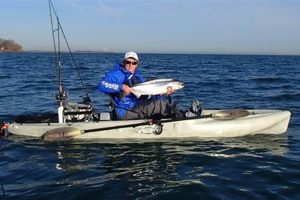
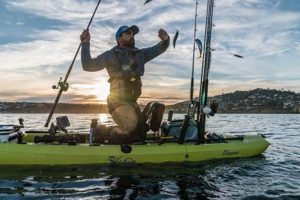
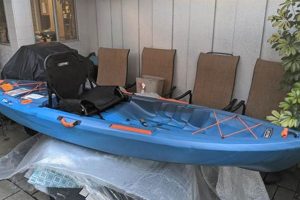
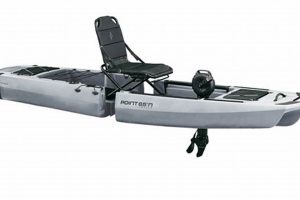
A multi-person vessel designed for angling typically accommodates four individuals and provides ample space for gear and equipment. These watercraft often feature specialized seating, rod holders, and storage compartments tailored to the needs of anglers. An example would be a large, stable platform with four individual seats, each equipped with rod holders and storage compartments for tackle boxes and personal items.
Such craft offer increased stability and carrying capacity compared to smaller kayaks, making them suitable for families, groups, or anglers requiring additional space for gear. Historically, fishing from human-powered watercraft dates back centuries, but the modern iteration, incorporating specialized designs and materials for enhanced stability and functionality, is a relatively recent development. This evolution reflects the growing popularity of kayak fishing and the demand for vessels catering to diverse angling needs.
This article will further explore topics relevant to larger-capacity fishing kayaks, including design considerations, material selection, safety precautions, and popular models available on the market. Additional information regarding essential accessories, maintenance procedures, and responsible paddling practices will also be provided.
Tips for Multi-Person Kayak Fishing
Proper planning and execution are crucial for successful and enjoyable fishing excursions utilizing larger-capacity kayaks. The following tips offer guidance for optimizing the experience.
Tip 1: Distribute Weight Evenly: Balanced weight distribution is critical for stability. Gear should be distributed evenly throughout the vessel, avoiding concentration at either end or side. Consider using dry bags or waterproof containers to protect equipment from water damage.
Tip 2: Practice Paddling as a Team: Synchronized paddling is essential for efficient movement and maneuverability. Before venturing out, practice paddling together to establish a rhythm and ensure coordinated efforts.
Tip 3: Assign Roles and Responsibilities: Designating specific roles, such as navigation, anchor management, and fish handling, streamlines activities and promotes efficiency. This can prevent confusion and enhance overall enjoyment.
Tip 4: Choose Appropriate Waters: Consider water conditions, including currents, tides, and wind, when selecting fishing locations. Opt for calmer waters, especially when starting, and avoid areas with heavy boat traffic.
Tip 5: Prioritize Safety: Ensure all passengers wear personal flotation devices (PFDs) and carry essential safety equipment, including a whistle, first-aid kit, and communication device. Check weather forecasts before departure and be prepared for changing conditions.
Tip 6: Respect Wildlife and the Environment: Adhere to local fishing regulations and practice catch-and-release whenever possible. Minimize environmental impact by properly disposing of waste and avoiding disturbance of natural habitats.
Tip 7: Communicate Effectively: Clear communication among all occupants is essential, especially in challenging situations. Establish hand signals or utilize a waterproof communication device for efficient coordination.
Careful preparation and adherence to these guidelines can significantly enhance safety and enjoyment during multi-person kayak fishing trips, ensuring a positive and rewarding experience for all participants.
By understanding the key elements of successful outings, anglers can confidently embark on adventures and fully appreciate the unique opportunities offered by these versatile vessels.
1. Capacity

The defining characteristic of a four-person fishing kayak is its capacity to accommodate four anglers. This seemingly straightforward feature has significant implications for vessel design, functionality, and overall fishing experience. A kayak designed for four individuals must possess sufficient size and stability to support the combined weight of the anglers and their gear. This necessitates a wider and longer hull design compared to single or tandem kayaks. The increased surface area contributes to enhanced stability, reducing the risk of capsizing, a crucial safety consideration, especially in challenging conditions. For example, a family of four choosing a kayak specifically designed for their size maximizes safety and enjoyment.
Furthermore, the capacity for four anglers influences the layout and features of the kayak. Sufficient space for seating, rod holders, and gear storage must be integrated without compromising stability or maneuverability. Strategic placement of these features is crucial for optimizing the angling experience, ensuring each passenger has adequate space and access to essential equipment. Consider a scenario where four friends plan a fishing trip; adequate seating and storage are paramount for a comfortable and successful excursion. The ability to comfortably cast lines without interference from fellow anglers enhances the overall enjoyment and success of the fishing experience. This underscores the importance of considering individual needs and preferences when selecting a four-person fishing kayak.
In conclusion, capacity directly impacts the design, functionality, and practicality of a four-person fishing kayak. Understanding the interplay between capacity and other key features, such as stability, storage, and layout, empowers informed decision-making, ultimately contributing to safer and more successful fishing excursions. Choosing the appropriate vessel size for the intended number of occupants ensures a comfortable and efficient experience, maximizing the potential for a successful and enjoyable outing. The practical implications of capacity extend beyond mere accommodation; they influence every aspect of the fishing experience, from safety and stability to functionality and overall enjoyment.
2. Stability

Stability is a paramount concern in four-person fishing kayaks, directly influencing safety and angling effectiveness. The increased capacity necessitates a wider and longer hull design compared to smaller kayaks. This larger platform provides enhanced initial stability, reducing the likelihood of tipping, particularly during angler movement or when encountering waves or wakes. However, initial stability is only one aspect. Secondary stability, the resistance to capsizing after tipping past the initial stable point, is equally crucial. Four-person kayaks must be designed to provide adequate secondary stability to prevent complete rollovers, ensuring occupant safety. For example, a kayak with a flatter hull may offer greater initial stability, while a kayak with a more rounded hull may provide better secondary stability. The optimal balance between these two types of stability depends on intended usage and water conditions.
Several factors contribute to kayak stability. Hull design, weight distribution, and water conditions play significant roles. A wider, flatter hull generally provides greater initial stability, while a narrower, V-shaped hull may offer better tracking in rougher water but less initial stability. Even weight distribution within the kayak is essential for maintaining balance and preventing instability. Overloading a kayak, especially with weight concentrated at one end, can significantly compromise stability, increasing the risk of capsizing. Calm water conditions generally contribute to greater stability, while rougher water, strong currents, or wind can significantly challenge stability. For instance, a fully loaded kayak navigating choppy water requires careful weight management and skillful paddling to maintain balance. Understanding these factors empowers informed choices regarding kayak selection and operation, maximizing safety on the water.
A stable platform is essential for effective angling. The ability to cast, reel, and land fish without compromising balance significantly enhances fishing success. Furthermore, a stable kayak provides greater comfort, reducing fatigue and allowing anglers to focus on the task at hand. Reduced movement minimizes disturbance of the water, improving the chances of attracting and catching fish. In conclusion, stability is a critical factor influencing safety, performance, and overall enjoyment in four-person fishing kayaks. Careful consideration of hull design, weight distribution, and water conditions is essential for ensuring a stable and rewarding fishing experience. Prioritizing stability empowers anglers to confidently navigate various water environments and focus on the thrill of the catch.
3. Storage Space

Ample storage space is a critical feature in a four-person fishing kayak, directly impacting practicality and the overall angling experience. The increased capacity inherently necessitates more gear, including rods, reels, tackle boxes, personal items, and potentially safety equipment. Insufficient storage can lead to a cluttered vessel, hindering movement, compromising stability, and detracting from the enjoyment of the outing. For example, a kayak lacking designated storage compartments might force anglers to place gear precariously on the deck, increasing the risk of equipment loss or damage, especially in rough water. Furthermore, inadequate storage can restrict the type and quantity of gear carried, limiting angling versatility and potentially impacting fishing success. Consider a scenario where anglers are unable to bring specialized equipment for targeted species due to limited storage; such restrictions can significantly impact the outcome of the fishing trip.
Effective storage solutions in four-person fishing kayaks often incorporate various compartments and features designed to maximize space utilization and organization. Dedicated rod holders secure fishing rods, preventing tangling and damage. Sealed hatches protect sensitive items from water damage. Bungee cords provide convenient storage for readily accessible items like paddles and life jackets. Recessed storage wells offer ample space for larger items like tackle boxes and coolers. The strategic placement and design of these storage features significantly enhance the overall functionality and user experience. For instance, readily accessible storage for essential gear, like pliers and line cutters, can be crucial in time-sensitive fishing situations. Efficient organization within the kayak promotes a clutter-free environment, enhancing both safety and enjoyment.
In conclusion, adequate storage space is integral to the functionality and enjoyment of a four-person fishing kayak. The capacity to securely and efficiently store essential gear contributes significantly to a successful and organized fishing experience. Prioritizing storage capacity during kayak selection empowers anglers to bring necessary equipment, maximizing their preparedness and enhancing their chances of a productive and enjoyable outing. Effective storage solutions contribute not only to practicality but also to safety and comfort, allowing anglers to focus on the task at hand and fully appreciate their time on the water.
4. Fishing Features

Specialized fishing features distinguish a four-person fishing kayak from a standard recreational model, directly impacting angling effectiveness and overall experience. These features are integral to the kayak’s design and purpose, enhancing functionality and catering specifically to the needs of anglers. Cause and effect relationships exist between these features and fishing success. For example, integrated rod holders secure rods, freeing hands for other tasks like paddling or handling fish. This direct impact on efficiency contributes to a more productive and enjoyable fishing experience. Similarly, strategically placed mounting points for fish finders or GPS units enhance navigational capabilities and improve fish-finding efficiency. The presence and quality of these features directly correlate with the kayak’s suitability for serious angling pursuits.
Consider the practical significance of these features. Built-in livewells maintain the health of caught fish, allowing for catch-and-release practices or preservation for later consumption. Adjustable seating positions accommodate individual preferences and fishing styles. Tackle storage compartments keep essential gear organized and readily accessible. These features, while seemingly minor, contribute significantly to the overall functionality and user experience. A well-designed four-person fishing kayak seamlessly integrates these features, maximizing space utilization and promoting efficient angling practices. For example, a family fishing trip benefits from ample rod holders and storage compartments, ensuring a comfortable and organized experience for all participants. The practical application of these features directly translates to enhanced fishing success and enjoyment.
Integrating specialized fishing features directly influences the functionality and effectiveness of a four-person fishing kayak. These features are not mere additions but essential components that enhance the angling experience and contribute to overall success. Challenges may arise in balancing feature integration with stability and maneuverability. However, careful design and strategic placement mitigate these challenges, resulting in a well-balanced and highly functional fishing platform. The inclusion of these features underscores the kayak’s intended purpose and its value to serious anglers. Understanding the practical implications of these features empowers informed purchasing decisions and contributes to a more rewarding and successful fishing experience.
5. Maneuverability

Maneuverability is a crucial aspect of four-person fishing kayak design, directly impacting navigation and angling effectiveness. Larger size and increased weight capacity inherent in these vessels present inherent challenges to maneuverability. The relationship between size and maneuverability is inversely proportional; larger kayaks generally require more effort to turn and maneuver compared to smaller, lighter models. This presents specific challenges in navigating tight waterways, shallow areas, or areas with obstacles. For example, navigating a river with narrow bends or maneuvering around submerged logs requires precise control and responsiveness, which can be challenging with a larger, less maneuverable kayak. The ability to efficiently position the kayak for optimal casting and fish retrieval significantly impacts angling success. Consider a scenario where anglers need to quickly reposition their kayak to follow a school of fish; impaired maneuverability can hinder this pursuit and reduce fishing opportunities.
Several factors influence the maneuverability of a four-person fishing kayak. Hull design plays a significant role; a longer, narrower hull generally tracks straighter and glides more efficiently, while a shorter, wider hull offers greater initial stability but may sacrifice some maneuverability. The presence of a rudder or skeg system can significantly enhance tracking and directional control, particularly in windy conditions or strong currents. Paddle length and blade shape also influence maneuverability; longer paddles provide greater leverage, while shorter paddles offer quicker strokes for more precise maneuvering. Weight distribution within the kayak also plays a role; uneven weight distribution can create drag and impede maneuverability. Understanding these factors allows for informed decisions regarding kayak selection and operation, optimizing maneuverability for specific fishing environments. For instance, a kayak equipped with a rudder system is advantageous in windy conditions, enhancing directional control and reducing the effort required to maintain course.
Balancing maneuverability with stability and load capacity presents inherent design challenges. While a longer, narrower hull may enhance maneuverability, it can compromise stability, a crucial safety consideration. Similarly, maximizing load capacity often necessitates a larger hull size, potentially impacting maneuverability. Successful four-person fishing kayak designs address these challenges by incorporating features that enhance maneuverability without compromising stability or capacity. The practical implications of maneuverability extend beyond simple navigation; they directly impact angling effectiveness and overall enjoyment on the water. Prioritizing maneuverability during kayak selection empowers anglers to confidently explore diverse fishing locations and effectively position themselves for optimal fishing success.
6. Weight Capacity

Weight capacity is a critical factor in four-person fishing kayak selection, directly impacting safety and performance. This specification defines the maximum weight the kayak can safely support, encompassing the combined weight of passengers, gear, and any additional equipment. Exceeding the specified weight capacity compromises stability, increases the risk of capsizing, and can potentially damage the kayak. A cause-and-effect relationship exists between exceeding weight capacity and decreased freeboard, the distance between the waterline and the top edge of the hull. Reduced freeboard increases the risk of water entering the kayak, further compromising stability and potentially leading to swamping. For example, overloading a kayak with four adults, fishing gear, and a cooler can exceed the weight capacity, resulting in dangerously low freeboard and increased susceptibility to capsizing, particularly in rough water.
Understanding weight capacity is essential for safe and efficient kayak operation. Calculations must account for the weight of all occupants, including personal items, fishing gear, and any additional equipment carried on board. Manufacturers typically provide weight capacity specifications based on average adult weights; however, variations in individual weights necessitate careful consideration and accurate calculations. Choosing a kayak with ample weight capacity provides a margin of safety and ensures optimal performance. Insufficient weight capacity restricts the amount of gear carried, potentially limiting fishing effectiveness and overall enjoyment. Conversely, excessive weight capacity can result in a larger, less maneuverable kayak, impacting navigation and handling. Practical applications of this understanding include distributing weight evenly within the kayak to maintain balance and stability, and prioritizing essential gear to avoid exceeding the weight capacity. For instance, a group planning an extended fishing trip with camping gear requires a kayak with significantly higher weight capacity compared to a group planning a short day trip.
In conclusion, weight capacity is a fundamental consideration in four-person fishing kayak selection. Accurate assessment of weight requirements, careful adherence to manufacturer specifications, and proper weight distribution are essential for safe and efficient operation. Balancing weight capacity with other key factors, such as stability and maneuverability, ensures optimal performance and maximizes enjoyment on the water. Neglecting weight capacity considerations can compromise safety and detract from the overall fishing experience, underscoring the practical significance of this critical factor.
7. Material and Construction
Material and construction significantly influence the performance, durability, and longevity of a four-person fishing kayak. Appropriate material selection and robust construction techniques are essential for withstanding the rigors of on-water use, including exposure to UV radiation, abrasion, and impacts. Understanding the properties of various materials and construction methods empowers informed decisions, ensuring the chosen kayak meets the demands of intended usage and environmental conditions. The interplay between material choice, construction quality, and overall kayak performance forms the basis for evaluating suitability and long-term value.
- Hull Material
Common hull materials include high-density polyethylene (HDPE), polyethylene terephthalate glycol-modified (PETG), and various composites. HDPE offers excellent impact resistance and durability, making it suitable for challenging environments. PETG provides a balance of durability and lighter weight, while composites offer superior strength and stiffness but often at a higher cost. Choosing the appropriate hull material depends on factors such as intended usage, budget, and desired performance characteristics. A kayak intended for rocky rivers requires a more durable hull material than one used primarily on calm lakes. Material selection directly influences the kayak’s ability to withstand impacts and abrasion, contributing significantly to its overall lifespan.
- Construction Methods
Common construction methods include rotomolding, thermoforming, and hand-laid composites. Rotomolding creates a seamless, highly durable hull ideal for recreational kayaks. Thermoforming produces lighter kayaks with varying hull thicknesses, offering a balance between weight and durability. Hand-laid composites provide the highest level of customization and performance but typically come at a premium cost. The chosen construction method influences the kayak’s structural integrity, weight, and overall performance. A kayak intended for rough water benefits from robust construction techniques that enhance durability and resistance to damage.
- UV Resistance
Prolonged exposure to ultraviolet (UV) radiation can degrade kayak materials, leading to discoloration, brittleness, and reduced lifespan. UV-resistant coatings and additives incorporated during manufacturing protect against sun damage and prolong the kayak’s useful life. The level of UV resistance directly correlates with the kayak’s ability to withstand prolonged sun exposure without degradation. Kayaks stored outdoors require higher levels of UV protection than those stored indoors. Investing in a kayak with adequate UV resistance safeguards against premature material degradation and ensures long-term durability.
- Fittings and Hardware
Fittings, such as handles, hatch covers, and rod holders, play a crucial role in kayak functionality and durability. High-quality, corrosion-resistant hardware ensures reliable performance and longevity. Stainless steel or marine-grade aluminum components are preferred for their resistance to saltwater corrosion. Durable fittings contribute to the overall structural integrity of the kayak and enhance its resistance to wear and tear. For example, robust handles are essential for safe and easy transport, while secure hatch covers protect stored gear from water damage. Careful consideration of fittings and hardware contributes to the overall quality and lifespan of the four-person fishing kayak.
The selection of materials and construction techniques directly influences the performance, durability, and overall value of a four-person fishing kayak. Balancing cost, performance, and intended usage is essential for making informed purchasing decisions. Prioritizing durable materials and robust construction ensures the kayak withstands the rigors of fishing excursions and provides years of reliable service. Investing in a well-constructed kayak, utilizing appropriate materials and manufacturing techniques, translates to enhanced safety, improved performance, and long-term satisfaction.
Frequently Asked Questions
This section addresses common inquiries regarding four-person fishing kayaks, providing concise and informative responses to facilitate informed decision-making and enhance understanding.
Question 1: What are the primary advantages of a four-person fishing kayak?
Increased stability, higher weight capacity, and ample space for gear and multiple anglers are key advantages. These features make them suitable for families, groups, or anglers requiring additional space and stability.
Question 2: How does one choose the right four-person fishing kayak?
Consider factors such as intended usage, water conditions, weight capacity requirements, storage needs, desired features, and budget. Researching various models and comparing specifications helps determine the most suitable kayak.
Question 3: What safety precautions should one take when using a four-person fishing kayak?
Prioritize wearing personal flotation devices (PFDs), carrying essential safety equipment, checking weather forecasts, adhering to local regulations, and practicing responsible paddling techniques. Proper weight distribution and adherence to capacity limits are crucial for stability.
Question 4: How does one maintain a four-person fishing kayak?
Regular cleaning, proper storage, and periodic inspections for damage contribute to kayak longevity. Following manufacturer recommendations for maintenance procedures ensures optimal performance and extends the kayak’s lifespan. Rinsing with fresh water after each use, especially in saltwater environments, helps prevent corrosion and material degradation.
Question 5: What are the typical price ranges for four-person fishing kayaks?
Prices vary depending on brand, features, materials, and construction. Entry-level models may be available at lower price points, while higher-end kayaks with advanced features and premium materials command higher prices. Researching various brands and models provides a comprehensive understanding of available options and associated costs.
Question 6: Are there any specific regulations regarding the use of four-person fishing kayaks?
Regulations vary by location and may include registration requirements, specific safety equipment mandates, and restrictions on fishing locations or species. Consulting local authorities or researching online resources provides information regarding applicable regulations.
Careful consideration of these frequently asked questions facilitates informed decision-making regarding four-person fishing kayak selection, usage, and maintenance. Understanding these key aspects contributes to a safer, more enjoyable, and successful on-water experience.
The next section will explore specific models and brands of four-person fishing kayaks, providing comparative analyses to further assist in the selection process.
Four-Person Fishing Kayaks
This exploration of four-person fishing kayaks has highlighted key aspects crucial for informed selection and optimal utilization. Capacity, stability, storage, fishing-specific features, maneuverability, weight capacity, and material/construction considerations are integral to evaluating these specialized vessels. Each element contributes significantly to the overall performance, safety, and enjoyment derived from these versatile watercraft. Understanding the interplay between these factors empowers informed choices tailored to individual needs and preferences.
The evolving landscape of recreational fishing continues to drive innovation in kayak design and technology. Careful consideration of these discussed elements empowers informed purchasing decisions, fostering safe and rewarding experiences on the water. Potential purchasers are encouraged to prioritize safety, conduct thorough research, and select a vessel aligning with specific angling requirements. The future of multi-person kayak fishing promises enhanced designs, incorporating advanced materials and innovative features to further elevate the angling experience.