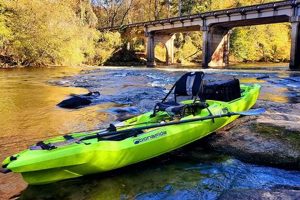
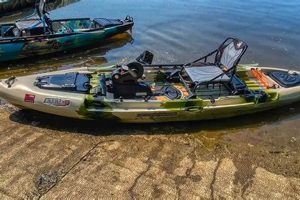
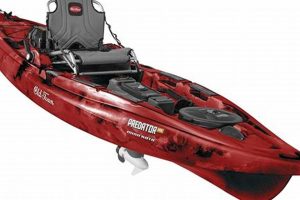
A customizable watercraft designed for anglers, this type of kayak offers a unique approach to fishing by employing interchangeable components. This adaptable design allows users to tailor their vessel to specific fishing styles, locations, and personal preferences. An example configuration might include specialized storage for rods and tackle, live wells for keeping catches fresh, and even outriggers for added stability.
The adaptability offered by this type of fishing kayak provides significant advantages. Anglers can optimize their vessel for diverse environments, from calm lakes to flowing rivers, and for various fishing techniques. This versatility translates to enhanced efficiency and enjoyment on the water. Furthermore, the modular nature potentially reduces long-term costs, as upgrades and replacements can be made component by component, rather than requiring a whole new vessel. This innovative approach to kayak design reflects the evolving needs and desires of the modern fishing community.
The following sections will delve deeper into specific features, benefits, and available configurations of these adaptable fishing platforms. Topics covered will include materials, construction, propulsion options, and popular accessories. Furthermore, expert advice and user testimonials will offer practical insights for selecting and utilizing a modular system tailored to individual needs.
Tips for Optimizing Modular Kayak Configuration
Careful consideration of configuration options is essential for maximizing the benefits of a modular fishing kayak. The following tips offer guidance for customizing a vessel to suit individual angling needs and preferences.
Tip 1: Prioritize Stability vs. Maneuverability: Wider hulls offer increased stability, beneficial for stand-up fishing or navigating choppy waters. Narrower hulls prioritize speed and maneuverability, ideal for covering larger distances or navigating tight spaces.
Tip 2: Tailor Storage to Target Species: Larger storage compartments are necessary for extensive gear associated with larger game fish, while smaller compartments suffice for lighter tackle used for smaller species.
Tip 3: Consider Propulsion Preferences: Paddle propulsion offers quiet operation and exercise, while pedal or motor drives provide speed and convenience, particularly over long distances or against currents.
Tip 4: Optimize for Comfort and Accessibility: Adjustable seating, backrests, and footrests contribute significantly to comfort, especially during extended fishing trips. Easy access to frequently used gear enhances efficiency.
Tip 5: Evaluate Environmental Conditions: Configurations should consider prevalent weather conditions. Added stability features are important in windy or choppy water, while lighter setups are preferable for calm environments.
Tip 6: Factor in Transportation and Storage: The modular nature allows for compact storage and transport. Consider available storage space and transportation methods when choosing component configurations.
Tip 7: Balance Budget and Desired Features: Modular systems offer flexibility in budgeting. Prioritize essential components initially and expand the configuration over time as budget allows.
By carefully considering these tips, anglers can configure a modular fishing kayak optimized for individual needs, enhancing both efficiency and enjoyment on the water.
The insights provided in this article equip anglers with the knowledge to make informed decisions regarding modular kayak configuration, leading to a more rewarding and personalized fishing experience.
1. Customization

Customization lies at the heart of the kingfisher modular fishing kayak system. It represents a departure from traditional kayak design, offering anglers unprecedented control over vessel configuration. This capacity for personalized adaptation is crucial for maximizing fishing effectiveness and overall experience.
- Hull Modifications
Hull shape significantly impacts performance. Interchangeable hulls allow anglers to prioritize stability for stand-up fishing or maneuverability for navigating complex waterways. A shorter hull might be chosen for tight river bends, while a longer hull might be preferred for open-water paddling. This adaptable hull system directly addresses the diverse demands of various fishing environments.
- Storage Solutions
Specialized storage options cater to diverse fishing styles. Dedicated compartments for rods, tackle boxes, and even live wells can be integrated or removed as needed. A bass angler might prioritize rod storage, while a fly fisherman might opt for smaller compartments suited to fly boxes and waders. This modular storage system allows anglers to carry essential equipment efficiently and effectively.
- Propulsion Choices
The propulsion system can be tailored to individual preferences and fishing locations. Paddle propulsion offers a traditional experience, while pedal or motor drives provide increased speed and range. A kayak configured for river fishing might benefit from a pedal drive for navigating currents, while a kayak intended for calm lakes might rely on paddle power. This adaptability enhances versatility across different fishing environments.
- Accessory Integration
The modular design readily accommodates various accessories. Fish finders, GPS units, rod holders, and camera mounts can be integrated seamlessly. A deep-sea angler might prioritize a high-quality fish finder, while a recreational angler might opt for a simple GPS for navigation. This accessory integration allows for personalized configurations tailored to specific fishing objectives.
These customizable facets of the kingfisher modular fishing kayak system highlight its potential to revolutionize the angling experience. The ability to tailor the vessel to individual needs, fishing styles, and target species enhances both efficiency and enjoyment on the water. This modular approach signifies a shift towards a more personalized and adaptable fishing experience, empowering anglers with greater control over their equipment and environment.
2. Adaptability

Adaptability defines the core advantage of the kingfisher modular fishing kayak. Its modular design allows reconfiguration to suit diverse environments and fishing styles, a significant departure from traditional, fixed-hull kayaks. This adaptability stems from the interchangeable component system, enabling modifications to hull shape, storage, propulsion, and accessory configurations. For example, an angler can switch from a stable hull for lake fishing to a maneuverable hull for navigating rivers, demonstrating a practical application of adaptability. This inherent flexibility extends the kayak’s utility, allowing it to serve multiple purposes and adapt to changing conditions or evolving angler preferences.
The practical significance of this adaptability becomes evident in diverse scenarios. Consider an angler targeting different species in varying locations. A configuration optimized for bass fishing in a calm lake, emphasizing stability and ample storage, can be transformed into a setup suited for trout fishing in a fast-flowing river, prioritizing maneuverability and specialized fly fishing equipment storage. This on-demand adaptability eliminates the need for multiple specialized kayaks, offering a cost-effective and versatile solution. Furthermore, adaptability extends to changing weather conditions. Adding outriggers for enhanced stability in windy conditions or switching to a pedal drive for navigating strong currents exemplifies the system’s capacity to respond to dynamic environmental factors.
In summary, adaptability, facilitated by the modular design, distinguishes the kingfisher fishing kayak. This core feature empowers anglers to customize their vessel, maximizing its utility across diverse fishing scenarios and environmental conditions. The ability to reconfigure the kayak represents a substantial advancement, offering enhanced versatility and cost-effectiveness compared to traditional kayak designs. This adaptability ultimately contributes to a more efficient, personalized, and enjoyable fishing experience.
3. Interchangeable Components
Interchangeable components constitute the foundational principle of the kingfisher modular fishing kayak. This design philosophy distinguishes it from traditional kayaks, enabling adaptability and customization. The ability to swap components modifies the kayak’s characteristics, optimizing performance for specific fishing styles and environments. Consider the impact of interchangeable hulls: a shorter hull enhances maneuverability in tight spaces, while a longer hull provides speed and tracking in open water. Similarly, swapping storage configurations allows anglers to accommodate diverse gear, from bulky tackle boxes for bass fishing to specialized compartments for fly fishing equipment. This fundamental principle of interchangeability empowers anglers to tailor the kayak to their precise needs.
Practical examples further illustrate the significance of interchangeable components. An angler targeting both lake and river environments can benefit significantly. For lake fishing, a stable hull configuration with ample storage for larger tackle might be ideal. However, when transitioning to river fishing, a narrower, more maneuverable hull becomes advantageous, coupled with specialized storage for lighter tackle and wading gear. The ability to switch between these configurations enhances versatility and eliminates the need for multiple specialized kayaks. Further extending this principle, propulsion methods can also be interchanged. A pedal drive might be preferred for long-distance paddling or navigating currents, while traditional paddle propulsion might be favored for quieter operation in shallow waters. This adaptability extends to accessories as well, allowing anglers to integrate fish finders, rod holders, and other equipment based on specific fishing techniques and target species.
In conclusion, the concept of interchangeable components lies at the heart of the kingfisher modular fishing kayak’s value proposition. This design principle allows for unparalleled adaptability and customization, catering to a wide range of fishing styles, environments, and individual preferences. By understanding the practical implications of interchangeable components, anglers can maximize the utility of their kayak, optimizing performance and enhancing the overall fishing experience. This modular approach signifies a significant advancement in kayak design, empowering anglers with greater control and flexibility on the water.
4. Enhanced Fishing Experience
The kingfisher modular fishing kayak prioritizes an enhanced fishing experience through its adaptable design. This focus stems from the understanding that diverse fishing styles, environments, and individual preferences necessitate a customizable approach. The modular system addresses these needs, offering anglers greater control over their vessel and, consequently, their fishing experience. The following facets explore specific aspects of this enhancement.
- Increased Efficiency
Modular configurations streamline fishing practices. Specialized storage keeps essential gear organized and readily accessible, reducing time spent searching and maximizing time spent fishing. Adaptable propulsion systems allow anglers to cover greater distances efficiently or navigate challenging currents with ease. This increased efficiency translates to more casts, more opportunities, and potentially greater success on the water.
- Personalized Comfort
Comfort plays a crucial role in the overall fishing experience, particularly during long hours on the water. Adjustable seating, footrests, and backrests cater to individual preferences, reducing fatigue and promoting focus on fishing. Customizable layouts allow anglers to position gear ergonomically, minimizing strain and maximizing comfort. This personalized approach ensures an enjoyable and less physically demanding fishing experience.
- Targeted Versatility
The modular nature enables configurations tailored to specific fishing techniques and target species. A kayak optimized for fly fishing in a river will differ significantly from one designed for trolling in a lake. Interchangeable hulls, specialized storage, and adaptable propulsion systems contribute to this targeted versatility, allowing anglers to pursue diverse fishing styles with a single, adaptable vessel.
- Seamless Adaptation to Environments
Environmental conditions play a significant role in fishing success and enjoyment. The kingfisher modular kayak adapts to these conditions through interchangeable components. Enhanced stability features, such as outriggers, address challenging winds and choppy waters, while maneuverable hull designs navigate tight rivers and shallow areas. This seamless adaptation empowers anglers to fish confidently in diverse environments, regardless of the prevailing conditions.
These facets demonstrate the kingfisher modular fishing kayak’s commitment to an enhanced fishing experience. By prioritizing efficiency, comfort, versatility, and adaptability, the system empowers anglers to tailor their vessel to their unique needs and preferences. This personalized approach fosters greater control, enjoyment, and ultimately, success on the water.
5. Cost-Effectiveness

Cost-effectiveness represents a significant advantage of the kingfisher modular fishing kayak system. While the initial investment might be comparable to a traditional high-end kayak, the modular design offers long-term cost savings through targeted upgrades and component replacements. This approach contrasts with traditional kayak ownership, where damage or the desire for new features often necessitates purchasing an entirely new vessel. The following facets explore the key components of this cost-effectiveness.
- Reduced Replacement Costs
Damage to a traditional kayak often requires costly repairs or even complete replacement. The modular system allows replacement of only the damaged component, significantly reducing expenses. For example, replacing a damaged hull section is substantially more economical than replacing the entire kayak. This targeted replacement strategy minimizes downtime and keeps long-term ownership costs manageable.
- Gradual Upgrades
The modular design accommodates gradual upgrades based on evolving needs and budget constraints. Rather than purchasing a new kayak with advanced features, anglers can incrementally upgrade individual components. For example, a basic paddle propulsion system can be replaced with a pedal drive or motor at a later time. This phased approach allows for controlled investment and avoids a large upfront expenditure.
- Extended Lifespan
The ability to replace individual components extends the overall lifespan of the kayak. As technology advances or personal preferences change, the kayak can be adapted rather than replaced. This contrasts with traditional kayaks, which often become obsolete or require significant investment to remain functional and up-to-date. The modular system’s extended lifespan contributes significantly to its long-term cost-effectiveness.
- Resale Value
The modular design can positively impact resale value. Individual components can be sold separately, potentially recouping a portion of the initial investment. Furthermore, the adaptability of the system makes it attractive to a wider range of buyers, increasing its marketability and resale potential. This factor further contributes to the overall cost-effectiveness of the modular kayak system.
These facets highlight the cost-effectiveness of the kingfisher modular fishing kayak system. The ability to replace components, upgrade gradually, extend the lifespan, and potentially recoup investment through resale contributes to long-term savings and value retention. This approach represents a significant advantage over traditional kayak ownership, offering a more sustainable and economically sound investment for anglers.
6. Evolving Design

The kingfisher modular fishing kayak exemplifies evolving design within the kayaking industry. This evolution stems from a shift away from traditional, fixed-form kayaks towards adaptable platforms catering to diverse angling needs and evolving technologies. The modular design represents a response to several factors, including the increasing specialization of fishing techniques, the demand for personalized equipment, and advancements in materials and manufacturing processes. One clear example of this evolving design is the integration of advanced electronics. Early kayaks offered limited space and integration for fish finders and GPS systems. Modern modular kayaks, however, incorporate dedicated mounting points and power sources for seamless integration of these technologies, enhancing fishing efficiency and navigation.
Furthermore, evolving design in modular kayaks addresses the growing demand for personalized configurations. Interchangeable hulls cater to diverse water conditions, from calm lakes to fast-flowing rivers. Specialized storage solutions accommodate specific gear requirements for various fishing styles, from bass fishing to fly fishing. Even propulsion systems have evolved, offering choices ranging from traditional paddles to pedal drives and electric motors. These adaptations demonstrate a commitment to meeting the diverse needs of the modern angler, enhancing both performance and enjoyment on the water. Consider the example of a kayak configured for stand-up fishing. A wider, more stable hull becomes essential, along with specialized storage for tackle and accessories needed for this specific technique. This level of customization reflects a significant departure from the limitations of traditional kayak designs.
In summary, the kingfisher modular fishing kayak embodies evolving design principles. Its adaptable nature caters to the increasing specialization and personalization within the fishing community. The integration of advanced technologies, interchangeable components, and specialized configurations reflects a commitment to enhancing the angling experience. Understanding this evolutionary process is crucial for appreciating the advantages offered by modular kayaks and for recognizing their potential to further transform the future of kayak fishing.
Frequently Asked Questions
This section addresses common inquiries regarding modular fishing kayaks, providing concise and informative responses.
Question 1: What are the primary advantages of a modular fishing kayak over a traditional kayak?
Modular designs offer adaptability to various fishing styles and environments through interchangeable components. This versatility allows for customized configurations, optimized storage, and adaptable propulsion systems, enhancing efficiency and personalization compared to fixed-hull traditional kayaks.
Question 2: How does the modularity impact the kayak’s durability and longevity?
The ability to replace individual components enhances durability and extends the lifespan. Damaged sections can be replaced without requiring a new kayak, while upgrades ensure the vessel remains current with evolving technologies and personal preferences.
Question 3: Are modular kayaks more difficult to assemble and disassemble than traditional kayaks?
While some assembly is required, modular designs are engineered for straightforward assembly and disassembly. Clear instructions and intuitive connection systems facilitate the process, allowing for efficient configuration changes and convenient storage.
Question 4: Do modular kayaks compromise performance compared to specialized fishing kayaks designed for specific purposes?
Modular kayaks, when configured appropriately, can match or exceed the performance of specialized kayaks. Interchangeable hulls and components allow for optimization based on specific fishing styles and environments, ensuring comparable performance characteristics.
Question 5: What is the typical price range for a modular fishing kayak system, and how does it compare to traditional kayaks?
The initial investment for a modular system may be slightly higher than a comparable traditional kayak. However, long-term costs are often lower due to reduced replacement needs and the ability to upgrade gradually rather than purchasing an entirely new vessel.
Question 6: Where can one purchase a kingfisher modular fishing kayak and associated components?
Authorized retailers and online marketplaces specializing in kayaking and fishing equipment typically offer modular kayak systems and components. Manufacturer websites often provide dealer locators and online purchasing options.
Understanding these key aspects of modular fishing kayaks helps potential buyers make informed decisions based on individual needs and preferences.
Further information regarding specific models, configurations, and accessories can be found in the subsequent sections of this article.
Conclusion
This exploration of the kingfisher modular fishing kayak system has highlighted its innovative approach to kayak design. Key advantages stemming from its modularity include adaptability to diverse fishing environments, enhanced customization options for individual preferences, and potential long-term cost-effectiveness. The system’s capacity to evolve through interchangeable components and integrate emerging technologies positions it as a significant advancement within the kayaking industry. The examination of hull modifications, storage solutions, propulsion choices, and accessory integration underscores the system’s potential to revolutionize the angling experience.
The kingfisher modular fishing kayak represents a paradigm shift, empowering anglers with unprecedented control and versatility. Its adaptability and customizability cater to the evolving demands of modern fishing, suggesting a future where personalized watercraft configurations become the standard. Further exploration and practical application of this technology promise to refine and expand the possibilities of modular kayak design, ultimately enhancing the fishing experience for anglers of all levels and specialties.