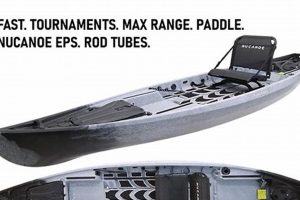
This specific watercraft designates a sit-on-top kayak designed for angling, measuring approximately twelve feet in length. The “Eagle Talon” likely denotes a particular model or brand, suggesting features tailored for fishing such as rod holders, storage compartments, and potentially a specialized hull design for stability. This type of vessel is often chosen for its maneuverability in various aquatic environments, from lakes and rivers to calmer coastal waters. The length suggests a balance between portability and tracking performance.
A fishing kayak of this size offers anglers enhanced access to fishing grounds often unreachable by larger boats. Its compact dimensions facilitate transport and storage, reducing the logistical challenges associated with boat ownership. Furthermore, the sit-on-top design typically provides improved stability and ease of re-entry in the event of a capsize, a crucial safety consideration. Historically, kayaks have evolved from traditional hunting craft used by indigenous peoples, demonstrating a lineage of functionality and connection with the water. Modern fishing kayaks build upon this legacy, incorporating advanced materials and design elements to optimize the angling experience.
Further exploration will delve into specific design features, performance characteristics, and potential advantages of kayaks in this category. Topics will include an analysis of suitable water conditions, recommended fishing techniques, essential safety gear, and appropriate maintenance practices for optimal performance and longevity.
Tips for Utilizing a Fishing Kayak
Optimal use of a fishing kayak requires careful consideration of various factors impacting safety, efficiency, and overall angling success. The following tips offer guidance for maximizing the benefits of this specialized watercraft.
Tip 1: Stability Assessment: Prior to embarking on any fishing trip, conduct a thorough stability check. This involves testing the kayak’s balance in shallow water, becoming accustomed to its movement and center of gravity. Understanding the vessel’s limitations is crucial for preventing capsize.
Tip 2: Essential Gear Storage: Organize essential fishing gear and safety equipment within easy reach while maintaining balanced weight distribution. Uneven loading can compromise stability and maneuverability.
Tip 3: Paddle Selection and Technique: Choose a paddle appropriate for individual physique and paddling style. Efficient paddling technique conserves energy and maximizes propulsion. Practicing basic paddling strokes in calm water is recommended.
Tip 4: Water Condition Awareness: Prior to any excursion, thoroughly research prevailing water conditions, including currents, tides, and wind forecasts. Avoid venturing into conditions exceeding experience level and kayak capabilities.
Tip 5: Navigation and Safety: Carry a reliable navigation device, such as a GPS unit or chart, especially when exploring unfamiliar waters. Inform someone of the intended fishing location and estimated return time.
Tip 6: Respect for Aquatic Environments: Practice responsible angling by adhering to local fishing regulations and minimizing environmental impact. Retrieve all fishing lines and dispose of waste appropriately.
Tip 7: Regular Maintenance: Rinse the kayak thoroughly with fresh water after each use to remove salt, sand, and other debris. Regular inspection and maintenance of critical components, such as hatches and hull integrity, ensure optimal performance and longevity.
Adherence to these guidelines promotes safety, efficiency, and responsible enjoyment of the fishing kayak experience, allowing anglers to fully appreciate the advantages offered by this versatile watercraft.
This foundational knowledge prepares for a deeper exploration of specific techniques, equipment recommendations, and advanced considerations associated with kayak fishing.
1. Length

The length of a kayak, in this case, twelve feet, significantly influences its performance characteristics, impacting maneuverability, tracking, and overall suitability for specific water conditions. Understanding the implications of this dimension is crucial for selecting the appropriate kayak for intended fishing environments and techniques. A twelve-foot length represents a common size for fishing kayaks, offering a balance between several key performance attributes.
- Maneuverability:
A twelve-foot kayak generally offers reasonable maneuverability in various water conditions. Shorter kayaks turn more quickly, beneficial in confined spaces like creeks or rivers with tight bends. Longer kayaks track more efficiently in open water. A twelve-foot length represents a compromise, providing adequate turning ability while maintaining reasonable tracking performance.
- Tracking:
Tracking refers to a kayak’s ability to maintain a straight course. Longer kayaks generally track better than shorter ones, requiring fewer corrective strokes to maintain direction. While twelve feet is not considered exceptionally long, it still offers improved tracking compared to significantly shorter kayaks, contributing to efficient paddling over longer distances in open water.
- Stability:
Length influences kayak stability. While width plays a more significant role, longer kayaks generally exhibit greater directional stability. This means they are less prone to tipping from side to side. The twelve-foot length contributes to a stable platform, especially advantageous for fishing activities that require standing or shifting weight.
- Storage and Transport:
A twelve-foot kayak presents logistical considerations for storage and transport. While still manageable for many individuals, it requires adequate storage space and suitable transportation methods. Roof racks or trailers are often necessary for transporting kayaks of this length.
These facets collectively illustrate the interconnectedness between length and overall kayak performance. In the context of a twelve-foot fishing kayak, this length represents a deliberate design choice aimed at balancing maneuverability, tracking, stability, and practical considerations like transport and storage, contributing to a versatile platform suitable for a range of fishing environments and techniques.
2. Brand
Eagle Talon denotes the brand associated with the 12ft fishing kayak, signifying a crucial element for understanding the vessel’s characteristics and potential performance. Brand reputation often reflects design philosophies, manufacturing processes, and overall product quality. Exploring the Eagle Talon brand provides context for evaluating the kayak’s features, construction, and intended usage within the broader fishing kayak market.
- Brand Identity and Reputation:
Understanding the Eagle Talon brand identity provides insight into the kayak’s design philosophy. Researching the brand’s history, values, and market positioning helps determine its target audience and potential specialization within the fishing kayak segment. Examining customer reviews and industry evaluations contributes to assessing brand reputation and product reliability.
- Manufacturing and Construction:
The Eagle Talon brand likely employs specific manufacturing processes and materials influencing the kayak’s durability, performance, and overall quality. Identifying the materials used, such as high-density polyethylene (HDPE) or other polymers, provides insight into the kayak’s resistance to impact, UV degradation, and overall longevity. Manufacturing techniques influence structural integrity and hull design, impacting performance in various water conditions.
- Features and Design Elements:
Fishing kayaks often incorporate specialized features tailored for angling activities. Investigating the specific design elements offered by Eagle Talon models, such as rod holders, storage compartments, anchor systems, and seating configurations, reveals the kayak’s intended usage and suitability for various fishing styles. These features contribute significantly to angler comfort, efficiency, and overall fishing experience.
- Target Audience and Intended Usage:
The Eagle Talon brand likely targets a specific segment within the fishing kayak market. Analyzing marketing materials, product descriptions, and user reviews helps determine the intended usage and suitability for different fishing environments, from calm lakes and rivers to more challenging coastal waters. Understanding the target audience allows for a more informed assessment of the kayak’s features and overall performance relative to specific fishing needs.
These facets collectively contribute to a comprehensive understanding of the Eagle Talon brand and its implications for the 12ft fishing kayak. Analyzing brand identity, manufacturing processes, design features, and target audience provides valuable context for evaluating the kayak’s suitability for individual fishing preferences and intended usage within various aquatic environments. This detailed examination empowers informed purchasing decisions and facilitates optimal utilization of the kayak’s specialized features.
3. Type
The classification “fishing kayak” distinguishes this specific watercraft from other kayak types, highlighting design features and functionalities optimized for angling. Analyzing the “fishing kayak” designation within the context of the “12ft Eagle Talon fishing kayak” clarifies its intended purpose and suitability for various fishing activities. This categorization informs potential buyers about the specialized attributes that differentiate it from recreational or touring kayaks.
- Specialized Features:
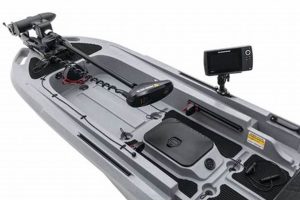
Fishing kayaks often incorporate features absent in other kayak types. Rod holders, strategically positioned for easy access and secure rod placement, are essential components. Storage compartments, designed to accommodate tackle boxes, fishing gear, and other necessities, enhance organization and efficiency. These specialized features directly address the practical needs of anglers, differentiating fishing kayaks from recreational or touring models.
- Stability and Hull Design:
Stability is paramount in a fishing kayak, enabling anglers to cast, reel, and land fish without compromising balance. Hull designs, often wider and flatter than recreational kayaks, prioritize stability over speed. The “12ft Eagle Talon fishing kayak” likely incorporates a hull design optimized for stability, allowing anglers to stand and fish comfortably, a crucial aspect of many fishing techniques. This emphasis on stability distinguishes fishing kayaks from kayaks designed for speed or maneuverability.
- Sit-On-Top vs. Sit-Inside Design:
Fishing kayaks frequently employ a sit-on-top design, facilitating easier entry and exit, crucial for water access and maneuverability around fishing spots. The sit-on-top design also improves stability and self-recovery in the event of a capsize, essential safety considerations for anglers. While sit-inside designs offer advantages in colder conditions, the sit-on-top configuration generally prevails in fishing kayaks due to its enhanced practicality and safety benefits.
- Integration with Fishing Accessories:
Fishing kayaks often integrate seamlessly with fishing-specific accessories like fish finders, anchor trolleys, and mounting systems for cameras or other equipment. These integration capabilities distinguish fishing kayaks from other types, providing a platform optimized for utilizing specialized angling technology. The “12ft Eagle Talon fishing kayak” likely offers compatibility with various accessories, enhancing the overall fishing experience and efficiency.
These specialized features collectively define the “fishing kayak” typology. The “12ft Eagle Talon fishing kayak,” by virtue of this classification, inherits these attributes, distinguishing it from recreational or touring models. This analysis highlights the importance of considering “Type: Fishing kayak” when evaluating suitability for specific angling needs and reinforces the value of specialized design elements in optimizing the fishing experience.
4. Activity

The designation “Activity: Angling” explicitly defines the primary purpose of the 12ft Eagle Talon fishing kayak. This clarifies its intended usage and guides an examination of its features within the specific context of fishing activities. Understanding this core purpose is crucial for evaluating the kayak’s suitability for various angling styles and environments.
- Casting and Retrieving:
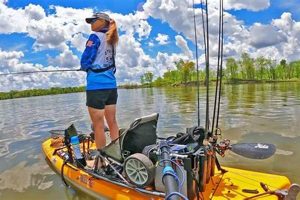
Angling involves casting fishing lines and retrieving lures or bait. The kayak’s stability, deck layout, and rod holder placement directly impact the effectiveness and comfort of these actions. A stable platform, like that offered by the 12ft Eagle Talon fishing kayak, enables anglers to cast accurately and maintain balance during the retrieve, even with larger fish on the line. Ample deck space and strategically positioned rod holders facilitate efficient lure and bait management.
- Fighting and Landing Fish:
Successfully fighting and landing fish from a kayak requires specialized equipment and techniques. The kayak’s stability and maneuverability play crucial roles. A stable platform, like that offered by a fishing kayak, prevents capsizing during the struggle with a powerful fish. Maneuverability allows anglers to adjust position and follow the fish, increasing landing success. The 12ft Eagle Talon fishing kayaks design likely incorporates features to facilitate these actions.
- Trolling and Drift Fishing:
Trolling involves dragging lures or bait behind a moving kayak, while drift fishing relies on natural currents to present bait. Both techniques require specific kayak attributes. Tracking performance is crucial for trolling, ensuring the kayak maintains a consistent course. Stability is essential for both methods, allowing anglers to manage lines and rods effectively. The 12ft Eagle Talon fishing kayaks length and hull design likely contribute to suitable performance in these scenarios.
- Accessing Fishing Locations:
Reaching productive fishing spots often requires navigating shallow water, narrow channels, or areas inaccessible to larger boats. A kayak’s maneuverability, portability, and shallow draft become advantageous in these situations. The 12ft Eagle Talon fishing kayaks relatively compact size and maneuverability enable access to secluded fishing grounds, expanding angling opportunities beyond the reach of conventional boats.
These facets of angling demonstrate the close relationship between the activity and the design of the 12ft Eagle Talon fishing kayak. Each element of angling, from casting and retrieving to fighting fish and accessing specific locations, influences the kayak’s design and features. This analysis clarifies how the “Activity: Angling” designation shapes the kayak’s characteristics and underscores its suitability for various fishing styles and environments.
5. Material

Polyethylene’s prevalence in kayak construction stems from a combination of desirable properties aligning with the demands of recreational and fishing use. Understanding the characteristics of this material in the context of a 12ft Eagle Talon fishing kayak provides insights into its durability, maintenance requirements, and overall suitability for diverse aquatic environments.
- Durability and Impact Resistance:
Polyethylene exhibits excellent impact resistance, crucial for withstanding collisions with rocks, submerged debris, or accidental impacts during transport and storage. This resilience contributes to the kayak’s longevity, especially in demanding fishing environments. Different grades of polyethylene offer varying impact resistance, impacting overall durability and suitability for specific usage scenarios. High-density polyethylene (HDPE) is commonly used for kayaks and this type of use.
- UV Resistance and Degradation:
Prolonged exposure to ultraviolet (UV) radiation from sunlight can degrade polyethylene over time, causing fading, brittleness, and reduced structural integrity. Manufacturers often incorporate UV inhibitors into the polyethylene formulation to mitigate these effects. Proper storage and maintenance practices, such as covering the kayak when not in use, further extend its lifespan and preserve its structural integrity.
- Weight and Portability:
Polyethylene offers a favorable balance between weight and durability. While not as lightweight as composite materials, it remains manageable for transport and storage, especially in the context of a 12ft kayak. The weight of the polyethylene hull influences overall kayak weight, impacting portability and ease of launching and retrieving.
- Maintenance and Repair:
Polyethylene’s relative ease of repair contributes to its practicality. Minor scratches and dents can often be repaired using readily available polyethylene repair kits. This repairability extends the kayak’s usable lifespan, minimizing the impact of minor damage. Regular cleaning and maintenance practices further contribute to preserving the polyethylene hull’s integrity and appearance.
These attributes collectively demonstrate the suitability of polyethylene for kayak construction, particularly in the context of a 12ft fishing kayak like the Eagle Talon. Durability, UV resistance, manageable weight, and repairability contribute to a robust and practical vessel capable of withstanding the rigors of fishing environments. Understanding these material characteristics informs proper maintenance practices and contributes to a more informed assessment of the kayak’s overall value and longevity.
6. Propulsion

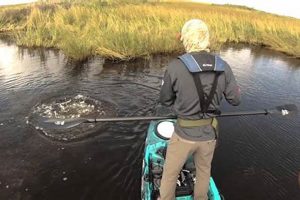
Paddle propulsion defines the human-powered nature of the 12ft Eagle Talon fishing kayak, distinguishing it from motorized watercraft. This method of propulsion directly impacts maneuverability, stealth, and the overall fishing experience. A paddle’s length, blade shape, and paddling technique influence speed, efficiency, and navigational control. The quiet operation inherent in paddle propulsion minimizes disturbance to aquatic life, enhancing fishing success by avoiding spooking fish. Furthermore, paddle propulsion eliminates the need for fuel and complex engine maintenance, simplifying operation and reducing environmental impact.
Consider navigating a shallow, weed-choked cove. A paddle allows precise maneuvering through tight spaces, enabling access to secluded fishing spots unreachable by motorboats. Similarly, the quiet approach afforded by paddle propulsion proves invaluable when stalking wary fish in clear, calm waters. Conversely, paddling against strong currents or covering long distances presents challenges. Efficient paddling technique and appropriate paddle selection become crucial for conserving energy and maximizing forward momentum in such situations. The physical engagement inherent in paddle propulsion contributes to the immersive nature of kayak fishing, fostering a direct connection with the aquatic environment.
Understanding the implications of paddle propulsion is fundamental to maximizing the 12ft Eagle Talon fishing kayak’s capabilities. Recognizing the advantages of maneuverability and stealth, alongside the challenges of long-distance travel or strong currents, informs strategic decision-making regarding fishing locations and techniques. Paddle selection, based on individual physique and paddling style, further optimizes performance and efficiency. Ultimately, paddle propulsion defines the core experience of kayak fishing, fostering a unique blend of physical engagement, environmental consciousness, and access to pristine fishing environments.
7. Design
The “sit-on-top” design of the 12ft Eagle Talon fishing kayak significantly influences its functionality and suitability for angling. This design choice directly impacts stability, water access, and overall angler experience. Unlike traditional sit-inside kayaks, the sit-on-top configuration positions the angler above the waterline on a molded seat. This elevated position enhances visibility and casting range, providing a broader perspective of the surrounding waterscape. Self-bailing scupper holes, integral to the sit-on-top design, allow water to drain freely from the deck, preventing water accumulation and maintaining buoyancy. This feature proves particularly advantageous in choppy conditions or when navigating through waves. The open design also facilitates easy entry and exit, a crucial factor for anglers frequently entering and exiting the kayak to access fishing spots or wade in shallow water. Consider an angler encountering a submerged log or unexpected wave. The sit-on-top design allows for quick recovery and minimizes the risk of capsize, enhancing overall safety. Furthermore, the open deck provides ample space for gear storage and movement, enabling anglers to shift positions and access equipment efficiently without feeling confined.
Practical implications of the sit-on-top design extend beyond basic functionality. Consider an angler targeting fish in shallow, weedy areas. The ease of entry and exit allows seamless transitions between paddling and wading, maximizing fishing versatility. The enhanced stability of the sit-on-top configuration proves crucial when casting from a standing position, a common technique in shallow-water fishing. However, the open design offers less protection from the elements. Anglers utilizing sit-on-top kayaks in colder conditions might require specialized clothing to maintain comfort. Additionally, while self-bailing scupper holes prevent water accumulation, they can also allow splashes and spray onto the deck, potentially wetting gear or causing discomfort in rougher waters.
The sit-on-top design’s impact on the 12ft Eagle Talon fishing kayak’s performance and usability is undeniable. Enhanced stability, water access, and the capacity for gear storage contribute to a fishing-focused design. Understanding the inherent trade-offs, such as reduced protection from the elements, empowers anglers to make informed decisions regarding clothing and gear choices based on prevailing conditions. Ultimately, the sit-on-top design reinforces the kayak’s suitability for various fishing styles and environments, aligning with the demands of angling activities.
Frequently Asked Questions
This FAQ section addresses common inquiries regarding 12-foot fishing kayaks, providing concise and informative responses to assist potential buyers and users in making informed decisions.
Question 1: What weight capacity can a typical 12-foot fishing kayak accommodate?
Weight capacity varies depending on the specific model and manufacturer, but typically ranges from 300 to 500 pounds. Consulting manufacturer specifications for the particular kayak is essential.
Question 2: Are 12-foot kayaks suitable for ocean fishing?
While suitable for calmer coastal waters and bays, using a 12-foot kayak in open ocean conditions requires careful consideration of weather forecasts, currents, and individual paddling experience. Ocean kayaking requires specialized safety precautions and should be approached with caution.
Question 3: What essential safety equipment should accompany kayak fishing excursions?
Essential safety gear includes a personal flotation device (PFD), a whistle, a signaling device (mirror or flare), a first-aid kit, and a communication device (waterproof cell phone or VHF radio). Navigation equipment, such as a GPS or chart, and appropriate attire for prevailing weather conditions are also highly recommended.
Question 4: How does one transport a 12-foot kayak?
Transportation options include roof racks specifically designed for kayaks, trailers equipped with kayak cradles, or truck bed extenders. Securing the kayak firmly during transport is crucial to prevent damage or accidents.
Question 5: What maintenance is required for a 12-foot fishing kayak?
Regular maintenance involves rinsing the kayak with fresh water after each use, especially after exposure to saltwater. Inspecting and cleaning scupper holes, checking hull integrity for cracks or damage, and lubricating moving parts contribute to the kayak’s longevity.
Question 6: What factors influence kayak stability?
Kayak stability depends on factors like hull design (width and shape), weight distribution, and angler positioning. Wider kayaks generally offer greater initial stability. Even weight distribution and maintaining a low center of gravity enhance stability in various water conditions.
Understanding these key aspects empowers informed decisions regarding kayak selection, usage, and maintenance. Thorough research and adherence to safety guidelines contribute significantly to a positive and safe kayaking experience.
Further sections will explore specific techniques and considerations associated with kayak fishing, including choosing appropriate paddles, selecting fishing gear, and navigating various water conditions.
Conclusion
Exploration of the 12ft Eagle Talon fishing kayak reveals a specialized watercraft designed for angling activities. Analysis of its core attributes, including length, brand reputation, material composition, propulsion method, and sit-on-top design, provides a comprehensive understanding of its capabilities and intended usage. The 12-foot length balances maneuverability and tracking performance, while the Eagle Talon brand signifies specific design features tailored for fishing. Polyethylene construction contributes durability and impact resistance, essential for navigating diverse aquatic environments. Paddle propulsion offers stealth and maneuverability advantageous for angling, and the sit-on-top configuration enhances stability and water access. Understanding these interconnected elements informs appropriate usage, maintenance, and equipment selection, optimizing the kayak’s performance and longevity.
Successful utilization of the 12ft Eagle Talon fishing kayak necessitates informed decision-making regarding fishing locations, techniques, and safety precautions. Careful consideration of water conditions, appropriate gear selection, and adherence to established safety guidelines contribute significantly to a rewarding and safe angling experience. Further exploration of advanced fishing techniques, specialized equipment, and responsible environmental stewardship will enhance appreciation for this versatile watercraft and its potential to connect anglers with the aquatic world.