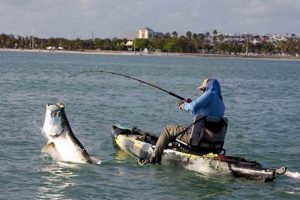
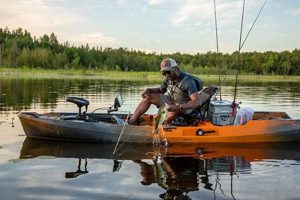
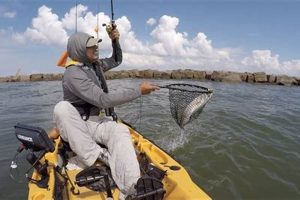
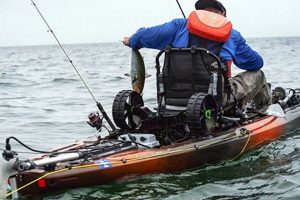
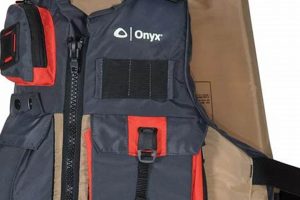
A retail establishment specializing in kayaks designed and equipped for angling typically offers a range of products and services. These can include various kayak models optimized for stability, maneuverability, and storage, along with specialized fishing accessories such as rod holders, fish finders, and anchors. Such businesses might also provide related services like kayak rentals, repairs, and guided fishing tours.
Dedicated retailers play a vital role in connecting anglers with the appropriate equipment and expertise. They offer a curated selection tailored to the needs of fishing enthusiasts, facilitating informed purchasing decisions through expert advice and product demonstrations. This specialized approach can enhance safety and enjoyment on the water by ensuring anglers are properly equipped and knowledgeable. Historically, the increasing popularity of kayak fishing has driven the growth of these dedicated retail outlets, contributing to a more accessible and specialized market for consumers.
The following sections will delve deeper into specific aspects of acquiring and utilizing fishing kayaks, including choosing the right model, essential accessories, and safety considerations.
Tips for Selecting and Utilizing Fishing Kayaks
Choosing and using a fishing kayak effectively involves careful consideration of various factors. The following tips offer guidance for maximizing one’s experience and ensuring safety on the water.
Tip 1: Consider Hull Design: Kayak stability and maneuverability are influenced by hull design. A wider, flatter hull offers greater stability, while a longer, narrower hull provides better tracking and speed. Anglers should choose a design that aligns with their fishing style and water conditions.
Tip 2: Evaluate Storage Capacity: Ample storage is crucial for carrying fishing gear, safety equipment, and personal belongings. Consider the size and type of storage compartments available, ensuring they meet individual needs.
Tip 3: Prioritize Comfort and Ergonomics: Long hours on the water necessitate a comfortable seating arrangement. Adjustable seats, footrests, and backrests contribute to proper posture and reduce fatigue. Testing different models before purchase is recommended.
Tip 4: Choose Appropriate Propulsion: Kayaks can be propelled by paddles, pedals, or motors. Each method has its advantages and disadvantages regarding speed, maneuverability, and effort. Selection should align with personal preferences and fishing locations.
Tip 5: Invest in Essential Accessories: Rod holders, fish finders, anchors, and safety equipment enhance fishing efficiency and overall experience. Research compatible accessories and select those that meet specific fishing requirements.
Tip 6: Practice Safe Kayaking Techniques: Prioritize safety by wearing a personal flotation device, carrying a whistle or other signaling device, and informing someone of your fishing plans. Familiarize oneself with basic kayaking techniques and water safety guidelines.
Tip 7: Research Local Regulations: Be aware of local fishing regulations, including licensing requirements and catch limits. Respect wildlife and the environment by practicing catch-and-release when appropriate and disposing of waste responsibly.
By considering these factors, individuals can enhance their fishing kayak experience, improve their chances of success, and prioritize safety on the water.
This information provides a foundation for selecting and using a fishing kayak. Further research and consultation with experienced anglers can further enhance one’s understanding and preparation.
1. Inventory Breadth

Inventory breadth within a fishing kayak store significantly impacts its ability to cater to diverse customer needs and preferences. A wide selection, encompassing various kayak types, sizes, and price points, allows anglers of differing skill levels, fishing styles, and budgets to find suitable equipment. For example, a store with broad inventory might offer sit-on-top kayaks for recreational anglers, sit-inside kayaks for enhanced stability in rougher waters, and pedal-powered kayaks for hands-free fishing. This range allows customers to select a kayak optimized for their specific needs, contributing to a more satisfying and successful fishing experience. Conversely, a limited inventory restricts choices and may necessitate compromises, potentially hindering angler performance or enjoyment.
The breadth of inventory also extends to accessories. Offering a wide selection of rod holders, fish finders, paddles, life vests, and other gear allows anglers to fully equip their kayaks and customize them to their preferred fishing techniques. A comprehensive inventory fosters a one-stop-shop experience, enhancing customer convenience and potentially increasing sales. Furthermore, a diverse inventory can attract a wider customer base, contributing to the store’s overall success. For instance, stocking specialized equipment for fly fishing or bass fishing can attract enthusiasts of those particular disciplines. This targeted approach can establish the store as a go-to resource for specific angling communities.
A well-maintained and strategically planned inventory is crucial for fishing kayak store success. While managing a large inventory presents challenges regarding storage space and investment costs, the benefits of catering to a wider customer base and offering a comprehensive selection often outweigh these challenges. Ultimately, a fishing kayak store’s inventory breadth reflects its commitment to serving the diverse needs of the angling community, solidifying its reputation as a reliable and valuable resource.
2. Expert Advice

Access to expert advice within a fishing kayak store significantly influences customer satisfaction and purchasing decisions. Knowledgeable staff can guide customers through the complexities of kayak selection, ensuring appropriate choices based on individual needs and intended usage. This guidance enhances the overall buying experience and promotes informed decisions, contributing to long-term customer satisfaction and positive word-of-mouth referrals.
- Kayak Selection Guidance
Expert staff can offer tailored recommendations considering factors such as fishing style, water conditions, and angler experience. For example, they can advise on hull design (stability vs. maneuverability), propulsion systems (paddle, pedal, or motor), and weight capacity. This personalized approach ensures customers acquire a kayak suited to their specific requirements, maximizing on-water performance and enjoyment.
- Accessory Recommendations
Navigating the range of fishing kayak accessories can be overwhelming for novice and experienced anglers alike. Expert advice helps customers choose appropriate rod holders, fish finders, anchors, safety gear, and other accessories tailored to their fishing techniques and target species. This informed selection enhances functionality and efficiency on the water.
- Maintenance and Repair Guidance
Expert staff can provide valuable insights into kayak maintenance and repair procedures. They can offer advice on proper storage techniques, cleaning methods, and minor repair procedures, extending the lifespan of the kayak and ensuring optimal performance. This knowledge empowers customers to care for their investment effectively.
- Local Fishing Knowledge
Experienced staff often possess valuable local fishing knowledge. They can offer insights into productive fishing spots, appropriate bait and tackle choices, and local regulations. This localized expertise enhances the customer’s overall fishing experience and increases the likelihood of success.
The presence of knowledgeable staff within a fishing kayak store significantly enhances its value proposition. Expert advice transforms the purchasing process from a simple transaction into a consultative experience, fostering trust and building lasting customer relationships. This ultimately contributes to the store’s reputation as a reliable resource for fishing kayak enthusiasts.
3. Accessory Availability

A fishing kayak store’s success hinges significantly on the availability of essential accessories. Providing a comprehensive range of accessories caters to diverse angler needs, enhances customer satisfaction, and promotes a convenient one-stop shopping experience. The following facets illustrate the critical connection between accessory availability and a thriving fishing kayak retail environment.
- Enhanced Fishing Functionality
Offering a diverse range of accessories directly impacts an angler’s ability to customize their kayak for specific fishing styles and target species. Rod holders, for instance, provide secure rod storage and facilitate hands-free fishing. Fish finders enhance the ability to locate fish, increasing angling success. These specialized accessories augment the core functionality of the kayak, transforming it into a highly effective fishing platform.
- Improved Safety and Comfort
Accessory availability extends to crucial safety and comfort enhancements. Life vests, essential for on-water safety, come in various sizes and styles. Comfortable seating and backrests enhance endurance during long fishing trips. Dry bags protect essential gear from water damage. By offering these accessories, the store prioritizes customer safety and well-being, fostering trust and responsible angling practices.
- Increased Customer Convenience
A well-stocked accessory selection offers significant convenience for customers. Acquiring essential gear alongside the kayak purchase streamlines the outfitting process, saving time and effort. This one-stop-shop approach enhances customer satisfaction and potentially encourages additional purchases, contributing to increased sales and revenue for the store.
- Opportunity for Upselling and Cross-Selling
Accessory availability creates valuable opportunities for upselling and cross-selling. Knowledgeable staff can recommend complementary accessories based on customer purchases and fishing preferences. For example, a customer purchasing a kayak for bass fishing might be interested in specialized bass fishing lures or tackle boxes. This personalized approach enhances customer experience and contributes to increased sales.
Comprehensive accessory availability strengthens a fishing kayak store’s position as a complete resource for anglers. By offering a wide range of products tailored to diverse needs and preferences, the store cultivates customer loyalty, promotes responsible fishing practices, and ultimately drives business success. This connection between accessory availability and overall store performance underscores the importance of a well-stocked and strategically curated inventory.
4. Repair Services

The availability of repair services within or associated with a fishing kayak store significantly impacts customer loyalty and long-term satisfaction. Kayaks, subjected to various environmental stressors and potential damage from use, require periodic maintenance and occasional repairs. Offering these services directly addresses customer needs, fostering a sense of trust and convenience. This connection between repair services and customer retention contributes directly to a fishing kayak store’s overall success.
Providing repair services strengthens customer relationships by offering convenient solutions to common kayak issues. Minor damage, such as hull scratches or leaky hatches, can often be addressed in-store, minimizing downtime and maximizing customer enjoyment. More complex repairs, like structural damage or rudder system malfunctions, may require specialized expertise. Having established relationships with qualified repair technicians allows the store to act as a liaison, streamlining the repair process for the customer. This comprehensive approach to repair services establishes the store as a reliable resource throughout the kayak’s lifespan, fostering long-term customer loyalty. For example, a customer experiencing a damaged rudder system shortly after purchasing a kayak would likely appreciate the store’s ability to facilitate a swift and efficient repair, solidifying their trust in the store’s commitment to customer satisfaction.
Furthermore, offering repair services presents an additional revenue stream for the fishing kayak store. Generating income from repairs contributes to overall profitability and allows the store to reinvest in inventory, staff training, and other resources that enhance the customer experience. This cyclical relationship between repair services, revenue generation, and reinvestment creates a positive feedback loop, contributing to sustained business growth and customer satisfaction. Moreover, the availability of repair services can serve as a differentiating factor in a competitive market. Customers are more likely to choose a store that offers comprehensive support throughout the product lifecycle, recognizing the long-term value and convenience of such services. This competitive advantage further strengthens the store’s position within the market and enhances its reputation as a reliable and customer-centric business.
5. Rental Options
Integrating rental options within a fishing kayak store’s business model offers significant advantages for both the business and its customers. Rentals provide a low-commitment entry point for individuals interested in exploring kayak fishing, allowing potential customers to experience the activity before investing in equipment. This “try-before-you-buy” approach mitigates purchase hesitation and fosters informed decision-making, ultimately contributing to increased sales conversions. For example, a novice angler hesitant about investing in a kayak can rent various models to determine preferred features and suitability for local fishing conditions. This experience can then guide their eventual purchase, ensuring a well-suited investment.
Furthermore, rental options provide an additional revenue stream for the store, contributing to overall profitability and business sustainability. This diversified income model cushions against fluctuations in sales and allows reinvestment in inventory, staff training, and other resources that enhance the customer experience. Rental offerings also attract a wider customer base, including tourists and occasional anglers who may not require kayak ownership. Catering to these diverse needs positions the store as a comprehensive resource within the local angling community. For instance, a coastal fishing kayak store can attract tourists seeking short-term rentals for recreational fishing, expanding its market reach beyond local residents. This diversified customer base contributes to sustained business growth and strengthens the store’s position within the local economy.
Strategically integrating rental options presents distinct advantages for fishing kayak stores. By offering a pathway for customer engagement and generating additional revenue, rentals contribute significantly to long-term business success and market competitiveness. This connection between rental services and overall store performance underscores the importance of considering rental integration as a core component of a successful business model. However, implementing rentals requires careful planning and execution, including inventory management, maintenance schedules, and liability considerations. Addressing these operational challenges effectively maximizes the potential benefits of rental integration.
6. Location Convenience

A fishing kayak store’s location significantly influences its accessibility and overall appeal to customers. Convenient access, often determined by proximity to target markets and transportation infrastructure, plays a crucial role in attracting customers and driving business success. Analyzing the various facets of location convenience reveals its intricate connection to a fishing kayak store’s performance and market reach.
- Proximity to Target Markets
Locating a fishing kayak store near its target demographic enhances accessibility and fosters customer engagement. Establishing a presence in areas with high concentrations of anglers or near popular fishing destinations increases visibility and attracts potential customers actively seeking related products and services. For example, a store situated near a coastal town or a lake frequented by anglers benefits from increased foot traffic and targeted market exposure. This strategic placement maximizes the likelihood of attracting customers actively engaged in or considering kayak fishing.
- Transportation Infrastructure
Easy access via major roadways and public transportation enhances a store’s reach and convenience. Customers transporting kayaks require adequate transportation infrastructure, including ample parking space and convenient loading areas. A store situated near major highways or with readily available public transportation options facilitates customer access, minimizing transportation challenges and expanding the store’s potential customer base. For instance, a store located near a major highway with ample parking and dedicated kayak loading zones simplifies the transportation process, attracting customers from a wider geographic area.
- Complementary Businesses
Locating near complementary businesses creates synergistic opportunities and attracts a broader customer base. Proximity to fishing tackle shops, outdoor gear retailers, or boat ramps creates a hub for outdoor enthusiasts, enhancing cross-promotional opportunities and increasing foot traffic for all businesses involved. For example, a fishing kayak store situated near a popular bait and tackle shop benefits from shared customer traffic and potential collaborative marketing efforts, expanding its reach and reinforcing its position within the local outdoor recreation market.
- Visibility and Signage
Clear visibility and effective signage enhance a store’s prominence and attract passing customers. A store located on a highly trafficked street with prominent signage benefits from increased visibility, capturing the attention of potential customers who might not have been actively searching for a fishing kayak store. Effective signage communicates the store’s offerings clearly and concisely, enticing potential customers to explore further. For example, a store located on a main thoroughfare with large, eye-catching signage featuring images of fishing kayaks and related gear attracts attention and communicates its specialization effectively, potentially converting passing motorists into customers.
Careful consideration of location convenience significantly influences a fishing kayak store’s success. Strategic placement near target markets, convenient transportation access, proximity to complementary businesses, and effective signage contribute to increased customer traffic, enhanced brand visibility, and overall business growth. By analyzing and optimizing these factors, fishing kayak stores can maximize their market reach and establish a strong presence within the competitive outdoor recreation landscape.
7. Price Competitiveness

Price competitiveness plays a crucial role in a fishing kayak store’s success within the market. Balancing attractive pricing with profitability requires strategic consideration of various factors, including target market, competitor pricing, and operational costs. Understanding these elements allows businesses to establish a pricing strategy that attracts customers while maintaining sustainable profit margins.
- Value Proposition
A clearly defined value proposition justifies pricing strategies and resonates with target customers. Offering competitive prices on entry-level kayaks attracts budget-conscious anglers, while premium pricing on high-end models with advanced features targets discerning customers seeking top-tier performance. Aligning price points with product features and benefits enhances perceived value and justifies pricing decisions. For example, a store specializing in high-end fishing kayaks with advanced features and technology can justify premium pricing by emphasizing superior quality and performance, catering to anglers willing to invest in top-tier equipment.
- Market Analysis
Thorough market analysis informs pricing decisions and ensures competitiveness. Evaluating competitor pricing, understanding local market dynamics, and identifying target customer price sensitivity allows businesses to position their offerings strategically. For example, a store operating in a highly competitive market may need to adjust pricing strategies to remain competitive, potentially offering discounts or promotional bundles to attract customers. Alternatively, a store operating in a niche market with limited competition might have greater flexibility in pricing decisions.
- Cost Management
Efficient cost management enables competitive pricing while maintaining profitability. Streamlining operational costs, optimizing inventory management, and negotiating favorable supplier agreements allows businesses to offer competitive prices without sacrificing profit margins. For example, a store with efficient inventory management minimizes storage costs and reduces the risk of overstocking, enabling more competitive pricing. Similarly, negotiating favorable supplier agreements reduces the cost of goods, providing greater flexibility in pricing strategies.
- Promotional Strategies
Strategic promotional strategies enhance price competitiveness and attract customers. Offering seasonal discounts, promotional bundles, or loyalty programs incentivizes purchases and drives sales volume. For example, a store offering a discount on fishing kayak accessories with the purchase of a new kayak encourages bundled purchases and increases overall sales. Similarly, implementing a loyalty program rewards repeat customers and fosters long-term relationships.
Price competitiveness in the fishing kayak market requires a nuanced approach that balances customer expectations with business profitability. By carefully considering value proposition, market analysis, cost management, and promotional strategies, fishing kayak stores can establish a pricing structure that attracts customers, builds brand loyalty, and ensures sustainable business growth.
Frequently Asked Questions
This section addresses common inquiries regarding specialized retail outlets for fishing kayaks, aiming to provide clarity and facilitate informed decision-making.
Question 1: What kayak features are most important for fishing?
Key features include stability, maneuverability, storage capacity, and comfort. Stability ensures a secure platform for casting and reeling. Maneuverability allows efficient navigation in various water conditions. Ample storage accommodates fishing gear and personal items. Comfort features, such as adjustable seating and footrests, enhance endurance during long fishing trips.
Question 2: How does one choose the right kayak size and weight capacity?
Kayak dimensions and weight capacity should align with the angler’s body weight and anticipated gear load. Exceeding the recommended weight capacity compromises stability and performance. Consider individual needs and intended usage when selecting kayak size.
Question 3: What essential accessories enhance the fishing kayak experience?
Essential accessories include rod holders for secure rod storage, fish finders for locating fish, anchors for maintaining position, and personal flotation devices (PFDs) for safety. Additional accessories, such as dry bags, paddle leashes, and storage crates, enhance convenience and organization.
Question 4: What maintenance is required for a fishing kayak?
Regular maintenance includes rinsing the kayak after each use, especially in saltwater environments, to prevent corrosion. Periodic inspection and cleaning of moving parts, such as rudder systems and hatches, ensures optimal performance. Proper storage, away from direct sunlight and extreme temperatures, prolongs the kayak’s lifespan.
Question 5: What safety precautions should one take when kayak fishing?
Always wear a PFD, inform someone of fishing plans and expected return time, carry a whistle or other signaling device, and be aware of weather conditions and water traffic. Familiarization with basic kayaking techniques and self-rescue procedures enhances safety on the water.
Question 6: What are the benefits of purchasing from a specialized retailer versus a general sporting goods store?
Specialized retailers offer expert advice, a wider selection of fishing-specific kayaks and accessories, and potential services like kayak rentals and repairs. This targeted expertise enhances the purchasing experience and provides ongoing support for kayak anglers.
Addressing these common inquiries equips prospective kayak anglers with the knowledge necessary to make informed decisions and enhance their on-water experiences. Careful consideration of these factors contributes to a safe and successful fishing kayak journey.
For further information and personalized guidance, consulting directly with experienced professionals at a fishing kayak specialty store is recommended.
Conclusion
Specialized fishing kayak retailers offer distinct advantages for anglers seeking optimized equipment and expert guidance. Access to a diverse range of kayak models, tailored accessories, and informed advice empowers anglers to make informed purchasing decisions. Furthermore, services such as rentals, repairs, and expert insights contribute significantly to the overall kayak fishing experience. Careful consideration of these factors ensures angler preparedness, enhances on-water safety, and maximizes enjoyment.
The evolution of specialized retail outlets reflects the growing popularity and specialization within the kayak fishing community. As the sport continues to evolve, the role of dedicated fishing kayak stores will likely become increasingly crucial in providing anglers with the resources necessary for successful and fulfilling experiences on the water. Seeking expert advice and investing in appropriate equipment remains paramount for maximizing enjoyment and prioritizing safety within this dynamic and rewarding pursuit.