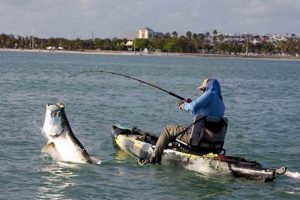
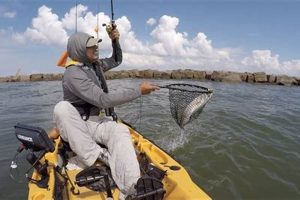
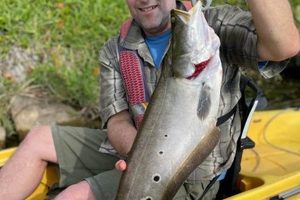
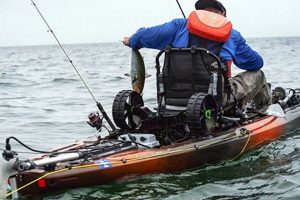
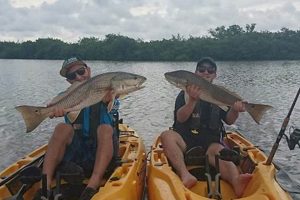
Equipping a small, human-powered watercraft for angling involves the strategic placement and installation of various accessories designed to improve functionality, safety, and the overall fishing experience. This might include rod holders, fish finders, anchor systems, storage compartments, and other specialized gear. For example, a well-placed rod holder allows for hands-free lure manipulation or trolling, while an anchor trolley system provides precise positioning in a current.
A properly outfitted kayak significantly enhances angling success and enjoyment. It offers anglers improved organization, easier access to equipment, and ultimately, more time focused on catching fish. Historically, kayaks were utilized for transportation and hunting, but their adaptability and stability have made them increasingly popular platforms for recreational fishing in recent decades. This growth in popularity has driven innovation in specialized equipment and techniques.
The following sections will explore key considerations in outfitting a kayak for fishing, covering topics such as choosing appropriate accessories, installation best practices, and safety precautions.
Tips for Kayak Fishing Setup
Careful planning and execution are crucial for an effective and enjoyable kayak fishing experience. The following tips offer guidance on optimizing a kayak for angling.
Tip 1: Prioritize Stability: Kayak stability is paramount, especially when fishing. Consider kayak width and hull design. Wider kayaks offer greater initial stability, while longer kayaks tend to track better in moving water.
Tip 2: Plan Accessory Placement: Before drilling holes or permanently affixing accessories, carefully consider placement based on individual fishing style and anticipated needs. Creating a mock setup can help visualize optimal layouts.
Tip 3: Choose Appropriate Rod Holders: Rod holders should securely hold rods while allowing quick and easy access. Flush-mount rod holders offer a streamlined profile, while adjustable rod holders provide versatility for different fishing techniques.
Tip 4: Install an Anchor System: An anchor system is essential for maintaining position in currents or wind. An anchor trolley system allows for adjustments in anchoring position based on changing conditions.
Tip 5: Consider Storage Solutions: Adequate storage is vital for tackle, safety gear, and personal items. Dry bags, waterproof hatches, and crate systems offer various options for keeping gear organized and protected.
Tip 6: Maximize Deck Space: Keep deck clutter to a minimum for safe and efficient movement. Utilize bungee cords and deck rigging to secure essential items within easy reach.
Tip 7: Implement Safety Measures: Always prioritize safety. Wear a personal flotation device (PFD), carry a whistle or other signaling device, and inform someone of fishing plans and estimated return time.
By following these tips, anglers can create a customized kayak setup that promotes safety, efficiency, and ultimately, fishing success.
These preparatory steps contribute significantly to a more rewarding and enjoyable experience on the water. Proper planning and execution ensure anglers can focus on the sport of fishing.
1. Stability

Stability forms the foundation of a successful kayak fishing experience. A stable platform is essential for casting, reeling, and landing fish, as well as for general safety and comfort on the water. Compromised stability can lead to capsizing, lost equipment, and potentially dangerous situations. Understanding the factors that contribute to kayak stability is crucial for proper rigging and safe operation.
- Center of Gravity
A lower center of gravity contributes to greater stability. Rigging a kayak should aim to keep weight low and evenly distributed. For example, storing heavier items close to the bottom of the hull and avoiding excessive weight on the deck improves overall stability. A high center of gravity makes the kayak more prone to tipping, particularly during abrupt movements or when encountering waves or wakes.
- Hull Design
Kayak hull design plays a critical role in stability. Wider hulls generally offer greater initial stability, making them suitable for calmer waters and activities like still fishing. Narrower hulls, while less initially stable, tend to track better and offer greater speed, making them more suitable for paddling longer distances or fishing in moving water. The choice of hull design should align with intended fishing environments and techniques.
- Weight Distribution
Proper weight distribution is crucial for maintaining balance and stability. Evenly distributing gear and equipment within the kayak helps prevent tilting or instability. Positioning heavier items lower and towards the center enhances stability, while uneven weight distribution can create unpredictable handling characteristics, increasing the risk of capsizing.
- Environmental Factors
Wind, waves, and currents can significantly impact kayak stability. Rigging should account for potential environmental challenges. For instance, using an anchor trolley system allows for adjusting anchor position based on changing wind or current directions. Understanding and anticipating environmental factors is critical for maintaining stability and ensuring a safe fishing experience.
By carefully considering these factors during the rigging process, anglers can significantly enhance kayak stability, improving safety, comfort, and overall fishing performance. A well-balanced and stable kayak allows for greater focus on fishing techniques and increases the likelihood of a successful and enjoyable outing.
2. Rod Placement

Strategic rod placement is integral to efficient and enjoyable kayak fishing. Optimal placement allows for immediate access, effortless casting, and efficient retrieval, minimizing tangled lines and maximizing fishing time. Positioning rods considers casting hand dominance, fishing techniques, and the presence of other onboard equipment. For example, a trolling angler might position rods horizontally along the gunwales, while a fly fisherman might prefer vertical placement within easy reach. Poor rod placement can hinder casting, create entanglement issues, and increase the risk of equipment damage or loss.
Effective rod placement considers the type of fishing being pursued. Anglers targeting larger fish often benefit from rod holders positioned to facilitate quick retrieval and maneuverability during a fight. Conversely, those targeting smaller species might prioritize ease of casting and lure manipulation. Improper placement can lead to frustration, lost fish, and decreased enjoyment. Consideration should also be given to minimizing interference with paddling strokes and other onboard activities.
Careful consideration of rod placement during the rigging process is crucial for optimizing the kayak fishing experience. Appropriate placement contributes significantly to fishing efficiency, safety, and enjoyment. Understanding the interplay between rod placement, fishing style, and the kayak environment enhances overall angling success.
3. Anchor System
A well-planned anchor system is a critical component of effective kayak fishing, providing the ability to maintain position in currents, wind, or over specific fishing locations. An ineffective or improperly deployed anchor system can lead to drifting away from target areas, entanglement hazards, or difficulty retrieving the anchor. A secure and easily accessible anchoring setup contributes significantly to fishing success and overall safety.
- Anchor Selection
Anchor choice depends on the fishing environment. Folding grapnel anchors perform well in rocky or weedy bottoms, while lightweight fluke or mushroom anchors suit sandy or muddy bottoms. Anchor weight must be sufficient to hold the kayak securely in anticipated conditions. An oversized anchor can be difficult to manage, while an undersized anchor will fail to hold effectively. The chosen anchor type influences deployment and retrieval efficiency.
- Anchor Line and Deployment
Anchor line material and length influence ease of deployment and retrieval. Braided nylon or polypropylene lines are commonly used due to their strength and durability. Line length should be appropriate for the expected water depth, typically several times the depth at the anchoring point. A properly sized and deployed anchor line prevents entanglement and simplifies retrieval.
- Anchor Trolley System
An anchor trolley system allows for adjustable anchor positioning along the length of the kayak, enabling anglers to control drift direction and maintain optimal fishing angles in changing wind or current conditions. This system typically consists of a line running along the gunwale with an attached pulley and ring, allowing the anchor line attachment point to be adjusted easily. An effective anchor trolley system is critical for precise boat positioning.
- Anchor Retrieval
Efficient anchor retrieval minimizes disruption to fishing. An anchor retrieval system may include a buoy and retrieval line or a dedicated anchor retrieval device. Planning for retrieval during the rigging process simplifies the process and prevents anchor loss or entanglement. Proper retrieval techniques protect both the angler and the kayak from potential damage.
The integration of a suitable anchor system into a kayak rigging setup significantly enhances fishing effectiveness and safety. Correct anchor selection, deployment, and retrieval contribute to a more controlled and enjoyable fishing experience. A well-designed anchor system allows anglers to focus on fishing rather than constantly adjusting position or fighting against wind and current.
4. Storage Solutions

Effective storage solutions are essential for a well-equipped fishing kayak. Organized and accessible storage maximizes space, keeps essential gear dry and protected, and contributes to a safe and efficient fishing experience. Inadequate storage can lead to cluttered decks, lost or damaged equipment, and compromised stability, hindering fishing effectiveness and potentially creating safety hazards.
- Dry Bags and Waterproof Containers
Dry bags and waterproof containers protect sensitive items like electronics, phones, and wallets from water damage. Various sizes accommodate different gear, from small tackle boxes to extra clothing. Proper use of dry bags and waterproof containers ensures essential items remain functional and available throughout the fishing trip, regardless of weather or accidental submersion.
- Tackle Storage Systems
Specialized tackle storage systems keep lures, hooks, and other small fishing accessories organized and readily accessible. These systems often feature compartments and dividers designed to accommodate specific tackle types, facilitating quick and efficient lure changes without disrupting fishing flow. Dedicated tackle storage minimizes time spent searching for specific items, maximizing fishing time and effectiveness.
- Built-in Storage Compartments
Many fishing kayaks feature built-in storage compartments, including hatches, tank wells, and recessed areas designed to accommodate larger items like rods, paddles, and safety gear. Utilizing these compartments effectively maximizes deck space and reduces clutter, enhancing both safety and fishing efficiency. Securely stowing items within built-in compartments minimizes the risk of losing essential equipment overboard.
- Crate Systems and Gear Tracks
Crate systems and gear tracks offer versatile storage and mounting options for customizing a kayak to individual fishing needs. Crates can be outfitted with rod holders, tackle boxes, and other accessories, while gear tracks provide attachment points for securing equipment and customizing storage arrangements. These systems allow for personalized setups and maximize storage flexibility.
Integrating appropriate storage solutions into a kayak rigging strategy significantly improves organization, efficiency, and safety on the water. A well-organized kayak allows anglers to focus on fishing without the distractions and potential hazards posed by cluttered decks and inaccessible equipment. Proper storage contributes directly to a more productive and enjoyable fishing experience.
5. Safety Equipment

Safety equipment is paramount when rigging a kayak for fishing. A safe and well-prepared angler is better equipped to handle unexpected situations, navigate challenging conditions, and ultimately enjoy a more productive and worry-free fishing experience. Overlooking safety considerations can lead to serious consequences, jeopardizing not only the fishing trip but also the angler’s well-being.
- Personal Flotation Device (PFD)
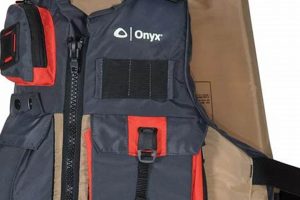
A properly fitted PFD is the most crucial piece of safety equipment for any kayaker. It provides essential buoyancy in the event of capsizing, increasing survival chances in cold water or strong currents. PFDs designed specifically for paddling offer greater comfort and mobility while fishing. Selecting a high-visibility PFD with ample storage pockets further enhances safety and practicality. A PFD should be worn at all times while on the water.
- Signaling Devices
Carrying signaling devices, such as a whistle, air horn, or signal mirror, is crucial for attracting attention in emergencies. These devices enable communication with other boaters or rescuers from a distance, especially in conditions with limited visibility. Regularly testing and ensuring the proper function of signaling devices is essential. Storing signaling devices in a readily accessible location ensures they can be quickly deployed when needed.
- First-Aid Kit
A comprehensive first-aid kit equipped to address common fishing-related injuries, such as hook punctures, cuts, and sunburns, is essential. The kit should contain waterproof bandages, antiseptic wipes, pain relievers, and any personal medications. Regularly checking and replenishing the kit’s contents ensures preparedness for unexpected situations. A well-stocked first-aid kit can significantly mitigate the impact of minor injuries and prevent them from escalating into more serious problems.
- Communication Devices
Carrying a waterproof VHF radio or a charged mobile phone in a waterproof case enables communication with shore or other boaters in emergencies. Informing someone of planned fishing locations and estimated return times further enhances safety. Checking weather forecasts before heading out and monitoring changing conditions during the trip allows for proactive adjustments to plans and minimizes exposure to hazardous weather. Reliable communication can be critical in emergency situations.
Integrating these safety considerations into kayak rigging ensures preparedness for unexpected events and fosters a safer, more enjoyable fishing experience. Prioritizing safety enhances not only personal well-being but also allows for greater focus on the sport of fishing, knowing that appropriate precautions are in place. A well-equipped angler is a confident angler, better able to enjoy the experience and handle any challenges that may arise.
Frequently Asked Questions
Addressing common inquiries regarding kayak fishing preparation helps ensure a safe, efficient, and enjoyable experience on the water.
Question 1: What is the most important factor to consider when choosing a kayak for fishing?
Stability is paramount. Kayak width, hull design, and weight capacity significantly influence stability. Selecting a kayak that offers adequate stability for the intended fishing environment and angler’s experience level is crucial.
Question 2: How many rod holders are recommended for a fishing kayak?
The optimal number depends on individual fishing style and preference. Two to four rod holders are common, allowing for different fishing techniques and accommodating various rod types. Excessive rod holders can lead to clutter and hinder maneuverability.
Question 3: Is an anchor trolley system necessary for kayak fishing?
While not strictly necessary, an anchor trolley system significantly enhances control and positioning in wind or current. It allows for adjustments in anchor position, optimizing fishing angles and preventing drifting away from target locations.
Question 4: What type of anchor is best suited for kayak fishing?
Anchor choice depends on the bottom composition of the fishing area. Folding grapnel anchors perform well in rocky or weedy areas, while fluke or mushroom anchors suit sandy or muddy bottoms.
Question 5: What essential safety equipment should be carried on a fishing kayak?
Essential safety equipment includes a properly fitted personal flotation device (PFD), signaling devices (whistle, air horn), a first-aid kit, and communication devices (VHF radio or mobile phone in a waterproof case).
Question 6: How can one maximize storage space on a fishing kayak?
Utilizing dry bags, waterproof containers, specialized tackle storage systems, and built-in compartments maximizes storage space and keeps gear organized and protected.
Careful consideration of these frequently asked questions contributes significantly to a safer and more productive kayak fishing experience. Addressing these common concerns beforehand enhances preparedness and fosters confidence on the water.
The following section will provide practical tips for maintaining and caring for fishing kayak equipment.
Rigging Kayak for Fishing
Equipping a kayak for fishing involves careful consideration of various factors, from stability and rod placement to storage solutions and safety equipment. A well-rigged kayak enhances fishing efficiency, safety, and overall enjoyment. Strategic placement of rods, a reliable anchor system, ample and organized storage, and appropriate safety measures are essential components of a successful kayak fishing setup. Understanding these elements and their interplay contributes significantly to a more productive and rewarding experience on the water.
Proper preparation transforms a kayak into a highly effective fishing platform. Careful planning and execution allow anglers to focus on the sport, maximizing their chances of success while ensuring a safe and enjoyable experience. The continued evolution of kayak fishing equipment and techniques promises even greater opportunities for anglers to explore and connect with the aquatic environment.