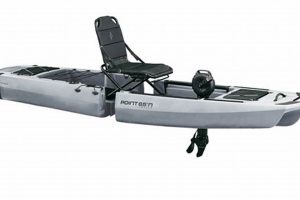
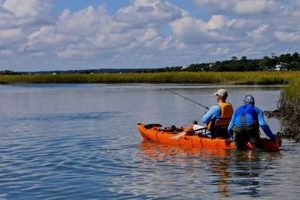
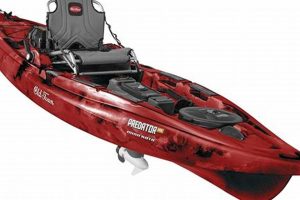
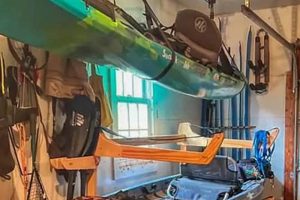
This specific watercraft is a premium, pedal-driven fishing kayak designed for stability and performance in a variety of aquatic environments. Its features often include ample storage for gear, a comfortable and adjustable seating system, and a robust pedal drive system for hands-free propulsion, allowing anglers to focus on fishing. Such designs often prioritize a stable hull platform for standing casts and maneuverability in both open water and tighter spaces like rivers and creeks.
High-capacity fishing kayaks of this type offer significant advantages to anglers. Enhanced stability and the ability to stand while fishing provides a wider casting range and improved visibility. Pedal-drive systems enable efficient and quiet movement across the water, covering more ground with less effort than traditional paddling. Ample storage facilitates carrying all the necessary equipment for a successful fishing trip. Historically, fishing kayaks have evolved from basic sit-on-top models to highly specialized vessels incorporating advanced features and technology, reflecting the increasing demand for comfortable and effective fishing platforms.
The following sections delve into specific design elements, performance characteristics, and user experiences associated with this category of fishing kayak. Topics covered include construction materials, propulsion systems, seating and comfort features, storage capacity, and overall performance on the water. Further, the analysis will explore how these features contribute to the overall fishing experience and address factors that potential buyers might consider during their selection process.
Tips for Utilizing High-Capacity Pedal-Drive Fishing Kayaks
Maximizing the advantages of a high-capacity pedal-drive fishing kayak requires careful consideration of various factors, from pre-trip planning to on-the-water techniques. The following tips offer guidance for enhancing safety, efficiency, and overall fishing success.
Tip 1: Pre-Trip Planning and Preparation: Thorough planning is essential. Research potential fishing locations, paying close attention to water conditions, access points, and local regulations. Organize and pack gear strategically to ensure easy access while on the water. Check weather forecasts and dress accordingly, considering sun protection, rain gear, and appropriate footwear.
Tip 2: Weight Distribution and Balance: Proper weight distribution is crucial for stability. Distribute gear evenly throughout the kayak, avoiding overloading any one area. Consider the impact of weight shifts when standing or casting. Practice entering and exiting the kayak in shallow water to develop a feel for its balance.
Tip 3: Pedal Drive System Maintenance: Regular maintenance ensures optimal performance and longevity of the pedal drive system. Rinse the system with fresh water after each use, especially in saltwater environments. Lubricate moving parts according to the manufacturer’s recommendations. Inspect the propeller and drive fins for damage and replace them if necessary.
Tip 4: Effective Pedal Stroke Technique: An efficient pedal stroke maximizes speed and minimizes fatigue. Maintain a smooth and consistent cadence, avoiding jerky movements. Utilize the full range of motion for optimal power transfer. Adjust pedal resistance as needed based on water conditions and desired speed.
Tip 5: Utilizing Rudder and Steering Controls: Master the rudder and steering controls for precise maneuvering. Practice turning, reversing, and holding position in various wind and current conditions. Understand how the rudder interacts with the pedal drive system for optimal control.
Tip 6: Anchoring and Positioning: Selecting appropriate anchoring techniques is critical for maintaining position in desired fishing areas. Consider using a stake-out pole in shallow water or a traditional anchor in deeper areas. Learn how to deploy and retrieve the anchor system efficiently and safely.
Tip 7: Safety Precautions and Emergency Procedures: Prioritize safety by wearing a personal flotation device (PFD) at all times. Carry essential safety equipment, including a whistle, signaling device, and first-aid kit. Familiarize oneself with local emergency procedures and inform someone of your fishing plans, including location and expected return time.
By adhering to these guidelines, anglers can enhance their safety, efficiency, and overall enjoyment on the water, allowing them to fully capitalize on the capabilities of their high-capacity pedal-drive fishing kayak. These tips offer a foundation for responsible and successful fishing excursions.
The following conclusion summarizes the key features and advantages, highlighting the overall value proposition of these specialized fishing platforms.
1. Stability

Stability is a paramount consideration in fishing kayak design, significantly influencing angler performance and safety. For the Jackson Big Rig FD, stability is a core design principle, enabling anglers to stand confidently while casting and reeling, providing a crucial advantage in various fishing scenarios. This enhanced stability contributes directly to angler confidence and effectiveness on the water.
- Hull Design and Stability:
The Big Rig FD’s wide, flat-bottom hull design contributes significantly to its stability. This design feature displaces more water, creating a broader base of support and increased resistance to tipping. Compared to kayaks with narrower or more rounded hulls, the Big Rig FD offers a more stable platform, particularly beneficial in challenging conditions such as wind or current. This enhanced stability allows anglers to focus on fishing rather than constantly adjusting balance.
- Center of Gravity and Balance:
The kayak’s center of gravity plays a crucial role in overall stability. The Big Rig FD’s design positions the seat and major weight-bearing components lower in the hull, optimizing the center of gravity for stability. This lower center of gravity reduces the likelihood of tipping, even when making dynamic movements like casting or landing a fish. Weight distribution within the kayak further influences stability, and proper gear placement enhances balance.
- Standing and Casting Stability:
The primary advantage of the Big Rig FD’s enhanced stability is the ability to stand and cast comfortably. This elevated position provides a wider casting range and improved visibility, crucial for sight fishing and accurate lure placement. The stable platform enables anglers to maintain balance while casting and retrieving, even with larger fish on the line. This feature is particularly advantageous in shallow water or when navigating through vegetation.
- Stability in Various Water Conditions:
The Big Rig FD’s stability translates to enhanced performance in diverse water conditions. Whether in calm lakes, flowing rivers, or choppy coastal waters, the stable hull design provides a secure and predictable platform. This versatility expands fishing opportunities, allowing anglers to confidently tackle a wider range of environments. The kayak’s stability contributes to a safer and more enjoyable fishing experience, regardless of the prevailing conditions.
The Jackson Big Rig FD’s focus on stability significantly enhances its fishing capabilities. By prioritizing a stable platform, the design enables anglers to stand, cast, and fight fish with confidence and control, ultimately maximizing their effectiveness and enjoyment on the water. This stability, combined with other key features, positions the Big Rig FD as a versatile and high-performance fishing kayak.
2. Pedal-driven propulsion

Pedal-driven propulsion represents a significant advancement in kayak fishing technology, offering distinct advantages over traditional paddle-powered kayaks. The Jackson Big Rig FD utilizes this technology to enhance angler efficiency and overall fishing experience. This propulsion system allows for hands-free operation, a critical advantage for fishing activities requiring constant adjustments, lure retrievals, and fish handling. By eliminating the need for paddling, anglers can focus entirely on fishing, maximizing their time and effort on the water. This hands-free operation contributes significantly to improved casting accuracy, lure presentation, and overall fishing success.
The Big Rig FD’s pedal-drive system typically employs a propeller or fin-based mechanism powered by the angler’s leg movements. This system offers several practical advantages. It allows for continuous, variable-speed propulsion, enabling precise boat control and maneuverability in diverse water conditions. Pedal power is generally more efficient and less fatiguing than paddling, particularly over longer distances. This sustained power and efficiency allows anglers to cover more water and explore a wider range of fishing locations. The quieter operation of a pedal drive, compared to paddling, minimizes disturbance to fish and the surrounding environment, a crucial advantage in shallow water or when targeting wary species. Real-world examples demonstrate the effectiveness of pedal-driven kayaks in various fishing scenarios, from navigating swift currents to stealthily approaching shallow-water habitats.
The integration of pedal-driven propulsion significantly enhances the Big Rig FD’s versatility and performance as a fishing platform. This technology allows anglers to maintain precise boat control while simultaneously managing fishing rods and tackle, a critical aspect of successful angling. The efficiency of pedal power conserves energy for the demanding aspects of fishing, such as fighting and landing fish. While pedal-drive systems may present maintenance considerations and initial cost implications, the benefits in terms of enhanced fishing efficiency and reduced physical strain often outweigh these factors for serious anglers. The Big Rig FD, by incorporating pedal-driven propulsion, demonstrates a commitment to optimizing the angling experience, reflecting broader trends in fishing kayak technology toward increased performance and angler-centric design.
3. Fishing-Specific Design
The Jackson Big Rig FD’s fishing-specific design distinguishes it from recreational kayaks, optimizing its functionality for angling pursuits. This specialization manifests in several key features, each contributing to improved angler performance and overall fishing success. Integrating these features directly addresses the unique needs of anglers, demonstrating a commitment to enhancing the on-the-water experience. Rod holders, strategically placed throughout the kayak, secure rods while paddling, maneuvering, or fighting fish. Tackle storage compartments provide organized and readily accessible storage for lures, tools, and other essential fishing gear. These purpose-built compartments maintain order and efficiency, crucial for optimizing fishing time. Further enhancements, such as integrated fish finders and transducer mounts, offer advanced technological integration, streamlining electronics usage and data interpretation for enhanced fish location and underwater terrain analysis.
The practical significance of this fishing-specific design becomes evident in real-world scenarios. Consider an angler targeting bass in a heavily vegetated area. The rod holders secure rods, preventing entanglement and damage while navigating through dense cover. The readily accessible tackle storage allows for quick lure changes, adapting to changing fish behavior or water conditions. The integrated fish finder provides crucial information about water depth and structure, aiding in locating prime fishing spots. These design elements work synergistically to enhance the angler’s efficiency and effectiveness. Another example could involve trolling for offshore species. The rod holders maintain proper rod angles and positioning, crucial for effective lure presentation. The ample storage accommodates various tackle and equipment needed for a day offshore. The stable platform provided by the Big Rig FD allows anglers to stand and fight powerful fish effectively.
The fishing-specific design of the Jackson Big Rig FD represents a crucial element in its overall value proposition. This specialization directly translates to enhanced angler performance and enjoyment on the water. While the inclusion of these specialized features may contribute to a higher price point, the benefits in terms of improved functionality and fishing success often outweigh the additional cost for dedicated anglers. The Big Rig FDs design exemplifies a broader trend in the kayak fishing industry toward increased specialization and angler-centric design, reflecting a deeper understanding of the specific needs and demands of modern fishing techniques.
4. Ample storage capacity
Ample storage capacity is a defining feature of the Jackson Big Rig FD fishing kayak, directly influencing its practicality and suitability for extended fishing trips. This generous storage space accommodates a substantial amount of fishing gear, including tackle boxes, rods, safety equipment, and personal items. The ability to carry all necessary equipment eliminates the need for multiple trips or sacrificing essential gear, enhancing overall fishing efficiency and enjoyment. For example, an angler embarking on a multi-day fishing expedition can store sufficient food, water, and camping gear, maximizing self-sufficiency and minimizing logistical constraints. This capacity also allows for carrying specialized equipment, such as larger tackle boxes for diverse lure selections or extra rods for different fishing techniques, enhancing adaptability to varying fishing conditions.
The practical implications of ample storage become particularly apparent in scenarios requiring extended time on the water or diverse fishing approaches. Consider a fly fisherman targeting various species in different locations throughout a day. The Big Rig FD’s storage accommodates multiple rod and reel setups, fly boxes, waders, and other specialized equipment, allowing for seamless transitions between fishing locations and techniques. Similarly, a kayak angler targeting large pelagic fish benefits from the capacity to carry heavier tackle, gaffs, and other specialized gear required for handling larger catches. This ample storage directly translates to increased preparedness and adaptability, essential components of successful fishing excursions. The design and placement of storage compartments also contribute to overall organization and accessibility, minimizing time spent searching for specific items and maximizing time spent fishing. Dry storage compartments protect sensitive electronics and personal items from water damage, further enhancing practicality and peace of mind.
In summary, the ample storage capacity of the Jackson Big Rig FD significantly enhances its value as a fishing platform. This feature contributes to increased angler preparedness, adaptability, and overall efficiency on the water. While the dimensions required to achieve this storage capacity may influence maneuverability in tight spaces, the benefits of carrying sufficient gear and supplies often outweigh this consideration for anglers undertaking longer trips or requiring specialized equipment. This emphasis on storage capacity aligns with the broader design philosophy of the Big Rig FD, prioritizing practicality and functionality for serious anglers.
5. High-end construction

High-end construction is a critical aspect of the Jackson Big Rig FD fishing kayak, directly influencing its durability, performance, and overall value. The kayak’s construction significantly impacts its longevity, resistance to wear and tear, and ability to withstand the demands of diverse fishing environments. Understanding the materials and construction techniques employed provides insights into the kayak’s robustness and long-term performance potential.
- Material Selection and Durability:
The Big Rig FD typically utilizes high-quality materials, such as rotomolded polyethylene, known for its impact resistance, UV stability, and overall durability. This material choice contributes to the kayak’s ability to withstand impacts, abrasion, and prolonged exposure to the elements. Compared to kayaks constructed from lower-grade materials, the Big Rig FD exhibits enhanced resistance to damage, extending its lifespan and maintaining its performance characteristics over time. This durability translates to a reliable and long-lasting fishing platform capable of handling challenging environments and rigorous use.
- Construction Techniques and Structural Integrity:
Advanced construction techniques further enhance the Big Rig FD’s structural integrity. Rotomolding, a process involving molding molten plastic within a rotating mold, creates a seamless, one-piece hull with uniform thickness and exceptional strength. This construction method minimizes weak points and enhances overall structural rigidity, contributing to the kayak’s ability to handle heavy loads and navigate challenging water conditions. Reinforced areas, such as the keel and seating areas, further enhance durability and impact resistance.
- Weight and Performance Implications:
While high-end construction often contributes to a slightly higher overall weight, the added durability and performance benefits generally outweigh this consideration for serious anglers. The robust construction enhances the kayak’s tracking ability and stability, crucial factors for efficient paddling and maneuverability. Moreover, the increased weight contributes to a more stable platform, particularly advantageous in rough water or when standing to cast. This balance between weight, durability, and performance reflects a design philosophy prioritizing long-term reliability and optimal on-the-water performance.
- Long-term Value and Resale Potential:
The investment in high-end construction translates to increased long-term value and enhanced resale potential. The durable construction ensures the kayak retains its functionality and aesthetic appeal over time, minimizing the need for repairs and replacements. This longevity contributes to a higher resale value compared to kayaks constructed from less durable materials or using inferior construction techniques. The robust construction, therefore, represents a sound investment, offering both long-term performance benefits and potential cost savings in the long run.
The high-end construction of the Jackson Big Rig FD represents a significant factor in its overall performance, durability, and value proposition. By utilizing premium materials and advanced construction techniques, the Big Rig FD delivers a robust and reliable fishing platform capable of withstanding the rigors of diverse fishing environments. This focus on quality construction aligns with the kayak’s overall design philosophy, prioritizing long-term performance and angler satisfaction. The investment in high-end construction ensures the kayak remains a dependable and valuable asset for years to come, justifying its position as a premium fishing kayak.
6. Customization Options
Customization options represent a significant advantage of the Jackson Big Rig FD fishing kayak, allowing anglers to tailor the vessel to their specific needs and preferences. This adaptability enhances comfort, efficiency, and overall fishing effectiveness. Modifiable seating configurations accommodate varying body types and fishing styles, ensuring optimal comfort and support during long hours on the water. Adjustable footrests further enhance ergonomics, promoting efficient pedaling and reducing fatigue. The ability to integrate various accessories, such as rod holders, fish finders, and GPS units, expands the kayak’s functionality and adaptability to diverse fishing techniques. For example, an angler specializing in trolling can customize the Big Rig FD with multiple rod holders and downrigger mounts, while a bass fisherman might prioritize shallow-water anchors and specialized tackle storage solutions. This adaptability distinguishes the Big Rig FD, enabling a personalized and highly effective fishing platform.
The practical significance of these customization options becomes evident when considering diverse fishing scenarios. An angler targeting large game fish in offshore environments can equip the Big Rig FD with heavy-duty rod holders, outriggers, and a GPS for navigation and fish tracking. Conversely, an angler fishing in shallow rivers or lakes can configure the kayak with lighter tackle storage solutions, anchor systems optimized for shallow water, and a fish finder tailored for freshwater environments. This adaptability allows anglers to maximize their effectiveness in specific fishing environments and pursue diverse target species. Furthermore, the ability to adjust seating and footrests enhances long-term comfort and reduces fatigue, crucial for extended fishing trips. Consider an angler with specific physical requirements; adjustable seating and footrests enable a customized fit, promoting proper posture and reducing strain during long hours on the water. This customization contributes significantly to overall comfort and enjoyment, ultimately maximizing time spent fishing effectively.
In conclusion, the extensive customization options available for the Jackson Big Rig FD fishing kayak contribute significantly to its versatility and appeal. This adaptability allows anglers to create a personalized fishing platform optimized for their specific needs, target species, and fishing environments. While the cost of additional accessories and customization can add to the overall investment, the enhanced comfort, efficiency, and fishing effectiveness often justify the expense for serious anglers. This focus on customization reflects a broader trend in the fishing kayak industry towards modularity and personalization, empowering anglers to create highly effective and tailored fishing platforms. The Big Rig FD exemplifies this trend, offering a robust and adaptable foundation upon which anglers can build their ideal fishing kayak.
Frequently Asked Questions
This section addresses common inquiries regarding high-capacity pedal-drive fishing kayaks, providing concise and informative responses.
Question 1: What are the key advantages of a pedal-drive system compared to traditional paddling?
Pedal-drive systems offer hands-free propulsion, increased efficiency over longer distances, and quieter operation, minimizing disturbance to fish. This allows anglers to focus on fishing rather than paddling, enhancing lure presentation and overall effectiveness.
Question 2: How stable are these kayaks, particularly when standing to cast?
High-capacity fishing kayaks are designed with stability as a priority. Wider hulls and lower centers of gravity contribute to a stable platform, enabling anglers to stand and cast confidently, even in challenging conditions.
Question 3: What type of maintenance is required for a pedal-drive system?
Regular rinsing, especially after saltwater use, and periodic lubrication of moving parts are essential. Occasional inspections for damage and prompt replacement of worn components ensure optimal performance and longevity.
Question 4: How much storage space do these kayaks typically offer?
High-capacity fishing kayaks are designed with ample storage for tackle, gear, and personal items. Specific storage capacity varies by model but generally accommodates sufficient equipment for extended fishing trips.
Question 5: Are these kayaks suitable for use in both freshwater and saltwater environments?
Most high-capacity fishing kayaks are designed for use in both freshwater and saltwater. However, thorough rinsing after saltwater exposure is crucial to prevent corrosion and maintain the kayak’s longevity.
Question 6: What factors should be considered when choosing a high-capacity fishing kayak?
Key considerations include stability, pedal-drive system efficiency, storage capacity, seating comfort, construction quality, and overall weight. Anglers should evaluate these factors in relation to their specific fishing needs and preferences.
Careful consideration of these frequently asked questions provides valuable insights for prospective buyers, enabling informed decisions aligned with individual fishing requirements and preferences. Understanding these aspects contributes significantly to a satisfying and productive kayak fishing experience.
The subsequent section offers concluding thoughts on high-capacity pedal-drive fishing kayaks, summarizing their key benefits and overall value proposition within the broader context of fishing kayak technology.
Conclusion
The Jackson Big Rig FD fishing kayak represents a significant advancement in fishing kayak technology. Its specialized design, incorporating a stable hull, efficient pedal-drive system, ample storage, and customizable features, caters specifically to the needs of serious anglers. This comprehensive approach to design and functionality positions the Big Rig FD as a versatile and high-performance fishing platform, capable of enhancing angling success in diverse environments. From its construction and stability to propulsion and storage solutions, the Big Rig FD prioritizes angler effectiveness and comfort.
This analysis underscores the value proposition of investing in specialized fishing kayaks. The design and features of the Jackson Big Rig FD demonstrate a commitment to optimizing the angling experience, reflecting a broader trend in the industry towards increased specialization and angler-centric design. Potential buyers seeking enhanced stability, efficient propulsion, ample storage, and customizable features may find the Jackson Big Rig FD a compelling option. Further research and hands-on experience are recommended to fully appreciate its capabilities and determine its suitability for individual fishing styles and preferences. The evolution of fishing kayak technology continues, promising further advancements in design and functionality, ultimately enriching the angling experience for enthusiasts seeking optimal performance and enjoyment on the water.