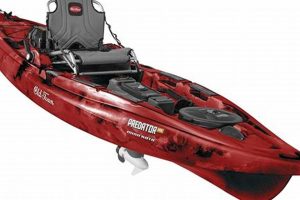
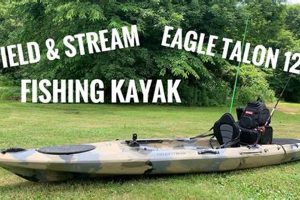
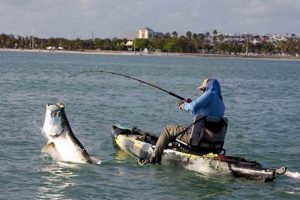
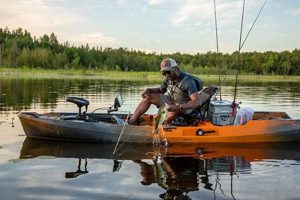
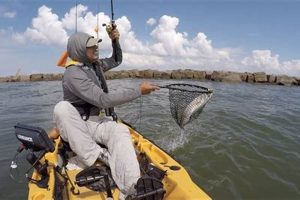
A specialized vessel designed for the pursuit of large game fish, this type of watercraft typically features enhanced stability, ample storage for gear, and specialized features such as rod holders and livewells. These kayaks are often chosen for their durability and ability to handle challenging offshore conditions. Imagine a sturdy platform equipped to navigate open waters and wrestle with powerful marine life; that’s the essence of this specialized fishing craft.
The growing popularity of this fishing method reflects a desire for closer interaction with the marine environment and a more active angling experience. Offering advantages in maneuverability and stealth compared to larger boats, these craft allow anglers to access shallower waters and explore diverse fishing grounds. This style of fishing has a rich history, evolving from traditional methods to incorporate modern materials and technology, resulting in a more efficient and exciting pursuit of prized catches.
This exploration will further examine the nuances of selecting, outfitting, and employing these specialized kayaks. Topics to be covered include a detailed look at construction materials, essential accessories, effective fishing techniques, and responsible angling practices.
Tips for Successful Offshore Kayak Fishing
Preparation and knowledge are crucial for a safe and productive experience targeting large pelagic species from a kayak. The following tips offer guidance for anglers venturing offshore.
Tip 1: Prioritize Safety Equipment: A personal flotation device (PFD) designed for offshore use is mandatory. Essential safety gear includes a VHF radio, signaling devices (flares, mirror), and a first-aid kit. A float plan shared with a responsible individual is highly recommended.
Tip 2: Choose the Right Kayak: Stability and storage capacity are paramount. Look for a sit-on-top design with ample space for gear and specialized features such as rod holders and a rudder system. Consider the target species and typical sea conditions when selecting vessel length and width.
Tip 3: Master Paddling Techniques: Efficient paddling conserves energy and allows anglers to cover greater distances. Practice proper stroke technique and learn how to navigate currents and wind. Consider incorporating a pedal-powered system for longer expeditions.
Tip 4: Understand Weather and Tides: Check marine forecasts before embarking and avoid venturing out in adverse conditions. Knowledge of tidal currents and their influence on fish behavior is crucial for successful angling.
Tip 5: Employ Effective Fishing Techniques: Trolling and drift fishing are common methods. Matching tackle and bait to the target species is essential. Learning how to fight and land large fish from a kayak requires practice and specialized equipment.
Tip 6: Practice Responsible Angling: Handle fish with care and practice catch-and-release whenever possible. Respect the marine environment and avoid disturbing sensitive habitats. Adhere to all local fishing regulations and licensing requirements.
Tip 7: Stay Hydrated and Sun-Protected: Offshore conditions can be demanding. Bring plenty of water and snacks. Wear protective clothing, including a hat and sunglasses, and apply sunscreen liberally.
Adhering to these guidelines will enhance both safety and the likelihood of a successful fishing trip. Preparation, appropriate equipment, and respect for the marine environment are the foundations of a rewarding offshore kayaking experience.
This information provides a foundation for planning and executing a successful offshore kayak fishing adventure. The subsequent sections will delve into specific techniques and strategies for targeting individual species.
1. Stable Kayak Platform

A stable kayak platform is paramount for successful kingfish angling. These powerful fish demand robust tackle and often require strenuous battles, necessitating a secure and balanced vessel to effectively manage the fight. Stability directly impacts angler safety and the ability to land a trophy catch.
- Hull Design:
Wider hulls and flatter bottoms generally offer greater primary stability, resisting initial tipping. A shallow-V hull provides a balance between stability and maneuverability, crucial when navigating changing sea conditions or tracking a hooked fish. Consider a kayak specifically designed for offshore fishing, as these often incorporate features that enhance stability.
- Weight Distribution:
Proper weight distribution within the kayak plays a crucial role in maintaining secondary stabilitythe ability to recover from a near capsize. Distributing gear evenly and storing heavier items lower in the hull lowers the center of gravity, enhancing overall stability. Practical experience loading and unloading the kayak in various scenarios is essential.
- Outriggers and Stabilizers:
Adding outriggers or stabilizers can significantly enhance stability, especially for anglers new to kayak fishing or those venturing into challenging conditions. These additions provide extra support and can make a noticeable difference when fighting a large kingfish. However, they may impact maneuverability and require additional storage space.
- Angler Positioning and Balance:
The angler’s position and balance influence the kayak’s stability. Maintaining a low center of gravity and avoiding sudden movements are essential, particularly during the fight. Practice casting, reeling, and landing fish from a seated position to develop the necessary skills and maintain balance.
The stability of the kayak platform directly influences angling success and safety when pursuing kingfish. A stable vessel allows for effective hooksets, controlled fights, and safe handling of the catch, ultimately increasing the chances of a successful and enjoyable fishing experience. Investing time in understanding and optimizing these facets contributes significantly to a positive outcome on the water.
2. Robust Rod Holders

Securing heavy tackle against the powerful runs of a kingfish demands robust rod holders. These are not mere accessories but integral components of a kingfish kayak, directly influencing angling success and safety. Their design and placement significantly impact an angler’s ability to effectively manage the fight and ultimately land the fish.
- Material and Construction:
High-quality materials like marine-grade stainless steel or reinforced polymers are essential for withstanding the stress exerted by a large, fighting fish. Welded or heavily bolted connections ensure the rod holder remains securely attached to the kayak, even under extreme pressure. Inferior materials or construction can lead to failure at critical moments, resulting in lost tackle and potentially dangerous situations.
- Mounting and Positioning:
Strategic placement of rod holders maximizes angler control and minimizes interference. Flush-mounted holders reduce snag potential, while adjustable holders allow for precise positioning depending on the fishing technique. The location of holders should facilitate easy access and allow for efficient rod retrieval and adjustment during a fight. Optimal placement prevents tangling lines and improves the angler’s leverage.
- Locking Mechanisms and Adjustability:
Secure locking mechanisms prevent rods from being pulled out of the holders during aggressive strikes or powerful runs. Adjustable features, such as angle and rotation, allow anglers to customize rod positioning for various fishing techniques, from trolling to live bait fishing. A firm grip ensures the rod remains secure, yet readily accessible for quick reactions.
- Rod Holder Types and Specializations:
Various rod holder types cater to specific fishing styles. Trolling rod holders often incorporate features to control line release and drag, while drift fishing holders prioritize stability and quick access. Specialized holders for outriggers or downriggers further enhance angling capabilities. Selecting appropriate holders based on the target species and fishing method optimizes efficiency and performance.
The choice and placement of robust rod holders directly contribute to a successful kingfish kayaking experience. They represent a critical intersection of function and safety, enabling anglers to effectively manage powerful fish while maintaining control and balance within the kayak. A well-equipped vessel with appropriately positioned rod holders significantly increases the likelihood of landing a prized catch while ensuring angler safety.
3. High-Capacity Storage

Ample storage is integral to a successful kingfish kayak expedition. These fishing trips often extend for several hours, traversing considerable distances. High-capacity storage accommodates essential gear, including safety equipment, tackle boxes, food, water, and extra clothing. Critically, it provides designated space for the catch, preventing damage to the kayak and ensuring hygiene. Consider a scenario where an angler hooks a large kingfish far offshore; adequate storage ensures the catch can be safely and efficiently transported back to shore, preserving its quality and minimizing risk.
Beyond the basics, specialized storage compartments contribute significantly to the overall efficiency of a kingfish kayak. Designated areas for tackle boxes keep lures and hooks organized and readily accessible, minimizing time spent searching for specific items. Dry storage compartments protect sensitive electronics, such as phones and GPS devices, from saltwater damage. A dedicated space for a cooler ensures food and drinks remain chilled, maintaining freshness and enhancing the overall experience. For instance, having readily accessible pliers or leader material can be crucial when dealing with a feisty kingfish alongside the kayak.
The practical significance of high-capacity storage extends beyond mere convenience. It directly impacts safety by allowing for proper weight distribution within the kayak, contributing to stability. Organized storage minimizes clutter, reducing the risk of entanglement or interference during critical moments like fighting a fish. Ultimately, ample and well-organized storage contributes to a more focused, efficient, and ultimately successful kingfish kayak fishing experience. It allows anglers to concentrate on the task at hand, maximizing their chances of landing a trophy catch while ensuring safety and preparedness for various eventualities.
4. Efficient Trolling Motor
An efficient trolling motor is integral to successful kingfish kayak fishing, significantly impacting range, maneuverability, and stealth. Kingfish often inhabit areas beyond paddling distance, necessitating motorized assistance. An efficient motor allows anglers to cover greater distances, explore wider areas, and conserve energy for the fight. Consider a scenario where kingfish are actively feeding several miles offshore; an efficient trolling motor enables access to these productive grounds without excessive physical exertion, maximizing fishing time and increasing the likelihood of encountering the target species.
Beyond range, an efficient trolling motor enhances maneuverability, a crucial factor when battling powerful kingfish. Precise boat control is essential for maintaining proper line tension and preventing the fish from gaining leverage. An efficient motor allows for quick adjustments in position, enabling anglers to counter the fish’s movements and maintain an advantageous angle. This control is particularly crucial in challenging conditions, such as strong currents or wind, where maintaining position and effectively presenting baits becomes significantly more difficult. Furthermore, an efficient motor operating at lower speeds contributes to stealth, minimizing noise and vibration that could spook wary fish. Quiet operation allows anglers to approach feeding areas undetected, increasing the chances of a successful presentation and hookup. This is especially important in shallow water or clear conditions where kingfish are more likely to be alerted by excessive noise or disturbance.
The practical significance of an efficient trolling motor lies in its ability to expand angling opportunities and enhance the overall fishing experience. By maximizing range, improving maneuverability, and promoting stealth, an efficient motor allows kayak anglers to effectively target kingfish in a wider range of environments and conditions. The choice of motor directly influences the success and enjoyment of the fishing trip, impacting factors such as access to fishing grounds, the ability to effectively fight and land fish, and the overall efficiency and comfort of the experience. Understanding the critical role of an efficient trolling motor in kingfish kayak fishing is essential for anglers seeking to maximize their success and enjoyment on the water.
5. Reliable fish-finding electronics

Locating kingfish in the vast expanse of the ocean presents a significant challenge. Reliable fish-finding electronics are essential tools for kayak anglers, providing crucial information about water depth, bottom structure, and fish location. These devices significantly increase the efficiency of kingfish kayak fishing by narrowing search areas and maximizing time spent in productive zones. This translates to a higher probability of encountering kingfish and ultimately, a more successful and rewarding fishing experience.
- Sonar/Fish Finders:
Sonar technology utilizes sound waves to create images of the underwater environment. A transducer emits pulses of sound, and the fish finder interprets the returning echoes to display information about depth, bottom contour, and the presence of fish. This information allows anglers to identify potential kingfish habitats, such as reefs, ledges, or drop-offs, significantly narrowing the search area. For example, a fish finder might reveal a school of baitfish near a submerged wreck, a likely spot to find predatory kingfish.
- GPS and Chartplotters:
GPS technology pinpoints the kayak’s location, while chartplotters display detailed nautical charts, including water depths, navigation hazards, and points of interest. Integrating these tools allows anglers to mark productive fishing spots, navigate safely to specific locations, and track drift patterns. For instance, an angler can mark a GPS waypoint at a location where they previously caught kingfish, enabling precise return trips to that productive spot. Chartplotters further enhance situational awareness, reducing the risk of grounding or encountering navigational hazards.
- Downriggers/Fish Attractors:
While not strictly electronics, downriggers and fish attractors are often integrated with fish-finding electronics. Downriggers allow anglers to precisely control the depth of their lures or baits, targeting specific zones where kingfish are suspected to be holding. Fish attractors, such as chumming devices or underwater lights, can draw kingfish into the area, increasing the chances of an encounter. These tools work in conjunction with sonar and GPS to create a comprehensive system for locating and attracting kingfish. For example, an angler might deploy a downrigger to present a bait at the specific depth where the fish finder indicates a concentration of kingfish.
- Transducer Mounting and Placement:
The effectiveness of fish-finding electronics depends heavily on the proper mounting and placement of the transducer. A poorly mounted transducer can generate inaccurate readings or interference, hindering the angler’s ability to locate fish. Optimal transducer placement ensures clear and accurate sonar signals, maximizing the effectiveness of the fish-finding system. For kayak anglers, through-hull or transom-mounted transducers are common options. Careful consideration should be given to factors such as hull shape and potential interference from the trolling motor when choosing and mounting the transducer.
Reliable fish-finding electronics are indispensable tools for kingfish kayak anglers. They transform the search for these elusive predators from a game of chance into a strategic pursuit, increasing efficiency and maximizing the likelihood of success. By providing real-time information about the underwater environment and the location of fish, these devices empower anglers to make informed decisions about where to fish, how to present their baits or lures, and ultimately, how to increase their chances of landing a trophy kingfish. The investment in quality electronics ultimately contributes to a more rewarding and productive fishing experience.
6. Appropriate Safety Equipment

The pursuit of kingfish from a kayak presents inherent risks demanding meticulous attention to safety. Appropriate safety equipment is not merely recommended; it is essential for mitigating these risks and ensuring angler well-being. The dynamic nature of offshore kayaking, coupled with the powerful nature of kingfish, necessitates a comprehensive approach to safety, encompassing personal flotation devices (PFDs), communication devices, signaling equipment, and navigation aids. Consider a scenario where an angler hooks a large kingfish and is pulled from the kayak; a properly fitted PFD becomes the critical difference between a challenging situation and a life-threatening one. Similarly, a VHF radio becomes indispensable if challenging weather conditions arise or assistance is required far from shore.
The connection between appropriate safety equipment and kingfish kayak fishing extends beyond basic survival. It directly impacts the angler’s ability to focus on the fishing experience, fostering confidence and reducing anxiety. Knowing that appropriate safety measures are in place allows for greater concentration on the task at hand targeting and landing kingfish. This mental clarity improves decision-making during critical moments, such as fighting a powerful fish or navigating through challenging conditions. For instance, an angler equipped with a reliable personal locator beacon (PLB) can focus on managing a hooked fish without undue concern about potential emergencies, knowing that help can be summoned if needed. Furthermore, carrying a well-stocked first-aid kit addresses minor injuries promptly, preventing them from escalating into more serious issues that could compromise the trip.
Effective preparation for kingfish kayak fishing demands a thorough understanding of potential hazards and a commitment to mitigating those risks through appropriate safety equipment. This includes not only possessing the necessary equipment but also understanding its proper use and maintenance. Regularly inspecting PFDs for wear and tear, checking the functionality of communication devices, and ensuring signaling equipment is readily accessible are crucial aspects of pre-trip preparation. This proactive approach to safety fosters a culture of preparedness and responsibility, contributing significantly to a positive and safe outcome on the water. Ultimately, appropriate safety equipment is an integral part of the kingfish kayak fishing experience, directly influencing not only angler safety but also the overall enjoyment and success of the trip. It empowers anglers to confidently pursue their passion while minimizing risks and ensuring a safe return.
Frequently Asked Questions
Addressing common queries regarding specialized kayak fishing for kingfish provides clarity for anglers seeking to enhance their understanding and preparedness.
Question 1: What type of kayak is best suited for targeting kingfish?
A sit-on-top kayak designed for offshore fishing is recommended. Key features include a stable hull, ample storage, and specialized features like rod holders and rudder systems. Vessel length and width should be chosen considering target species size and typical sea conditions.
Question 2: What essential safety gear is required for offshore kayak fishing?
Essential safety equipment includes a properly fitted offshore personal flotation device (PFD), a VHF radio, visual signaling devices (flares, mirror), a first-aid kit, and a float plan filed with a responsible individual. A personal locator beacon (PLB) is also highly recommended.
Question 3: What fishing techniques are most effective for kingfish from a kayak?
Trolling and drift fishing are common techniques. Matching tackle and bait to the target species is crucial. Live bait, such as menhaden or mullet, can be highly effective. Artificial lures, including spoons, plugs, and jigs, can also trigger strikes.
Question 4: How does one handle a hooked kingfish from a kayak safely?
Maintaining proper line tension and using appropriate drag settings are essential. Avoid sudden movements and keep the kayak balanced. A landing net or gaff can assist in securing the fish. Exercise caution when handling the fish due to its sharp teeth and powerful struggles.
Question 5: What are the typical weather considerations for kingfish kayak fishing?
Check marine forecasts before venturing out. Avoid fishing in adverse conditions, including high winds, rough seas, or thunderstorms. Be aware of changing weather patterns and have a plan for returning to shore quickly if conditions deteriorate.
Question 6: What legal regulations or licensing requirements should anglers be aware of?
Adherence to all local fishing regulations, including size and bag limits for kingfish, is mandatory. Ensure possession of the required fishing licenses and permits. Familiarize oneself with any specific regulations pertaining to kayak fishing in the target area.
Careful consideration of these frequently asked questions equips anglers with the knowledge necessary to approach kingfish kayak fishing safely and effectively. Preparedness enhances the overall experience and contributes to a positive outcome on the water.
The next section provides an in-depth exploration of specific techniques for targeting kingfish from a kayak, delving into tackle selection, bait presentation, and fighting strategies.
King Fish Kayak
This exploration has provided a comprehensive overview of specialized kayak fishing for kingfish, encompassing vessel selection, equipment considerations, safety protocols, and effective fishing techniques. Key takeaways include the importance of a stable platform, robust rod holders, ample storage, efficient trolling motors, reliable fish-finding electronics, and appropriate safety gear. The interplay of these elements contributes significantly to a successful and safe fishing experience. Understanding these core principles empowers anglers to approach this demanding yet rewarding pursuit with confidence and preparedness.
The pursuit of kingfish from a kayak represents a unique intersection of skill, strategy, and respect for the marine environment. Anglers who embrace a comprehensive approach, prioritizing safety and ethical practices, stand to gain not only prized catches but also a deeper appreciation for the challenges and rewards inherent in this specialized form of angling. The future of kingfish kayak fishing rests on the continued development of innovative techniques and technologies, coupled with a steadfast commitment to conservation and responsible stewardship of marine resources.