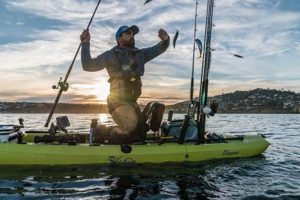
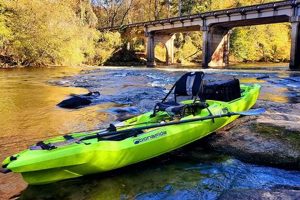
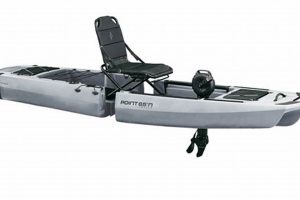
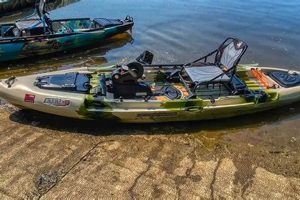
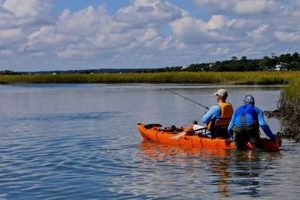
This specialized watercraft, designed for angling in lakes and rivers, combines stability, maneuverability, and features tailored to the needs of anglers. These features often include rod holders, tackle storage, and comfortable seating designed for long hours on the water. A well-equipped model provides a platform for a successful and enjoyable fishing experience.
The stability and specialized design offer anglers distinct advantages over traditional kayaks or other small watercraft. A stable platform allows for easier casting and retrieval, while integrated storage and rod holders keep essential equipment organized and accessible. This type of specialized vessel improves the overall fishing experience by enhancing efficiency and comfort, allowing anglers to focus on their technique and the pursuit of their target species. The evolution of these vessels reflects the growing popularity of kayak fishing and the increasing demand for specialized equipment.
The following sections will explore various aspects of this type of watercraft, including selecting the right model, essential accessories, and popular fishing locations.
Tips for Kayak Fishing
Effective kayak angling requires a blend of skill, preparation, and appropriate equipment. These tips offer guidance for enhancing on-the-water experiences.
Tip 1: Stability is Paramount: Choose a watercraft designed for stability, especially in challenging conditions. Wider hulls generally provide a more stable platform, crucial for casting and landing fish.
Tip 2: Plan and Prepare: Research potential fishing locations, including water conditions, species present, and access points. Pack essential safety gear, including a personal flotation device, whistle, and first-aid kit.
Tip 3: Organize Tackle and Gear: Utilize integrated storage compartments and rod holders to maintain a clutter-free deck. Keep frequently used items readily accessible.
Tip 4: Master Basic Paddling Techniques: Efficient paddling conserves energy and allows for precise maneuvering. Practice various strokes to control the vessel effectively.
Tip 5: Consider Anchor or Drift Sock Deployment: Maintain position in desired fishing areas by utilizing an anchor or drift sock, especially in currents or windy conditions.
Tip 6: Respect Wildlife and the Environment: Adhere to Leave No Trace principles. Pack out all trash and avoid disturbing natural habitats.
Tip 7: Dress Appropriately: Wear clothing suitable for the weather conditions, including sun protection and rain gear. Consider water shoes or sandals for comfort and safety.
By implementing these strategies, anglers can enhance their safety, efficiency, and overall enjoyment on the water. Preparation and proper technique contribute significantly to successful kayak fishing excursions.
This information provides a foundation for successful kayak angling. The subsequent conclusion offers final thoughts and encourages further exploration of this rewarding activity.
1. Stability

Stability forms a cornerstone of effective kayak fishing, directly influencing angler safety, comfort, and success. A stable platform minimizes the risk of capsizing, particularly crucial when navigating challenging waters or engaging with larger fish. It provides a secure foundation for casting, reeling, and landing, allowing anglers to focus on technique rather than maintaining balance. A stable hull allows anglers to stand up and cast, providing a superior vantage point and maximizing casting range, features highly valued by experienced anglers. For example, navigating windy conditions or swift currents demands a stable vessel, providing confidence and control in dynamic environments.
Several factors contribute to kayak stability. Hull design plays a pivotal role, with wider, flatter hulls generally offering greater initial stability. Features such as outriggers and pontoons further enhance stability, particularly valuable for anglers prioritizing stand-up fishing. Weight distribution also influences stability; evenly distributing gear and maintaining a low center of gravity contribute to a balanced and stable platform. Understanding these factors empowers informed decision-making when selecting and outfitting a fishing kayak. A well-balanced and stable vessel contributes significantly to a positive and productive fishing experience. For instance, an angler carrying a heavy load of tackle and gear benefits from a kayak designed for enhanced stability, minimizing the risk of tipping.
Prioritizing stability enhances not only safety but also fishing performance. A secure platform fosters confident casting and reduces fatigue associated with constantly adjusting balance. This allows anglers to concentrate on reading the water, presenting lures effectively, and reacting quickly to strikes. The enhanced stability facilitates precise hooksets and reduces the risk of losing fish during the fight. By understanding the factors contributing to stability, anglers can select and equip their kayaks to optimize performance and enhance their overall fishing experience. The interplay between stability, angler comfort, and fishing effectiveness underscores its fundamental importance in kayak selection and usage.
2. Maneuverability

Maneuverability in a fishing kayak directly impacts an angler’s ability to navigate diverse water environments and access prime fishing spots. Efficient maneuvering enables precise navigation through tight channels, around obstacles like fallen trees or rocks, and across varying currents. This agility proves crucial for reaching secluded coves, navigating shallow flats, or repositioning quickly in response to changing fish activity. A highly maneuverable vessel allows anglers to explore a wider range of fishing locations, maximizing their opportunities for success. For example, navigating a winding creek choked with vegetation requires a kayak capable of tight turns and responsive handling. Similarly, pursuing fish in fast-moving rivers necessitates a vessel that can hold its position effectively and respond quickly to changing current patterns.
Several factors contribute to kayak maneuverability. Hull design plays a significant role; shorter, narrower hulls generally offer greater agility, while longer kayaks track more efficiently in open water. The shape of the keel also influences turning performance, with pronounced keels providing better tracking and less maneuverability, while flatter hulls enhance turning capabilities. Paddle length and blade shape further affect maneuverability; shorter paddles with wider blades provide greater leverage for quick turns. Understanding the interplay of these factors empowers informed decision-making when selecting a fishing kayak suited to specific fishing environments. For instance, an angler frequently fishing in confined spaces, such as mangrove tunnels, benefits from a shorter, more maneuverable kayak, while an angler primarily fishing open lakes might prefer a longer, more stable design.
The practical significance of maneuverability in a fishing kayak extends beyond simply reaching fishing locations. It also influences angling effectiveness. Precise boat control enables accurate lure presentation, allowing anglers to target specific structures or cover effectively. Quick maneuvering facilitates efficient repositioning to follow moving schools of fish or adjust to changing wind or current conditions. This adaptability enhances fishing success by keeping anglers in the optimal position to present lures and react to strikes. Therefore, the connection between maneuverability and angling success reinforces its importance as a key consideration when selecting and utilizing a fishing kayak. Choosing a kayak with appropriate maneuverability characteristics ultimately enhances both the exploration of diverse waterways and the overall fishing experience.
3. Storage Capacity

Ample and well-designed storage is a critical element in fishing kayaks, directly impacting organization, efficiency, and overall fishing success. Sufficient storage capacity allows anglers to carry essential gear, including tackle boxes, rods, safety equipment, and personal items, ensuring preparedness for diverse fishing scenarios and enhancing on-the-water experiences. A well-organized storage system minimizes clutter, facilitates easy access to essential equipment, and maximizes usable deck space, contributing to a more efficient and enjoyable fishing trip.
- Dedicated Tackle Storage:
Designated compartments for tackle boxes, trays, and individual lures maintain organization and protect sensitive fishing gear from damage. Dry storage compartments safeguard electronic devices and other valuables from water exposure. Examples include waterproof hatches, sealed bags, and specialized tackle box compartments. The presence of dedicated tackle storage contributes significantly to efficient lure changes and reduces time spent searching for specific items, optimizing fishing time.
- Rod Holders and Management Systems:
Secure rod holders, strategically positioned for easy access and safe transport, are essential. Flush-mounted rod holders minimize line tangling and interference during paddling, while adjustable rod holders accommodate different rod lengths and fishing styles. Integrated rod management systems keep rods organized and prevent damage during transport and on-the-water maneuvers. The availability of appropriate rod storage and management systems enhances safety and efficiency while maximizing fishing opportunities.
- Dry Storage and Gear Protection:
Protecting essential gear and personal items from water damage is paramount. Watertight compartments, hatches, and sealed bags safeguard electronic devices, wallets, keys, and other valuables from moisture and the elements. Dry storage capacity influences the range of environments and conditions anglers can comfortably fish in, allowing for extended trips and exploration of diverse waterways. For example, anglers venturing into remote areas or facing unpredictable weather benefit significantly from ample dry storage to protect essential gear and ensure a safe and successful outing.
- On-Deck Storage and Accessibility:
Conveniently located on-deck storage, such as bungee cords, cargo nets, and recessed compartments, provides quick access to frequently used items like pliers, line cutters, and small tackle boxes. Efficient on-deck storage minimizes the need to rummage through larger compartments, streamlining lure changes and other essential tasks. This readily accessible storage contributes to a more efficient and focused fishing experience, allowing anglers to maximize their time on the water.
The strategic integration of these storage features in a Teton fishing kayak directly impacts angling efficiency and overall enjoyment. A well-organized vessel allows anglers to focus on the task at hand fishing rather than managing gear or searching for misplaced items. Ample and accessible storage enhances preparedness for diverse fishing scenarios and contributes to a more productive and satisfying experience on the water. The availability and configuration of storage features should be a primary consideration when selecting a fishing kayak, ensuring the vessel aligns with individual angling needs and preferences.
4. Comfort
Comfort plays a crucial role in the overall fishing kayak experience. Extended periods on the water necessitate a comfortable seating arrangement and ergonomic design to minimize fatigue and maximize enjoyment. A comfortable angler can focus on fishing, rather than physical discomfort, leading to increased focus and a more productive outing. Several key factors contribute to comfort in a fishing kayak.
- Seat Design and Adjustability:
A well-designed seat provides adequate support and cushioning, reducing pressure points and back strain. Adjustable features, such as backrest angle and seat height, allow customization to individual body types and preferences. High-quality padding and breathable materials enhance comfort, particularly during long hours on the water. For example, a seat with adjustable lumbar support can significantly reduce back fatigue during extended fishing trips. An uncomfortable seat can lead to premature fatigue and a shortened fishing day, highlighting the importance of prioritizing seat design.
- Legroom and Footrests:
Adequate legroom and adjustable footrests contribute significantly to comfort and paddling efficiency. Proper leg extension reduces cramping and allows for a more powerful and comfortable paddling stroke. Adjustable footrests accommodate different leg lengths and paddling styles, further enhancing comfort and control. Anglers with longer legs, for instance, will benefit from a kayak with ample legroom and adjustable footrests to maintain a comfortable and efficient paddling position. Restricted legroom can quickly lead to discomfort and reduced paddling efficiency.
- Deck Layout and Accessibility:
A well-designed deck layout maximizes comfort and efficiency by placing essential gear within easy reach. Strategically positioned rod holders, tackle storage compartments, and other accessories minimize the need for excessive stretching or bending, reducing strain and enhancing angler comfort. A clutter-free deck also contributes to a more comfortable and enjoyable fishing experience. Easy access to frequently used items, such as pliers and line cutters, minimizes disruption and allows anglers to maintain focus on fishing.
- Stability and Handling:
While not directly related to seating or physical layout, stability and handling characteristics contribute to overall comfort by reducing angler anxiety and fatigue. A stable and predictable kayak instills confidence, allowing anglers to relax and focus on fishing rather than constantly adjusting balance. Similarly, a kayak that handles well in various water conditions minimizes physical exertion and enhances comfort. For example, a stable kayak platform allows anglers to stand up and cast with confidence, reducing strain and enhancing comfort.
These comfort-related features significantly impact the overall fishing kayak experience. A comfortable angler is a more focused and effective angler, able to enjoy longer hours on the water and maximize their fishing potential. When selecting a fishing kayak, careful consideration of these comfort features ensures a more enjoyable and productive experience on the water. Choosing a comfortable kayak directly translates to increased time on the water and enhanced enjoyment of the sport.
5. Durability

Durability is a critical factor in fishing kayaks, directly influencing the vessel’s lifespan, performance, and overall value. A durable kayak withstands the rigors of regular use, including impacts, abrasion, and exposure to various weather conditions. This resilience ensures long-term reliability, minimizes maintenance requirements, and allows anglers to focus on fishing rather than equipment concerns. The following facets explore the key components and considerations related to durability in fishing kayaks.
- Hull Material and Construction:
The hull material significantly impacts a kayak’s durability. High-density polyethylene (HDPE) is a common choice due to its impact resistance and affordability. Thermoformed ABS and composite materials, such as fiberglass and carbon fiber, offer enhanced durability and performance but often come at a higher price point. Rotational molding, a common manufacturing process for HDPE kayaks, creates a seamless, one-piece hull with uniform thickness, enhancing overall strength and impact resistance. Examining the hull material and construction provides insights into the kayak’s ability to withstand impacts, abrasion, and long-term wear.
- UV Resistance and Protection:
Exposure to sunlight and ultraviolet (UV) radiation can degrade kayak materials over time, leading to fading, cracking, and reduced structural integrity. UV-resistant coatings and additives protect the hull from sun damage, extending its lifespan and maintaining its appearance. Regularly inspecting and cleaning the kayak, and storing it out of direct sunlight when not in use, further contribute to preserving its UV resistance and overall durability. Consideration of UV resistance is essential for maintaining long-term performance and aesthetic appeal, particularly in regions with intense sunlight.
- Hardware and Fittings:
Hardware components, such as handles, latches, and deck rigging, contribute to the kayak’s overall durability. Marine-grade stainless steel and corrosion-resistant materials ensure long-term functionality and resist degradation in saltwater environments. High-quality hardware withstands repeated use and exposure to the elements, minimizing maintenance requirements and enhancing overall reliability. Inspecting the quality and construction of hardware components provides insights into the kayak’s long-term durability and resistance to corrosion.
- Maintenance and Care:
Proper maintenance and care play a vital role in preserving a kayak’s durability. Regular cleaning removes dirt, grime, and saltwater residue, which can degrade materials over time. Inspecting the hull for damage and addressing any issues promptly prevents further deterioration and extends the kayak’s lifespan. Proper storage, preferably out of direct sunlight and extreme temperatures, further contributes to long-term durability. Adhering to recommended maintenance practices maximizes the kayak’s lifespan and ensures optimal performance over time.
These facets of durability collectively influence a fishing kayak’s long-term performance, reliability, and overall value. A durable kayak withstands the demands of regular use, providing anglers with a dependable platform for pursuing their passion. Investing in a durable kayak minimizes maintenance concerns and allows anglers to focus on the fishing experience. Careful consideration of these durability factors ensures a sound investment and contributes to countless hours of enjoyment on the water.
6. Specialized Features

Specialized features distinguish fishing kayaks from recreational models, enhancing angling effectiveness and overall experience. These features cater specifically to the needs of anglers, optimizing functionality and performance on the water. A well-equipped fishing kayak integrates features designed to improve casting accuracy, fish detection, tackle management, and overall comfort. For example, integrated rod holders secure rods while paddling or fighting fish, freeing hands for other tasks. Similarly, transducer mounts accommodate fish finders, providing crucial underwater insights. These specialized features transform the kayak into a dedicated fishing platform, maximizing efficiency and enjoyment. The presence and quality of these features directly influence an angler’s ability to target specific species, navigate diverse water environments, and ultimately, achieve fishing success.
Consider a scenario where an angler targets fish near submerged structures. A kayak equipped with a fish finder and GPS allows precise navigation and accurate lure placement near these structures. Furthermore, adjustable rod holders facilitate various fishing techniques, from trolling to jigging, maximizing versatility and adaptability to changing conditions. Integrated tackle storage keeps essential gear organized and readily accessible, minimizing disruptions and optimizing fishing time. These specialized features work in concert to enhance the angling experience, allowing the angler to focus on fish behavior and technique rather than equipment management. The integration of these features transforms the kayak into a purpose-built fishing platform, enhancing efficiency and maximizing potential success.
Understanding the purpose and effective utilization of specialized features is crucial for maximizing fishing kayak performance. While the specific features vary between models, the core principle remains consistent: enhancing angling efficiency and overall experience. Anglers benefit from carefully evaluating their individual needs and fishing styles to select a kayak with features that align with their specific requirements. This considered approach ensures a well-equipped vessel optimized for target species, fishing environments, and personal preferences. The strategic selection and utilization of specialized features transform the kayak from a simple mode of transportation into a high-performance fishing machine, enhancing angling success and overall enjoyment on the water.
Frequently Asked Questions
This section addresses common inquiries regarding specialized fishing kayaks, providing concise and informative responses to assist in informed decision-making.
Question 1: What differentiates a specialized fishing kayak from a recreational model?
Specialized fishing kayaks incorporate features designed for angling, such as rod holders, tackle storage, and transducer mounts. Recreational kayaks typically lack these specialized features and prioritize stability and ease of paddling for general-purpose use.
Question 2: How does hull design influence stability and maneuverability?
Wider hulls generally provide greater stability, while narrower hulls enhance maneuverability. Longer kayaks track better in open water, while shorter kayaks offer greater agility in tight spaces. The specific hull design influences performance characteristics, requiring consideration of intended fishing environments.
Question 3: What materials are commonly used in fishing kayak construction?
High-density polyethylene (HDPE) is a common material due to its durability and affordability. Thermoformed ABS and composite materials like fiberglass offer enhanced performance but often come at a higher cost. Material selection influences weight, durability, and overall performance.
Question 4: What safety precautions should one take when kayak fishing?
Always wear a personal flotation device (PFD). Inform someone of planned fishing locations and estimated return time. Carry essential safety gear, including a whistle, first-aid kit, and communication device. Check weather conditions before embarking and be prepared for changing conditions.
Question 5: How does one choose the right size and weight capacity for a fishing kayak?
Consider the combined weight of the angler, gear, and any potential catch. Choose a kayak with a weight capacity exceeding this combined weight to ensure safe and stable performance. Kayak length influences maneuverability and tracking; longer kayaks are generally faster and track better in open water, while shorter kayaks offer greater agility.
Question 6: What essential accessories enhance the kayak fishing experience?
Essential accessories include a paddle, PFD, anchor, rod holders, and a dry bag for storing valuables. Additional accessories, such as a fish finder, GPS, and specialized tackle storage, further enhance functionality and angling effectiveness. Accessory choices depend on individual fishing styles and target species.
Understanding these key aspects of specialized fishing kayaks facilitates informed purchasing decisions and enhances on-the-water experiences. Careful consideration of individual needs and preferences ensures optimal equipment selection and contributes to enjoyable and successful fishing trips.
The following section delves further into specific kayak models and their respective features.
Conclusion
This exploration of specialized fishing kayaks has highlighted key features contributing to enhanced angling experiences. Stability, maneuverability, storage capacity, comfort, durability, and specialized features all play crucial roles in optimizing performance and enjoyment on the water. Careful consideration of these factors empowers informed decisions regarding kayak selection and equips anglers with the knowledge to maximize their time on the water. Understanding the interplay of these elements ensures a well-equipped and efficient fishing platform tailored to individual needs and preferences.
The pursuit of angling excellence requires continuous learning and adaptation. Exploring advanced techniques, refining equipment choices, and embracing a conservation-minded approach contribute to responsible and rewarding fishing experiences. As angling technology evolves and understanding of aquatic ecosystems deepens, the pursuit of a fulfilling fishing experience remains a dynamic and enriching endeavor. Continued exploration and informed decision-making are essential for maximizing enjoyment and preserving the integrity of aquatic environments for future generations.