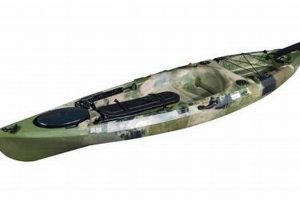
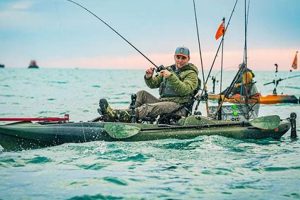
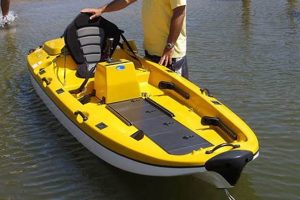
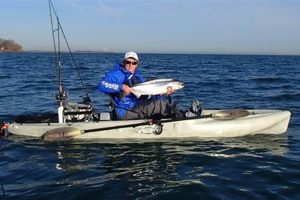
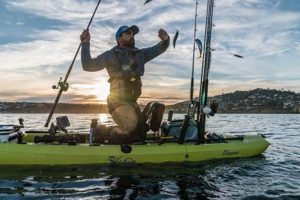
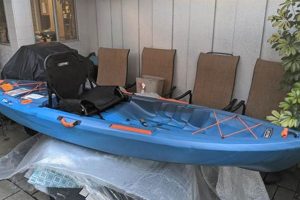
A premium, stable fishing kayak designed for stand-up angling offers a distinct advantage on the water. Such vessels prioritize stability with features like wider hulls, flatter bottoms, and outriggers, permitting anglers to cast, retrieve, and fight fish with greater balance and control than traditional sit-on-top kayaks. This enhanced platform affords improved sightlines for spotting fish and navigating shallows, and provides more leverage for battling larger species.
The ability to stand while fishing has revolutionized the sport for kayak anglers. Previously limited by a seated position, anglers now gain improved casting accuracy and a broader range of motion. This evolution in kayak design has opened up new possibilities for techniques and fishing locations, allowing access to previously inaccessible areas and optimizing the fishing experience. Improved stability translates to increased safety and confidence on the water, particularly in challenging conditions.
This exploration will delve into key features to consider when selecting a platform optimized for stand-up fishing, including hull design, construction materials, weight capacity, and additional features. Furthermore, it will examine various popular models and provide insights into essential safety practices and techniques for standing and fishing from a kayak.
Tips for Selecting a Stable Fishing Kayak for Standing
Choosing a kayak optimized for stand-up fishing requires careful consideration of various factors to ensure optimal stability, performance, and safety. The following tips provide guidance for making an informed decision.
Tip 1: Prioritize Hull Design: Wider, flatter hulls, sometimes incorporating outriggers or pontoons, offer superior stability compared to narrower, V-shaped hulls. Consider the intended fishing environment; flatter hulls excel in calm waters, while moderate V-shapes handle chop better but sacrifice some stability.
Tip 2: Evaluate Weight Capacity: A kayak’s weight capacity should comfortably accommodate the angler’s weight, plus gear and potential catch. Exceeding the capacity compromises stability and performance.
Tip 3: Consider Deck Features: Look for features that enhance stability and angling, such as a wide, flat standing platform, non-slip surfaces, and strategically placed grab handles or rails.
Tip 4: Examine Construction Materials: Durable materials like polyethylene and rotomolded plastic offer excellent impact resistance and longevity. Consider the weight and portability implications of different materials.
Tip 5: Test Before Purchasing: Whenever possible, test potential kayaks on the water. This allows anglers to assess stability, maneuverability, and comfort firsthand.
Tip 6: Factor in Storage and Transportation: Consider the kayak’s length and weight concerning storage and transportation limitations. Roof racks and trailers may be necessary for larger models.
Tip 7: Research Reputable Brands: Opting for kayaks from established manufacturers often ensures higher quality construction, better performance, and reliable customer support.
By carefully evaluating these factors, anglers can select a kayak offering optimal stability, performance, and safety for stand-up fishing, enhancing their experience on the water.
Following these guidelines ensures anglers are well-equipped to choose the right kayak, leading to a more enjoyable and productive fishing experience.
1. Wide Hull Design

Hull design plays a critical role in kayak stability, especially for stand-up fishing. A wider hull contributes significantly to a kayak’s ability to resist tipping, making it a crucial factor when selecting a kayak intended for standing and casting.
- Increased Initial Stability
Wider hulls provide a larger base of support, enhancing initial stabilitythe resistance to tipping when the kayak is at rest. This is particularly important when entering and exiting the kayak and when transitioning from a seated to a standing position. A wider hull offers a more stable platform for these movements, reducing the likelihood of capsizing. For example, a kayak with a 40-inch wide hull will exhibit greater initial stability than a 30-inch wide model.
- Enhanced Secondary Stability
Secondary stability refers to the kayak’s ability to remain stable when tilted. While a wider hull might feel less stable initially when leaned, it provides greater resistance to full capsize. This is crucial when encountering waves, currents, or unexpected shifts in weight while standing. A wider hull provides a broader platform to recover balance before tipping over.
- Impact on Maneuverability
Wider hulls generally reduce maneuverability compared to narrower designs. They track straighter and require more effort to turn, a trade-off for increased stability. This is a key consideration for fishing in areas with tight turns or obstacles. Anglers prioritizing stability over agility will find a wider hull more suitable.
- Considerations for Transportation and Storage
Wider kayaks can be more challenging to transport and store due to their increased size. They might not fit on standard car roof racks and require specialized trailers or storage solutions. This is an important factor to consider based on individual logistical constraints. Anglers should weigh the benefits of increased stability against the added complexity of transport and storage.
The selection of hull width depends on the balance between desired stability and maneuverability, as well as practical considerations like transportation and storage. For anglers prioritizing stand-up fishing, a wider hull design is essential for a safe and comfortable experience. It directly impacts both initial and secondary stability, providing a more secure platform for casting, reeling, and landing fish while standing.
2. Flat Deck

A flat deck is a critical design element contributing significantly to the stability of a fishing kayak intended for standing. Its level surface provides a predictable and secure platform for anglers, minimizing the risk of slips or loss of balance. This feature is fundamental for comfortable and safe stand-up fishing, allowing for greater freedom of movement and improved casting accuracy.
- Enhanced Standing Balance
A flat deck, unlike a curved or sloped surface, offers a consistent plane for weight distribution. This facilitates maintaining balance while standing, particularly during dynamic movements like casting or reeling. The predictable surface removes the instability introduced by uneven footing, allowing anglers to focus on fishing rather than maintaining equilibrium.
- Facilitated Movement
The uninterrupted, level surface of a flat deck enables easier movement within the kayak’s cockpit. Anglers can shift their weight and adjust their position without encountering obstacles or changes in elevation. This is crucial for reaching rods, tackle, and other equipment while maintaining balance. A kayak designed with a completely flat deck, from bow to stern, would exemplify this benefit, providing unrestricted movement.
- Improved Casting Accuracy and Retrieval
A stable standing platform provided by a flat deck translates to improved casting accuracy and more efficient retrieval. A secure stance allows for controlled casting motions, enhancing the angler’s ability to target specific locations. Furthermore, a stable base provides more leverage during retrieval, particularly when battling larger fish. An example would be an angler sight-casting to a shallow-water redfish, where a stable standing position is crucial for accuracy.
- Integration with Other Stability Features
A flat deck works synergistically with other stability features like a wide hull and outriggers to maximize stability. It complements these features by providing a consistent and predictable surface area upon which these other stabilizing elements can act. A kayak with a flat deck combined with a wide hull and outriggers demonstrates how these features enhance stability collectively.
A flat deck’s contribution to stability is paramount for kayaks designed for stand-up fishing. Its influence on balance, movement, and casting accuracy directly enhances the angler’s experience. When combined with other stability-enhancing features, a flat deck transforms a fishing kayak into a secure and efficient platform, maximizing both performance and enjoyment on the water.
3. Weight Capacity

Weight capacity is a critical factor influencing the stability of a fishing kayak designed for standing. It represents the maximum weight a kayak can safely support and directly impacts its performance and safety, particularly when an angler is standing. Understanding weight capacity and its implications is essential for selecting a kayak suitable for stand-up fishing.
- Total Weight Consideration
Weight capacity encompasses the combined weight of the angler, fishing gear, and any potential catch. Accurately estimating and adhering to this limit is crucial for maintaining stability and preventing capsizing. For example, an angler weighing 175 pounds with 50 pounds of gear needs a kayak with a minimum capacity of 225 pounds. Exceeding this limit compromises stability and increases the risk of submersion. Always choose a kayak with a capacity exceeding the anticipated total weight.
- Impact on Stability
A kayak loaded near its maximum capacity sits lower in the water, reducing freeboard and impacting stability. This lower profile increases susceptibility to waves and makes the kayak more prone to tipping. Conversely, a kayak with ample weight capacity remaining will ride higher, offering greater stability and maneuverability. A kayak loaded to 90% of its capacity will be noticeably less stable than one loaded to 50%.
- Performance Implications
Exceeding the weight capacity negatively impacts performance. The kayak will feel sluggish and less responsive, making paddling and maneuvering more difficult. Additionally, it may sit so low in the water that the deck becomes submerged, increasing drag and reducing speed. This can be particularly problematic in challenging conditions or when navigating against currents.
- Safety Considerations
Operating a kayak overloaded beyond its weight capacity significantly increases the risk of capsizing, especially when standing. A lower center of gravity and reduced freeboard make recovery from a tilt more challenging. This poses a serious safety hazard, particularly in open water or adverse weather conditions. Adhering to the manufacturer’s specified weight capacity is paramount for safe operation.
Selecting a kayak with appropriate weight capacity is fundamental for safe and effective stand-up fishing. It directly influences stability, performance, and overall safety on the water. Careful consideration of anticipated weight loads and adherence to manufacturer guidelines are crucial for a positive and secure fishing experience.
4. Outriggers/Pontoons

Outriggers and pontoons represent a significant advancement in kayak stability, particularly for stand-up fishing. These additions provide enhanced lateral stability, allowing anglers to confidently stand and cast, even in challenging conditions. They function by extending the kayak’s effective width, creating a broader base of support that resists tipping. This increased stability significantly reduces the likelihood of capsizing, enhancing both safety and fishing effectiveness. Consider an angler attempting to land a large fish while standing; the added stability provided by outriggers or pontoons can be the difference between success and an unintended swim. Some kayaks offer integrated, retractable outrigger systems, while others allow for aftermarket attachments. Pontoon systems, often inflatable, provide a similar stability boost. The choice between outriggers and pontoons depends on individual needs and preferences.
The impact of outriggers and pontoons on stability is demonstrably significant. Studies have shown that kayaks equipped with these stabilizing features exhibit a marked reduction in lateral movement and increased resistance to tipping. This enhanced stability translates to greater angler confidence, permitting more aggressive fishing techniques and allowing access to previously unfishable areas. For instance, anglers can confidently stand and sight-cast in shallow water, a technique that demands exceptional balance. Furthermore, these stability aids enable anglers to handle larger fish more effectively, reducing the risk of losing balance during the fight. The practical implications extend beyond simply staying dry; increased stability allows for more focused fishing, improved casting accuracy, and ultimately, a more successful and enjoyable experience on the water. Consider a windy day on a choppy lake; outriggers or pontoons can make the difference between a productive fishing trip and a frustrating struggle to stay upright.
Incorporating outriggers or pontoons significantly transforms a kayak’s stability profile. They provide a crucial advantage for anglers seeking to maximize their stand-up fishing experience. The added stability increases safety, expands fishing opportunities, and enhances overall performance on the water. While adding complexity and potentially impacting maneuverability, the benefits for stand-up fishing are substantial. Understanding the function and impact of these stability aids allows anglers to make informed decisions when selecting a kayak optimized for standing and fishing. The enhanced stability offered by these systems has broadened the horizons of kayak fishing, enabling anglers to explore new techniques and access previously inaccessible waters with confidence.
5. Stable Standing Platform

A stable standing platform is paramount for realizing the full potential of a fishing kayak designed for stand-up angling. It forms the foundation upon which anglers maintain balance, cast effectively, and confidently navigate the challenges of on-the-water angling. A secure platform distinguishes a purpose-built stand-up fishing kayak from a less stable alternative, facilitating advanced techniques and enhancing overall fishing success.
- Platform Dimensions and Shape
The dimensions and shape of the standing platform directly influence stability. A wider, flatter platform provides a more secure base of support. Ample space allows for comfortable foot placement and weight distribution, reducing fatigue and promoting balanced movement. For example, a platform extending the full width of the kayak, with a flat, non-slip surface, offers superior stability compared to a narrow or contoured design. Insufficient platform area restricts movement, compromising stability and hindering fishing performance.
- Integration with Hull Design
Seamless integration between the standing platform and the kayak’s hull design is crucial for optimal stability. A stable platform must complement the hull’s characteristics to ensure predictable performance. For instance, a wide, flat platform paired with a wide, flat-bottomed hull maximizes stability, while the same platform on a narrow, V-shaped hull might feel less secure. A well-integrated design minimizes wobble and maximizes responsiveness to angler movements.
- Deck Features and Accessories
Deck features, such as strategically placed grab handles and non-slip padding, significantly enhance the stability and functionality of a standing platform. Grab handles offer secure points of contact, aiding balance and facilitating transitions between sitting and standing. Non-slip surfaces ensure secure footing, even in wet conditions. Ergonomic design features enhance comfort and reduce fatigue during prolonged standing, contributing to a more stable and enjoyable experience. A recessed standing area, lower than the surrounding deck, further lowers the center of gravity and improves stability.
- Material and Construction
The material and construction of the standing platform influence its rigidity and durability. A rigid platform minimizes flex and provides a solid foundation for standing. Durable materials resist wear and tear from constant exposure to the elements and fishing equipment. High-quality construction ensures long-lasting performance and maintains the platform’s stability over time. A robust, well-constructed platform contributes to overall kayak stability and longevity.
These facets of a stable standing platform collectively contribute to the overall stability and performance of a fishing kayak intended for standing. A secure, well-designed platform enhances angler confidence, enables dynamic fishing techniques, and maximizes the potential for a successful and enjoyable fishing experience. The platform’s design, integration with the hull, and incorporated features are critical considerations when selecting a kayak optimized for stand-up angling.
Frequently Asked Questions
This section addresses common inquiries regarding kayaks designed for stand-up fishing, offering concise and informative responses.
Question 1: How does hull design impact stability for stand-up fishing?
Wider, flatter hulls generally provide greater initial stability, crucial for standing and casting. However, they may sacrifice some maneuverability. A moderate V-hull offers a balance between stability and performance in choppy water.
Question 2: What is the significance of weight capacity in relation to stability?
Weight capacity dictates the maximum load a kayak can safely carry. Exceeding this limit significantly compromises stability, especially when standing. Selecting a kayak with ample weight capacity is essential for safety and performance.
Question 3: Do outriggers or pontoons truly enhance stability?
Outriggers and pontoons significantly enhance lateral stability, making standing and fishing more secure, even in challenging conditions. They extend the kayak’s effective width, providing a broader base of support.
Question 4: What features should one look for in a stable standing platform?
A stable standing platform should be wide, flat, and non-slip. Strategically placed grab handles and a recessed design further enhance stability and angler confidence. Seamless integration with the hull is essential.
Question 5: How does one determine the appropriate kayak width for stand-up fishing?
The ideal width depends on the angler’s balance preference and the intended fishing environment. Wider kayaks offer greater stability, while narrower designs prioritize maneuverability. Testing various widths is recommended.
Question 6: What are the safety considerations for standing in a fishing kayak?
Always wear a personal flotation device. Start slowly in calm water to gain confidence and gradually progress to more challenging conditions. Distribute weight evenly and avoid sudden movements. Be mindful of wind and current.
Understanding these key aspects contributes to informed decision-making when selecting a fishing kayak optimized for stability and stand-up angling performance.
This foundational knowledge facilitates a transition to exploring specific kayak models and further refining selection criteria based on individual needs and preferences. The next section delves into a comparative analysis of popular models, providing detailed insights into features, performance, and suitability for stand-up fishing.
Conclusion
Optimal stability in a fishing kayak designed for standing is achieved through a confluence of factors. Hull design, weight capacity, the presence of outriggers or pontoons, and a dedicated standing platform each play a crucial role. A wider hull provides a broader base of support, while a higher weight capacity ensures the kayak remains stable even when fully loaded. Outriggers and pontoons further enhance stability, particularly in challenging conditions. Finally, a well-designed standing platform, incorporating features like non-slip surfaces and strategically placed grab handles, provides a secure and comfortable base for anglers. Careful consideration of these elements is essential for selecting a kayak that offers both performance and safety when fishing from a standing position.
Investing in a kayak optimized for standing transforms the fishing experience. Enhanced stability allows anglers to access previously unreachable fishing grounds, employ diverse casting techniques, and confidently handle larger fish. This evolution in kayak design has broadened the horizons of the sport, offering new possibilities for exploration and angling success. Prioritizing stability not only elevates the fishing experience but also significantly improves safety on the water, contributing to a more rewarding and secure angling pursuit.