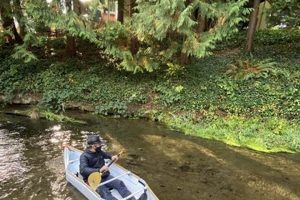
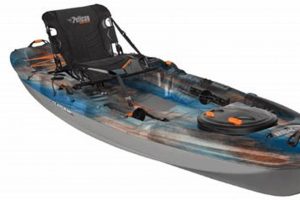
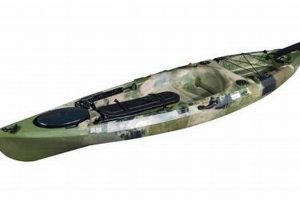
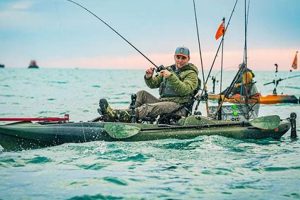
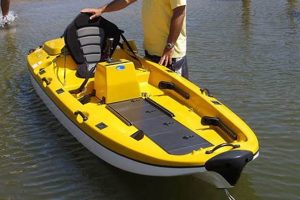
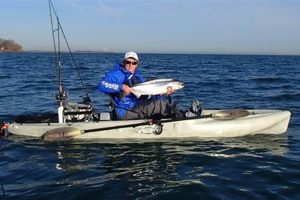
A small, human-powered watercraft designed for angling activities on bodies of water near Austin, Texas, typically features specialized equipment such as rod holders, storage compartments, and comfortable seating adapted for extended periods on the water. These vessels are often chosen for their maneuverability and stability, enabling access to shallow waters and areas unreachable by larger boats. A typical example might be a sit-on-top model equipped with a rudder system and anchor trolley.
The popularity of this type of watercraft stems from the confluence of Austin’s abundant waterways and the growing interest in recreational fishing. These kayaks provide an accessible and environmentally friendly way to explore diverse aquatic environments, from the Colorado River to the numerous lakes and reservoirs in the area. Their relatively low cost and ease of transport compared to motorized boats contribute significantly to their appeal. Historically, angling in the region relied on traditional methods from shore or larger vessels; however, the advent of specialized kayaks has opened up new possibilities for anglers seeking a more intimate and personalized fishing experience.
This article will further explore various aspects related to this activity, including popular fishing locations near Austin, suitable kayak models, recommended fishing gear, and responsible angling practices. The information presented will assist both novice and experienced anglers in maximizing their fishing experience in the Austin area.
Tips for Kayak Fishing in Austin
Successful kayak angling in Austin requires preparation and adherence to best practices. The following tips provide valuable guidance for a safe and productive experience.
Tip 1: Research fishing regulations. Understanding license requirements, catch limits, and permitted fishing methods is crucial before embarking on any fishing trip. Consulting the Texas Parks and Wildlife Department website provides comprehensive information on current regulations.
Tip 2: Choose the right kayak. Kayak selection depends on individual needs and preferences. Sit-on-top models offer stability and ease of re-entry if capsized, while sit-inside models provide better protection from the elements. Consider factors such as storage capacity, maneuverability, and comfort.
Tip 3: Utilize appropriate safety gear. A personal flotation device (PFD) is essential and should be worn at all times. Carrying a whistle, signaling device, and first-aid kit is highly recommended. Inform someone of the intended fishing location and estimated return time.
Tip 4: Plan for the elements. Check weather forecasts before heading out and dress accordingly. Sun protection, including sunscreen, a hat, and polarized sunglasses, is crucial. Hydration is also essential, so pack plenty of water.
Tip 5: Employ effective fishing techniques. Researching effective fishing techniques for targeted species increases chances of success. Local bait shops can provide valuable insights on preferred baits and lures for the area.
Tip 6: Respect the environment. Practicing catch-and-release whenever possible helps conserve fish populations. Proper disposal of fishing line and other waste minimizes environmental impact.
Tip 7: Learn basic kayak paddling skills. Familiarization with basic paddling strokes enhances maneuverability and efficiency on the water. Practicing in calm waters before venturing onto larger bodies of water is advisable.
By following these guidelines, anglers can ensure both a rewarding and responsible fishing experience on Austin’s waterways. These preparatory steps contribute significantly to both safety and success.
This information provides a strong foundation for planning a kayak fishing trip. The following section will delve into specific locations and resources available to Austin anglers.
1. Kayak Selection

Kayak selection is a critical factor in the overall success and enjoyment of the Austin fishing kayak experience. The chosen vessel directly influences maneuverability, stability, and access to desired fishing locations. Different kayak types offer varying advantages and disadvantages depending on the specific characteristics of Austin’s waterways. For example, a shorter, wider kayak provides superior stability in the calmer waters of Lady Bird Lake, allowing anglers to focus on fishing rather than balance. Conversely, a longer, narrower kayak might be preferred for paddling greater distances and handling the chop of Lake Travis. Careful consideration of these factors ensures the kayak complements the chosen fishing environment.
Several key features warrant attention during the selection process. Sufficient storage space for tackle and gear is essential for a productive and organized fishing trip. Built-in rod holders and other fishing-specific accessories enhance convenience and efficiency. Comfort is also paramount, especially during longer outings. Adjustable seating, ample legroom, and appropriate back support contribute to a more enjoyable experience. Evaluating these features in relation to individual needs and preferences ensures the chosen kayak aligns with the demands of Austin fishing.
Ultimately, appropriate kayak selection optimizes the Austin fishing kayak experience. A well-chosen vessel enhances safety, improves fishing effectiveness, and increases overall enjoyment on the water. By carefully considering the characteristics of Austin’s waterways, individual needs, and specific kayak features, anglers can ensure their vessel complements their fishing style and contributes to a successful and fulfilling outing. This informed approach transforms the kayak from simply a mode of transportation into an integral component of the overall fishing experience.
2. Fishing Locations

Effective utilization of an Austin fishing kayak hinges upon careful selection of fishing locations. Appropriate location choice maximizes angling opportunities while ensuring safety and enjoyment. The following facets illustrate the crucial connection between fishing locations and the Austin fishing kayak experience.
- Accessibility
Kayak fishing provides access to locations often unreachable by larger motorized boats. Shallow coves, narrow creeks, and protected inlets become viable fishing grounds, expanding the range of explorable waters. For example, the numerous tributaries feeding into Lake Travis offer prime kayak fishing opportunities inaccessible to traditional fishing boats. This expanded access allows anglers to target specific species and explore diverse habitats within the Austin area.
- Species Diversity
Different locations within the Austin area support diverse fish populations. Selecting locations known for targeted species increases the likelihood of a successful fishing trip. Lady Bird Lake, for example, offers excellent opportunities for catching largemouth bass and sunfish, while Lake Austin is known for its catfish and striped bass populations. Matching location to target species is a key element of effective kayak angling.
- Water Conditions
Water conditions significantly impact kayak fishing. Calm, protected waters are ideal for novice kayakers or anglers seeking a relaxing experience. Experienced anglers seeking a challenge might opt for locations with current or open water exposure, such as the Colorado River. Evaluating water conditions relative to skill level and desired fishing experience is crucial for both safety and enjoyment.
- Environmental Considerations
Respecting the environment is paramount in kayak fishing. Choosing locations with established access points minimizes disturbance to shoreline habitats. Adhering to local regulations regarding protected areas and sensitive ecosystems preserves the integrity of Austins waterways. For example, practicing catch-and-release fishing in certain areas helps maintain healthy fish populations and supports sustainable angling practices.
Strategic selection of fishing locations enhances the Austin fishing kayak experience. By considering accessibility, species diversity, water conditions, and environmental factors, anglers can maximize their chances of a successful and rewarding outing. These considerations transform the fishing location from simply a backdrop to an integral component of the overall kayak fishing experience.
3. Essential Gear

The efficacy and enjoyment of an Austin fishing kayak outing are directly linked to the selection and utilization of essential gear. Appropriate gear facilitates successful angling while ensuring safety and comfort on the water. This connection hinges on the interplay between the specific demands of kayak fishing in Austin and the functionalities offered by various types of equipment. For instance, a well-chosen paddle, suited to the angler’s physique and paddling style, contributes significantly to efficient navigation and reduced fatigue during long hours on the water. Similarly, a high-quality anchor system, designed for kayak use, ensures the vessel remains stationary in desired fishing locations, maximizing angling opportunities. These examples illustrate the direct cause-and-effect relationship between gear selection and the overall fishing experience.
Beyond basic equipment, specialized gear enhances the Austin fishing kayak experience. Rod holders designed for kayak mounting free up hands for paddling and other tasks, while fish finders tailored for shallow water use provide valuable insights into fish location and behavior. Tackle storage solutions designed for kayak environments ensure efficient organization and accessibility of lures and bait. A waterproof bag or box safeguards essential items like phones and wallets from the elements. These specialized items elevate the fishing experience from basic functionality to optimized performance and enjoyment, directly contributing to the success of Austin kayak fishing outings.
Careful consideration of essential gear distinguishes a successful Austin fishing kayak outing from a frustrating one. Appropriate gear selection, grounded in an understanding of the specific demands of kayak fishing in this environment, translates directly to enhanced angling performance, increased safety margins, and greater overall enjoyment. This preparedness allows anglers to focus on the core experiencefishingrather than contending with preventable challenges or discomfort. Investing in appropriate essential gear transforms the Austin fishing kayak experience from a simple activity into a rewarding pursuit.
4. Safety Precautions
Safety precautions form an integral component of the Austin fishing kayak experience. Neglecting these precautions can transform a recreational activity into a hazardous situation. The inherent risks associated with on-water activities, coupled with the specific challenges of kayak fishing, necessitate a proactive approach to safety. For instance, the potential for capsizing, even in relatively calm waters, underscores the importance of wearing a personal flotation device (PFD). Similarly, unexpected changes in weather conditions, common in the Austin area, can create dangerous situations for kayakers unprepared for sudden wind gusts or temperature drops. These examples highlight the direct cause-and-effect relationship between neglecting safety precautions and increased risk.
Practical application of safety precautions within the Austin fishing kayak context requires specific considerations. Checking weather forecasts prior to embarking on a fishing trip allows anglers to anticipate potentially hazardous conditions and make informed decisions about whether to proceed. Informing someone of the intended fishing location and estimated return time provides a crucial safety net in case of emergencies. Carrying a whistle, signaling device, and basic first-aid kit equips anglers to respond effectively to unexpected situations. These practical steps directly mitigate risks and enhance the safety margin within the Austin fishing kayak experience. Understanding and applying these measures significantly reduces the likelihood of incidents and contributes to a safer overall experience.
A comprehensive understanding of safety precautions is paramount for responsible enjoyment of Austin fishing kayak activities. Consistent application of these measures minimizes risks and ensures the focus remains on the recreational aspects of the experience. Challenges such as complacency and underestimation of potential hazards must be actively addressed through education and awareness. Ultimately, prioritizing safety precautions safeguards not only individual well-being but also contributes to a more positive and sustainable Austin kayak fishing environment for all participants. This proactive approach transforms safety from a peripheral concern to a core value within the Austin kayak fishing community.
5. Local Regulations
Adherence to local regulations forms a critical component of responsible and sustainable Austin fishing kayak practices. Disregarding these regulations undermines conservation efforts, disrupts aquatic ecosystems, and jeopardizes the long-term viability of the sport. The connection between local regulations and the Austin fishing kayak experience is multifaceted, encompassing legal obligations, ethical considerations, and environmental stewardship. For example, fishing license requirements ensure funding for habitat preservation and fisheries management, directly supporting the resources upon which kayak fishing depends. Similarly, catch limits and size restrictions, designed to protect fish populations and maintain healthy ecosystems, directly impact the sustainability of the activity. Ignoring these regulations not only risks legal penalties but also contributes to the depletion of fish stocks and degradation of aquatic environments. This intricate relationship between regulations and the kayak fishing experience necessitates a clear understanding of the rules and their underlying purpose.
Practical application of local regulations within the Austin fishing kayak context requires specific knowledge. Awareness of permitted fishing methods, designated fishing areas, and seasonal restrictions ensures compliance and promotes responsible angling. Consulting the Texas Parks and Wildlife Department website provides access to comprehensive information on current regulations. For example, understanding prohibited fishing practices, such as the use of certain types of nets or fishing in restricted areas, prevents inadvertent violations. Furthermore, familiarization with species-specific regulations, such as catch limits for largemouth bass in Lady Bird Lake, contributes to the preservation of healthy fish populations. This proactive approach to understanding and applying local regulations aligns the Austin fishing kayak experience with broader conservation goals.
A thorough understanding of local regulations is fundamental to the ethical and sustainable practice of Austin fishing kayak activities. Compliance with these regulations demonstrates respect for the environment, contributes to the long-term health of aquatic ecosystems, and ensures the continued enjoyment of the sport for future generations. Challenges such as lack of awareness or intentional disregard for regulations must be addressed through education and enforcement. Ultimately, adherence to local regulations positions the Austin fishing kayak community as responsible stewards of the environment and champions of sustainable angling practices. This commitment transforms regulatory compliance from a mere obligation into an integral component of the Austin kayak fishing ethos.
Frequently Asked Questions
This section addresses common inquiries regarding kayak fishing in Austin, providing concise and informative responses to facilitate a deeper understanding of the activity.
Question 1: What type of kayak is best suited for fishing in Austin?
Kayak selection depends on individual needs and the specific fishing location. Sit-on-top kayaks offer stability and ease of re-entry, making them suitable for beginners and calmer waters like Lady Bird Lake. Sit-inside kayaks provide better protection from the elements but can be more challenging to re-enter after capsizing. Longer kayaks are generally faster and track better in open water like Lake Travis, while shorter kayaks offer better maneuverability in tighter spaces.
Question 2: Where are the best places to kayak fish in Austin?
Popular locations include Lady Bird Lake, Lake Austin, Lake Travis, and the Colorado River. Each location offers unique characteristics and fishing opportunities. Researching specific access points, species prevalence, and water conditions is recommended prior to selecting a fishing location.
Question 3: What essential gear is required for kayak fishing in Austin?
Essential gear includes a personal flotation device (PFD), a paddle, an appropriately sized fishing rod and reel, tackle, and a fishing license. Additional gear, such as a fish finder, anchor, and rod holders, enhances the fishing experience but is not strictly required.
Question 4: Are there specific regulations for kayak fishing in Austin?
Regulations regarding fishing licenses, catch limits, and permitted fishing methods apply to all anglers, including those fishing from kayaks. Consulting the Texas Parks and Wildlife Department website provides comprehensive information on current regulations.
Question 5: What safety precautions should be taken while kayak fishing in Austin?
Always wear a PFD, check weather conditions before embarking on a fishing trip, inform someone of the intended fishing location and estimated return time, and carry a whistle or other signaling device. Awareness of water conditions, boat traffic, and potential hazards enhances safety on the water.
Question 6: What are some recommended resources for learning more about kayak fishing in Austin?
Local kayak fishing clubs, outfitters, and bait shops offer valuable resources and insights. Online forums and communities dedicated to kayak fishing can provide additional information and connect anglers with experienced practitioners.
Understanding these frequently asked questions equips prospective kayak anglers with the foundational knowledge necessary for a safe, successful, and enjoyable experience in Austin. Thorough preparation and adherence to best practices contribute significantly to a positive and rewarding outing.
The following section will delve further into advanced techniques for kayak fishing in Austin, providing insights for experienced anglers seeking to refine their skills and maximize their success on the water.
Conclusion
This exploration of specialized kayak angling within the Austin, Texas area has highlighted key aspects of the activity. From equipment selection and location considerations to safety precautions and regulatory adherence, the information presented provides a comprehensive overview for both novice and experienced anglers. The analysis emphasized the interconnectedness of these elements, demonstrating how each contributes to a safe, successful, and sustainable fishing experience.
The growing popularity of this specialized form of angling reflects a broader trend towards engaging with nature in accessible and environmentally conscious ways. Continued exploration and refinement of techniques, coupled with responsible stewardship of aquatic resources, will ensure the enduring appeal and viability of kayak fishing in Austin for years to come.