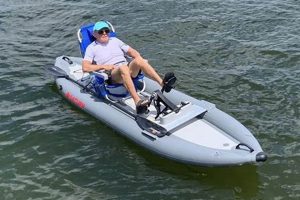
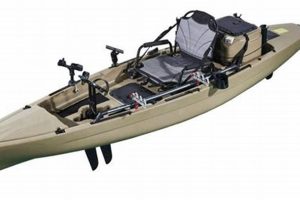
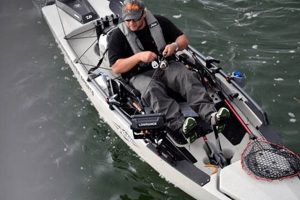
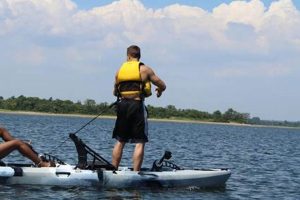
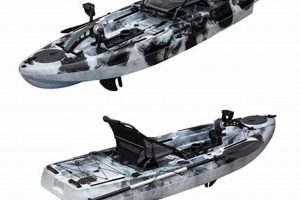
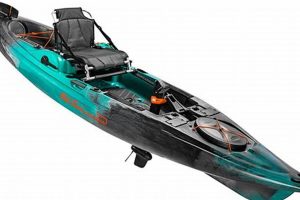
This specific model represents a type of watercraft designed for angling. It features a foot-powered propulsion system, differentiating it from paddle-driven kayaks. The twelve-foot length offers a balance of stability and maneuverability, suitable for various water conditions. The “Balsam” likely designates a specific model line within the “Erewhon” brand, potentially indicating features or construction materials.
Pedal-powered kayaks offer distinct advantages for fishing enthusiasts. Hands-free operation allows anglers to focus on casting and reeling. The increased speed and range compared to paddling enable access to more distant fishing spots. This particular craft’s length provides stability ideal for casting and landing fish, while maintaining enough agility to navigate narrower waterways. The “Erewhon” brand may hold a certain reputation within the fishing kayak market, potentially associated with quality or specific design innovations.
The following sections will explore the specifics of this watercraft’s design, features, performance, and suitability for different fishing environments. Further discussion will encompass potential advantages and disadvantages compared to other fishing kayak options, along with considerations for maintenance and accessories.
Tips for Pedal Kayak Fishing
Effective angling from a pedal-driven kayak requires specific techniques and considerations. The following tips offer guidance for maximizing success and enjoyment on the water.
Tip 1: Master Pedal Propulsion: Familiarize oneself with the pedal system’s operation, including forward and reverse movement, and subtle maneuvering adjustments. Practice efficient pedaling techniques to conserve energy and maximize speed.
Tip 2: Optimize Gear Placement: Organize fishing rods, tackle boxes, and other equipment for easy access while maintaining kayak stability. Utilize available storage compartments and consider mounting systems for frequently used items.
Tip 3: Choose Appropriate Anchoring Techniques: Employ anchor systems suited for various water conditions and fishing locations. Practice deploying and retrieving anchors efficiently and silently to avoid spooking fish.
Tip 4: Utilize Fish Finders and Electronics: Integrate electronic devices strategically for improved fish location and navigation. Consider mounting options and power sources for optimal performance and minimal interference.
Tip 5: Prioritize Safety Precautions: Always wear a personal flotation device and carry essential safety equipment, including a whistle, signaling devices, and a first-aid kit. Check weather conditions before embarking and inform someone of the intended fishing location.
Tip 6: Practice Casting Techniques: Adapt casting methods to the kayak’s stability and limited space. Practice accurate and controlled casts to avoid entanglement and maximize fishing opportunities.
Tip 7: Respect the Environment: Adhere to catch-and-release guidelines when appropriate and dispose of fishing line and other waste responsibly. Minimize disturbance to natural habitats and wildlife.
By implementing these strategies, anglers can enhance their fishing experience from a pedal kayak. Careful preparation and attention to detail contribute significantly to both success and enjoyment on the water.
The concluding section will summarize key takeaways and offer additional resources for further exploration of pedal kayak fishing.
1. Erewhon (Brand)

“Erewhon” represents the manufacturer of the “Balsam” fishing kayak model. Understanding the brand’s reputation and product offerings provides crucial context for evaluating the specific kayak’s features and potential performance. Erewhon’s market position, specialization, and overall brand identity inform the expectations and considerations surrounding the Balsam model.
- Brand Reputation and Specialization:
Erewhon’s standing within the kayak market influences perceptions of quality, innovation, and customer support. Whether known for budget-friendly options or high-end performance crafts, this reputation shapes expectations for the Balsam model. For instance, a brand known for durable, fishing-specific kayaks enhances the Balsam’s perceived suitability for angling.
- Product Line and Design Philosophy:
Examining Erewhon’s broader product range reveals potential design philosophies and target demographics. If Erewhon primarily produces recreational kayaks, the Balsam’s fishing-specific features might represent a specialized offering within their portfolio. Conversely, a focus on fishing kayaks suggests a deeper expertise in addressing angler needs.
- Manufacturing Processes and Materials:
Erewhon’s manufacturing practices impact the quality and durability of the Balsam kayak. Utilization of advanced materials like rotomolded polyethylene or composites affects the kayak’s weight, strength, and resistance to wear. These factors directly influence the kayak’s longevity and suitability for various fishing environments.
- Customer Support and Warranty:
Erewhon’s customer service reputation and warranty provisions impact the overall ownership experience. Reliable customer support and comprehensive warranty coverage offer peace of mind for buyers, especially concerning potential repairs or replacements. This post-purchase support contributes significantly to long-term customer satisfaction.
Considering these facets of the Erewhon brand provides a more comprehensive understanding of the “Balsam” fishing kayak. By evaluating the brand’s reputation, product line, manufacturing practices, and customer support, potential buyers can make informed decisions based on a holistic perspective, aligning their needs and expectations with Erewhon’s offerings.
2. Balsam (Model)

Balsam designates the specific model within the Erewhon kayak lineup, distinguishing it from other offerings. Understanding the “Balsam” model’s unique characteristics clarifies its role within the broader context of “Erewhon balsam fishing pedal 12′ kayak,” highlighting its purpose and intended usage.
- Design and Features:
The “Balsam” model likely incorporates specific design elements tailored for fishing. These might include rod holders, tackle storage compartments, and a hull design optimized for stability. For example, recessed rod holders protect fishing rods during transport and use, while strategically placed storage compartments keep tackle organized and accessible. These design choices differentiate the “Balsam” from recreational kayak models.
- Construction and Materials:
The materials used in constructing the “Balsam” influence its durability, weight, and performance. Rotational molding, a common kayak manufacturing process, could yield a robust and UV-resistant hull. Higher-end materials like composites contribute to lighter weight and increased rigidity, impacting maneuverability and speed. The choice of materials aligns with the kayak’s intended use for fishing.
- Target Audience and Intended Use:
The “Balsam” model likely targets anglers seeking a specialized kayak. Its features cater to the needs of fishing enthusiasts, offering convenience and functionality specific to angling. For instance, the pedal-drive system allows hands-free fishing, a key advantage for anglers. This focus differentiates “Balsam” from general-purpose recreational kayaks.
- Performance Characteristics:
The “Balsam’s” 12-foot length influences its stability and maneuverability. This length provides a stable platform for casting while allowing for navigation in various water conditions. The pedal-drive system contributes to efficient propulsion, enabling anglers to cover greater distances and access more fishing spots. These performance characteristics underscore the “Balsam’s” suitability for angling.
These facets illustrate how the “Balsam” model’s design and features align with the overall concept of “Erewhon balsam fishing pedal 12′ kayak.” By understanding these components, one can appreciate how this particular model serves the specific needs of anglers, offering a tailored solution for kayak fishing.
3. Fishing (Purpose)
The “fishing” component within “Erewhon Balsam fishing pedal 12′ kayak” defines the core purpose and intended usage of this specific watercraft. It signifies that the kayak’s design, features, and performance characteristics are optimized for angling activities. This purpose-driven design directly influences the kayak’s functionality and suitability for different fishing environments. For example, the inclusion of rod holders, tackle storage, and a stable hull platform directly results from its intended use for fishing. Without this core purpose, the kayak’s design would likely differ significantly.
The importance of “fishing” as a defining characteristic lies in its impact on user experience and overall kayak performance. An angler requires specific features and functionalities not found in recreational kayaks. The hands-free propulsion offered by the pedal system, coupled with the stability needed for casting and reeling, directly addresses the practical needs of anglers. Consider a scenario where an angler needs to navigate through shallow waters while simultaneously managing fishing gear; a pedal-driven kayak, designed for stability and hands-free operation, becomes essential in this situation. The kayak’s purpose directly influences its suitability for such specific fishing scenarios.
Understanding the “fishing” purpose inherent in “Erewhon Balsam fishing pedal 12′ kayak” enables informed decision-making for potential buyers. Recognizing the kayak’s specialized design and targeted functionality allows anglers to assess its suitability for their specific fishing needs and preferences. It also allows for a more accurate comparison with other fishing kayaks or alternative angling platforms. Ultimately, acknowledging the “fishing” purpose clarifies the value proposition of this particular model within the broader kayak market, highlighting its specialized role and optimized design for angling activities.
4. Pedal (Propulsion)
The “pedal” propulsion system distinguishes the “Erewhon Balsam fishing pedal 12′ kayak” from traditional paddle-driven kayaks. This distinction significantly impacts the kayak’s functionality, performance, and overall suitability for fishing. The pedal drive’s implications extend beyond simple propulsion, influencing angling techniques, efficiency, and the overall fishing experience.
- Hands-Free Operation:
Pedal propulsion allows anglers to keep their hands free for casting, reeling, and managing fishing gear. This advantage proves crucial in various fishing scenarios. For example, when battling a strong fish, an angler can maintain control of the rod and reel while simultaneously maneuvering the kayak using the pedals. This hands-free capability enhances fishing efficiency and increases the likelihood of a successful catch.
- Increased Speed and Range:
Pedal-powered kayaks often achieve higher speeds and cover greater distances compared to paddle-driven counterparts. This extended range allows anglers to access more remote fishing spots and explore larger bodies of water. Consider an angler seeking specific fish species known to inhabit deeper waters; the increased range provided by a pedal drive becomes essential for reaching these areas. This enhanced mobility significantly expands fishing opportunities.
- Enhanced Maneuverability and Control:
Modern pedal-drive systems often incorporate features like forward and reverse pedaling, as well as rudder control, allowing for precise maneuvering and positioning. This level of control proves invaluable when navigating tight spaces, such as shallow creeks or areas with dense vegetation. Imagine an angler trying to position the kayak near a submerged structure; precise maneuvering offered by the pedal drive becomes crucial for accurate placement without disturbing the fishing spot.
- Physical Effort and Fatigue:
While pedaling engages different muscle groups compared to paddling, it can potentially reduce overall fatigue during long fishing trips. The continuous, rhythmic motion of pedaling may be less strenuous than repetitive paddling for some individuals. Consider an angler spending several hours on the water; reduced fatigue associated with pedaling can extend fishing time and enhance overall enjoyment.
These facets of pedal propulsion contribute significantly to the “Erewhon Balsam fishing pedal 12′ kayak’s” suitability for angling. By offering hands-free operation, increased range, enhanced maneuverability, and potentially reduced fatigue, the pedal drive optimizes the fishing experience. This propulsion method distinguishes the Balsam from traditional paddle kayaks and reinforces its specialized design for fishing activities. The choice between a pedal-driven kayak and a paddle kayak ultimately depends on individual fishing styles, target species, and the specific environments being fished.
5. 12' (Length)
The 12-foot length of the Erewhon Balsam fishing pedal kayak represents a crucial design element directly influencing its performance characteristics and suitability for various fishing environments. This length contributes to a balance between stability and maneuverability, essential factors for anglers. Cause and effect relationships exist between kayak length and performance. A longer kayak generally offers increased tracking and speed, advantageous for covering larger distances and navigating open water. Conversely, shorter kayaks typically provide enhanced maneuverability in tight spaces and quicker turning capabilities, beneficial in rivers, creeks, or areas with dense vegetation. The 12-foot length of the Balsam seeks to strike a balance between these characteristics, making it adaptable to diverse fishing locations.
The importance of the 12′ length as a component of the Erewhon Balsam becomes evident when considering real-life fishing scenarios. Imagine an angler fishing in a moderately sized lake with open areas and some vegetated shorelines. The 12-foot length provides sufficient stability for standing and casting, an important aspect for sight fishing or fly fishing techniques. Simultaneously, it retains enough maneuverability to navigate closer to the shoreline or around obstacles, enabling access to prime fishing locations. In contrast, a significantly shorter kayak might be too unstable for standing casting, while a much longer kayak could prove cumbersome in tighter spaces. The 12′ length represents a compromise optimized for versatility.
Practical significance of understanding the 12-foot length lies in informed decision-making for potential buyers. Anglers targeting specific species or fishing in particular environments can assess the suitability of this length. Those frequently fishing large, open bodies of water might prioritize a longer kayak for increased speed and tracking. Conversely, anglers focusing on smaller rivers or creeks might prefer a shorter kayak for enhanced maneuverability. Recognizing the implications of the 12-foot length allows for informed selection based on individual fishing preferences and target locations. Ultimately, understanding this aspect of the Erewhon Balsam contributes to selecting the appropriate kayak for specific fishing needs and maximizing overall angling success.
Frequently Asked Questions
This section addresses common inquiries regarding the Erewhon Balsam fishing pedal 12′ kayak, providing concise and informative responses to facilitate informed decision-making for prospective buyers.
Question 1: What differentiates the Balsam model from other Erewhon kayaks?
The Balsam model distinguishes itself through its fishing-specific design, incorporating features like rod holders, tackle storage, and a stable hull optimized for angling activities. These specialized features differentiate it from recreational Erewhon kayak models.
Question 2: How does the pedal-drive system compare to traditional paddling?
The pedal-drive system offers hands-free operation, crucial for fishing activities. It typically provides increased speed and range compared to paddling, enabling access to distant fishing spots. However, individual preferences and physical capabilities should be considered when evaluating propulsion methods.
Question 3: What is the weight capacity of the Balsam kayak?
Specific weight capacity information requires consultation with official Erewhon product specifications or authorized dealers. This information ensures safe and optimal kayak performance.
Question 4: Is the Balsam suitable for use in saltwater environments?
Manufacturer recommendations regarding saltwater usage should be verified through official product documentation or authorized dealers. Material compatibility and maintenance procedures may vary depending on intended usage environments.
Question 5: What accessories are recommended for the Balsam kayak?
Recommended accessories vary depending on individual fishing styles and preferences. Common additions include fish finders, anchor systems, and specialized storage solutions. Compatibility with specific accessories should be confirmed based on manufacturer guidelines.
Question 6: What maintenance procedures are required for the Balsam kayak?
Regular maintenance ensures optimal kayak performance and longevity. Consult official Erewhon guidelines for specific cleaning, storage, and maintenance procedures. These procedures may vary based on usage environment and frequency.
These responses offer general guidance; consulting official Erewhon resources or authorized dealers ensures accurate and up-to-date information specific to the Balsam model.
The following section provides concluding remarks and additional resources for prospective buyers.
Conclusion
This exploration of the Erewhon Balsam fishing pedal 12′ kayak has provided a comprehensive overview of its key features, functionalities, and suitability for angling activities. The analysis encompassed the brand’s reputation, the model’s specific design elements, the advantages of pedal propulsion, and the implications of the kayak’s length for performance. The examination considered various fishing scenarios and highlighted the kayak’s adaptability to diverse environments. Potential benefits and considerations for prospective buyers were addressed, including maintenance requirements and potential accessory additions.
The Erewhon Balsam represents a specialized tool designed for angling enthusiasts. Thorough consideration of individual fishing needs, target species, and preferred environments remains crucial for informed purchasing decisions. Further research and consultation with authorized dealers are recommended for obtaining detailed specifications and ensuring the selected kayak aligns precisely with individual angling objectives. Successful integration of appropriate angling techniques and adherence to safety precautions will contribute significantly to maximizing the enjoyment and productivity of fishing experiences from this specialized watercraft. The future of kayak fishing continues to evolve with advancements in design and technology, promising further enhancements to on-the-water angling experiences.