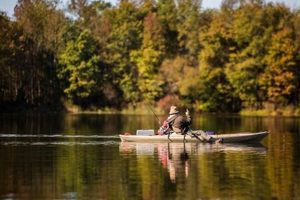
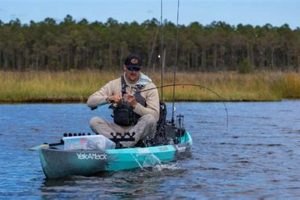
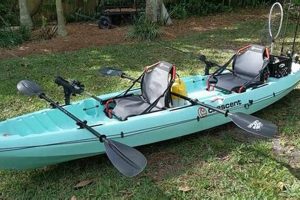
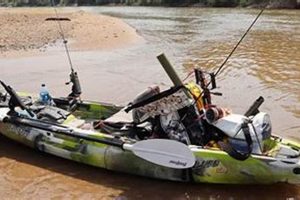
Folding kayaks designed for angling offer a unique blend of portability and on-the-water performance. These vessels typically incorporate features like rod holders, tackle storage, and comfortable seating tailored to the needs of anglers. An angler might choose this type of watercraft for accessing remote fishing spots, navigating shallow waters, or simply for ease of storage and transport.
The portability of these specialized kayaks opens up a world of fishing opportunities previously difficult or impossible to reach. Their compact folded size allows for convenient storage in apartments, small vehicles, and even on public transportation. Once unfolded, they provide a stable and efficient platform for fishing in various environments. This design philosophy traces back to the desire for a more versatile and accessible approach to kayak fishing, eliminating the need for large vehicles and specialized storage racks.
Further exploration will cover topics such as selecting the appropriate model based on fishing style and water conditions, essential accessories for enhancing the angling experience, and proper techniques for launching, paddling, and fishing from these innovative watercraft. Details regarding maintenance and care will also be addressed to ensure the longevity and optimal performance of the kayak.
Tips for Kayak Fishing
Successful kayak angling requires careful planning and execution. These tips offer guidance for a safe and productive experience on the water.
Tip 1: Prioritize Stability: Select a kayak model offering ample stability, especially for beginners. Wider hulls generally provide a more stable platform, reducing the risk of capsizing, particularly when casting or reeling in fish.
Tip 2: Plan and Prepare: Research potential fishing locations thoroughly, considering water conditions, access points, and local regulations. Pack essential gear, including safety equipment, fishing tackle, and appropriate clothing for anticipated weather.
Tip 3: Master Basic Paddling Techniques: Efficient paddling conserves energy and allows for precise maneuvering. Practice basic strokes and turning techniques before venturing into challenging waters or fishing areas.
Tip 4: Organize Tackle and Gear: A well-organized kayak maximizes fishing efficiency. Utilize storage compartments and accessories to keep tackle readily accessible and prevent clutter. Secure loose items to avoid loss or entanglement.
Tip 5: Practice Casting from a Kayak: Casting from a seated position requires adjustments to technique. Practice casting accuracy and distance from the kayak before heading to prime fishing spots. This minimizes the risk of tangles and lost lures.
Tip 6: Respect Wildlife and the Environment: Practice catch-and-release whenever possible, handling fish with care. Adhere to Leave No Trace principles by packing out all trash and minimizing disturbance to natural habitats.
Tip 7: Prioritize Safety: Always wear a personal flotation device (PFD) and inform someone of your fishing plans, including location and expected return time. Carry a communication device in case of emergencies.
By adhering to these guidelines, anglers can enhance their on-the-water safety, improve fishing success, and foster a deeper appreciation for the sport and the environment.
These insights contribute to a more informed and rewarding kayak fishing experience. The following section will offer concluding remarks and additional resources for continued learning.
1. Portability

Portability stands as a defining characteristic of the folding kayak designed for angling, significantly impacting accessibility and overall fishing experience. This feature allows anglers to reach previously inaccessible fishing spots and simplifies transportation and storage.
- Reduced Transportation Burden
Traditional kayaks often require roof racks or trailers for transport, posing logistical challenges. Folding kayaks eliminate this need, packing down small enough to fit within most vehicle trunks, significantly expanding the range of accessible fishing locations. This ease of transport is particularly beneficial for anglers residing in urban areas or those without dedicated vehicle storage solutions.
- Simplified Storage
Storage space limitations present a significant barrier to kayak ownership for many individuals. The compact folded size of these specialized kayaks addresses this issue, allowing for convenient storage in apartments, closets, or garages. This streamlined storage solution further enhances the accessibility of kayak fishing.
- Access to Remote Locations
The ability to transport a kayak easily unlocks access to remote fishing spots often unreachable by larger vessels or vehicles. Anglers can hike, bike, or even utilize public transport to reach secluded waters, expanding fishing opportunities and enhancing the overall experience. Consider the scenario of accessing a remote mountain lake; transporting a traditional kayak would prove difficult, whereas a folding model easily facilitates such an excursion.
- Multi-Modal Transportation
Portability lends itself well to multi-modal transportation, combining various methods like driving, hiking, and even paddling to reach desired fishing destinations. This adaptability proves invaluable when navigating complex terrain or combining transportation methods. For example, an angler could drive to a trailhead, hike to a remote lake with their folded kayak, and then paddle to prime fishing locations.
These facets of portability collectively redefine the accessibility and convenience of kayak fishing. The ability to effortlessly transport and store a kayak opens up new possibilities for anglers, allowing them to explore diverse waterways and tailor their fishing experiences to individual preferences and logistical realities.
2. Stability
Stability forms a critical foundation for a successful and enjoyable fishing experience from a folding kayak. A stable platform allows anglers to focus on fishing, rather than constantly battling to maintain balance. This is particularly crucial when performing actions like casting, reeling, and landing fish, all of which shift the center of gravity and can compromise stability in less stable vessels.
- Primary Stability
Primary stability refers to a kayak’s initial resistance to tipping. A kayak with high primary stability feels secure and predictable at rest, inspiring confidence, especially for beginners. A wider hull generally contributes to greater primary stability. For example, a flat-bottomed hull design offers excellent initial stability, making it ideal for calm waters and stationary fishing techniques.
- Secondary Stability
Secondary stability describes a kayak’s ability to resist capsizing when leaned or tilted. This characteristic becomes crucial when navigating choppy water or engaging in dynamic movements like casting or fighting a fish. A kayak with strong secondary stability provides a reassuring feeling of support even when angled, allowing the angler to maintain control and recover balance. Rounded hulls typically offer superior secondary stability.
- Impact of Kayak Design on Stability
Various design elements influence a kayak’s stability. Hull shape, width, and length all play significant roles. Wider, shorter kayaks generally offer greater initial stability, while longer, narrower kayaks tend to track straighter and handle waves more effectively. The specific design of a folding kayak influences its performance characteristics; for instance, a kayak with a multi-chine hull might prioritize stability over speed, making it suitable for fishing in calm waters.
- Influence of Angler Actions on Stability
An angler’s movements and actions significantly impact stability. Sudden shifts in weight, like standing up or leaning over the side, can compromise balance. Understanding how weight distribution affects stability is crucial for maintaining control and preventing capsizes. Practicing techniques like bracing and leaning into turns can enhance stability and maneuverability. For example, an angler accustomed to fishing from a larger, more stable boat might need to adjust their movements and casting technique when transitioning to a folding kayak.
Understanding the interplay between these stability factors allows anglers to select the most appropriate folding kayak for their individual needs and fishing style. A stable platform contributes significantly to angling success and overall enjoyment on the water, enabling anglers to focus on the task at hand and enjoy a more confident and rewarding fishing experience.
3. Fishing Features

Specialized features integrated into a folding kayak significantly enhance its effectiveness as a fishing platform. These features are designed to improve angler efficiency, comfort, and overall fishing success. Understanding these features and their practical applications is crucial for maximizing the benefits of a fishing-oriented folding kayak.
- Rod Holders
Dedicated rod holders secure fishing rods, freeing hands for other tasks like paddling, adjusting tackle, or landing fish. Various types of rod holders exist, including flush-mounted, adjustable, and rotating models. The number and placement of rod holders depend on the angler’s fishing style and preferences. For example, a trolling angler might prefer multiple rod holders positioned for various lines, while a fly fisherman might prioritize a single, easily accessible holder. Securely held rods also minimize the risk of losing valuable equipment overboard.
- Tackle Storage
Integrated tackle storage compartments keep essential gear organized and readily accessible. These compartments can range from simple open trays to sealed, waterproof hatches. Well-designed tackle storage maximizes available space and prevents gear from shifting during transport or paddling. For example, dedicated compartments for lure boxes, leader spools, and other small items streamline the fishing process and prevent tangles. Secure and organized tackle contributes to a more efficient and enjoyable fishing experience.
- Anchor Trolley System
An anchor trolley system allows anglers to control kayak position and maintain desired location in various current or wind conditions. This system typically consists of a line running along the length of the kayak, allowing the anchor point to be adjusted. Controlling position is essential for techniques like drift fishing or maintaining a stationary position over a structure. An example scenario would be positioning the kayak upstream of a promising fishing spot, allowing the current to carry the angler through the target area.
- Mounting Tracks and Accessories
Mounting tracks provide versatile attachment points for additional accessories like fish finders, GPS units, cameras, and other specialized equipment. These tracks allow for customization, enabling anglers to tailor their kayak setup to specific fishing styles and preferences. For example, a kayak equipped with a fish finder transducer and GPS unit enhances the angler’s ability to locate fish and navigate effectively. The flexibility offered by mounting tracks transforms the kayak into a personalized fishing platform.
These integrated fishing features, in conjunction with the inherent portability of a folding kayak, create a highly effective and versatile fishing platform. The combination of portability and specialized features allows anglers to access a wide range of fishing locations and optimize their approach for various species and techniques. This synergy ultimately enhances the overall fishing experience, making it more productive and enjoyable.
4. Durability

Durability is a critical factor influencing the lifespan and overall value of a folding kayak intended for fishing. These kayaks are subjected to various stresses, including abrasion, impacts, and UV exposure. A durable construction ensures the kayak withstands these challenges, providing reliable performance over extended periods and in diverse environments. This discussion will explore key aspects of durability relevant to folding fishing kayaks.
- Material Selection
The choice of materials significantly impacts a kayak’s resistance to wear and tear. High-quality polymers, often incorporating UV inhibitors, are commonly used for their strength, flexibility, and resistance to environmental degradation. For example, a kayak constructed from a UV-resistant polymer will better withstand prolonged sun exposure compared to one made from a less durable material. The specific material properties directly influence the kayak’s ability to resist punctures, abrasions, and cracking.
- Construction Techniques
Construction techniques influence the overall structural integrity of the kayak. Robust joining methods, such as double-stitched seams or heat-welded joints, contribute to a stronger, more resilient hull. Reinforced areas, particularly in high-stress zones like the keel or seating area, further enhance durability. For example, a kayak with reinforced seams will be less susceptible to leaks or failures compared to one with simpler, less robust construction. The manufacturing process plays a crucial role in determining long-term durability.
- Hardware and Fittings
Durable hardware and fittings are essential for maintaining the kayak’s functionality and structural integrity. Corrosion-resistant materials like stainless steel or marine-grade aluminum are preferred for components such as hinges, buckles, and fasteners. High-quality hardware ensures these critical elements withstand exposure to saltwater and other harsh environments. For example, stainless steel hardware will maintain its strength and functionality over time, while less durable materials might corrode or fail, compromising the kayak’s performance and safety. The choice of hardware directly impacts the long-term reliability of the kayak.
- Maintenance and Care
Proper maintenance and care significantly extend a folding kayak’s lifespan. Regular cleaning, proper storage practices, and timely repairs contribute to preserving the kayak’s structural integrity and functionality. For example, rinsing the kayak with fresh water after each use helps remove salt and debris, preventing corrosion and material degradation. Adhering to recommended maintenance procedures maximizes the kayak’s longevity and ensures optimal performance over time. Diligent care plays a crucial role in preserving the kayak’s value and extending its useful life.
The durability of a folding fishing kayak directly influences its long-term performance, reliability, and overall value. Investing in a kayak constructed from durable materials, employing robust construction techniques, and incorporating quality hardware ensures the vessel withstands the rigors of regular use and provides years of reliable service. Coupled with proper maintenance, these factors contribute significantly to a positive and rewarding kayak fishing experience.
5. Assembly/Disassembly

The ease and efficiency of assembly and disassembly are critical factors influencing the overall practicality and appeal of a folding kayak designed for fishing. These processes directly impact the angler’s ability to transport, store, and deploy the kayak quickly and effectively. A streamlined setup and takedown process contributes significantly to a more enjoyable and less cumbersome fishing experience.
- Speed and Simplicity
Rapid assembly and disassembly are crucial for maximizing fishing time and minimizing time spent on logistical tasks. A well-designed folding kayak should unfold and become ready for the water in minutes, and similarly, pack down quickly for transport or storage. For example, an angler arriving at a remote fishing spot can quickly deploy their kayak and begin fishing without lengthy setup procedures. This efficiency is especially valuable when fishing opportunities are time-sensitive, such as during specific tidal flows or insect hatches. A simple and intuitive process minimizes frustration and allows anglers to focus on their primary objective: fishing.
- Compact Pack Size
The folded dimensions of the kayak directly influence transportation and storage options. A compact pack size is essential for fitting the kayak within a vehicle’s trunk, carrying it on public transportation, or storing it in limited spaces like apartments or closets. For instance, an angler living in an urban environment can easily store their folding kayak in a closet, eliminating the need for dedicated storage space or roof racks. This compact portability expands fishing opportunities and makes kayak ownership more feasible for individuals with limited storage capacity.
- Durability of Joining Mechanisms
Repeated assembly and disassembly can stress the kayak’s joining mechanisms, highlighting the importance of durable components. Robust hinges, buckles, and straps are essential for ensuring long-term reliability and preventing failures. High-quality joining mechanisms maintain structural integrity over extended periods of use and withstand the rigors of repeated folding and unfolding. For example, a kayak with reinforced hinges will better withstand repeated use compared to one with less durable components. The durability of these mechanisms directly impacts the lifespan and overall value of the kayak.
- Ease of Learning and Execution
An intuitive and easy-to-learn assembly/disassembly process is essential, particularly for beginners. Clear instructions and simple procedures minimize frustration and allow anglers to quickly master the process. A user-friendly design contributes to a more positive overall experience and encourages regular use. For example, a kayak with clearly marked connection points and simple folding procedures simplifies the setup process, even for first-time users. This ease of use encourages spontaneous fishing trips and reduces the perceived barrier to entry for novice kayak anglers.
The efficiency and ease of assembly and disassembly are integral to the overall utility and appeal of a fishing oru kayak. A streamlined process, combined with a compact pack size and durable components, enhances portability, simplifies storage, and contributes to a more enjoyable and efficient fishing experience. These factors collectively make folding kayaks a practical and versatile option for anglers seeking to maximize their time on the water.
Frequently Asked Questions
This section addresses common inquiries regarding folding kayaks designed for fishing, providing concise and informative responses to clarify key aspects and address potential concerns.
Question 1: How durable are folding kayaks compared to traditional hard-shell kayaks?
While constructed from different materials, modern folding kayaks utilize robust polymers and advanced construction techniques to achieve comparable durability to hard-shell counterparts. Regular maintenance and proper care are essential for maximizing lifespan regardless of construction type.
Question 2: What is the typical weight capacity of a folding fishing kayak?
Weight capacity varies depending on the specific model but generally ranges from 250 to 350 pounds, including the weight of the angler, gear, and any potential catch.
Question 3: How long does it typically take to assemble and disassemble a folding kayak?
With practice, most folding kayaks can be assembled or disassembled within 5 to 10 minutes. Initial setup may take slightly longer as one becomes familiar with the process.
Question 4: Are folding kayaks suitable for use in rough water conditions?
While capable of handling moderate chop and waves, folding kayaks are generally best suited for calm to moderately rough waters. Always check weather conditions and water forecasts before embarking on a fishing trip.
Question 5: What are the primary advantages of choosing a folding kayak for fishing?
Key advantages include portability, simplified storage, and access to remote fishing locations often inaccessible with traditional kayaks. The reduced transportation burden eliminates the need for roof racks or trailers, making them a convenient option for many anglers.
Question 6: What safety precautions should be taken when fishing from a folding kayak?
Always wear a personal flotation device (PFD), inform someone of fishing plans including location and expected return time, and carry a communication device for emergencies. Adhering to safe boating practices and understanding local regulations are crucial for a safe and enjoyable fishing experience.
Understanding these key aspects of folding fishing kayaks empowers informed decisions regarding suitability for individual needs and fishing styles. Thorough research and careful consideration of intended usage scenarios are recommended before purchase.
This concludes the FAQ section. The following section will offer a summary of key findings and concluding remarks.
Conclusion
Folding kayaks designed for angling offer a unique blend of portability and on-the-water performance. Key advantages include convenient transport and storage, access to remote fishing locations, and specialized features that enhance angling effectiveness. Durability, stability, and ease of assembly/disassembly are crucial factors to consider when evaluating suitability for individual needs and fishing styles. Understanding these aspects empowers informed decisions and contributes to a more rewarding fishing experience.
The evolution of kayak design continues to enhance angling opportunities. Careful consideration of individual needs, fishing styles, and target waterways ensures optimal equipment selection, fostering a deeper connection with the sport and the natural environment. Continued exploration of innovative kayak designs promises to further expand angling horizons.