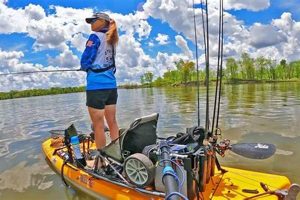
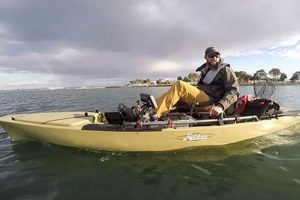
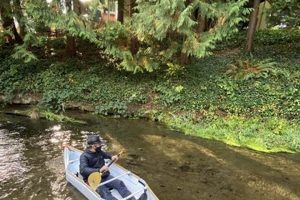
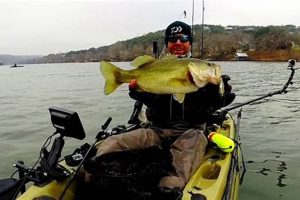
This sit-on-top vessel, crafted from high-density polyethylene, offers a stable and efficient platform for anglers. Its design typically incorporates features like fishing rod holders, paddle cradles, and storage compartments, catering specifically to the needs of recreational fishing. Common dimensions fall within a length of 11 feet and a width suitable for single-person use.
The durability and affordability of this type of watercraft make it a popular choice for novice and experienced anglers alike. Its relatively lightweight nature facilitates easy transport and maneuverability. The development of such specialized kayaks reflects a growing trend towards purpose-built recreational equipment, offering enhanced performance and user experience. These vessels provide an accessible entry point into kayak fishing, contributing to the sport’s increasing popularity.
Further exploration will cover topics including material selection, design features, performance characteristics, maintenance requirements, and potential modifications. This detailed analysis aims to provide a comprehensive understanding of this particular kayak’s attributes and its role within the broader context of recreational fishing.
Tips for Kayak Fishing
Effective angling from a kayak requires a blend of technique and preparation. These tips offer guidance for enhancing on-the-water experiences.
Tip 1: Prioritize Stability: Weight distribution is crucial. Center gear within the hull and avoid sudden, large movements. Practice entering and exiting the vessel in shallow, calm water.
Tip 2: Master Paddle Strokes: Efficient paddling conserves energy and minimizes disturbance. Learn forward, reverse, and sweep strokes for precise maneuvering.
Tip 3: Utilize Anchor Systems: A well-placed anchor maintains position in currents or wind. Consider a drift sock for controlled drifting.
Tip 4: Organize Tackle Strategically: Keep frequently used lures and tools within easy reach. Utilize waterproof storage solutions to protect gear.
Tip 5: Understand Water Conditions: Research tides, currents, and weather forecasts before heading out. Adapt fishing techniques to prevailing conditions.
Tip 6: Practice Catch and Release Techniques: Handle fish carefully to minimize stress and ensure their survival. Utilize appropriate tools for hook removal.
Tip 7: Wear Appropriate Safety Gear: A personal flotation device (PFD) is essential. Consider a whistle, signaling device, and appropriate clothing for weather conditions.
Adhering to these practices enhances safety and improves angling success. Preparation and informed decision-making contribute significantly to a positive experience.
This foundational knowledge prepares for a more detailed examination of specific techniques and equipment choices within kayak fishing.
1. Hull Design

Hull design significantly influences the performance of the Lifetime Stealth 110 fishing kayak, affecting its stability, speed, and maneuverability. This kayak typically features a tunnel hull design. The tunnel creates a flatter bottom surface, increasing primary stability resistance to initial tipping. This design provides a secure platform for anglers, especially beneficial when casting, fighting fish, or entering and exiting the kayak. However, the tunnel hull may compromise secondary stability the ability to recover from a near capsize compared to a v-hull. The broader, flatter bottom also increases drag, potentially reducing top speed. This trade-off prioritizes stability over pure speed, a characteristic valuable in fishing scenarios where stability is paramount. The wider hull design contributes to enhanced stability but also affects how the kayak tracks in the water. It may require more corrective strokes to maintain a straight course, particularly in windy conditions.
Compared to a displacement hull, often found in touring kayaks, the tunnel hull’s shallower draft allows navigation in shallower waters, a significant advantage when accessing secluded fishing spots. For example, navigating shallow creeks or flats becomes feasible, opening up opportunities to reach areas inaccessible to deeper-draft vessels. The increased contact with the water surface due to the flatter bottom provides improved maneuverability in tight spaces. Turning becomes easier, facilitating navigation around obstacles like submerged logs or vegetation. This agility becomes crucial when fishing in confined areas such as mangrove tunnels or tight river bends.
Understanding the tunnel hull design’s impact on performance characteristics is crucial for maximizing the kayak’s effectiveness in various fishing environments. While the tunnel hull provides inherent stability, anglers should be aware of its effect on secondary stability and tracking. Balancing stability and maneuverability allows anglers to adapt techniques and exploit the kayak’s strengths in specific conditions. Consideration of hull design within the broader context of material properties and added features offers a comprehensive understanding of the kayak’s overall performance profile.
2. Stability

Stability is a paramount consideration in fishing kayaks, directly impacting angler safety and fishing effectiveness. For the Lifetime Stealth 110, stability influences casting accuracy, the ability to fight fish effectively, and overall comfort. Examining the factors contributing to this kayak’s stability provides valuable insights into its suitability for various fishing scenarios.
- Hull Design:
The tunnel hull design, characteristic of the Stealth 110, provides inherent primary stability. The wide, flat bottom resists initial tipping, creating a secure platform. However, this design can compromise secondary stabilitythe ability to recover from a significant lean. Anglers should be aware of this trade-off, especially when fishing in rough conditions or making sudden movements. Compared to a V-hull, the tunnel hull offers more initial stability but less ability to recover from extreme angles. This characteristic is suitable for calm water fishing but requires caution in challenging conditions.
- Width and Length:
The Stealth 110’s width contributes significantly to its stability. The wider beam creates a more stable platform, especially beneficial for stand-up fishing. The length, while providing ample storage and tracking, can slightly reduce maneuverability compared to shorter kayaks. A wider, shorter kayak generally offers greater stability, while a longer, narrower one favors speed and tracking. The Stealth 110 strikes a balance between these characteristics.
- Center of Gravity:
Proper weight distribution significantly influences stability. Keeping gear low and centered within the hull lowers the center of gravity, enhancing stability. Positioning heavier items towards the kayak’s center minimizes rocking. For example, placing tackle boxes and coolers near the center improves stability compared to storing them at the bow or stern. Maintaining a low center of gravity allows for more confident movement within the kayak.
- Water Conditions:
While the kayak’s design contributes significantly to stability, external factors like wind and waves also play a role. Calm water conditions maximize the inherent stability offered by the tunnel hull. Rougher conditions can test the kayak’s stability, requiring adjustments in angler positioning and behavior. For example, strong winds or boat wakes can increase the likelihood of tipping. Understanding how the kayak responds to various water conditions is essential for safe operation.
The interplay of these factors determines the overall stability of the Lifetime Stealth 110. While the tunnel hull provides a secure platform for most fishing situations, understanding its limitations and adapting to varying conditions are essential for maximizing performance and ensuring angler safety. Recognizing the connection between design, weight distribution, and environmental factors provides a comprehensive understanding of the kayak’s stability characteristics and informs safe and effective operation. This analysis empowers informed decision-making regarding appropriate usage scenarios and necessary precautions.
3. Storage Capacity

Storage capacity significantly impacts the functionality and practicality of a fishing kayak, directly influencing the amount and type of gear that can be carried. For the Lifetime Stealth 110 fishing kayak, understanding its storage solutions and their implications is crucial for optimizing fishing trips. Adequate storage allows anglers to carry essential equipment, enhancing both convenience and safety on the water.
- Tankwell Storage:
The rear tankwell, a common feature in sit-on-top kayaks, provides open storage space suitable for larger items like coolers, tackle crates, or dry bags. Its bungee cord system secures gear against movement during transport and while on the water. The tankwell’s accessibility allows for quick retrieval of frequently used items. However, items stored in the tankwell are exposed to the elements, requiring waterproof storage solutions for sensitive gear.
- Center Hatch:
A center hatch offers enclosed, protected storage for smaller items vulnerable to water damage, such as electronics, wallets, and keys. Its sealed design keeps contents dry, enhancing security and peace of mind. However, access can be more limited compared to the tankwell, requiring pauses in fishing activity to retrieve items. The limited space within the hatch may restrict the size and quantity of items stored.
- Side Storage:
Smaller storage compartments or pockets located on the sides of the kayak offer quick access to frequently used items like pliers, knives, or lures. These compartments may be open or feature splash-proof covers. While convenient, they offer limited space and may not be suitable for larger items. Their location enhances efficiency by keeping essential tools within easy reach.
- Rod Holders:
Dedicated rod holders, typically flush-mounted or adjustable, secure fishing rods while not in use. These holders free up hands for paddling, maneuvering, or handling fish. They also contribute to organization and prevent rods from becoming tangled or damaged. The number and type of rod holders vary, influencing the angler’s ability to carry multiple rods or switch between different fishing techniques.
The combination of these storage solutions contributes to the overall functionality of the Lifetime Stealth 110. While the tankwell provides ample space for larger items, the center hatch, side storage, and rod holders cater to smaller essentials and fishing-specific needs. Analyzing the kayak’s storage capacity in conjunction with its other features, like stability and hull design, provides a comprehensive understanding of its capabilities and limitations. This understanding empowers informed decisions regarding gear selection and organization, maximizing the kayak’s effectiveness for various fishing scenarios.
4. Material Construction

Material construction significantly influences a kayak’s durability, performance, and overall lifespan. For the Lifetime Stealth 110 fishing kayak, understanding the materials used and their properties provides valuable insights into the kayak’s suitability for various fishing environments and its long-term resilience. Material selection directly impacts the kayak’s resistance to impact, UV degradation, and overall wear and tear.
- High-Density Polyethylene (HDPE):
The Stealth 110 typically utilizes HDPE, a common material in kayak construction known for its durability and impact resistance. HDPE can withstand significant abuse, making it suitable for navigating shallow waters, rocky shorelines, and other challenging environments. This material’s resistance to UV degradation contributes to the kayak’s longevity, even with prolonged sun exposure. For example, HDPE kayaks can endure minor collisions with rocks or submerged logs without sustaining significant damage. However, HDPE is less rigid than other materials, potentially flexing under stress, which can slightly impact performance in demanding conditions.
- UV Resistance:
UV resistance is crucial for kayaks frequently exposed to sunlight. HDPE’s inherent UV resistance protects the kayak from degradation and discoloration, extending its lifespan. This resistance minimizes the material’s breakdown, preserving its structural integrity and preventing cracking or fading over time. Regularly storing the kayak out of direct sunlight further enhances UV protection and prolongs its usable life. This resistance to sun damage makes the Stealth 110 suitable for use in regions with high sun exposure.
- Impact Resistance:
Impact resistance is essential for navigating various water environments, especially those with potential obstacles. HDPE’s high impact resistance allows the Stealth 110 to withstand minor collisions without sustaining significant damage. This durability minimizes the risk of punctures or cracks from encounters with rocks, logs, or other debris. The impact-resistant nature of HDPE contributes to the kayak’s suitability for fishing in diverse environments, including rocky rivers, shallow creeks, and coastal areas.
- Maintenance and Repair:
HDPE’s relatively low maintenance requirements contribute to the kayak’s long-term practicality. Minor scratches or abrasions can often be repaired with readily available HDPE repair kits. The material’s resistance to staining and discoloration simplifies cleaning and maintenance, ensuring the kayak’s appearance and performance are maintained over time. This ease of maintenance reduces the long-term cost and effort associated with ownership, making the Stealth 110 a practical choice for recreational anglers.
The material properties of the Lifetime Stealth 110, primarily its use of HDPE, contribute significantly to its durability, UV resistance, impact resistance, and ease of maintenance. These characteristics influence the kayak’s suitability for various fishing environments and its long-term performance. Understanding the material’s strengths and limitations empowers informed decisions regarding usage, care, and maintenance, ultimately maximizing the kayak’s lifespan and overall value. This knowledge allows anglers to assess the kayak’s suitability for their specific needs and fishing style.
5. Weight and Portability
Weight and portability significantly influence the practicality and usability of a kayak, especially for those transporting it frequently or covering distances between vehicle and launch point. For the Lifetime Stealth 110 fishing kayak, these factors directly impact ease of transport, storage, and overall user experience. Analyzing the interplay between weight, portability, and design features provides valuable insights into the kayak’s suitability for various fishing scenarios.
The Stealth 110’s weight, typically around 60 pounds, places it within a manageable range for single-person transport. While heavier than some inflatable or ultra-lightweight kayaks, it remains light enough for most individuals to lift and carry short distances. This weight allows for loading and unloading from vehicle roof racks or carrying across shorter stretches of terrain, such as from a parking area to a boat ramp. For example, an angler could transport the kayak solo from a cartop carrier to the water’s edge without requiring assistance. However, longer portages or challenging terrain might necessitate a kayak cart or assistance. The kayak’s molded-in handles and relatively balanced weight distribution aid in carrying and maneuvering the vessel. Compared to significantly heavier kayaks, the Stealth 110 offers greater ease of transport, expanding accessibility for individuals with physical limitations or those lacking access to specialized transport equipment.
The kayak’s length of 11 feet presents some challenges for portability compared to shorter models. Maneuvering in tight spaces, such as narrow doorways or storage areas, requires careful planning and consideration of the kayak’s dimensions. Vehicle roof rack systems must accommodate the kayak’s length for secure transport. Storage within limited spaces, such as garages or apartments, requires adequate planning. Despite these considerations, the Stealth 110 remains portable enough for most situations encountered by recreational anglers. The relatively lightweight nature of the kayak, combined with appropriate carrying techniques and transportation aids, mitigates potential challenges related to its length. The balance between length, weight, and portability makes the Stealth 110 a practical choice for individuals seeking a stable fishing platform without sacrificing reasonable transportability. Understanding these factors allows for informed decisions regarding transportation methods, storage solutions, and appropriate usage scenarios based on individual capabilities and logistical considerations.
6. Target User (Angler)

The Lifetime Stealth 110 fishing kayak demonstrates a design philosophy centered around the needs and preferences of the recreational angler. This user-centric approach manifests in features specifically tailored for fishing functionality and on-the-water practicality. Understanding this connection between target user and product design provides insights into the kayak’s strengths and its suitability for various fishing styles. Multiple factors contribute to the Stealth 110’s appeal to anglers. The stable hull design provides a secure platform for casting and reeling, while the inclusion of multiple rod holders accommodates diverse fishing techniques. For example, an angler targeting bass in a calm lake benefits from the stability offered by the tunnel hull, allowing for comfortable stand-up casting. Conversely, an angler trolling for trout in a slow-moving river appreciates the tracking and multiple rod holders. The kayak’s affordability also positions it as an accessible option for anglers entering the sport or seeking a cost-effective vessel.
Furthermore, the kayak’s storage capacity directly addresses the angler’s need to transport gear and equipment. The tankwell accommodates larger items like coolers and tackle boxes, while smaller compartments provide convenient storage for frequently used tools and lures. This focus on storage solutions enhances organization and efficiency on the water. For example, an angler embarking on a multi-day fishing trip can store essential supplies in the tankwell, ensuring easy access and maximizing space utilization. The inclusion of features like paddle parks and adjustable footrests further enhances comfort and customization, catering to individual angler preferences. These design elements demonstrate a clear understanding of the target user’s requirements, prioritizing functionality and user experience. Practical considerations like weight and portability also factor into the kayak’s design. Its relatively lightweight nature and integrated carrying handles facilitate transport, making it accessible to a wider range of users. This consideration expands accessibility for anglers without specialized transport equipment or those facing physical limitations.
In conclusion, the Lifetime Stealth 110 fishing kayak effectively addresses the specific needs and preferences of the recreational angler. The design choices reflect a user-centric approach, prioritizing stability, storage, and fishing-specific features. The kayak’s affordability and portability further enhance its appeal to a broad spectrum of anglers, from beginners to experienced enthusiasts. Understanding this connection between design and target user allows for a comprehensive assessment of the kayak’s strengths and limitations, empowering informed purchasing decisions and optimizing its utilization within various fishing contexts. While suitable for many, the Stealth 110’s design trade-offs, like prioritizing stability over speed, may necessitate consideration of alternative options for anglers with specialized performance requirements or those operating in demanding environments.
Frequently Asked Questions
This section addresses common inquiries regarding the Lifetime Stealth 110 fishing kayak, providing concise and informative responses.
Question 1: What is the weight capacity of the kayak?
The typical weight capacity ranges from 275 to 300 pounds, accommodating most adult anglers and their gear.
Question 2: Is the kayak suitable for ocean use?
While designed primarily for calm waters, careful consideration of weather conditions and appropriate safety precautions can permit limited ocean use in sheltered areas.
Question 3: What materials comprise the kayak’s construction?
The kayak is constructed from high-density polyethylene (HDPE), known for its durability and UV resistance.
Question 4: How does one maintain and clean the kayak?
Regular rinsing with fresh water and occasional application of marine-grade protectant maintain the kayak’s appearance and prolong its lifespan.
Question 5: What accessories enhance the kayak’s fishing functionality?
Common additions include anchors, drift socks, rod holders, fish finders, and specialized seating systems.
Question 6: Where can replacement parts be obtained?
Replacement parts are often available through authorized retailers or directly from the manufacturer.
Addressing these common questions clarifies key aspects of ownership and usage. Careful consideration of these factors facilitates informed decision-making regarding the kayak’s suitability for individual needs and intended applications.
This concludes the frequently asked questions section. Subsequent sections will delve into advanced techniques and modifications for enhancing on-the-water performance.
Conclusion
Analysis of the Lifetime Stealth 110 fishing kayak reveals a design prioritizing stability, affordability, and fishing-specific features. Its tunnel hull design, high-density polyethylene construction, and ample storage capacity cater to recreational anglers seeking a practical and durable vessel. Examination of its weight, portability, and target user further clarifies its suitability for various fishing environments and user profiles. While the kayak excels in stability, its design necessitates trade-offs in speed and maneuverability, factors requiring consideration within specific usage contexts. Understanding these characteristics empowers informed decision-making regarding its appropriateness for individual needs and preferences.
The Lifetime Stealth 110 presents a compelling option within the entry-level fishing kayak market. Its robust construction, coupled with fishing-oriented features, positions it as a valuable tool for anglers seeking a stable and accessible platform. Continued exploration of advanced techniques and modifications can further enhance on-the-water performance and personalize the kayaking experience. Careful consideration of individual needs and preferences, balanced against the kayak’s inherent strengths and limitations, remains paramount for maximizing its utility and enjoyment on the water.