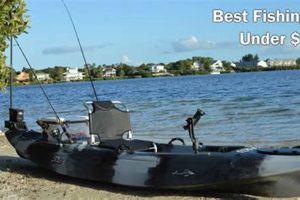
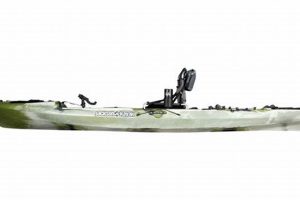
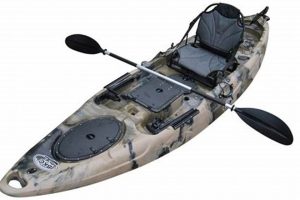
A premium, purpose-built watercraft designed for combined waterfowl hunting and angling activities offers stability, stealth, and specialized features. Such kayaks typically include camouflage coloring, ample storage for gear and game, and mounting points for accessories like rod holders and hunting blinds. A well-chosen vessel allows hunters and anglers to access shallow waters and secluded areas often inaccessible by larger boats, increasing opportunities for success.
Selecting an appropriate kayak significantly enhances both hunting and fishing effectiveness. Stability is paramount for safe firearm handling and comfortable casting. Stealth features, such as low profiles and muted colors, enable closer approaches to wildlife. Integrated storage solutions keep gear organized and accessible, crucial for efficient transitions between activities. The ability to navigate shallow water and vegetated areas opens up prime hunting and fishing grounds, providing a distinct advantage. Historically, hunters and anglers relied on traditional boats, but specialized kayaks have emerged as a preferred option due to their maneuverability and adaptability in diverse environments.
Key factors to consider when selecting a suitable watercraft include stability, maneuverability, storage capacity, and camouflage effectiveness. Subsequent sections will delve into these aspects in detail, providing comprehensive guidance for choosing the optimal kayak for combined hunting and fishing excursions. Further discussion will encompass essential accessories, safety considerations, and responsible hunting and fishing practices.
Tips for Selecting a Kayak for Duck Hunting and Fishing
Choosing the right kayak for combined duck hunting and fishing requires careful consideration of several factors. The following tips offer guidance for selecting a vessel optimized for both activities.
Tip 1: Prioritize Stability: A stable platform is crucial for safe firearm handling and comfortable angling. Wider kayaks with flatter hulls generally offer greater stability than narrower, more agile designs. Consider kayaks specifically designed for stand-up fishing, as these offer enhanced stability.
Tip 2: Evaluate Storage Capacity: Ample storage is essential for carrying hunting and fishing gear, decoys, and harvested game. Look for kayaks with large hatches, tank wells, and integrated storage compartments to ensure sufficient space for all equipment.
Tip 3: Consider Camouflage and Stealth: Camouflage patterns and muted colors help hunters blend into the environment, increasing the likelihood of successful approaches. Consider adding natural camouflage elements like vegetation to further enhance concealment.
Tip 4: Assess Maneuverability: Kayaks should be maneuverable enough to navigate shallow water, dense vegetation, and tight spaces. Shorter kayaks generally offer greater maneuverability than longer ones, but may sacrifice some tracking ability.
Tip 5: Choose Durable Construction: Hunting and fishing kayaks are subjected to harsh conditions and potential impacts. Select a kayak constructed from durable materials like polyethylene that can withstand wear and tear.
Tip 6: Factor in Weight Capacity: Ensure the kayak has sufficient weight capacity to accommodate the combined weight of the hunter or angler, gear, and any potential game. Exceeding the weight capacity can compromise stability and performance.
Tip 7: Think About Transportation: Consider the kayak’s weight and length when evaluating transportation options. Roof racks, trailers, and truck beds are common methods for transporting kayaks. Choose a kayak that is manageable to transport based on available resources.
By carefully considering these tips, individuals can select a kayak that optimizes both hunting and fishing experiences, maximizing success and enjoyment on the water.
This information provides a foundation for informed decision-making. The following section will address frequently asked questions to further clarify key considerations.
1. Stability

Stability is paramount when selecting a kayak for combined duck hunting and fishing. A stable platform is essential for safe firearm operation, minimizing the risk of accidents. Steady footing allows for accurate shooting and reduces the chance of capsizing, particularly when handling shotguns or retrieving downed birds. Furthermore, stability enhances angling effectiveness, enabling comfortable casting, retrieving, and fighting fish without compromising balance. For instance, a stable kayak allows anglers to stand and cast, significantly expanding their field of vision and casting range. Conversely, an unstable kayak can hinder fishing success, particularly in challenging conditions like wind or current. This stability is paramount for a safe and successful experience.
Several factors influence kayak stability, including hull design, width, and length. Wider, flatter hulls generally offer greater initial stability than narrower, V-shaped hulls. Longer kayaks tend to track better in a straight line but may be less maneuverable than shorter kayaks. Specialized kayak designs, such as those with outriggers or pontoon-style hulls, provide exceptional stability, making them ideal for activities requiring a stable platform. Choosing a kayak with appropriate stability features is crucial for balancing hunting and fishing requirements. For example, a wider, more stable kayak might be preferable for waterfowl hunting in open water, while a slightly narrower kayak with enhanced maneuverability could be advantageous for fishing in tight, vegetated areas.
Understanding the relationship between stability and kayak performance is essential for selecting the optimal watercraft for combined duck hunting and fishing. Prioritizing stability enhances both safety and effectiveness in both pursuits. Careful consideration of hull design, width, and length, along with individual needs and preferences, will ensure a secure and productive experience on the water. Evaluating stability features alongside other key aspects, like storage capacity and camouflage, allows for a comprehensive assessment and selection of the most suitable kayak for combined hunting and fishing excursions.
2. Storage Capacity

Ample storage capacity is a critical factor distinguishing a suitable kayak for combined duck hunting and fishing excursions. These activities necessitate carrying a diverse array of equipment, including firearms, ammunition, fishing rods, reels, tackle, decoys, safety gear, and potentially harvested game. Insufficient storage can lead to a cluttered and disorganized cockpit, hindering efficient movement and access to essential items. Furthermore, improperly stored gear may become damaged or lost, compromising safety and effectiveness. For instance, a tangled fishing line can interfere with firearm handling, while unsecured decoys can shift during transit, affecting kayak balance. Conversely, a kayak with well-designed storage compartments enables organized gear stowage, facilitating smooth transitions between hunting and fishing activities. Dedicated compartments for specific items, such as dry storage for electronics and ammunition, further enhance organization and protect sensitive equipment from water damage.
Practical examples illustrate the significance of storage capacity. A duck hunter requires space for decoys, blinds, calls, and extra clothing. An angler needs room for rods, reels, tackle boxes, and a landing net. Combining these pursuits necessitates a kayak capable of accommodating all essential gear without compromising stability or maneuverability. Consider a scenario where a hunter needs to quickly switch from hunting to fishing due to changing conditions. A kayak with ample, organized storage allows for a seamless transition, maximizing opportunities for success. Conversely, limited storage can force difficult choices regarding gear selection, potentially hindering both hunting and fishing effectiveness.
Understanding the direct link between storage capacity and the efficacy of combined duck hunting and fishing trips is crucial. Adequate storage directly contributes to a safe, organized, and efficient experience. Evaluating storage options, including hatches, tank wells, and specialized compartments, enables informed decisions tailored to specific needs and preferences. Prioritizing storage capacity alongside other essential factors, like stability and maneuverability, ultimately contributes to a more productive and enjoyable outing. Addressing storage needs effectively enhances the overall experience and maximizes the potential for successful hunting and fishing endeavors.
3. Camouflage
Camouflage plays a crucial role in optimizing kayak-based duck hunting effectiveness. Waterfowl possess keen eyesight, making concealment essential for successful approaches. Kayak camouflage aims to blend the vessel with the surrounding environment, reducing its visibility and allowing hunters to approach waterfowl undetected. Effective camouflage considers the specific environment, including water color, vegetation type, and lighting conditions. For example, in marshes with tall reeds, a camouflage pattern incorporating greens and browns is more effective than a pattern designed for open water with varying shades of blue and gray. The interplay between kayak camouflage and the surrounding environment directly impacts hunting success. A well-camouflaged kayak allows hunters to get closer to waterfowl, increasing opportunities for ethical and effective harvests. Conversely, a brightly colored or poorly camouflaged kayak can alert birds to the hunter’s presence, causing them to flush prematurely.
Practical applications of camouflage in kayak-based duck hunting are diverse. Factory-applied camouflage patterns offer a baseline level of concealment. Hunters often enhance this by adding natural vegetation, such as reeds or grasses, to their kayaks, further blending the vessel with the surroundings. Mud or paint can also be applied to break up the kayak’s outline and reduce glare. Consider a scenario where a hunter uses a kayak with a camouflage pattern matching the local marsh vegetation. This camouflage allows the hunter to navigate closer to waterfowl without detection, significantly increasing the chances of a successful hunt. In contrast, a hunter using a brightly colored kayak is easily spotted by waterfowl, reducing hunting effectiveness. The choice of camouflage strategy directly impacts the outcome of the hunt.
Camouflage selection and application are integral components of successful kayak-based duck hunting. Matching camouflage to the specific environment is paramount for effective concealment. Understanding the interplay between camouflage, waterfowl behavior, and hunting success allows for informed decision-making. Integrating camouflage considerations into broader hunting strategies, including scouting, decoy placement, and calling techniques, further enhances hunting effectiveness. Adapting camouflage strategies based on changing environmental conditions and waterfowl behavior is crucial for consistent success. This adaptability, combined with a comprehensive understanding of camouflage principles, directly contributes to ethical and productive waterfowl hunting experiences.
4. Maneuverability

Maneuverability represents a critical attribute within the context of kayaks optimized for combined duck hunting and fishing. Navigating shallow, vegetated waterways, often essential for accessing prime hunting and fishing locations, demands a highly maneuverable vessel. Kayak maneuverability directly influences hunting and fishing effectiveness. A nimble kayak allows hunters to quietly navigate tight spaces, approaching waterfowl undetected. Similarly, anglers benefit from maneuverability when targeting fish in complex underwater structures or along heavily vegetated shorelines. Restricted maneuverability, conversely, limits access to these productive areas, diminishing hunting and fishing opportunities. A less maneuverable kayak may require wider turning arcs, potentially spooking waterfowl or preventing precise lure placement near submerged cover. This highlights the direct, causal relationship between kayak maneuverability and successful hunting and fishing outcomes.
Practical examples underscore maneuverability’s significance. Consider a shallow, winding creek teeming with waterfowl and bass. A highly maneuverable kayak, such as a shorter, lighter model, allows seamless navigation through tight bends and around obstacles, granting access to secluded pockets holding both game and fish. Conversely, a longer, less maneuverable kayak struggles to navigate the creek’s complexities, limiting access to prime locations. This scenario illustrates the practical advantages of maneuverability in diverse aquatic environments. Furthermore, maneuverability enhances safety by enabling quick course corrections in challenging conditions, such as swift currents or sudden wind gusts. This responsiveness is crucial for avoiding collisions with submerged obstacles or capsizing in unpredictable waters. Therefore, maneuverability contributes significantly to both effective hunting and fishing and overall safety on the water.
Maneuverability is integral to selecting a “best” kayak for combined duck hunting and fishing. Prioritizing maneuverability alongside other key features, such as stability and storage capacity, ensures optimal performance in diverse environments. Understanding the direct influence of maneuverability on hunting and fishing success, along with its contribution to enhanced safety, allows for informed kayak selection tailored to specific needs. Ultimately, selecting a kayak with appropriate maneuverability characteristics empowers hunters and anglers to access prime locations, maximize their success, and navigate waterways safely and efficiently. This understanding underscores the critical connection between maneuverability and optimizing the combined hunting and fishing experience from a kayak.
5. Durability
Durability is a critical factor influencing the long-term value and performance of kayaks intended for the combined demands of duck hunting and fishing. These activities expose kayaks to harsh conditions, including impacts from submerged obstacles, abrasive contact with vegetation, and prolonged exposure to sunlight and water. A durable kayak withstands these rigors, maintaining structural integrity and functionality over extended periods, contributing significantly to both safety and performance. Compromised durability can lead to leaks, cracks, and structural failures, potentially jeopardizing safety and necessitating costly repairs or replacements. A durable kayak represents a sound investment, ensuring reliable performance throughout numerous hunting and fishing excursions.
- Material Selection
Kayak material composition directly impacts durability. Polyethylene kayaks are known for their impact resistance and affordability, making them suitable for navigating challenging environments. Higher-end thermoformed kayaks offer enhanced durability and lighter weight but often come at a premium price. Fiberglass kayaks, while durable, are more susceptible to damage from impacts and require greater care. Selecting a material appropriate for anticipated usage conditions is crucial. For instance, a polyethylene kayak might be preferable for rocky rivers, while a fiberglass kayak might suit calmer waters.
- Construction Quality
Construction methods and quality control significantly influence kayak durability. Robust hull construction, reinforced seams, and quality hardware contribute to long-term structural integrity. Inspecting welds, fittings, and overall construction quality before purchase can help identify potential weaknesses. A well-constructed kayak resists stress and wear, minimizing the risk of damage during use. For example, kayaks with reinforced keels and sterns are better equipped to withstand impacts from submerged rocks or logs. Careful examination of construction details can help identify kayaks built to withstand the rigors of hunting and fishing.
- UV Resistance
Prolonged exposure to sunlight can degrade kayak materials, causing fading, cracking, and reduced structural integrity. UV-resistant coatings and additives protect kayaks from sun damage, extending their lifespan. Storing kayaks out of direct sunlight when not in use further minimizes UV degradation. This is particularly important for brightly colored kayaks, as fading can compromise camouflage effectiveness. For example, a kayak stored outdoors without adequate UV protection may become brittle and prone to cracking over time, whereas a UV-resistant kayak retains its structural integrity and color vibrancy.
- Maintenance and Care
Proper maintenance and care contribute significantly to kayak longevity. Regular cleaning, rinsing with fresh water after use, and timely repairs of minor damage prevent further deterioration. Storing kayaks properly, protected from the elements, further extends their lifespan. Diligent maintenance preserves kayak integrity and performance, ensuring long-term value and safety. For instance, regularly inspecting and lubricating moving parts, such as rudder cables and hatch hinges, prevents corrosion and ensures smooth operation.
Durability is an integral factor impacting the overall performance and lifespan of kayaks used for combined duck hunting and fishing. Careful consideration of material selection, construction quality, UV resistance, and ongoing maintenance ensures a kayak remains functional and safe throughout extended use. Prioritizing durability safeguards the investment and contributes to numerous successful outings on the water, directly impacting the quality and enjoyment of both hunting and fishing experiences.
Frequently Asked Questions
This section addresses common inquiries regarding kayaks suitable for combined duck hunting and fishing, providing concise and informative responses.
Question 1: What type of kayak is best suited for combined duck hunting and fishing?
Sit-on-top kayaks are generally preferred for their stability, ease of entry and exit, and self-bailing capabilities. However, sit-in kayaks can offer advantages in colder conditions, providing greater protection from the elements.
Question 2: What key features should one look for in a hunting and fishing kayak?
Essential features include stability for safe firearm handling and angling, ample storage for gear and game, camouflage for concealment, maneuverability for navigating shallow waters, and durability to withstand demanding conditions. Rod holders, paddle clips, and anchor systems are valuable additions.
Question 3: How does kayak length affect performance for hunting and fishing?
Longer kayaks generally track better in open water, while shorter kayaks offer enhanced maneuverability in tight spaces. The optimal length depends on the specific environment and individual preferences. Shorter kayaks are often preferred for navigating shallow, vegetated areas.
Question 4: What safety precautions should be taken when hunting and fishing from a kayak?
Wearing a personal flotation device (PFD) is paramount. Carrying a whistle, signaling devices, and a first-aid kit is essential. Informing someone of the planned route and estimated return time is crucial. Understanding local regulations and weather conditions is vital for safe outings.
Question 5: How does one transport a kayak for hunting and fishing trips?
Roof racks, trailers, and truck beds are common transportation methods. Selecting a method appropriate for kayak size and vehicle type is essential. Securing the kayak properly during transport prevents damage and ensures safe travel. Practicing loading and unloading procedures beforehand simplifies transport logistics.
Question 6: Are there specific regulations regarding kayak use for hunting and fishing?
Regulations vary by location. Researching and adhering to local regulations regarding hunting licenses, fishing permits, and waterway access is crucial. Respecting private property and practicing ethical hunting and fishing principles ensures responsible enjoyment of these activities.
Careful consideration of these frequently asked questions, combined with thorough research and planning, ensures informed decisions regarding kayak selection and safe, responsible enjoyment of combined duck hunting and fishing excursions.
For further information and specific product recommendations, consult specialized kayak retailers and online resources dedicated to hunting and fishing.
Best Kayak for Duck Hunting and Fishing
Optimal kayak selection for combined duck hunting and fishing necessitates careful consideration of several interconnected factors. Stability ensures safe firearm handling and effective angling. Ample storage accommodates essential gear and harvested game. Effective camouflage enhances hunting success by promoting concealment. Maneuverability allows access to shallow, productive waters. Durability ensures long-term performance and safety in demanding environments. Understanding the interplay between these key attributes empowers informed decisions, optimizing kayak selection for specific needs and maximizing both hunting and fishing effectiveness.
Strategic kayak selection significantly enhances the combined hunting and fishing experience. A well-chosen kayak facilitates access to secluded areas, improves stealth, and promotes efficient transitions between activities. Careful consideration of the discussed factors, combined with diligent research and planning, ensures a safe, productive, and enjoyable pursuit of these rewarding outdoor activities. Prioritizing these elements contributes not only to successful hunting and fishing outcomes but also to a deeper appreciation for the natural world and the unique experiences offered by kayak-based exploration.