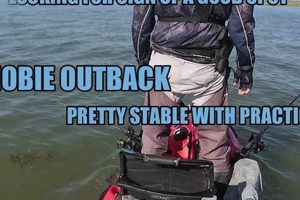
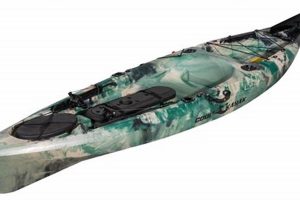
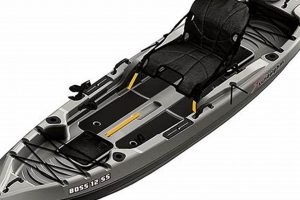
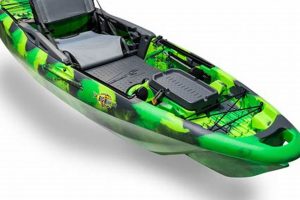
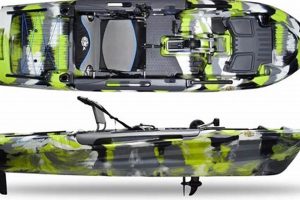
Entering and exiting a fishing kayak safely and efficiently is fundamental to a successful and enjoyable angling experience. This process involves a series of deliberate movements and considerations, adapting to various launch environments, including docks, shores, and shallow water. For example, from a dock, one might steady the kayak alongside, sit on the edge, and then swivel legs into the cockpit.
Mastering these techniques is crucial for preventing capsizing, equipment damage, and personal injury. A stable entry and exit minimize the risk of sudden shifts that could compromise balance. This contributes to greater angler confidence and allows for more focus on fishing, rather than maneuvering the vessel. Historically, kayak fishing evolved from traditional paddling, gradually incorporating specialized designs and features. As kayaks became more stable and equipped for fishing, the methods for entering and exiting also adapted to accommodate gear and maintain balance.
The following sections will detail specific techniques for entering and exiting a fishing kayak in various scenarios, covering shallow water launches, deep-water entries, and utilizing docks or other stable platforms. Furthermore, the influence of wind, current, and personal physical limitations will be explored to provide a comprehensive guide for anglers of all experience levels.
Tips for Kayak Entry and Exit
Proper techniques for entering and exiting a fishing kayak are essential for safety and efficiency. These tips offer guidance for various launching scenarios.
Tip 1: Assess the Environment: Before attempting entry, evaluate water depth, current, wind conditions, and the presence of obstacles. Choose a stable and accessible launch point.
Tip 2: Position the Kayak: For shore launches, position the kayak perpendicular to the shoreline, partially in the water. For dock launches, position the kayak parallel to the dock.
Tip 3: Maintain Three Points of Contact: Always maintain three points of contact with the kayak two hands and one foot, or two feet and one hand until seated securely.
Tip 4: Use a Paddle for Support: Utilize the paddle as an outrigger by placing the blade flat on the ground or dock for added stability during entry and exit.
Tip 5: Enter and Exit from the Center: Enter and exit the kayak from the center, keeping weight balanced to prevent tipping. Avoid sudden movements or leaning too far to either side.
Tip 6: Secure Gear Beforehand: Secure all fishing gear and equipment within the kayak before entering to prevent loss or shifting during the process.
Tip 7: Practice in Shallow Water: Practice entry and exit techniques in calm, shallow water before venturing into deeper or more challenging environments.
Tip 8: Consider Physical Limitations: Adapt techniques based on individual physical limitations. Explore alternative methods or seek assistance if necessary.
By adhering to these guidelines, anglers can significantly improve their stability and confidence while entering and exiting a fishing kayak, promoting a safer and more enjoyable experience.
Following these preparatory measures contributes to a more streamlined and efficient fishing excursion, enabling anglers to focus on their primary objective.
1. Stable Launch Location

A stable launch location is paramount for safe and efficient kayak entry and exit. The stability of the launching point directly influences the ease and control one can maintain during these critical transitions. Launching from an unstable location, such as a steep, slippery bank or a rocking platform, significantly increases the risk of capsizing or losing balance. A stable location allows for controlled movements and minimizes unexpected shifts in weight distribution. For example, a gently sloping sandy beach provides a secure base for entering and exiting, allowing the kayaker to maintain firm footing while maneuvering into the vessel. Conversely, attempting to launch from a steep, rocky embankment presents significant challenges in maintaining balance and increases the likelihood of slipping or tipping.
The choice of launch location also affects the ability to utilize assistive techniques, such as using a paddle for support. A firm, even surface allows for proper paddle placement, offering additional stability during entry and exit. In contrast, a soft, muddy bottom or a shifting gravel bank can hinder effective paddle usage. Choosing a location with minimal current and wave action also contributes to stability. Strong currents or waves can destabilize the kayak during the entry and exit process, increasing the risk of capsizing, especially for less experienced kayakers. Launching from a sheltered area, such as a cove or behind a breakwater, can mitigate the impact of these external forces.
Selecting an appropriate launch location is therefore not merely a matter of convenience but a critical factor contributing to safe and efficient kayak entry and exit. Careful assessment of the environment, considering factors such as terrain, water conditions, and potential obstacles, significantly reduces the risk of accidents and promotes a more enjoyable kayaking experience. A stable launch location facilitates controlled movements, enabling the kayaker to focus on maintaining balance and executing the necessary maneuvers rather than struggling against instability. This is particularly important when carrying fishing gear or navigating challenging conditions. Careful planning in this aspect contributes significantly to overall safety and success on the water.
2. Balanced Body Positioning

Balanced body positioning is fundamental to safe and efficient entry and exit of a fishing kayak. Maintaining equilibrium throughout the process minimizes the risk of capsizing and ensures smooth transitions. Understanding the core components of balanced posture contributes significantly to successful kayak fishing excursions.
- Center of Gravity:
Maintaining a low center of gravity enhances stability. Keeping the body’s weight centered over the kayak’s centerline minimizes the likelihood of tipping. Bending at the knees and hips while entering and exiting lowers the center of gravity, contributing to overall balance. For example, crouching low while reaching for the seat or paddle provides greater stability than standing upright. Shifting weight away from the centerline, such as leaning over the side, compromises stability and increases the risk of capsize.
- Weight Distribution:
Even weight distribution across the kayak’s width is crucial. Uneven weight distribution, such as leaning heavily to one side, creates instability. Distributing weight evenly across both sides of the kayak ensures balance. For instance, placing gear evenly within the kayak before entry helps maintain an even weight distribution. Concentrating heavy items on one side significantly compromises stability, increasing the risk of tipping.
- Core Engagement:
Engaging core muscles provides stability and control. A strong core helps maintain balance during the dynamic movements of entering and exiting. Activating core muscles before and during transitions enhances stability. For instance, tightening abdominal muscles while stepping into the kayak prevents excessive swaying or tipping. Lack of core engagement contributes to instability, making it more difficult to control body movements.
- Controlled Movements:
Controlled, deliberate movements prevent sudden weight shifts. Avoid abrupt movements, such as quickly shifting weight from one side to the other. Smooth, controlled transitions minimize the risk of instability. For example, slowly lowering oneself into the seat while maintaining three points of contact ensures a balanced entry. Sudden, jerky movements compromise stability and increase the likelihood of capsizing.
These facets of balanced body positioning are interconnected and essential for safe kayak entry and exit. By understanding and applying these principles, anglers can significantly reduce the risk of accidents and enhance their overall kayaking experience. Mastery of these techniques allows for a more confident and efficient transition into and out of the fishing kayak, allowing for greater focus on the fishing itself.
3. Three Points of Contact

The “three points of contact” principle is paramount for safe and efficient fishing kayak entry and exit. This principle dictates maintaining contact with the kayak at three points either two hands and one foot, or two feet and one hand at all times during transitions. This provides a stable base, minimizing the risk of capsizing due to unexpected shifts in weight or sudden movements. The inherent instability of a kayak, especially when floating freely, necessitates a methodical approach to entry and exit. Adherence to the three-point principle provides the necessary stability to prevent tipping or losing balance. Consider a scenario where an angler attempts to enter a kayak from a dock without adhering to this principle. Reaching for the seat with both hands leaves no stabilizing foot contact. A slight shift in the dock’s position or a sudden gust of wind can easily lead to a loss of balance and a potential capsize. Conversely, maintaining two feet on the dock and one hand on the kayak provides a secure, stable base, allowing for a controlled transition into the seat.
The application of this principle extends beyond dock entries. When launching from shore, maintaining two feet in the shallow water and one hand on the kayak provides stability while the angler positions themselves for entry. Similarly, during exit, keeping two feet planted within the kayak and one hand on a stable surface, such as the dock or shore, ensures a controlled exit, reducing the risk of slipping or falling. The principle also applies when maneuvering around the kayak, such as reaching for gear or adjusting fishing rods. Maintaining three points of contact while performing these actions prevents unexpected weight shifts that could compromise balance. For anglers with mobility limitations, adapting the three-point principle becomes even more critical. Utilizing assistive devices, such as a paddle float or a stable support, can help maintain balance and ensure a secure transition.
In summary, the three-point contact principle is a fundamental element of safe kayak entry and exit techniques. Its consistent application, regardless of the launch environment or individual physical capabilities, significantly mitigates the risk of capsizing and promotes a more confident and enjoyable fishing experience. Integrating this principle into routine practice contributes to a safer and more efficient interaction with the kayak, allowing anglers to focus on their primary objective fishing.
4. Controlled Movements

Controlled movements are essential for safe and efficient entry and exit of a fishing kayak. Sudden, jerky movements create instability, increasing the risk of capsizing, especially when transitioning between a stable platform and the inherently less stable kayak. The physics of balance dictate that abrupt shifts in weight distribution, such as those caused by rapid movements, compromise equilibrium. Consider the scenario of stepping quickly from a dock into a kayak. The rapid transfer of weight from the dock to the kayak, coupled with the potential for the kayak to shift in the water, creates a significant risk of tipping. Conversely, a slow, deliberate step, maintaining a low center of gravity and three points of contact, minimizes weight shift and allows for adjustments to maintain balance.
The importance of controlled movements extends beyond the initial entry and exit. Reaching for gear, adjusting fishing rods, and even subtle shifts in body position while on the water require controlled actions. An abrupt reach for a dropped lure, for instance, can shift the kayak’s center of gravity enough to cause a capsize. Similarly, a sudden shift in body weight while fighting a fish can create instability, potentially jeopardizing both the angler and the catch. Practicing controlled movements on land before entering the kayak can enhance awareness of body mechanics and improve control over weight distribution. This practice translates directly to improved stability and confidence on the water. Simulating entry and exit movements, such as stepping into and out of a stationary object while maintaining a low center of gravity, helps develop the muscle memory necessary for smooth transitions.
Controlled movements are not merely a matter of technique; they are a fundamental principle of safe kayaking. Integrating controlled, deliberate actions into every interaction with the kayak contributes significantly to stability and reduces the risk of accidents. This mindful approach allows for a safer and more enjoyable fishing experience, allowing anglers to focus on the activity rather than constantly battling instability. The ability to maintain control in dynamic situations, such as encountering unexpected waves or currents, stems from a foundation of controlled movement. This control is essential for navigating challenging conditions and ensuring a safe return to shore.
5. Paddle Usage for Support
Paddle usage for support is integral to safe and efficient fishing kayak entry and exit. The paddle, extending reach and providing a stabilizing point of contact, significantly enhances balance and control during these critical transitions. This technique mitigates the inherent instability of kayaks, particularly during the moments when an angler is most vulnerable moving between a stable platform and the kayak itself. Effectively utilizing the paddle as a support tool requires understanding its potential and applying specific techniques tailored to various launch scenarios.
- Outrigger Technique:
The outrigger technique involves placing the paddle blade flat on a stable surface, such as a dock or the shallow seabed, perpendicular to the kayak. This creates a wide base of support, analogous to an outrigger canoe, significantly enhancing stability during entry and exit. The paddle acts as an extension of the angler’s reach, providing a secure point of contact to maintain balance while transferring weight. This is particularly useful when launching from uneven surfaces or in conditions with mild currents or wave action. For instance, placing the paddle on a submerged rock while entering from shore provides a stable platform to brace against, minimizing the risk of slipping.
- Bracing Technique:
The bracing technique utilizes the paddle shaft for support during entry and exit. By placing the paddle shaft against the dock or shore, anglers gain a stable point of contact to steady themselves while transferring weight. This technique requires careful placement and a firm grip on the paddle shaft to ensure adequate support. Bracing is especially useful when the water is too deep for the outrigger technique or when launching from a higher platform. For example, using the paddle shaft for support while stepping from a high dock into the kayak provides added stability during the transition.
- T-Grip Support:
The T-grip at the top of many kayak paddles offers an additional point of contact for support. While seated, the T-grip can be used to brace against the dock or shore, aiding in maintaining balance while adjusting seating position or retrieving gear. This is particularly helpful for anglers with mobility limitations, providing extra leverage and support during transitions. For example, using the T-grip to stabilize oneself while reaching for a tackle box placed on the dock minimizes the risk of tipping.
- Combined Techniques:
Combining these techniques offers enhanced stability in challenging situations. For instance, utilizing the outrigger technique for initial stability while simultaneously bracing with the paddle shaft provides additional support during entry from a steep bank. Adapting paddle usage based on specific launch conditions and individual needs maximizes the effectiveness of this versatile support tool. Anglers may find combining techniques particularly useful when launching in strong winds or currents, where maintaining balance becomes more challenging.
Mastering these paddle support techniques significantly enhances safety and efficiency during fishing kayak entry and exit. Integrating these techniques into routine practice allows anglers to confidently navigate various launch scenarios and maintain control during transitions. This proficiency contributes to a more enjoyable and focused fishing experience, minimizing the risk of accidents and maximizing time spent on the water. By reducing the physical and mental demands associated with unstable entry and exit, anglers can conserve energy and focus on their primary objective.
6. Gear Security Beforehand
Securing fishing gear before entering or exiting a kayak is crucial for maintaining stability and preventing equipment loss. A kayak’s instability is amplified during transitions, making unsecured gear a significant hazard. Preemptive organization minimizes risks associated with shifting weight and unexpected movement.
- Weight Distribution and Balance:
Uneven weight distribution caused by loose gear compromises stability. A tackle box shifting during entry can create sudden imbalance, increasing capsize risk. Distributing and securing gear evenly beforehand mitigates this risk, promoting controlled transitions. For example, placing heavier items low and towards the center enhances stability.
- Preventing Equipment Loss:
Unsecured rods, reels, and tackle boxes are vulnerable to being dislodged during entry and exit. A sudden shift or unexpected wave can sweep unsecured items overboard. Securing gear within designated compartments or utilizing tie-down straps prevents loss and protects investments. For instance, attaching lanyards to essential tools ensures they remain tethered to the kayak even if dropped.
- Streamlined Entry and Exit:
Loose gear creates obstacles during entry and exit. Fishing rods protruding from the cockpit impede smooth transitions. Clearing the cockpit and securing gear beforehand allows for unobstructed movement, promoting efficiency and safety. This streamlined approach reduces the time spent in a precarious position during entry and exit, minimizing exposure to potential hazards like unstable footing or sudden waves.
- Minimizing Distractions:
Addressing gear security beforehand reduces distractions during critical moments. Fumbling with loose items while entering or exiting diverts attention from maintaining balance and executing proper techniques. A pre-organized cockpit allows for focused transitions, promoting safety and efficiency. This focused approach minimizes the likelihood of errors caused by divided attention during these inherently unstable moments.
Preemptive gear security contributes significantly to safe and efficient kayak entry and exit. Addressing these factors beforehand allows anglers to focus on maintaining balance and executing proper techniques, minimizing risks and maximizing time spent fishing. This proactive approach transforms potentially hazardous transitions into smooth, controlled movements, enhancing both safety and overall enjoyment on the water.
7. Environmental Awareness

Environmental awareness plays a crucial role in safe and responsible kayak fishing entry and exit. Understanding and respecting the surrounding environment minimizes disturbance to ecosystems and contributes to a safer experience. Launching and landing a kayak invariably involves interaction with the shoreline, shallow water habitats, and potentially other watercraft. Consideration of environmental factors during these transitions is essential for minimizing negative impacts.
Choosing an appropriate launch site demonstrates environmental awareness. Opting for established launch areas or durable surfaces like sandy beaches minimizes disturbance to vegetation and prevents erosion. Avoiding sensitive habitats such as spawning beds or areas with dense aquatic vegetation protects these crucial ecosystems. For example, dragging a kayak across a shallow, vegetated area can damage plant life and disrupt the habitat of small fish and invertebrates. Launching from a designated access point or a bare sandy area minimizes such disturbances. Furthermore, awareness of water conditions, such as currents and tides, influences launch and landing choices. Launching into a strong current requires advanced skills and can increase the risk of capsizing, potentially impacting sensitive downstream environments. Waiting for calmer conditions or choosing a sheltered launch area demonstrates responsible environmental practice.
Awareness of wildlife is also essential. Avoiding disturbance to nesting birds or resting seals demonstrates respect for the local fauna. Maintaining a safe distance from wildlife and refraining from loud noises minimizes disruption to their natural behaviors. For example, approaching a seal haul-out too closely can cause the animals to panic and enter the water, disrupting their rest and potentially separating mothers from pups. Careful observation and respect for wildlife contribute to a more harmonious coexistence. In conclusion, environmental awareness is not merely an adjunct to safe kayak entry and exit; it is an integral component. Respectful interaction with the environment during these transitions minimizes disturbance to ecosystems, promotes wildlife conservation, and contributes to a safer and more responsible kayaking experience. Integrating environmental considerations into launch and landing procedures ensures that kayak fishing remains a sustainable and enjoyable activity for future generations.
Frequently Asked Questions
Addressing common queries regarding kayak entry and exit techniques provides clarity and promotes safe practices for anglers.
Question 1: What is the most common mistake anglers make when entering or exiting a fishing kayak?
The most frequent error is neglecting the three-point contact principle. Attempting entry or exit without maintaining three points of contact significantly increases the risk of capsizing.
Question 2: How does one adapt entry and exit techniques to different launch environments?
Adapting techniques requires assessing the specific environment. Dock launches necessitate different body positioning and movements compared to shore launches. Water depth, current, and surface conditions influence technique selection.
Question 3: How can individuals with physical limitations safely enter and exit a fishing kayak?
Individuals with limitations can adapt techniques by using assistive devices or seeking assistance. Paddle floats, stable supports, or the help of a companion can provide added stability during transitions. Consulting with a physician or physical therapist can provide personalized guidance.
Question 4: What are the safety implications of improperly secured gear during entry and exit?
Unsecured gear presents two primary safety concerns: potential for capsizing due to shifting weight, and the risk of losing valuable equipment. Sudden weight shifts during transitions can compromise stability. Unsecured items are easily dislodged and lost overboard.
Question 5: How does wind and current impact the entry and exit process?
Wind and current add complexity to entry and exit. Strong winds can push the kayak away from the launch point, requiring adjustments in technique and positioning. Currents can destabilize the kayak during transitions, necessitating precise control and awareness.
Question 6: What are the benefits of practicing entry and exit techniques in a controlled environment?
Practicing in a controlled environment, such as calm, shallow water, allows for technique refinement and confidence building without the added pressure of challenging conditions. This builds muscle memory and improves reaction time in less stable situations.
Prioritizing safety and technique during entry and exit procedures enhances overall fishing experience and promotes responsible angling practices.
The subsequent section will provide a detailed checklist for preparing a fishing kayak, encompassing gear organization, safety checks, and essential equipment.
Conclusion
Safe and efficient entry and exit are fundamental aspects of fishing kayak use. This exploration has highlighted the critical importance of selecting stable launch locations, maintaining balanced body positioning, adhering to the three-point contact principle, executing controlled movements, utilizing the paddle for support, securing gear beforehand, and cultivating environmental awareness. Each of these elements contributes significantly to minimizing risks and maximizing success on the water.
Proficiency in these techniques empowers anglers to confidently navigate diverse launch environments and varying conditions. This mastery fosters a safer and more enjoyable experience, allowing for greater focus on the pursuit of angling rather than the challenges of maneuvering the vessel. Continued emphasis on these principles contributes to responsible kayaking practices and promotes long-term enjoyment of this rewarding activity.