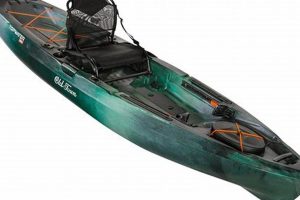
A compact, single-user vessel designed specifically for angling offers enhanced maneuverability and portability compared to larger boats. This type of watercraft typically features specialized storage for fishing gear, rod holders, and often a comfortable, elevated seat for improved visibility and casting. A common example is a sit-on-top model constructed from durable, lightweight materials like polyethylene.
Smaller watercraft designed for individual anglers provide significant advantages in accessing shallow waters and navigating narrow waterways often teeming with fish. Their portability simplifies transportation and launch, eliminating the need for boat ramps and trailers in many instances. This ease of use contributes to the growing popularity of individual angling from small, specialized watercraft, reflecting a modern approach to a timeless pastime.
The following sections will delve deeper into specific aspects of these specialized vessels, covering topics such as hull design, propulsion options, essential features, and safety considerations for enjoying a successful and safe fishing experience.
Tips for Solo Kayak Fishing
Careful planning and preparation contribute significantly to a successful and enjoyable solo kayak fishing excursion. The following tips offer guidance for maximizing efficiency and safety on the water.
Tip 1: Prioritize Stability: Choose a wider, flatter hull design for enhanced stability, especially when fishing in rougher conditions or standing to cast. Consider a sit-on-top kayak for improved balance and self-rescue capabilities.
Tip 2: Plan and Share Your Route: Always inform someone of your intended fishing location and estimated return time. A float plan enhances safety by ensuring someone is aware of your whereabouts.
Tip 3: Dress for Immersion: Wear appropriate clothing for the water temperature, not the air temperature. A wetsuit or drysuit offers protection in colder conditions, while quick-drying fabrics are suitable for warmer climates. Always wear a personal flotation device (PFD).
Tip 4: Organize and Secure Gear: Utilize storage compartments and deck rigging to keep essential gear organized, accessible, and secure. This prevents items from shifting during movement and minimizes clutter.
Tip 5: Practice Self-Rescue Techniques: Before venturing out alone, practice re-entering the kayak from the water. This essential skill builds confidence and ensures preparedness in case of capsizing.
Tip 6: Check Weather Conditions: Monitor weather forecasts before heading out and be prepared to adjust plans or return to shore if conditions deteriorate. Wind, waves, and lightning pose significant risks.
Tip 7: Carry Essential Safety Equipment: A whistle, signaling mirror, first-aid kit, and communication device (e.g., VHF radio or waterproofed cell phone) are crucial for safety in emergencies.
Tip 8: Distribute Weight Evenly: Load gear evenly within the kayak to maintain balance and prevent tipping. Consider the weight distribution when moving or changing positions.
Adhering to these guidelines promotes a safer and more productive fishing experience, enabling anglers to fully enjoy time on the water.
The insights provided in this article equip individuals with the knowledge and strategies to maximize their solo kayak fishing adventures.
1. Stability

Stability represents a critical performance characteristic in single-person fishing kayaks, directly influencing safety and fishing effectiveness. A stable platform enables anglers to cast, retrieve, and land fish without compromising balance, reducing the risk of capsizing, especially in challenging conditions such as windy weather or when encountering boat wakes. Kayak stability is affected by hull design, width, length, and weight distribution. Wider, flatter hulls generally provide greater initial stability, beneficial for beginners or those fishing in calmer waters. Longer, narrower hulls may offer superior tracking and speed but often compromise initial stability. The angler’s center of gravity also plays a crucial role; maintaining a low center of gravity enhances stability. For example, sitting lower in the kayak and distributing gear evenly improves balance. Specialized designs like pontoon hulls or outriggers can further enhance stability, providing added security in demanding environments.
Compromised stability necessitates constant adjustments and corrections, diverting focus from fishing and increasing fatigue. Conversely, a stable kayak allows anglers to concentrate on fishing techniques, enhancing enjoyment and success. Consider a scenario where an angler hooks a large fish. A stable kayak provides the necessary platform to fight the fish effectively without jeopardizing balance, while an unstable kayak might lead to capsizing during the struggle. Similarly, standing to cast or sight fish requires a stable platform to prevent accidental falls. The practical implications of stability extend beyond mere convenience; they are essential for angler safety and overall fishing performance.
Understanding the factors influencing kayak stability is essential for informed decision-making. Matching kayak design to intended fishing environments and angler experience levels optimizes both safety and fishing effectiveness. Prioritizing stability when selecting a single-person fishing kayak contributes significantly to a positive and productive on-the-water experience, reducing risks and allowing anglers to focus on the pursuit of their target species.
2. Maneuverability
Maneuverability in a single-person fishing kayak directly impacts an angler’s ability to navigate diverse water environments and effectively target fish. A highly maneuverable kayak allows for precise adjustments in position, crucial for navigating tight spaces like narrow creeks, maneuvering through vegetation, or quickly repositioning to follow schooling fish. Kayak length, hull design, and the presence of a rudder or skeg system significantly influence maneuverability. Shorter kayaks generally turn more quickly than longer ones, while specific hull designs, such as those with a defined keel, enhance tracking and straight-line stability but may reduce turning agility. A rudder or skeg assists in maintaining course in windy conditions and improves tracking, particularly beneficial in larger bodies of water. Consider a scenario where an angler needs to navigate through a dense patch of lily pads to access a promising fishing spot. A highly maneuverable kayak allows for precise navigation through the obstacles, while a less maneuverable kayak might become entangled or require excessive effort to navigate the tight space. Similarly, quickly changing direction to follow a moving school of fish requires a kayak that responds efficiently to paddle strokes or rudder adjustments.
The practical implications of maneuverability extend beyond simple navigation. Efficient maneuvering conserves energy, allowing anglers to cover more water and fish for extended periods without fatigue. The ability to precisely position the kayak optimizes casting angles and presentation, maximizing fishing effectiveness. For example, approaching a target area stealthily and positioning the kayak for an optimal cast improves the chances of a successful hookup. Furthermore, maneuverability plays a crucial role in safety, enabling anglers to quickly react to changing conditions, avoid obstacles, and navigate challenging currents or windy conditions effectively.
Understanding the factors that influence kayak maneuverability is essential for informed selection and optimal utilization. Matching kayak design to specific fishing environments and angler preferences contributes significantly to on-the-water success. A kayak that balances maneuverability with stability and other performance characteristics optimizes the fishing experience, enabling anglers to explore diverse waters, access prime fishing spots, and react effectively to dynamic on-the-water situations.
3. Storage Capacity

Adequate storage capacity is a crucial factor in single-person fishing kayak selection, directly impacting organization, efficiency, and overall fishing success. Effective storage solutions enable anglers to carry essential gear, including tackle boxes, rods, safety equipment, and personal items, securely and accessibly. Insufficient storage can lead to clutter, hindering fishing activities and potentially compromising safety.
- Dedicated Tackle Storage:
Purpose-built compartments designed for tackle boxes, often located within easy reach of the angler, optimize organization and streamline lure and tackle retrieval. Examples include recessed trays, waterproof hatches, and removable tackle organizers. Dedicated storage prevents tackle from shifting during movement, minimizing tangles and damage. This dedicated space allows anglers to focus on fishing rather than searching for misplaced items.
- Rod Holders:
Secure rod holders, typically integrated into the kayak’s design, provide safe and convenient storage for fishing rods while not in use or during transport. Flush-mounted rod holders minimize line tangles and prevent rods from obstructing paddling strokes. Vertical rod holders allow for trolling or storing rods vertically, while angled rod holders position rods for quick access. The number and placement of rod holders influence fishing versatility and efficiency.
- Dry Storage Compartments:
Waterproof compartments protect sensitive items like electronics, wallets, and keys from water damage. Sealed hatches or bags provide a secure environment for essential gear, ensuring functionality even in wet conditions. Ample dry storage contributes to peace of mind, allowing anglers to focus on fishing without concern for gear damage. This feature is crucial for preserving essential items in the event of capsizing or unexpected splashes.
- Bungee Cords and Deck Rigging:
Deck rigging systems, utilizing bungee cords or webbing straps, offer versatile storage options for items requiring quick access, such as paddles, landing nets, or extra layers of clothing. Securely fastened gear remains readily available while minimizing clutter within the cockpit. Strategic placement of deck rigging optimizes space utilization and enhances on-the-water efficiency.
The strategic integration of these storage solutions within a single-person fishing kayak significantly enhances the overall angling experience. Ample, well-designed storage contributes to organization, efficiency, and safety, enabling anglers to focus on fishing rather than managing gear. Careful consideration of storage capacity during kayak selection contributes significantly to a positive and productive outing, maximizing enjoyment and success on the water.
4. Portability
Portability represents a defining characteristic of single-person fishing kayaks, significantly influencing accessibility and ease of use. Reduced weight and compact dimensions simplify transport and launch, expanding fishing location possibilities. Unlike larger vessels requiring trailers and boat ramps, these kayaks can be easily transported on roof racks, in truck beds, or even carried short distances, granting access to remote or difficult-to-reach waters. This portability expands angling opportunities, allowing exploration of smaller rivers, ponds, and secluded coves often inaccessible to larger craft. Consider, for example, accessing a remote mountain lake. A portable kayak can be easily transported and launched, enabling fishing in otherwise inaccessible locations.
Several factors contribute to kayak portability. Lightweight construction materials, such as polyethylene or composites, reduce overall weight, simplifying handling. Kayak length and width also influence portability; shorter, narrower kayaks are generally easier to transport and maneuver. Specialized features like integrated carrying handles and molded-in side handles further enhance portability. Consider the practical implications: an angler can easily load a lightweight kayak onto a vehicle’s roof rack without assistance, while a heavier kayak might require two people or specialized loading equipment. Similarly, carrying a kayak a short distance to a secluded launch point is significantly easier with a lightweight, compact model. This ease of transport and launch encourages more frequent fishing trips, expanding access to diverse fishing environments.
The portability of single-person fishing kayaks unlocks numerous advantages, expanding angling opportunities and simplifying logistical challenges. Accessing remote waters, navigating shallow areas, and launching from unconventional locations become feasible, enriching the fishing experience. The inherent portability of these kayaks aligns with a modern, adaptable approach to fishing, emphasizing versatility and ease of access. This characteristic empowers anglers to explore a wider range of waters, contributing significantly to the growing popularity of kayak fishing as a versatile and accessible outdoor pursuit.
5. Comfort

Comfort plays a crucial role in the overall fishing experience from a single-person kayak. Extended periods on the water, often involving repetitive motions and varying weather conditions, necessitate a comfortable seating arrangement and ergonomic design. Discomfort can lead to fatigue, reduced concentration, and a diminished ability to react effectively to fishing opportunities or changing environmental conditions. A comfortable kayak allows anglers to maintain focus and energy throughout the fishing trip, maximizing enjoyment and effectiveness. Consider a scenario where an angler spends several hours on the water. A comfortable, supportive seat minimizes fatigue and allows for sustained focus on fishing, while an uncomfortable seat might lead to premature fatigue and a shortened fishing trip.
Several factors contribute to kayak comfort. Seat design, including cushioning, adjustability, and back support, significantly impacts long-term comfort. Ergonomic considerations, such as footrest placement and cockpit dimensions, ensure proper posture and reduce strain. Features like adjustable backrests, padded seating, and ample legroom contribute to a more comfortable experience, particularly during extended fishing trips. The ability to customize seat position and footrest placement allows anglers to accommodate individual body types and preferences, further enhancing comfort. A well-designed kayak provides adequate space for movement and gear storage, preventing cramped conditions and facilitating easy access to essential items. A poorly designed kayak, on the other hand, might restrict movement and contribute to discomfort, potentially leading to an unpleasant and shortened fishing experience.
Prioritizing comfort in kayak selection directly enhances the overall fishing experience. Reduced fatigue, improved focus, and enhanced responsiveness contribute to a more enjoyable and productive time on the water. Understanding the elements contributing to kayak comfort empowers anglers to make informed decisions, optimizing their equipment for long-term enjoyment and success on the water. This emphasis on comfort reflects a broader trend in outdoor recreation, prioritizing user experience and recognizing the direct link between comfort and performance.
6. Durability
Durability represents a critical factor in the lifespan and overall value of a single-person fishing kayak. These vessels are subjected to various stressors, including UV exposure, abrasion from rocks and vegetation, impacts from accidental collisions, and the general wear and tear of regular use. A durable kayak withstands these challenges, minimizing maintenance requirements and extending its usable life. This robust construction translates to long-term cost savings and ensures the kayak remains a reliable platform for fishing excursions over an extended period. Consider a scenario where a kayak is frequently used in rocky, shallow rivers. A durable, abrasion-resistant hull maintains its integrity despite frequent contact with rocks, while a less durable hull might sustain damage, requiring repairs or even replacement.
Several factors contribute to kayak durability. Hull material plays a significant role; high-density polyethylene (HDPE) is a common choice due to its impact resistance and UV stability. Other durable materials include composites and thermoformed plastics. Construction techniques, such as roto-molding, influence overall strength and impact resistance. Reinforced areas, particularly in high-stress zones like the keel and chines, enhance durability and protect against damage from impacts. UV resistance prevents material degradation from prolonged sun exposure, maintaining the kayak’s structural integrity and color over time. Well-maintained hardware, including handles, latches, and deck rigging, further contributes to long-term durability. Neglecting routine maintenance, such as rinsing the kayak after use and storing it properly, can accelerate wear and tear, shortening its lifespan.
The practical implications of durability extend beyond simple longevity. A durable kayak provides a reliable and safe platform for fishing, minimizing the risk of failures or damage in challenging conditions. This reliability instills confidence, allowing anglers to focus on fishing rather than worrying about equipment integrity. Investing in a durable kayak represents a long-term investment in enjoyment and peace of mind, ensuring the vessel remains a dependable companion for countless fishing adventures. The inherent durability of a well-constructed kayak contributes significantly to its overall value proposition, justifying the initial investment through extended lifespan and reduced maintenance requirements. This emphasis on durability aligns with a broader trend in outdoor gear, prioritizing long-lasting performance and minimizing environmental impact through reduced consumption and waste.
Frequently Asked Questions
This section addresses common inquiries regarding single-person fishing kayaks, providing concise and informative responses to facilitate informed decision-making.
Question 1: What are the primary advantages of a fishing kayak designed for a single occupant?
Key advantages include enhanced maneuverability in tight spaces, improved portability for accessing diverse locations, and a streamlined design optimized for individual anglers. These kayaks often feature specialized storage and fishing-specific features tailored for solo excursions.
Question 2: How does one choose the appropriate size and type of single-person fishing kayak?
Selection depends on factors such as angler weight and size, intended fishing environment (calm lakes versus rivers or coastal waters), and desired features. Consider stability, maneuverability, storage capacity, and intended use when making a selection.
Question 3: What safety precautions should be considered when fishing from a single-person kayak?
Essential safety measures include wearing a personal flotation device (PFD), informing someone of the intended fishing location and return time, carrying essential safety equipment (whistle, signaling device, first-aid kit), and checking weather forecasts before departure.
Question 4: What essential gear is recommended for single-person kayak fishing?
Recommended gear includes appropriate fishing rods and reels, tackle suited to the target species, a landing net, pliers, appropriate clothing and footwear, sun protection, and navigation tools (GPS or chart). Safety equipment, as mentioned previously, remains paramount.
Question 5: How does one maintain and store a single-person fishing kayak properly?
Proper maintenance includes rinsing the kayak with fresh water after each use, especially after exposure to saltwater, and storing the kayak in a protected environment away from direct sunlight and extreme temperatures. Regular inspection of hardware and accessories ensures long-term functionality.
Question 6: What are the typical price ranges for single-person fishing kayaks?
Prices vary significantly depending on the kayak’s features, materials, and brand. Entry-level models may be available at lower price points, while high-end fishing kayaks with advanced features and construction can command higher prices. Researching different brands and models helps determine the best value for individual needs and budget.
Understanding these key aspects of single-person fishing kayaks empowers individuals to make informed decisions and enjoy safe, productive, and fulfilling fishing experiences.
For further information, consult specialized kayak fishing resources or connect with experienced anglers for practical insights and advice.
Conclusion
Single-person fishing kayaks offer a specialized approach to angling, providing distinct advantages in maneuverability, portability, and access to diverse waterways. Careful consideration of factors such as stability, storage capacity, comfort, and durability ensures selection of a vessel optimized for individual needs and fishing styles. Understanding these key aspects empowers anglers to maximize their on-the-water experience, enhancing both efficiency and enjoyment.
The growing popularity of this specialized angling platform reflects a broader trend towards individualized outdoor pursuits, emphasizing versatility and direct engagement with the natural environment. Continued innovation in kayak design and technology promises further refinement of these specialized vessels, enhancing the angling experience and enabling exploration of even more diverse aquatic environments. The future of individual kayak fishing appears promising, driven by a pursuit of efficient, adaptable, and immersive angling experiences.