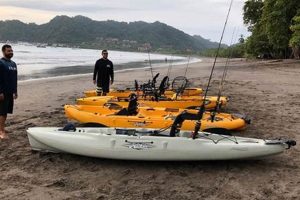
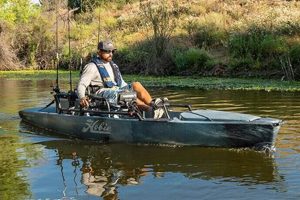
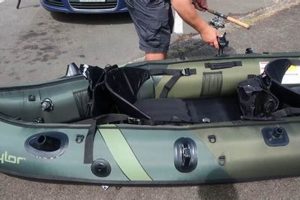
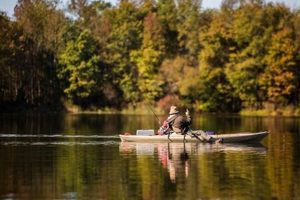
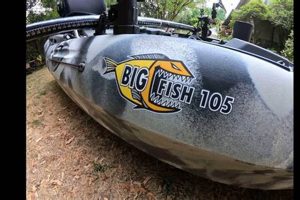
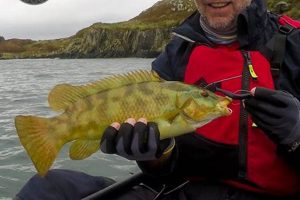
A small, human-powered watercraft designed for angling typically includes a specialized seat, rod holders, and other gear-mounting options. These vessels are often propelled using a double-bladed oar, offering maneuverability and a quiet approach beneficial for attracting fish. This combination provides anglers access to shallow waters and secluded fishing spots often unreachable by larger, motorized boats.
The stability and portability of these compact vessels, coupled with their human-powered propulsion, provide distinct advantages. This method allows for stealthy movement through the water, minimizing disturbance to fish and maximizing angling success. Historically, smaller, paddle-driven boats have been utilized for fishing in various cultures, reflecting their enduring practicality. Modern designs incorporate advanced materials and features, enhancing performance and comfort while retaining the core functionality.
Further exploration will cover topics such as choosing the appropriate vessel type for specific fishing environments, essential accessories for optimizing the angling experience, and techniques for safe and efficient paddling.
Tips for Kayak Fishing
Proper preparation and technique contribute significantly to a successful and enjoyable fishing experience from a kayak.
Tip 1: Prioritize Stability: Vessel stability is paramount. Consider hull design and weight capacity when selecting a kayak. Distribute weight evenly within the craft to maintain balance and prevent capsizing.
Tip 2: Master Basic Paddling Strokes: Efficient paddling conserves energy and allows for precise maneuvering. Practice forward, reverse, and turning strokes before venturing into fishing areas.
Tip 3: Choose Appropriate Paddles: Paddle length and blade shape affect performance. Longer paddles generate more power, while shorter paddles are better suited for confined spaces. Feathering the blades reduces wind resistance.
Tip 4: Utilize a Kayak Anchor: A properly deployed anchor maintains position in desired fishing locations, particularly in currents or windy conditions. Consider anchor types suitable for various bottom substrates.
Tip 5: Organize Gear Strategically: Accessibility to essential equipment is crucial. Utilize rod holders, tackle boxes, and other storage solutions to keep gear organized and within easy reach, minimizing movement and maximizing fishing time.
Tip 6: Dress for the Environment: Appropriate attire enhances comfort and safety. Consider water temperature, weather conditions, and sun exposure when selecting clothing and accessories. Layering allows for adjustments throughout the day.
Tip 7: Practice Safety First: Wear a personal flotation device at all times. Carry a whistle or other signaling device for emergencies. Inform someone of planned fishing locations and estimated return time.
By adhering to these guidelines, anglers can enhance their safety, efficiency, and overall enjoyment on the water. These practices contribute to a more productive and fulfilling fishing experience.
These tips offer a foundation for successful kayak fishing. Further exploration of specific techniques and equipment choices will refine skills and enhance performance.
1. Stability

Stability is a critical factor influencing the safety and effectiveness of a fishing kayak. A stable platform allows anglers to cast, reel, and land fish without compromising balance, ultimately contributing to a more productive and enjoyable experience. This characteristic becomes even more crucial when navigating challenging conditions such as currents, wind, or waves.
- Primary Stability:
This refers to the initial resistance a kayak offers to tipping. A wider hull provides greater primary stability, making it ideal for calm waters and activities requiring minimal movement, such as still fishing. A kayak with a flatter bottom will feel more stable initially, allowing for confident casting and retrieving.
- Secondary Stability:
This describes how stable a kayak remains as it leans beyond its initial point of resistance. Kayaks designed for rougher waters often feature a rounded or V-shaped hull, sacrificing some initial stability for increased secondary stability. This design allows the kayak to lean further without capsizing, important when paddling in waves or currents. Anglers fishing in moving water benefit from secondary stability, enabling them to maintain balance in dynamic conditions.
- Factors Influencing Stability:
Beyond hull design, other factors influence stability. The distribution of weight within the kayak plays a crucial role. Positioning heavier items lower in the hull and distributing weight evenly enhances overall stability. Wind and water conditions also significantly impact stability. Strong winds and choppy waters can challenge even the most stable kayaks. Anglers must consider environmental factors when evaluating stability needs.
- Importance for Fishing:
Stability is particularly crucial for fishing activities. Standing to cast, fighting larger fish, and reaching for gear can all compromise balance. A stable kayak provides a secure platform for these movements, minimizing the risk of capsizing and maximizing fishing effectiveness. Consider the type of fishing and the anticipated conditions when selecting a kayak with appropriate stability characteristics. Anglers targeting larger species in open water require greater stability than those fishing in sheltered areas.
Understanding these facets of stability allows anglers to make informed decisions when selecting a fishing kayak. Choosing a kayak with the appropriate stability characteristics for the intended fishing environment and style ensures safety, enhances performance, and ultimately contributes to a more positive and productive experience on the water.
2. Maneuverability

Maneuverability represents a critical performance attribute in fishing kayaks, directly influencing the angler’s ability to navigate diverse water environments and access productive fishing locations. Precise and efficient maneuvering allows for strategic positioning within targeted areas, ultimately maximizing fishing success. This capability becomes particularly crucial in challenging environments such as shallow water, dense vegetation, or areas with complex currents and obstacles.
- Hull Design and Maneuverability
Hull design significantly impacts a kayak’s maneuvering characteristics. Shorter kayaks with a wider beam generally offer greater initial stability but sacrifice maneuverability. Longer, narrower kayaks track better and turn more efficiently but may feel less stable. Specific hull designs, such as those with a pronounced keel or defined chines, can enhance tracking and responsiveness. Understanding the relationship between hull design and maneuverability allows for informed decisions based on individual fishing styles and target environments.
- Paddle Length and Blade Shape
Paddle characteristics also influence maneuverability. Shorter paddles provide quicker strokes and enhanced control for tight turns, while longer paddles generate more power for covering greater distances. Blade shape also plays a role. Asymmetrical blades or blades with a dihedral angle can improve stroke efficiency and reduce flutter, contributing to smoother, more controlled paddling. Selecting an appropriate paddle length and blade shape further enhances maneuverability based on individual needs and preferences.
- Environmental Factors
Wind, current, and water conditions directly affect kayak maneuverability. Strong winds and currents can significantly challenge directional control, requiring adjustments in paddling technique and positioning. Navigating shallow water or areas with dense vegetation necessitates precise paddle control to avoid grounding or entanglement. Recognizing and adapting to prevailing environmental conditions is crucial for maintaining optimal maneuverability and ensuring safety.
- Maneuverability and Fishing Success
The ability to maneuver effectively is directly linked to fishing success. Precise maneuvering allows anglers to position their kayaks strategically for optimal casting angles and presentations. It enables access to prime fishing locations often inaccessible to larger vessels. Furthermore, efficient maneuvering allows for quick adjustments in response to fish movement or changing environmental conditions, maximizing opportunities for successful hookups. Proficient maneuvering techniques, coupled with appropriate equipment selection, empower anglers to navigate complex environments and enhance their overall fishing experience.
The interplay of these factors underscores the importance of maneuverability in a fishing kayak context. Selecting a kayak and paddle combination optimized for intended fishing environments and styles significantly enhances on-the-water performance, allowing anglers to navigate effectively, access productive areas, and ultimately increase their chances of fishing success.
3. Paddle Propulsion
Paddle propulsion forms the core of the “fishing kayak with paddle” concept, defining its operational characteristics and influencing its suitability for specific angling scenarios. Understanding the nuances of paddle propulsion is crucial for maximizing efficiency, stealth, and overall fishing success. This exploration delves into the multifaceted relationship between human-powered paddling and the specialized design of fishing kayaks.
- Efficiency and Energy Conservation
Efficient paddle propulsion minimizes energy expenditure, allowing anglers to cover greater distances and spend more time fishing. Proper paddling technique, utilizing core muscles and minimizing wasted motion, is crucial for maximizing efficiency. Choosing a paddle appropriate for individual physique and paddling style further enhances energy conservation. This sustained paddling capacity allows anglers to explore wider areas and access remote fishing spots, increasing opportunities for success.
- Stealth and Approach
Paddle propulsion offers a significant advantage in stealth, a critical factor in many fishing scenarios. Unlike motorized vessels, kayaks powered by paddles produce minimal noise and vibration, reducing disturbance to fish and increasing the likelihood of successful approaches. This quiet operation is particularly crucial in shallow water or clear environments where fish are easily spooked. The stealthy nature of paddle propulsion allows anglers to get closer to target species without detection, enhancing their chances of a successful catch.
- Maneuverability and Control
Paddle propulsion provides exceptional maneuverability, allowing anglers to navigate complex waterways and precisely position their kayaks for optimal casting angles. This control is essential for navigating tight spaces, maneuvering around obstacles, and adjusting position in response to changing currents or fish movement. Efficient paddle strokes enable quick changes in direction and speed, offering a dynamic advantage over less maneuverable vessels. This precise control allows anglers to exploit specific fishing locations and react effectively to changing conditions, maximizing fishing opportunities.
- Environmental Considerations
Paddle propulsion offers an environmentally friendly alternative to motorized vessels. Producing zero emissions and minimizing disturbance to aquatic ecosystems, paddling aligns with sustainable fishing practices. This low-impact approach preserves the natural environment and contributes to responsible resource management. Choosing human-powered propulsion demonstrates a commitment to environmental stewardship and ensures the long-term health of waterways for future generations of anglers.
The integration of paddle propulsion with the specialized design of fishing kayaks creates a synergistic relationship, optimizing performance and enhancing the overall angling experience. Understanding and mastering the facets of paddle propulsion efficiency, stealth, maneuverability, and environmental impact empowers anglers to maximize their potential on the water and contribute to a sustainable fishing future.
4. Quiet Operation

Quiet operation represents a significant advantage inherent in fishing kayaks propelled by paddles. The absence of engine noise significantly reduces disturbance to aquatic life, enhancing angling success. Cause and effect are directly linked: the minimal sound produced by paddles moving through water minimizes disruption to fish behavior, increasing the likelihood of close approaches and successful presentations. This quiet approach is particularly crucial in shallow-water environments or when targeting wary species easily spooked by noise. For example, pursuing fish in clear, shallow flats or along heavily vegetated shorelines necessitates a stealthy approach; a paddled kayak excels in these scenarios. Motorized approaches in such environments often scatter fish, reducing fishing opportunities.
The importance of quiet operation as a component of the “fishing kayak with paddle” concept extends beyond immediate catch rates. It contributes to a more immersive and natural experience, allowing anglers to connect with the environment without the intrusion of mechanical noise. The quietude facilitates observation of wildlife and enhances appreciation for the subtle sounds of the natural world. Practically, this translates to a more rewarding and less disruptive angling experience, benefiting both the angler and the ecosystem. Furthermore, the lack of engine noise reduces stress on fish populations and minimizes disruption to their natural behaviors, contributing to the long-term health and sustainability of the fishery.
Quiet operation, therefore, constitutes a defining characteristic and significant advantage of the fishing kayak with paddle. Its practical significance lies in enhanced fishing success, a deeper connection with nature, and a contribution to responsible angling practices. Recognizing the cause-and-effect relationship between quiet operation and positive fishing outcomes underscores the value of this approach, promoting both successful angling and environmental stewardship. This understanding empowers anglers to make informed choices that benefit both their individual experience and the long-term health of aquatic ecosystems.
5. Shallow Water Access
Shallow water access represents a defining advantage of fishing kayaks propelled by paddles. These vessels excel in environments inaccessible to larger, motorized boats, opening a wealth of angling opportunities. This capability stems from the kayak’s compact size, minimal draft, and maneuverability facilitated by paddle propulsion. The following facets explore the relationship between shallow water access and the “fishing kayak with paddle” concept.
- Expanding Fishing Grounds
Kayaks grant access to shallow creeks, estuaries, and backwater areas often teeming with fish yet unreachable by conventional boats. These shallow environments serve as nurseries for many species, providing abundant feeding grounds and cover from predators. Anglers utilizing kayaks gain access to these otherwise inaccessible areas, significantly expanding their fishing grounds and increasing opportunities for encountering target species. For instance, navigating shallow flats teeming with bonefish or stalking redfish in flooded marshes showcases the advantages of a kayak’s shallow draft.
- Stealthy Approach in Shallows
The shallow draft of a kayak, combined with the quiet nature of paddle propulsion, allows for a stealthy approach in shallow water. This minimizes disturbance to fish, crucial in clear, shallow environments where fish are easily spooked. Anglers can quietly paddle into prime locations without alarming their quarry, enhancing chances of successful presentations and hookups. Consider sight fishing for wary species in shallow, crystal-clear water; a kayak provides a distinct advantage over a noisy motorboat in such scenarios.
- Navigating Complex Environments
Kayaks excel in navigating complex shallow environments, including areas with submerged vegetation, fallen trees, or other obstacles. Paddle propulsion provides precise control, allowing anglers to maneuver through tight spaces and avoid grounding. This maneuverability opens access to secluded pockets and prime fishing spots often hidden within shallow-water ecosystems. For example, navigating a mangrove-lined creek or a shallow, weed-choked pond requires the precise control and minimal draft offered by a kayak.
- Reduced Environmental Impact
The ability to access shallow water with a kayak propelled by paddles minimizes environmental impact. Unlike motorized boats, kayaks do not churn up sediment or damage sensitive bottom habitats. This low-impact approach preserves water quality and supports the health of shallow-water ecosystems. Furthermore, the absence of fuel and oil spills associated with motorized vessels further reduces environmental impact, contributing to responsible and sustainable angling practices in these fragile areas.
The capacity to access shallow water distinguishes the “fishing kayak with paddle” as a versatile and effective angling platform. This capability expands fishing opportunities, allows for stealthy approaches, enables navigation through complex environments, and minimizes environmental impact. These combined advantages demonstrate the utility of kayaks for anglers seeking to explore shallow-water ecosystems and connect with the natural world while pursuing their passion.
Frequently Asked Questions
This section addresses common inquiries regarding fishing kayaks and their use with paddles, providing concise and informative responses.
Question 1: What are the key advantages of using a paddle with a fishing kayak?
Paddle propulsion offers stealth, maneuverability, and access to shallow, vegetated areas often inaccessible to motorized vessels. It also promotes a quiet, environmentally friendly approach to angling.
Question 2: How does one choose the right paddle length for a fishing kayak?
Paddle length depends on factors including torso height, kayak width, and paddling style. Consulting retailer recommendations or online resources specific to kayak paddling can provide further guidance.
Question 3: Are there specific paddle types better suited for fishing kayaks?
Paddles with feathered blades reduce wind resistance and asymmetrical blades enhance stroke efficiency. Materials like fiberglass or carbon fiber offer lightweight yet durable performance.
Question 4: What safety precautions should be taken when fishing from a kayak with a paddle?
Wearing a personal flotation device is paramount. Carrying a whistle, communication device, and informing someone of fishing plans are also crucial safety measures.
Question 5: How does one maintain balance and stability while fishing from a kayak?
Distributing weight evenly within the kayak and avoiding sudden movements enhance stability. Practicing basic paddling strokes and understanding how to recover from a capsize are essential skills.
Question 6: What essential accessories enhance the fishing kayak paddling experience?
Rod holders, anchor systems, dry bags for gear storage, and a comfortable seat enhance functionality and comfort. A fish finder and GPS unit can further improve angling effectiveness.
Careful consideration of these frequently asked questions contributes to informed decision-making and enhances the overall fishing kayak experience. Understanding the nuances of paddle propulsion and its benefits empowers anglers to optimize their approach, leading to greater enjoyment and success on the water.
Further resources provide comprehensive information on specific techniques, equipment choices, and safety guidelines related to fishing kayak with paddle utilization.
Conclusion
Exploration of the “fishing kayak with paddle” concept reveals a specialized vessel offering distinct advantages for anglers. Maneuverability within shallow, complex environments, coupled with the quiet operation inherent in paddle propulsion, enhances angling effectiveness. Stability considerations, informed paddle selection, and adherence to safety practices contribute to a positive and productive on-the-water experience. Understanding the interplay of these factors empowers anglers to maximize the potential of this specialized equipment.
The enduring appeal of the fishing kayak with paddle lies in its capacity to connect anglers with the natural world while pursuing their passion. This human-powered approach fosters a deeper appreciation for aquatic ecosystems and encourages responsible angling practices. As angling evolves, the fishing kayak with paddle stands as a testament to the enduring effectiveness of simple, yet refined, human-powered watercraft. Continued exploration of specialized techniques and equipment advancements promises further enhancement of this rewarding angling pursuit.