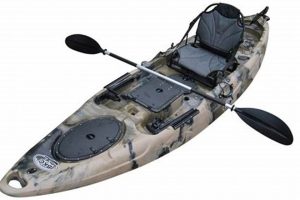
A high-quality whitewater kayak designed for angling in fast-moving rivers combines stability, maneuverability, and specialized features like rod holders and gear storage. Such a vessel allows anglers to access challenging and rewarding fishing locations often unreachable by other means. For example, a shorter, rockered hull enables navigation through turbulent water, while strategically placed storage compartments secure equipment amidst challenging conditions.
Accessing remote river sections with rich fishing opportunities offers anglers a distinct advantage. The right watercraft enables safe and efficient navigation through rapids, increasing the likelihood of reaching pristine waters teeming with fish. Historically, anglers faced limitations in accessing such locations, but advances in kayak design have opened up exciting possibilities for the sport. This specialization in kayak design has increased the effectiveness and enjoyment of river fishing considerably.
Key considerations for selecting a suitable river fishing kayak include hull design, material, weight capacity, and included features. The following sections will explore these factors in detail to equip anglers with the knowledge necessary to make informed decisions for their specific needs and fishing styles.
Tips for Selecting a Whitewater Fishing Kayak
Choosing a kayak suited for river fishing requires careful consideration of several crucial factors. These tips offer guidance for selecting the optimal vessel for navigating rapids and enjoying a successful fishing experience.
Tip 1: Prioritize Stability and Maneuverability: Opt for a kayak with a wider, flatter hull for enhanced stability in turbulent water. A shorter length and rockered hull improve maneuverability in rapids and tight turns.
Tip 2: Consider Durable Materials: Rotomolded polyethylene kayaks offer excellent impact resistance against rocks and other river obstacles. Consider reinforced hulls for added protection in demanding environments.
Tip 3: Evaluate Weight Capacity: Account for the combined weight of the angler, fishing gear, and potential catch. Select a kayak with sufficient weight capacity to ensure safe and stable performance.
Tip 4: Inspect Storage Options: Ample, strategically placed storage compartments are essential for securing fishing rods, tackle boxes, and other equipment amidst challenging conditions. Dry storage compartments safeguard sensitive items from water damage.
Tip 5: Examine Seating and Comfort: A comfortable and adjustable seat enhances endurance during long fishing trips. Look for features like adjustable backrests and foot braces for optimal support.
Tip 6: Consider Rod Holders and Rigging: Integrated rod holders and rigging systems free up hands for paddling and landing fish. Ensure compatibility with preferred fishing styles and techniques.
Tip 7: Research River Conditions: Understand the specific characteristics of the rivers intended for fishing, including water flow rates, rapids classifications, and potential hazards. Match kayak selection to the anticipated conditions.
Careful consideration of these factors contributes significantly to angler safety, fishing success, and overall enjoyment on the water. Choosing the appropriate kayak empowers anglers to confidently navigate challenging rapids and access rewarding fishing opportunities.
By understanding these essential elements, individuals can confidently select a kayak tailored to their specific needs and fishing preferences, ultimately enhancing their experience on the river.
1. Stability

Stability represents a critical performance characteristic in kayaks designed for rapid navigation and fishing. A stable platform allows anglers to cast, reel, and land fish effectively while maintaining balance in dynamic water conditions. Compromised stability increases the risk of capsizing, jeopardizing both angler safety and fishing success. Therefore, understanding the factors that contribute to kayak stability is essential for selecting the optimal vessel for demanding river environments.
- Hull Design
Hull design significantly influences stability. Wider, flatter hulls provide primary stability, resisting initial tipping. A shallow-V hull offers a balance between stability and maneuverability, suitable for moderate rapids. For example, a wider, flatter hull excels in slower-moving sections and during stationary fishing, while a shallow-V hull allows for quicker turns and adjustments in faster currents. However, excessively wide hulls can feel sluggish and unresponsive in dynamic water.
- Center of Gravity
The center of gravity (CG) represents the point where the kayak’s weight is balanced. A lower CG enhances stability. Angler positioning and gear distribution influence the CG. Sitting lower in the kayak and distributing weight evenly contributes to a lower CG, reducing the likelihood of tipping. Conversely, standing up or concentrating weight in one area raises the CG and compromises stability.
- Water Displacement
The volume of water displaced by the kayak’s hull affects stability. Larger displacement typically provides greater initial stability. This is particularly beneficial in rough water or when dealing with larger fish. However, increased displacement can also reduce maneuverability, impacting performance in tight turns and swift currents.
- Secondary Stability
Secondary stability refers to a kayak’s ability to recover from a tilted position. Kayaks with rounded or flared hulls offer greater secondary stability. This characteristic is crucial for handling waves, eddy lines, and unexpected impacts in rapids. A kayak with strong secondary stability provides a sense of security and reduces the likelihood of capsizing when encountering challenging conditions.
Careful consideration of these stability factors ensures a safer and more effective fishing experience in rapids. Prioritizing stability features enables anglers to focus on fishing rather than constantly battling to maintain balance. The optimal balance between stability and maneuverability depends on the intended river conditions and individual paddling skills.
2. Maneuverability

Maneuverability is paramount in whitewater kayaks designed for fishing. Navigating rapids, eddy lines, and obstacles effectively requires precise control and responsiveness. A highly maneuverable kayak enables anglers to position themselves strategically for optimal casting angles, maintain precise locations in fast-moving water, and react swiftly to changing river conditions. For instance, navigating a narrow channel between rocks or quickly adjusting position to avoid a submerged log necessitates responsive handling. Without precise control, anglers risk losing fishing opportunities, impacting overall success and potentially compromising safety. The ability to hold position in a current seam or maneuver into a prime eddy for casting significantly influences fishing outcomes.
Several design elements contribute to kayak maneuverability. A shorter hull length typically enhances turning performance, allowing for quicker adjustments in dynamic water. Rocker, the upward curve of the hull at the bow and stern, facilitates navigation through turbulent flows and over obstacles. A shallower hull design, while potentially sacrificing some stability, improves responsiveness to paddle strokes. For example, a kayak with significant rocker and a shorter length will excel in navigating complex rapids and tight turns, whereas a longer kayak with less rocker will track straighter and maintain speed in open water. Selecting the appropriate balance of these characteristics depends on the specific river environments the angler intends to navigate.
Understanding the connection between maneuverability and successful river fishing is crucial. While stability ensures a secure platform for casting and reeling, maneuverability allows anglers to access prime fishing locations and react effectively to dynamic water conditions. Challenges arise when balancing maneuverability with stability; kayaks optimized for one characteristic may compromise the other. Therefore, careful consideration of intended river conditions and personal paddling skills is essential for selecting a kayak that offers the optimal balance for a safe and productive fishing experience.
3. Durability

Durability is a critical factor in selecting a kayak for river fishing, particularly in rapids. A kayak’s ability to withstand impacts, abrasions, and the general wear and tear of navigating challenging river environments directly impacts its lifespan and the angler’s safety. Choosing a durable kayak minimizes the risk of damage and ensures reliable performance over extended periods, contributing to a more cost-effective and enjoyable fishing experience. Compromising on durability can lead to costly repairs, premature replacement, and potentially dangerous situations on the water.
- Material Selection
The kayak’s construction material significantly influences its durability. Rotomolded polyethylene is a popular choice due to its impact resistance, UV stability, and relatively low cost. Thermoformed plastics offer lighter weight but may be less durable. Composites like fiberglass and carbon fiber provide excellent strength and stiffness but come at a higher price point and require more careful handling to prevent damage. For example, rotomolded polyethylene kayaks are well-suited for rocky rivers and frequent impacts, while thermoformed options might be better suited for calmer waters with fewer obstacles.
- Hull Thickness and Construction
Hull thickness and construction methods contribute to overall durability. Thicker hulls generally offer greater impact resistance but increase weight. Reinforced areas, such as along the keel or chines, provide added protection in high-wear areas. Examine the construction techniques used, such as the number of layers and the presence of reinforcing ribs, to assess the kayak’s ability to withstand stress and impacts from rocks, logs, and other river hazards.
- Hardware and Fittings
The quality of hardware and fittings, such as handles, latches, and deck rigging, plays a role in overall durability. Corrosion-resistant materials like stainless steel or anodized aluminum are essential for withstanding the harsh river environment. Inspect the attachment points and reinforcement around fittings to ensure they can withstand stress and prevent leaks. Well-secured and robust hardware contributes to the kayak’s longevity and reliable performance.
- UV Resistance
Exposure to sunlight can degrade kayak materials over time, leading to fading, cracking, and reduced structural integrity. UV-resistant coatings or additives in the plastic help protect the kayak from sun damage and prolong its lifespan. Storing the kayak out of direct sunlight when not in use further minimizes UV degradation. This is especially important in regions with intense sunlight or for anglers who frequently fish during peak sun hours.
Investing in a durable kayak specifically designed for river fishing offers long-term value and enhances safety in demanding environments. While initial costs may be higher for more durable materials and construction, the reduced risk of damage, lower maintenance requirements, and extended lifespan ultimately contribute to a more cost-effective and enjoyable fishing experience. Choosing a kayak built to withstand the rigors of rapids ensures reliable performance and peace of mind on the water, allowing anglers to focus on the thrill of the catch and the beauty of the river.
4. Storage Capacity
Adequate storage capacity is essential in a fishing kayak designed for rapids. Effectively organizing and securing gear amidst challenging conditions directly impacts fishing success and safety. Insufficient storage can lead to cluttered decks, tangled lines, and lost or damaged equipment, compromising both efficiency and the overall fishing experience. A well-designed storage system allows anglers to focus on fishing rather than managing gear, maximizing enjoyment and effectiveness on the water.
- Dedicated Tackle Storage
Specialized compartments designed for tackle boxes, trays, and small items maintain organization and accessibility. Secure latches and waterproof seals protect sensitive gear from water damage and loss. For example, a dedicated tackle storage area with adjustable dividers allows anglers to customize the space for various lure types and sizes, ensuring quick access to the right equipment without disrupting the fishing process.
- Rod Holders and Management Systems
Secure rod holders, preferably flush-mounted or recessed to minimize interference while paddling, are crucial. Integrated rod management systems keep rods organized and readily accessible, preventing tangling and damage. Multiple rod holders accommodate different rod types and fishing techniques. For instance, adjustable rod holders accommodate various rod lengths and angles, while secure straps prevent loss in turbulent water. This allows anglers to switch between techniques quickly and efficiently without compromising safety.
- Dry Storage Compartments
Waterproof compartments protect essential items like phones, wallets, and cameras from water damage. These compartments should be readily accessible yet securely sealed to prevent leakage, even during capsizes or rollovers. Ample dry storage ensures peace of mind and preserves valuable belongings in challenging river conditions. A well-placed dry hatch allows quick access to essential items without requiring the angler to disembark or significantly disrupt their fishing position.
- Deck Rigging and Bungee Systems
Secure deck rigging and bungee systems provide additional storage options for items like dry bags, spare paddles, and safety gear. Strategically placed attachment points facilitate customization and secure storage, preventing gear from shifting or becoming dislodged in rapids. Durable bungee cords ensure items remain securely fastened even in turbulent water. For example, strategically placed deck rigging allows anglers to secure a dry bag containing extra layers of clothing or emergency supplies, keeping them readily available while maximizing space within the kayak’s hull.
The strategic integration of these storage features directly contributes to a more organized, efficient, and ultimately safer fishing experience in rapids. Ample and accessible storage keeps essential gear within easy reach, minimizing distractions and maximizing fishing time. Waterproof compartments protect sensitive items from the elements, while secure rod holders and deck rigging prevent gear loss in dynamic river conditions. Selecting a kayak with thoughtfully designed storage solutions empowers anglers to navigate challenging rapids with confidence and focus on the thrill of the catch.
5. Weight Capacity

Weight capacity is a critical factor influencing the performance and safety of a fishing kayak in rapids. It represents the maximum combined weight the kayak can safely support, encompassing the angler, gear, and any potential catch. Selecting a kayak with inadequate weight capacity compromises stability, maneuverability, and safety, especially in demanding river environments. A kayak overloaded beyond its recommended capacity sits lower in the water, reducing freeboard and increasing the risk of swamping or capsizing. Furthermore, responsiveness to paddle strokes diminishes, hindering maneuverability in turbulent currents and rapids. For example, an angler exceeding the weight capacity with excessive gear and a large fish catch may find the kayak sluggish and difficult to control in fast-moving water, increasing the likelihood of encountering hazardous situations.
Understanding the practical significance of weight capacity involves considering several factors. Base kayak weight influences the overall carrying capacity and ease of transport. The angler’s body weight, combined with essential fishing gear, including rods, reels, tackle boxes, and safety equipment, contributes significantly to the total load. Additionally, anticipated catch weight should be factored into the equation, especially when targeting larger fish species. Calculating these factors accurately ensures the selected kayak provides sufficient buoyancy and stability for a safe and enjoyable fishing experience. Neglecting to account for the cumulative weight can lead to dangerous instability and reduced performance, hindering the angler’s ability to navigate rapids effectively and safely. For instance, an angler planning a multi-day fishing trip needs to account for the added weight of camping gear, food, and water when determining the appropriate kayak weight capacity.
Careful consideration of weight capacity is crucial for optimizing performance and safety in a river fishing kayak. Selecting a kayak with ample capacity ensures optimal freeboard, maintains maneuverability in rapids, and maximizes stability when landing fish. Accurately assessing the combined weight of the angler, gear, and potential catch is essential for making informed decisions. Ultimately, understanding the relationship between weight capacity and kayak performance empowers anglers to choose a vessel that balances stability, maneuverability, and safety, contributing to a more enjoyable and successful fishing experience in challenging river environments.
6. Comfort
Comfort plays a crucial role in the effectiveness and enjoyment of fishing in rapids. Extended periods in a kayak, particularly when navigating challenging whitewater, necessitate a comfortable seating system and ergonomic design. Discomfort can lead to fatigue, reduced focus, and potentially unsafe situations. A well-designed, comfortable kayak allows anglers to maintain concentration and react effectively to changing river conditions, maximizing both fishing success and personal safety. For example, an uncomfortable seat can cause back pain and stiffness, hindering an angler’s ability to paddle efficiently and maintain balance, especially in turbulent water. This can negatively impact casting accuracy and reaction time, increasing the risk of accidents.
Several factors contribute to kayak comfort. An adjustable seat with adequate back support and cushioning is essential for accommodating different body types and preferences. Adjustable foot braces provide leverage and stability while paddling, reducing strain on legs and core muscles. Sufficient legroom allows for comfortable positioning and reduces cramping during long hours on the water. The kayak’s cockpit design should provide ample space for movement and access to gear without feeling cramped or restrictive. For example, a kayak with a larger cockpit opening allows for easier entry and exit, a significant advantage for anglers with mobility limitations or when wearing bulky gear. Furthermore, features like breathable seat materials and strategically placed padding can enhance comfort in hot or humid conditions, preventing overheating and chafing.
Prioritizing comfort in a river fishing kayak translates directly to improved performance and a more enjoyable experience. Reduced fatigue allows for longer fishing trips and sustained focus on the task at hand. Enhanced stability and control contribute to safer navigation in rapids. By investing in a kayak designed for comfort, anglers can maximize their time on the water, focus on fishing effectively, and minimize the risk of discomfort-related distractions or safety compromises. Addressing comfort not only enhances enjoyment but also contributes to overall safety and success in challenging river environments. The proper combination of seat adjustability, foot brace placement, and cockpit design ensures anglers can maintain focus, react quickly, and enjoy their time on the water without physical limitations hindering their experience.
7. Specialized Features

Specialized features distinguish a high-performing fishing kayak designed for rapids from a standard recreational model. These features enhance functionality, efficiency, and safety in demanding river environments. They directly address the unique challenges of navigating whitewater while fishing, impacting an angler’s ability to access prime locations, manage gear effectively, and maintain stability and control. For example, integrated rod holders secure fishing rods while paddling, preventing loss or damage in turbulent water, while strategically placed anchor trolleys enable precise boat positioning in currents, maximizing fishing effectiveness.
Several key specialized features contribute significantly to a positive fishing experience in rapids. Anchor trolleys allow anglers to control drift speed and maintain position in fast-moving water. Recessed rod holders secure rods while paddling, preventing entanglement and minimizing interference with maneuvering. Gear tracks offer versatile mounting options for accessories like fish finders, cameras, and GPS units. Paddle parks provide convenient storage for the paddle when not in use, freeing hands for fishing activities. Integrated rigging and bungee systems secure gear and prevent loss in turbulent conditions. Examples of practical applications include using an anchor trolley to hold position in a prime fishing spot within a rapid, utilizing gear tracks to mount a fish finder for locating fish in deeper pools, and securing dry bags containing extra gear with bungee systems to prevent loss during unexpected swims. These specialized features enhance fishing efficiency, safety, and overall enjoyment by streamlining essential tasks and maximizing angler control in dynamic environments.
Integrating specialized features contributes directly to a safer, more efficient, and ultimately more rewarding fishing experience in rapids. These features, while often overlooked, address the specific challenges of navigating and fishing in demanding river environments. They empower anglers to access remote locations, manage gear effectively, and maintain stability and control in dynamic conditions. The practical significance of these features becomes evident when navigating complex rapids, maintaining precise boat position in currents, or efficiently managing fishing gear amidst turbulent water. Understanding the contribution of these specialized features is crucial for selecting the optimal kayak for navigating rapids and maximizing fishing success.
Frequently Asked Questions
This section addresses common inquiries regarding kayaks designed for fishing in rapids, providing concise and informative responses to assist in informed decision-making.
Question 1: What key features differentiate a whitewater fishing kayak from a recreational kayak?
Whitewater fishing kayaks prioritize stability, maneuverability, and specialized features like rod holders, anchor trolleys, and ample storage for gear and catches. Recreational kayaks typically prioritize speed and tracking over these specialized features.
Question 2: How does hull design impact performance in rapids?
Shorter, rockered hulls enhance maneuverability in turbulent water, enabling quicker turns and navigation through tight spaces. Wider hulls increase stability but may sacrifice some responsiveness. The optimal hull design depends on the specific river conditions and angler preferences.
Question 3: Which materials are best suited for kayak construction in whitewater environments?
Rotomolded polyethylene is a popular choice for its durability, impact resistance, and affordability. Thermoformed plastics offer lighter weight but may be less robust. Composite materials provide superior performance but come at a higher cost.
Question 4: What safety precautions are essential when fishing in rapids?
Wearing a properly fitted personal flotation device (PFD) is paramount. River-specific safety training, including swiftwater rescue techniques, is highly recommended. Informing someone of fishing plans and expected return time is a crucial safety measure.
Question 5: How does weight capacity influence kayak selection?
Weight capacity dictates the maximum combined weight of the angler, gear, and potential catch. Exceeding the specified capacity compromises stability and performance. Selecting a kayak with ample weight capacity ensures safe and efficient operation in rapids.
Question 6: What maintenance is required for a kayak used in whitewater?
Regular cleaning removes dirt, debris, and algae, preventing material degradation. Inspecting and replacing worn hardware, such as bungee cords and fittings, maintains kayak integrity and safety. Proper storage out of direct sunlight prolongs the lifespan of the kayak.
Understanding these key aspects of selecting and maintaining a kayak for fishing in rapids contributes significantly to a safe and successful angling experience. Thorough research and careful consideration of individual needs and river conditions empower informed decisions.
The subsequent section will explore specific kayak models recommended for fishing in rapids, providing further guidance for anglers seeking the optimal vessel for their needs.
Conclusion
Selecting the optimal kayak for navigating rapids while fishing requires careful consideration of several interconnected factors. Stability, maneuverability, durability, storage capacity, weight capacity, comfort, and specialized features contribute significantly to both safety and fishing effectiveness. Prioritizing these elements ensures anglers can confidently navigate challenging whitewater environments, access prime fishing locations, and manage gear efficiently. Understanding the nuanced relationship between these factors empowers informed decisions tailored to individual needs, river conditions, and fishing styles. Neglecting any of these key aspects can compromise not only fishing success but also angler safety.
The pursuit of fishing in rapids offers rewarding experiences in unique and often pristine environments. Careful selection of a purpose-built kayak enhances these experiences by providing the necessary platform for safe and efficient navigation, gear management, and ultimately, successful angling. A thorough understanding of kayak design principles, combined with a realistic assessment of individual skill levels and anticipated river conditions, allows anglers to maximize their time on the water and contribute to a safe and enjoyable fishing experience. Ultimately, the right kayak becomes an extension of the angler’s skill, seamlessly integrating with the river environment and empowering the pursuit of a challenging and rewarding sport.