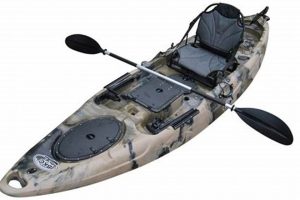
A high-quality wheeled conveyance designed for kayaks, especially those used for fishing, facilitates easy transport between vehicle and launch point. These specialized carts typically feature durable construction, large pneumatic tires suitable for various terrains (sand, gravel, etc.), and adjustable cradles or straps to secure the kayak. Some models even incorporate specialized features like kickstands and gear storage.
Transporting a fishing kayak, often laden with gear, can be physically demanding. A suitable cart significantly reduces strain and potential damage to the vessel. This is particularly valuable for anglers accessing remote fishing spots or navigating challenging terrain. The evolution of these carts reflects a growing emphasis on angler convenience and efficiency, allowing for more time focused on the sport itself.
The following sections will explore key factors to consider when selecting such a cart, including weight capacity, terrain compatibility, and construction materials. Additional topics will cover popular models, maintenance tips, and recommended accessories.
Tips for Selecting a Kayak Cart for Fishing
Choosing the right kayak cart significantly impacts transport efficiency and overall fishing experience. Careful consideration of several factors ensures optimal performance and longevity.
Tip 1: Weight Capacity: Verify the cart’s weight capacity exceeds the combined weight of the kayak and all fishing gear. Overloading can lead to cart failure and potential damage to the kayak.
Tip 2: Tire Type and Size: Larger, pneumatic tires generally handle soft surfaces like sand and mud more effectively. Consider the typical terrain encountered when selecting tire type and size.
Tip 3: Frame Material: Aluminum and stainless steel frames offer excellent corrosion resistance and durability, crucial for saltwater environments. Powder-coated steel provides a more affordable, but potentially less durable, option.
Tip 4: Cradle Design: Adjustable cradles accommodate various hull shapes and sizes, providing secure transport. Check for padding to prevent scratches and abrasion during transit.
Tip 5: Ease of Assembly and Disassembly: Quick and easy assembly/disassembly is essential for efficient transitions between transport and launch. Look for models with intuitive designs and minimal components.
Tip 6: Additional Features: Some carts offer features like kickstands for loading/unloading stability, gear storage compartments, and tie-down straps for added security. Consider which features align with individual needs and preferences.
Selecting a cart tailored to individual requirements ensures ease of use, protects the kayak investment, and allows anglers to focus on their pursuit.
The concluding section offers a summary of key selection criteria and highlights recommended cart models for various budgets and fishing styles.
1. Durability

Durability stands as a critical attribute in fishing kayak carts, directly influencing their lifespan and overall value. A cart subjected to harsh outdoor conditionssaltwater, UV exposure, and rough terrainrequires robust construction to withstand wear and tear. A durable cart minimizes the risk of breakdowns during transport, safeguarding both the kayak and the angler’s time. For instance, a cart constructed from corrosion-resistant materials like anodized aluminum or stainless steel offers superior longevity in coastal environments compared to one made of untreated steel. Investing in a durable cart ultimately reduces long-term replacement costs and ensures consistent performance throughout its service life.
The practical significance of durability extends beyond material choice. Reinforced welds, high-quality hardware, and puncture-resistant tires contribute to a cart’s overall resilience. Consider a scenario where an angler transports a fully loaded kayak across a rocky beach. A cart with inferior wheels might suffer punctures or axle damage, rendering it unusable. Conversely, a cart with heavy-duty pneumatic tires and a robust frame will handle such terrain with ease. This resilience translates to uninterrupted fishing trips and a reliable transport solution for years to come.
Prioritizing durability ensures a dependable, long-lasting kayak cart. Selecting a cart built with robust materials and construction methods minimizes maintenance requirements and maximizes the return on investment. This focus on durability directly contributes to a more enjoyable and efficient fishing experience, allowing anglers to focus on their pursuit rather than equipment concerns.
2. Terrain Compatibility

Terrain compatibility represents a pivotal factor in selecting the best fishing kayak cart. The cart’s ability to navigate diverse surfaces directly impacts transport efficiency and overall fishing experience. A cart ill-suited to the terrain can lead to difficulty maneuvering, potential damage to the kayak, and wasted time and effort. Understanding terrain requirements before selecting a cart ensures a seamless transition from vehicle to water.
- Tire Type and Size
Tire characteristics significantly influence a cart’s performance across various terrains. Large, pneumatic (air-filled) tires excel on soft surfaces like sand and mud, providing greater flotation and reducing the risk of getting bogged down. Smaller, solid tires might be suitable for paved surfaces or hard-packed ground but struggle in softer conditions. For instance, launching from a sandy beach necessitates larger pneumatic tires, while a cart with smaller, harder tires suffices for launching from a boat ramp. Selecting appropriate tire type and size ensures efficient transport across the intended terrain.
- Wheel Bearings
Wheel bearings play a crucial role in smooth and efficient rolling, especially under load. Sealed bearings offer superior protection against sand, water, and debris, contributing to longer lifespan and reduced maintenance requirements. Unsealed bearings, while often less expensive, are more susceptible to contamination and require more frequent cleaning and lubrication. High-quality, sealed bearings provide consistent performance and minimize rolling resistance, especially when transporting heavy kayaks and gear across challenging terrain.
- Cart Frame and Construction
The cart’s frame material and overall construction contribute to its ability to withstand the stresses of various terrains. A sturdy frame, constructed from materials like aluminum or stainless steel, offers greater durability and resistance to bending or twisting, particularly when navigating uneven surfaces. For example, a cart traversing a rocky path benefits from a robust frame to prevent damage. Conversely, a lightweight frame might be suitable for smoother surfaces but risks structural failure on rougher terrain.
- Suspension System (if applicable)
Some kayak carts incorporate suspension systems to further enhance terrain compatibility. Suspension helps absorb shocks and vibrations, improving stability and reducing strain on both the cart and the kayak when traversing uneven surfaces. While not essential for all terrains, suspension can be advantageous for anglers frequently navigating particularly rough or bumpy landscapes. This feature contributes to a smoother, more controlled ride and minimizes the risk of damage from impacts.
By carefully considering these facets of terrain compatibility, anglers can select a kayak cart optimized for their specific needs and fishing environments. Matching the cart’s capabilities to the prevalent terrain ensures effortless transport, minimizes the risk of damage, and ultimately contributes to a more productive and enjoyable fishing experience.
3. Weight Capacity
Weight capacity stands as a critical factor in selecting a fishing kayak cart. A cart’s capacity must exceed the combined weight of the kayak, fishing gear, and any additional accessories. Insufficient weight capacity can lead to structural failure, potentially damaging both the kayak and the cart. Accurately assessing weight requirements ensures safe and efficient transport.
- Kayak Weight
Kayak weight varies significantly based on material, size, and design. Fishing kayaks, often outfitted with additional features, tend to be heavier than recreational kayaks. Determining the precise weight of the kayak, including any installed accessories like fish finders or rod holders, is crucial for selecting a cart with adequate capacity.
- Gear Weight
Fishing gear contributes significantly to the overall load. This includes rods, reels, tackle boxes, coolers, and personal items. Accurately estimating the weight of all carried gear ensures the cart’s capacity aligns with the total load requirement. Underestimating gear weight can overload the cart, jeopardizing its structural integrity.
- Safety Margin
Incorporating a safety margin beyond the calculated combined weight of the kayak and gear provides a buffer against unexpected weight fluctuations. This margin accounts for potential variations in gear load or the addition of accessories over time. A safety margin ensures the cart operates within its optimal performance range, reducing stress on its components.
- Cart Material and Construction
The cart’s material and construction directly influence its weight capacity. Heavy-duty materials like reinforced aluminum or steel offer higher weight limits compared to lighter materials. A cart’s design, including frame structure and axle strength, also plays a role in determining its overall capacity. Matching cart material and construction to the anticipated load ensures safe and reliable transport.
Careful evaluation of these weight considerations ensures the selection of a cart capable of safely and efficiently transporting the kayak and all associated gear. Prioritizing weight capacity contributes to a dependable transport solution, allowing anglers to focus on their pursuit without concern for equipment limitations. A properly selected cart provides peace of mind and enhances the overall fishing experience.
4. Portability

Portability represents a crucial aspect of the best fishing kayak carts, directly influencing transport convenience and overall usability. A highly portable cart simplifies transport to and from the water, minimizing effort and maximizing fishing time. Various factors contribute to a cart’s portability, impacting its ease of use and storage.
- Cart Weight and Size
A lightweight and compact cart simplifies handling and storage. A heavier, bulkier cart proves cumbersome to maneuver, especially across challenging terrain or when loading into a vehicle. Consider a compact, foldable cart that easily fits in a car trunk compared to a larger, non-folding cart requiring significant storage space. Cart weight and size directly influence transport convenience, particularly for anglers with limited storage capacity or physical strength.
- Ease of Assembly/Disassembly
Quick and intuitive assembly and disassembly streamline transitions between transport and launch. A cart with complex assembly procedures or numerous small parts can be frustrating and time-consuming to set up and break down, especially in adverse weather conditions. For example, a cart featuring quick-release mechanisms or tool-free assembly offers superior convenience compared to one requiring multiple tools and complex instructions. Efficient assembly and disassembly maximize fishing time and minimize pre- and post-fishing logistical challenges.
- Wheel Removal (if applicable)
Removable wheels further enhance portability, particularly for storage and transport in smaller vehicles. Detaching the wheels reduces the cart’s overall size, allowing it to fit in tighter spaces. This feature proves advantageous for anglers with limited storage capacity or those who frequently transport their carts in compact cars. The ability to quickly remove and reattach wheels streamlines storage and transport logistics.
- Carrying Handles/Straps
Integrated carrying handles or straps facilitate transport, especially when navigating stairs, uneven terrain, or short distances. These features provide secure grip points, simplifying maneuvering the cart, even when folded. For instance, a cart with a comfortable shoulder strap offers greater portability compared to one without any carrying aids, especially when transporting the cart across longer distances or over obstacles. Carrying handles and straps enhance overall transport convenience and reduce strain during handling.
Prioritizing portability in kayak cart selection ensures effortless transport and enhances the overall fishing experience. A readily portable cart minimizes logistical challenges, allowing anglers to focus on their pursuit rather than equipment management. Careful consideration of these portability factors contributes to a seamless transition from vehicle to water, maximizing fishing time and enjoyment.
5. Secure Kayak Cradling

Secure kayak cradling constitutes a critical element of a best fishing kayak cart, directly impacting both kayak safety and transport efficiency. A well-designed cradling system safeguards the kayak from damage during transit while ensuring stable and balanced movement. Inadequate cradling can lead to slippage, scratches, or even structural damage to the kayak, potentially jeopardizing the fishing trip. For example, a kayak transported on a cart with insufficient cradling might shift during movement, causing it to rub against the cart frame and sustain abrasions. Conversely, a cart equipped with adjustable, padded cradles securely holds the kayak in place, preventing such damage.
The practical significance of secure cradling extends beyond damage prevention. A stable kayak minimizes the risk of tipping or shifting during transport, particularly over uneven terrain. This stability improves maneuverability and reduces strain on the cart user. Consider traversing a bumpy path with a kayak precariously balanced on an unstable cart. This scenario presents a significant risk of the kayak tipping, potentially causing damage and injury. A cart with secure cradling alleviates this risk, providing a stable and predictable transport experience. Furthermore, adjustable cradles accommodate various kayak hull shapes and sizes, ensuring compatibility and optimal support for different kayak models. This adaptability eliminates the need for multiple carts or makeshift solutions, enhancing overall convenience and efficiency.
Effective kayak cradling contributes significantly to a positive fishing experience. By safeguarding the kayak from damage and ensuring stable transport, it allows anglers to focus on their pursuit without equipment concerns. Selecting a cart with a well-designed cradling system, featuring adjustable and padded contact points, represents a worthwhile investment, protecting the kayak and enhancing overall transport efficiency. This careful consideration ultimately contributes to a smoother, more enjoyable fishing outing.
6. Price
Price plays a significant role in the selection of a fishing kayak cart. While the “best” cart often implies premium features and performance, budget considerations remain a practical constraint for many anglers. Balancing cost with desired features requires careful evaluation of available options and a clear understanding of individual needs and priorities. A higher price doesn’t always equate to superior performance, and a budget-friendly option can often provide adequate functionality for specific fishing styles and environments.
- Budget Constraints
Anglers operate within diverse budget constraints. Establishing a realistic budget before evaluating cart options helps narrow the field and prevents overspending. Recognizing budgetary limitations allows for focused research on carts within the affordable range, maximizing value for money. For instance, an angler on a tight budget might prioritize essential functionality over premium features, opting for a simpler, more cost-effective cart.
- Feature Set vs. Cost
Cart features directly impact price. Premium features like advanced suspension systems, integrated gear storage, or specialized tire designs often command a higher price. Evaluating which features align with individual fishing needs and preferences allows for informed decision-making. An angler frequently navigating challenging terrain might justify the added expense of a cart with advanced suspension, while an angler launching from smooth boat ramps might find a basic cart sufficient.
- Material and Construction Quality
Cart materials and construction quality significantly influence both price and durability. Carts constructed from high-grade materials like marine-grade aluminum or stainless steel typically come at a premium but offer superior corrosion resistance and longevity. Less expensive materials might suffice for freshwater environments but lack the durability required for saltwater exposure. Balancing material quality with budget constraints requires considering the intended usage environment and long-term ownership costs.
- Long-Term Value
While initial price is a primary consideration, evaluating long-term value proves essential. A more expensive, durable cart might offer a lower total cost of ownership over time compared to a cheaper cart requiring frequent repairs or replacement. Considering factors like warranty coverage, expected lifespan, and maintenance requirements allows for a more comprehensive cost assessment. Investing in a higher-quality cart initially can save money in the long run, particularly for frequent users.
Understanding the interplay between price and features allows anglers to make informed decisions when selecting a fishing kayak cart. Prioritizing essential features within budget constraints ensures a suitable cart that meets individual needs without unnecessary expenditure. A balanced approach to price consideration maximizes value and contributes to a positive fishing experience.
Frequently Asked Questions
This section addresses common inquiries regarding the selection and use of kayak carts designed for fishing.
Question 1: What is the typical weight capacity of a fishing kayak cart?
Weight capacities vary, generally ranging from 100 to 300 pounds. Confirming the combined weight of the kayak and all gear is essential for selecting a cart with adequate capacity.
Question 2: Are pneumatic tires always preferable to solid tires?
Pneumatic tires excel on soft surfaces like sand and mud, providing better flotation and shock absorption. Solid tires offer greater durability and require less maintenance but can struggle on soft terrain.
Question 3: What materials are best suited for saltwater environments?
Anodized aluminum, stainless steel, and powder-coated steel offer corrosion resistance. Aluminum provides a balance of strength and light weight, while stainless steel offers superior corrosion protection, often at a higher price point.
Question 4: How does one determine the appropriate cart size for a specific kayak?
Cart specifications typically indicate compatible kayak lengths and widths. Ensure the cart’s dimensions accommodate the kayak’s hull shape and size for secure transport.
Question 5: What maintenance is recommended for extending cart lifespan?
Regular rinsing, especially after saltwater exposure, helps prevent corrosion. Periodic lubrication of moving parts, such as axles and wheel bearings, ensures smooth operation. Inspecting tires for wear and tear and replacing them as needed maintains optimal performance.
Question 6: Are there specific features to consider for launching from a beach?
Wide, balloon-style tires are ideal for navigating soft sand. Carts with kickstands aid in loading and unloading on uneven surfaces. Corrosion-resistant materials are essential for withstanding saltwater exposure.
Careful consideration of these frequently asked questions facilitates informed decisions regarding kayak cart selection and maintenance. Addressing these common concerns ensures optimal performance and longevity, contributing to a more enjoyable and efficient fishing experience.
The next section provides a comparative analysis of several popular fishing kayak cart models currently available on the market.
Best Fishing Kayak Cart
Selecting the optimal kayak cart for fishing necessitates careful consideration of several interconnected factors. Durability, terrain compatibility, weight capacity, portability, secure cradling, and price all contribute significantly to transport efficiency, kayak safety, and overall user experience. Prioritizing durability ensures long-term performance in challenging environments. Careful assessment of terrain requirements, including surface type and anticipated obstacles, guides appropriate tire selection and frame construction considerations. Accurate weight calculation, encompassing both kayak and gear, prevents overloading and potential cart failure. Portability features, such as compact size and ease of assembly, simplify transport logistics. Secure cradling mechanisms protect the kayak from damage during transit. Finally, balancing budget constraints with desired features allows for informed purchasing decisions, maximizing value for money.
Effective kayak transport significantly enhances the fishing experience. Investing in a suitable cart tailored to individual needs and fishing environments streamlines logistical challenges, allowing anglers to focus on their pursuit. The right cart becomes an invaluable asset, contributing to efficient transitions between vehicle and water, preserving kayak integrity, and ultimately maximizing time spent on the water. Careful evaluation of these crucial elements empowers anglers to select the best fishing kayak cart for their specific requirements, enhancing both convenience and overall enjoyment of the sport.