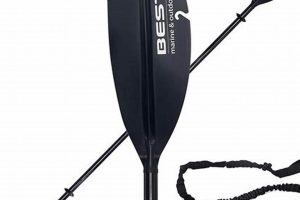
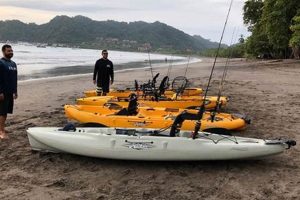
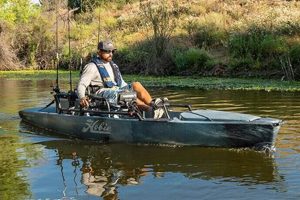
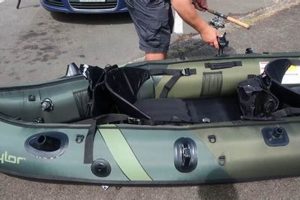
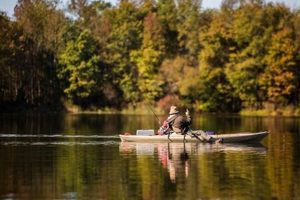
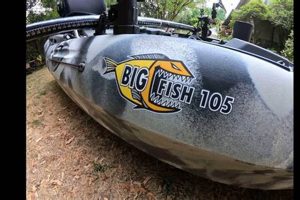
A small, self-propelled watercraft designed specifically for angling offers unparalleled access to secluded fishing spots. These vessels typically feature specialized storage for fishing gear, rod holders, and often comfortable seating arrangements tailored for extended periods on the water. An example would be a compact, sit-on-top vessel equipped with adjustable footrests, a built-in cooler, and multiple flush-mounted rod holders, allowing anglers to navigate shallow waters and easily access hard-to-reach fishing grounds.
The independent nature of this type of watercraft allows anglers to explore diverse waterways at their own pace, unconstrained by the limitations of larger boats or shore fishing. This self-reliance fosters a deeper connection with nature and provides opportunities for a more personalized fishing experience. Historically, smaller fishing boats have played a crucial role in subsistence fishing and recreational angling, evolving from simple dugout canoes to the modern, purpose-built designs seen today. The increasing popularity of these smaller craft reflects a growing appreciation for their versatility and the unique access they provide.
This exploration will further examine the advantages of this approach to angling, covering topics such as choosing the right vessel, essential equipment, popular fishing techniques, and responsible angling practices. Subsequent sections will delve into specific features and options available to prospective purchasers, providing a comprehensive guide to selecting and utilizing this type of watercraft.
Tips for Kayak Fishing
Effective angling from a kayak requires careful planning and execution. The following tips offer guidance for a safe and productive experience.
Tip 1: Prioritize Stability: Vessel stability is paramount. Consider wider, flatter-bottomed designs for enhanced stability, especially for beginners or when fishing in rougher waters. A lower center of gravity contributes significantly to stability.
Tip 2: Plan Fishing Locations Carefully: Research potential fishing spots thoroughly, accounting for water conditions, accessibility, and prevailing weather patterns. Check local regulations and obtain necessary permits.
Tip 3: Equip Appropriately: Select appropriate fishing gear for the target species and the specific environment. Compact tackle boxes and specialized kayak fishing rods and reels are recommended.
Tip 4: Practice Essential Safety Procedures: Always wear a personal flotation device (PFD). Carry a whistle, signaling device, and communication equipment for emergencies. Inform someone of intended fishing locations and estimated return times.
Tip 5: Master Paddling and Maneuvering Techniques: Practice paddling and maneuvering in calm waters before venturing into more challenging conditions. Understanding how the kayak responds to wind and currents is crucial.
Tip 6: Employ Effective Anchoring Strategies: Utilize appropriate anchoring systems for securing the kayak in desired fishing locations. Consider anchor trolleys or drift socks to control drift in flowing water.
Tip 7: Respect Wildlife and the Environment: Practice catch-and-release whenever possible. Adhere to Leave No Trace principles by properly disposing of waste and minimizing disturbance to natural habitats.
By adhering to these guidelines, anglers can significantly enhance their safety and overall fishing experience, while contributing to the preservation of aquatic ecosystems.
The following section will offer concluding thoughts on maximizing the enjoyment and success of kayak angling adventures.
1. Independent Exploration

Independent exploration forms the cornerstone of the freedom fishing kayak experience. It represents the ability to navigate and discover waterways autonomously, unbound by predetermined routes or schedules. This aspect significantly contributes to the appeal of kayak angling, offering a sense of self-reliance and adventure. The following facets highlight the importance of independent exploration within this context.
- Personalized Itinerary:
Kayak anglers can design personalized itineraries based on their specific interests and fishing goals. This might involve exploring secluded coves, navigating upstream to access pristine stretches of river, or venturing offshore to target pelagic species. The autonomy to choose one’s own route and pace significantly enhances the fishing experience, allowing for spontaneous adjustments based on real-time conditions and opportunities.
- Unfettered Access:
Kayaks grant access to shallow-water environments and narrow tributaries often inaccessible to larger vessels. This opens up a wider range of fishing opportunities, allowing anglers to target species in their preferred habitats. The ability to navigate tight passages and shallows expands the potential for discovery and increases the likelihood of encountering diverse fish populations.
- Solitude and Connection with Nature:
Independent exploration often leads to experiences of solitude and a deeper connection with nature. Paddling through quiet waterways, surrounded by natural beauty, fosters a sense of tranquility and appreciation for the environment. This aspect contributes significantly to the overall enjoyment and therapeutic value of kayak fishing.
- Skill Development and Self-Reliance:
Navigating and fishing from a kayak fosters essential skills in paddling, navigation, and watercraft handling. The self-sufficient nature of kayak angling promotes problem-solving abilities and resourcefulness, enhancing confidence and independence on the water.
These facets of independent exploration coalesce to create a unique and rewarding angling experience. The freedom to choose one’s own path, access remote locations, connect with nature, and develop essential skills distinguishes kayak fishing as a pursuit that emphasizes self-reliance, personal growth, and a deeper appreciation for the aquatic environment.
2. Unrestricted Access
Unrestricted access represents a pivotal component of the freedom fishing kayak experience. The ability to navigate diverse waterways, unconstrained by limitations imposed on larger vessels, expands angling opportunities significantly. This access stems from the kayak’s compact size, maneuverability, and shallow draft, enabling navigation through narrow channels, shallow creeks, and areas beyond the reach of motorized boats. This advantage allows anglers to explore diverse habitats, target specific species in their preferred environments, and discover hidden fishing grounds often inaccessible by other means. For example, navigating a shallow, heavily vegetated estuary teeming with juvenile fish becomes achievable, offering opportunities unattainable from the confines of a larger boat.
The practical significance of unrestricted access manifests in several ways. It expands the range of fishable water, increasing the potential for discovering productive spots. This translates to greater opportunities for encountering diverse fish species and tailoring fishing techniques to specific environments. Moreover, unrestricted access often leads to encounters with pristine natural settings, enhancing the overall angling experience and fostering a deeper connection with the aquatic environment. Anglers can silently glide through untouched mangrove tunnels or explore hidden coves, experiencing a level of intimacy with nature often precluded by more intrusive methods of water travel. These experiences contribute to the overall sense of freedom and adventure inherent in kayak fishing.
In summary, unrestricted access provided by kayaks broadens the scope of angling possibilities. It unlocks diverse habitats, allowing anglers to explore otherwise inaccessible areas and connect with the natural environment in a unique way. This capacity to navigate freely underscores the core principle of freedom inherent in kayak fishing, empowering anglers to pursue their passion on their own terms and discover new horizons on the water. Overcoming challenges such as navigating changing tides or portages between waterways only serves to deepen the sense of self-reliance and accomplishment integral to the kayak fishing experience.
3. Personalized Experience

The personalized experience offered by freedom fishing kayaks distinguishes it from other angling methods. The ability to tailor the experience to individual preferences, skill levels, and fishing styles contributes significantly to its appeal. This customization extends from equipment choices and fishing techniques to selecting destinations and setting the pace of the excursion. This autonomy empowers anglers to create unique and fulfilling experiences on the water.
- Customization of Fishing Gear:
Kayak anglers can select fishing gear tailored to their specific needs and target species. This includes choosing rods, reels, lines, lures, and other tackle appropriate for the environment and fishing style. A fly fisherman might equip their kayak with specialized fly rods and storage for flies, while a bass angler might opt for baitcasting setups and tackle boxes organized for bass fishing lures. This level of customization ensures an optimized and efficient fishing experience.
- Choice of Fishing Location and Technique:
The maneuverability and accessibility of kayaks allow anglers to choose fishing locations based on personal preference. Whether targeting fish in shallow estuaries, navigating river rapids, or exploring open lakes, the kayak provides the versatility to reach diverse environments. This freedom extends to fishing techniques as well, allowing for trolling, casting, jigging, or fly fishing based on individual preference and the characteristics of the chosen location. An angler seeking tranquility might choose a quiet cove for fly fishing, while another seeking a challenge might navigate a fast-flowing river for drift fishing.
- Pacing and Exploration:
Kayak fishing allows individuals to set their own pace and explore at will. Unlike guided fishing tours or shared boat trips, kayak anglers are not bound by predetermined schedules or routes. They can linger in productive areas, explore new territories, or simply enjoy the tranquility of the water at their leisure. This self-determined pace allows for a more immersive and contemplative experience, enhancing the connection with nature and personal enjoyment of the activity.
- Solo or Social Experience:
Kayak fishing offers the flexibility of a solitary experience or a shared adventure with companions. Solo trips foster introspection and a deeper connection with nature, while group outings provide opportunities for camaraderie and shared experiences. This adaptability caters to diverse social preferences, further personalizing the overall experience. A group of friends might plan a multi-day kayak fishing trip, while a solitary angler might seek a peaceful solo outing on a remote lake.
The capacity for personalization inherent in freedom fishing kayak contributes significantly to its appeal. By empowering anglers to tailor their experience to individual preferences and fishing styles, it fosters a unique sense of ownership and fulfillment. This flexibility, combined with the independent exploration and unrestricted access provided by kayaks, creates an angling experience that prioritizes personal connection, self-reliance, and enjoyment of the natural world. It promotes a deep sense of freedom and empowers anglers to cultivate their own unique relationship with the sport.
4. Connection with Nature

Kayak fishing fosters a profound connection with nature often absent in other forms of angling. The quiet propulsion and intimate scale of the kayak minimize disturbance to the environment, allowing closer observation of wildlife and a deeper immersion in natural surroundings. This connection arises from the direct interaction with the water, the quiet observation of aquatic life, and the immersive experience of navigating natural waterways. Cause and effect are intertwined: the choice to engage with nature through kayak fishing leads to heightened awareness and appreciation of the natural world. For example, an angler paddling silently through a marsh might observe herons hunting, turtles basking, and fish schooling, fostering an understanding of the interconnectedness of the ecosystem.
The importance of this connection as a component of freedom fishing kayak lies in its contribution to a holistic angling experience. It transcends the mere pursuit of fish, encompassing an appreciation for the environment and a respect for its delicate balance. This heightened awareness can lead to greater environmental stewardship among anglers, promoting responsible fishing practices and conservation efforts. The practical significance of this understanding lies in its potential to transform anglers into advocates for the protection of aquatic ecosystems. Witnessing firsthand the beauty and fragility of these environments can inspire individuals to take active roles in conservation initiatives, promoting sustainable fishing practices and advocating for the protection of natural resources. For instance, an angler who regularly kayaks through a particular estuary might become involved in local efforts to clean up pollution or protect vital habitats.
In summary, the connection with nature fostered by kayak fishing represents a significant aspect of its appeal. This connection, arising from the immersive and minimally disruptive nature of the activity, can lead to increased environmental awareness and a deeper appreciation for the natural world. The challenge lies in fostering this connection among all kayak anglers, encouraging responsible practices and promoting a sense of stewardship towards aquatic ecosystems. This ensures the long-term sustainability of the sport and the preservation of the natural environments that make it so rewarding. This understanding reinforces the concept of freedom inherent in kayak fishing, not only as freedom to explore but also as freedom to contribute meaningfully to the preservation of these unique and valuable ecosystems.
5. Versatile Fishing Platform

The concept of a “versatile fishing platform” is central to understanding the appeal of freedom fishing kayaks. These kayaks are not merely vessels for reaching fishing spots; they are adaptable platforms designed to accommodate diverse fishing styles, techniques, and environments. This versatility enhances angling effectiveness and contributes significantly to the overall freedom and enjoyment experienced by kayak anglers.
- Adaptability to Diverse Environments:
Kayaks excel in a variety of aquatic environments, from shallow, vegetated estuaries and narrow creeks to open lakes and coastal waters. Their compact size and maneuverability allow access to areas often inaccessible to larger boats, expanding fishing opportunities. For example, a kayak angler can easily navigate through tight mangrove tunnels to access secluded lagoons teeming with snook or redfish, while a larger boat would be restricted by draft and maneuverability. This adaptability broadens the range of fishable waters and increases the potential for discovering productive fishing grounds.
- Support for Multiple Fishing Techniques:
Kayaks provide stable and adaptable platforms for various fishing techniques. Whether trolling, casting, jigging, or fly fishing, the kayak can be configured and positioned to optimize effectiveness. A kayak angler can easily switch between trolling with multiple lines and casting to structure by simply adjusting their position and tackle. Specialized accessories, like rod holders and anchor trolleys, further enhance the kayak’s adaptability to different fishing styles.
- Integration of Fishing Accessories:
Modern fishing kayaks are designed to integrate seamlessly with a wide range of accessories, enhancing their functionality and versatility. Rod holders, fish finders, GPS units, anchor systems, and specialized storage compartments can be readily installed, transforming the kayak into a fully equipped fishing platform. An angler might equip their kayak with a fish finder to locate underwater structures, a GPS to mark productive spots, and rod holders for convenient access to multiple rods. This integration streamlines the fishing experience and maximizes efficiency on the water.
- Stability and Maneuverability:
While offering versatility, fishing kayaks also prioritize stability and maneuverability. Stable hull designs ensure a secure platform for casting, fighting fish, and landing catches, while responsive handling allows for precise navigation and quick adjustments in changing conditions. A stable kayak enables an angler to confidently stand and cast in calm waters, while its maneuverability allows for quick turns and adjustments to follow schooling fish or avoid obstacles. This balance of stability and maneuverability is crucial for a successful and enjoyable kayak fishing experience.
The versatility of the freedom fishing kayak as a fishing platform is a key element of its appeal. By seamlessly integrating adaptability, diverse technique support, accessory integration, and balanced performance, these kayaks empower anglers to explore a wider range of fishing opportunities and personalize their experiences on the water. This versatility ultimately enhances fishing success and strengthens the connection between angler and environment, contributing significantly to the freedom and enjoyment inherent in kayak fishing.
6. Self-Reliant Angling
Self-reliant angling represents a core principle underpinning the freedom fishing kayak experience. It embodies the capacity to manage all aspects of a fishing excursion independently, from planning and preparation to execution and adaptation on the water. This self-sufficiency empowers anglers, fosters a deeper connection with the sport, and enhances the overall sense of accomplishment. The following facets explore the components and implications of self-reliance in the context of kayak fishing.
- Pre-Trip Planning and Preparation:
Self-reliance begins long before launching the kayak. It involves researching potential fishing locations, assessing weather conditions, selecting appropriate gear, and developing contingency plans. An angler might consult tide charts, study nautical maps, and prepare emergency gear, demonstrating proactive self-sufficiency. This thorough preparation minimizes reliance on external resources and maximizes the chances of a safe and successful outing.
- Independent Navigation and Decision-Making:
On the water, self-reliant kayak anglers navigate independently, making real-time decisions based on changing conditions and observed opportunities. This includes adjusting routes based on wind and currents, selecting fishing spots based on environmental cues, and modifying techniques based on fish behavior. An angler might choose to paddle further up a creek based on observed baitfish activity, demonstrating independent judgment and adaptability. This autonomy fosters confidence and enhances the sense of personal accomplishment.
- Equipment Management and Problem-Solving:
Self-reliance extends to managing equipment effectively and troubleshooting any issues that arise. This includes maintaining and repairing gear, adapting to unforeseen challenges, and implementing solutions independently. An angler might repair a broken fishing rod tip on the water or adjust their anchoring strategy due to shifting winds, demonstrating practical problem-solving skills. This ability to overcome challenges reinforces self-sufficiency and builds confidence in one’s abilities.
- Safety Consciousness and Risk Management:
Self-reliant kayak anglers prioritize safety by assessing risks, taking appropriate precautions, and adhering to safe boating practices. This includes wearing a personal flotation device, carrying essential safety gear, and communicating planned routes and estimated return times to others. An angler might check weather forecasts before departing and carry a VHF radio for communication in case of emergencies, demonstrating a proactive approach to safety and risk management. This responsible behavior minimizes potential hazards and ensures a safer and more enjoyable experience.
These facets of self-reliant angling highlight the integral role it plays in the freedom fishing kayak experience. By fostering independent planning, navigation, problem-solving, and safety consciousness, self-reliance empowers anglers to take ownership of their experiences on the water. This autonomy strengthens the connection with the sport, enhances the sense of accomplishment, and contributes significantly to the overall freedom and enjoyment inherent in kayak fishing. This reinforces the idea that freedom fishing kayaks are not just about physical independence but also about the empowering sense of self-sufficiency that comes with mastering the skills and knowledge required for successful and enjoyable angling.
Frequently Asked Questions
This section addresses common inquiries regarding specialized small watercraft designed for angling.
Question 1: What are the primary advantages of using this type of watercraft for angling?
Key advantages include enhanced access to shallow or secluded areas, maneuverability, affordability compared to larger motorized boats, and a closer connection with the aquatic environment.
Question 2: What safety precautions are essential when angling from these vessels?
Essential precautions include wearing a personal flotation device (PFD), carrying a whistle and signaling device, informing someone of planned fishing locations and return times, and checking weather forecasts before embarking.
Question 3: What essential gear is recommended for this type of angling?
Recommended gear includes appropriate fishing rods and reels, tackle boxes designed for compact storage, a landing net, pliers, appropriate fishing line and lures, and a dry bag for personal items.
Question 4: How does one choose the appropriate vessel for individual needs?
Consider factors such as fishing style, target species, intended fishing locations (calm lakes, rivers, or open ocean), storage capacity requirements, and individual physical limitations when selecting a vessel.
Question 5: What are the typical costs associated with acquiring and maintaining these vessels?
Costs vary based on the chosen model, features, and accessories. Consider expenses such as the initial purchase price, paddle(s), PFD, fishing gear, potential maintenance or repairs, and optional accessories like fish finders or GPS units.
Question 6: Are there specific regulations or licensing requirements for angling from these watercraft?
Regulations vary by location. Consult local authorities or relevant governing bodies to ascertain specific licensing requirements, permitted fishing areas, and any applicable regulations regarding vessel operation and catch limits.
Understanding these aspects contributes to a safer, more informed, and ultimately successful experience on the water.
The subsequent section will delve into advanced techniques for maximizing angling success.
Freedom Fishing Kayak
This exploration has examined the multifaceted nature of the freedom fishing kayak experience, emphasizing its unique advantages and contributions to angling pursuits. From the unrestricted access to diverse waterways and the personalized nature of each excursion to the profound connection with nature fostered by this self-reliant approach, the benefits are significant. The versatility of these specialized watercraft as fishing platforms, coupled with the emphasis on self-sufficiency and responsible angling practices, further distinguishes this approach. Understanding these elements allows for a more informed and rewarding experience on the water.
The increasing popularity of this angling method reflects a growing appreciation for its unique blend of freedom, versatility, and connection with the natural world. As anglers continue to seek new ways to engage with their passion, the freedom offered by these specialized kayaks presents an opportunity to rediscover the essence of angling and forge a deeper connection with aquatic ecosystems. The future of this approach rests upon responsible stewardship and a shared commitment to preserving the natural environments that make it so rewarding. Embracing sustainable practices ensures the continued enjoyment and accessibility of this unique angling experience for generations to come.