Essential gear for kayak angling enhances safety and improves the fishing experience. This equipment ranges from fundamental safety devices like personal flotation devices (PFDs) and signaling whistles to specialized fishing tools such as rod holders and anchor systems. A well-chosen selection of equipment allows anglers to venture further, stay on the water longer, and increase their chances of a successful catch.
Appropriate equipment contributes significantly to both angler safety and fishing effectiveness. Historically, kayak fishing relied on adapted equipment from other angling disciplines. However, the growing popularity of this sport has driven innovation and the development of specialized gear. This evolution has resulted in lighter, more durable, and more efficient tools designed specifically for the unique demands of kayak fishing, providing anglers with greater comfort, safety, and fishing success.
The following sections will explore the key categories of essential equipment for kayak fishing, offering detailed insights into their functions, benefits, and selection criteria. These categories include personal safety gear, kayak modifications, fishing-specific equipment, navigation and communication tools, and clothing and accessories suitable for diverse weather conditions.
Essential Kayak Fishing Tips
Effective kayak angling requires careful planning and the proper equipment. These tips offer guidance for enhancing safety and maximizing fishing success.
Tip 1: Prioritize Safety Gear: A personal flotation device (PFD) is paramount. Ensure it fits correctly and is approved by relevant authorities. A whistle, signaling mirror, and waterproof first-aid kit are also crucial safety essentials.
Tip 2: Choose a Stable Kayak: Kayak stability significantly impacts fishing performance. Wider, flatter hulls offer greater stability, especially for stand-up fishing. Consider kayak length and weight capacity based on individual needs and anticipated fishing conditions.
Tip 3: Organize Tackle Efficiently: A well-organized tackle system optimizes efficiency. Utilize waterproof tackle boxes and storage solutions designed specifically for kayaks. Prioritize essential lures and tackle to minimize clutter and maximize space.
Tip 4: Secure Equipment Properly: Prevent gear loss by securely mounting rod holders, fish finders, and other accessories. Utilize leashes and tie-down straps to safeguard valuable equipment from unexpected capsizes or rough water.
Tip 5: Plan for Navigation and Communication: A waterproof GPS device or chartplotter aids navigation, particularly in unfamiliar waters. A VHF radio or a charged mobile phone in a waterproof case enables communication in emergencies.
Tip 6: Dress Appropriately: Clothing should offer protection from sun, wind, and water. Layering allows for adaptability to changing weather conditions. Consider quick-drying fabrics and appropriate footwear.
Tip 7: Practice Paddle Strokes and Kayak Control: Confident kayak maneuvering is essential for efficient fishing. Practice different paddle strokes and techniques for controlling the kayak in various wind and current conditions.
Adherence to these guidelines contributes significantly to angler safety and enhances the overall kayak fishing experience, allowing for more productive and enjoyable outings.
By considering these essential tips, anglers can ensure they are well-prepared for a successful and safe kayak fishing adventure.
1. Personal Flotation Device (PFD)
A Personal Flotation Device (PFD), commonly known as a life vest or life jacket, is a non-negotiable component of essential kayak fishing equipment. Its primary function is to keep the angler afloat in the event of capsizing or accidental immersion, making it a critical safety device.
- Types and Selection
PFDs come in various types, including inherently buoyant (foam) and inflatable models. Inherently buoyant PFDs offer immediate flotation, while inflatable PFDs are less bulky but require manual or automatic inflation. Anglers should select a PFD specifically designed for paddling, ensuring proper fit and comfort for extended wear. Type III PFDs, designed for calm, inland waters where rapid rescue is likely, are generally suitable for kayak fishing.
- Legal Requirements and Regulations
Many jurisdictions mandate the carriage of PFDs on kayaks. Regulations may specify the type and condition of the PFD. Anglers should consult local boating regulations to ensure compliance and avoid penalties. Beyond legal requirements, wearing a PFD consistently while on the water is a fundamental safety practice.
- Features and Functionality
Modern fishing-specific PFDs often incorporate features like pockets for tackle and tools, attachment points for accessories, and high-visibility colors for enhanced safety. Some models offer integrated hydration packs or storage compartments. These features enhance convenience and utility while maintaining core safety functionality.
- Maintenance and Care
Proper PFD maintenance ensures its effectiveness in emergencies. Regular inspection for wear and tear, including checking straps, buckles, and inflation mechanisms (for inflatable models), is crucial. PFDs should be stored in a cool, dry place away from direct sunlight to prevent degradation of materials.
The inclusion of a properly fitted and maintained PFD in a kayak angler’s essential gear list significantly enhances safety on the water. Prioritizing PFD selection and usage demonstrates a commitment to responsible angling practices, enabling anglers to enjoy their sport with reduced risk.
2. Paddle
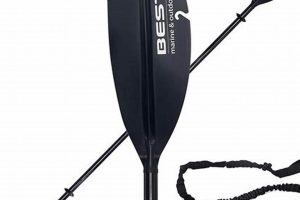
A paddle’s crucial role in kayak fishing stems from its function as the primary means of propulsion and maneuverability. Effective paddle selection and utilization directly impact an angler’s ability to reach fishing spots, control drift, and navigate various water conditions. This connection elevates the paddle from a simple tool to an essential piece of equipment.
Paddle choice influences fishing efficiency and safety. A paddle too short or too long for the kayaker’s physique and kayak dimensions results in reduced paddling power and potential strain. Blade shape also plays a significant role; wider blades offer more power, while narrower blades prioritize efficiency over long distances. Material selection impacts weight and durability, with lighter materials like carbon fiber offering performance advantages but at a higher cost. For instance, navigating strong currents or windy conditions necessitates a paddle with sufficient blade surface area to maintain control and prevent drift. Conversely, calmer waters may favor a lighter, narrower blade for efficient cruising.
Understanding the relationship between paddle characteristics and kayak fishing requirements empowers informed equipment choices. Selecting a paddle appropriate for the angler’s physical attributes, kayak type, and anticipated fishing environment optimizes performance and contributes to a safer and more productive experience. Furthermore, proper paddling technique maximizes efficiency and minimizes fatigue, allowing anglers to focus on fishing rather than exertion. This knowledge transforms the paddle from a mere accessory into an integral component of successful kayak angling.
3. Rod and Reel

The rod and reel combination forms the core of kayak fishing equipment, directly influencing an angler’s ability to target specific species and effectively handle fish from a kayak’s confined space. Appropriate rod and reel selection hinges on factors such as target species, fishing techniques employed, and the kayak’s stability characteristics. Shorter rods, typically between 6 and 7 feet, offer maneuverability advantages in a kayak’s limited space, while longer rods may be suitable for specific techniques or larger target species. Reel choice depends on factors like line capacity, drag system capabilities, and desired gear ratios. A lightweight spinning reel paired with a medium-power rod suits many kayak fishing applications, offering versatility for various species and techniques. Targeting larger game fish, however, may necessitate heavier tackle with increased line capacity and a more robust drag system.
Consider a kayak angler targeting bass in a shallow, weedy environment. A shorter, baitcasting rod paired with a low-profile baitcasting reel allows for precise casts and efficient lure presentation in tight spaces. The baitcasting reel’s higher gear ratio enables quick line retrieval, crucial for reacting to strikes and preventing fish from seeking cover. Conversely, an angler pursuing offshore species like kingfish might opt for a longer, heavier spinning rod and a high-capacity spinning reel with a powerful drag system. This combination provides the strength and line capacity necessary to handle larger, more powerful fish in open water.
Understanding the relationship between rod and reel selection, target species, and fishing environment is essential for successful kayak angling. Choosing appropriate gear enhances fishing effectiveness, improves fish handling capabilities within the kayak’s constraints, and ultimately contributes to a more rewarding and enjoyable fishing experience. Neglecting these considerations can lead to lost opportunities, equipment failure, or even safety risks when battling larger fish from a kayak. Matching the rod and reel to the specific fishing scenario ensures anglers are adequately equipped to handle the challenges and opportunities presented by kayak fishing.
4. Tackle Box

Effective tackle organization is paramount in kayak fishing, where limited space necessitates efficient storage and retrieval of essential gear. The tackle box serves as the central hub for this organization, directly impacting an angler’s preparedness and ability to adapt to changing fishing conditions. A well-organized tackle box streamlines lure changes, prevents tangles, and maximizes fishing time by minimizing wasted effort searching for specific items. Its importance extends beyond mere convenience; readily accessible essential gear can be crucial in critical moments, such as changing lures quickly to match active fish behavior or addressing line breakage promptly.
- Storage Capacity and Compartmentalization
Tackle boxes designed for kayak fishing often feature specialized compartments and dividers, accommodating a range of lure sizes and terminal tackle. This compartmentalization prevents items from shifting during transit and facilitates quick identification and retrieval of specific lures or hooks. Examples include adjustable dividers for customizing compartments, dedicated slots for hooks and weights, and secure storage for larger lures or tools. Adequate storage capacity ensures anglers can carry a sufficient variety of tackle to address diverse fishing scenarios without overcrowding the kayak.
- Portability and Accessibility
Kayak tackle boxes prioritize portability and ease of access. Compact sizes and lightweight construction minimize bulk and weight, essential considerations in a kayak’s limited space. Features like carrying handles, shoulder straps, and clear lids further enhance portability and accessibility. For instance, a tackle box designed to fit securely within a kayak’s storage hatch ensures readily accessible gear without impeding movement or stability. This convenient access allows for swift tackle changes and adjustments without disrupting the fishing flow.
- Durability and Water Resistance
Durability and water resistance are critical considerations for kayak tackle boxes, given their exposure to the elements and potential for water contact. Robust construction using impact-resistant materials protects tackle from damage during transport and handling. Waterproof seals and closures safeguard against water intrusion, preserving tackle integrity and preventing rust or corrosion. A durable, water-resistant tackle box ensures reliable performance even in challenging conditions, such as rain, splashing waves, or accidental submersion.
- Customization and Adaptability
Many kayak tackle boxes offer customization options, allowing anglers to tailor storage configurations to their specific needs and fishing styles. Removable dividers, adjustable trays, and interchangeable compartments provide flexibility for accommodating different lure types, terminal tackle, and tools. This adaptability allows anglers to optimize tackle organization based on target species, fishing techniques, and prevailing conditions. For example, an angler focusing on topwater fishing might configure their tackle box with dedicated compartments for various surface lures, while another angler specializing in bottom fishing might prioritize storage for weights, hooks, and sinkers.
The tackle box’s role in kayak fishing extends beyond simple storage; it serves as a critical organizational tool that directly influences fishing efficiency and preparedness. By carefully considering factors like storage capacity, portability, durability, and customization options, kayak anglers can select a tackle box that effectively addresses their specific needs and enhances their overall fishing experience. A well-organized and readily accessible tackle system contributes significantly to a successful and enjoyable day on the water, allowing anglers to focus on the pursuit of fish rather than the challenges of managing gear in a limited space.
5. Anchor

Anchoring plays a crucial role in kayak fishing, enabling anglers to maintain position in desired locations despite wind, current, or water depth. An anchor’s ability to secure the kayak enhances fishing effectiveness by allowing anglers to focus on fishing rather than constantly adjusting position. This stability becomes particularly critical in scenarios such as fishing structure, targeting specific depths, or presenting bait in a consistent manner. Understanding anchor selection, deployment, and retrieval is essential for maximizing fishing success and ensuring angler safety.
- Anchor Types and Selection
Various anchor types cater to different kayak fishing environments and bottom compositions. Folding grapnel anchors excel in rocky or weedy bottoms, while fluke or claw anchors suit sandy or muddy substrates. Anchor weight selection depends on kayak size, anticipated conditions, and water depth. For example, a heavier anchor is necessary for larger kayaks or strong current conditions. Carrying multiple anchors with varying weights allows anglers to adapt to diverse fishing locations. The anchor’s connection to the kayak utilizes an anchor trolley system, enabling adjustment of anchor position along the kayak’s length for optimal boat control in varying wind or current.
- Deployment and Retrieval Techniques
Proper anchor deployment and retrieval techniques contribute to both fishing effectiveness and safety. Deploying the anchor from the bow or stern allows control of kayak orientation relative to wind or current. Paying out sufficient anchor line, typically at a 5:1 or 7:1 ratio relative to water depth, ensures secure anchoring. Retrieval involves carefully hauling in the anchor line, hand-over-hand or with an anchor retrieval system, while maintaining kayak stability. Drifting the kayak towards the anchor during retrieval minimizes strain and facilitates a smoother process.
- Safety Considerations and Best Practices
Safe anchoring practices enhance angler safety and prevent equipment damage. Avoiding anchoring in heavily trafficked waterways or near navigation hazards is paramount. Attaching the anchor line to a designated anchor trolley or cleat distributes load and prevents sudden jolts. Regularly inspecting anchor line for wear and tear minimizes the risk of breakage. Carrying a spare anchor and line provides redundancy in case of equipment failure or unexpected anchoring challenges. Understanding and adhering to these safety precautions mitigates potential risks associated with anchoring.
- Anchor Accessories and Enhancements
Various accessories enhance anchor functionality and convenience. An anchor trolley system allows for adjusting the anchor’s position along the kayak’s length, optimizing boat control in various conditions. Anchor retrieval systems, including floats and pulleys, facilitate easier and more efficient retrieval, particularly in deeper water. Chain or rope snubbers reduce shock loads on the anchor line, increasing its lifespan and minimizing noise. Utilizing these accessories enhances anchor control, streamlines retrieval, and improves the overall anchoring experience.
Mastery of anchoring techniques and equipment selection significantly enhances kayak fishing effectiveness and safety. A well-chosen anchor, deployed and retrieved correctly, provides stability, allowing anglers to concentrate on fishing and maximizing their chances of success. Understanding the nuances of different anchor types, appropriate deployment techniques, and safety considerations empowers kayak anglers to confidently and safely utilize this essential tool in diverse fishing environments.
6. Fish Finder

A fish finder significantly enhances kayak fishing effectiveness by providing real-time underwater insights. These devices utilize sonar technology to locate fish, map bottom contours, and identify underwater structures. This information empowers anglers to make informed decisions about where to fish, what lures to use, and how to present them. The connection between a fish finder and essential kayak fishing equipment stems from its direct impact on fishing success. Locating fish concentrations, identifying drop-offs, or pinpointing submerged vegetation significantly increases the likelihood of a successful catch. Consider a scenario where an angler kayaks over a seemingly featureless area. Without a fish finder, this area might appear unproductive. However, a fish finder could reveal a submerged reef or a school of baitfish attracting larger predators, transforming an apparently barren area into a prime fishing spot. This transformative capability underscores a fish finder’s importance as a key component of essential kayak fishing gear.
Fish finders vary in features and complexity. Basic models display depth and fish locations, while advanced units offer features like GPS mapping, side-scanning sonar, and down-imaging capabilities. GPS integration allows anglers to mark productive fishing spots, navigate to specific locations, and track their movements on the water. Side-scanning sonar provides a wider view of the underwater environment, revealing structures and fish beyond the boat’s immediate path. Down-imaging sonar offers a detailed, near-photographic view of the bottom, aiding in identifying specific fish species and underwater features. Selecting a fish finder with appropriate features aligns with individual angler needs and fishing styles. For example, an angler focusing on deep-water trolling might prioritize a fish finder with advanced sonar capabilities and GPS mapping, while an angler fishing shallow flats might opt for a simpler model with clear depth readings and fish identification.
Integrating a fish finder into a kayak fishing setup enhances situational awareness and improves decision-making. Understanding the underwater environment empowers anglers to choose optimal fishing locations, select appropriate lures, and refine presentation techniques. This informed approach translates to increased fishing efficiency and a higher likelihood of success. While fish finders offer significant advantages, they complement, rather than replace, traditional angling skills and knowledge. Interpreting sonar data, understanding fish behavior, and applying appropriate fishing techniques remain crucial for successful kayak angling. The combination of technology and angling expertise optimizes the kayak fishing experience, increasing the potential for rewarding catches.
7. Dry Bag
Maintaining dry gear is paramount in kayak fishing, where exposure to water, splashing, and occasional submersion presents constant risks. The dry bag addresses this critical need by providing a waterproof barrier against the elements, safeguarding essential items like phones, cameras, wallets, and extra clothing. This protection elevates the dry bag beyond mere convenience, transforming it into an essential component of responsible kayak angling preparation. Its role in preserving valuable and often irreplaceable items underscores its importance in the broader context of “must-have items for kayak fishing.”
- Waterproof Protection
Dry bags employ waterproof materials and closure systems to create a sealed environment, protecting contents from water damage. This protection extends beyond rain and splashes to full submersion, safeguarding sensitive electronics, important documents, and spare clothing. A dry bag containing a mobile phone, for example, ensures communication capabilities remain intact even after accidental capsizing. This functionality is critical for summoning assistance in emergencies or maintaining contact in remote locations. The assurance of dry gear contributes significantly to peace of mind and allows anglers to focus on fishing without concern for their valuable possessions.
- Durability and Construction
Dry bags designed for kayak fishing typically feature durable, abrasion-resistant materials capable of withstanding the rigors of outdoor use. Reinforced seams, waterproof zippers, and roll-top closures contribute to a robust construction that resists punctures, tears, and water ingress. This durability ensures long-term reliability and protection even in challenging conditions. For instance, a dry bag constructed from heavy-duty PVC or nylon fabric with welded seams provides superior resistance to abrasion and impact compared to a lightweight vinyl bag. This robust construction safeguards contents against damage from sharp rocks, hooks, or rough handling during transport and use.
- Sizes and Capacity
Dry bags come in various sizes, accommodating a range of storage needs. Smaller dry bags suit essential items like phones and wallets, while larger capacities cater to extra clothing, cameras, or even emergency supplies. Selecting appropriate sizes based on individual needs and anticipated fishing duration optimizes storage efficiency and minimizes bulk. For example, a small dry bag attached to the angler’s PFD provides quick access to essential items like a phone or fishing license, while a larger dry bag stowed within the kayak’s storage compartment holds extra layers of clothing and a first-aid kit. This tiered approach ensures both readily accessible essentials and protected storage for less frequently used items.
- Floatation and Visibility
Many dry bags incorporate inherent buoyancy, aiding in the recovery of essential items in the event of capsizing or accidental loss. Bright colors and reflective elements further enhance visibility, making the dry bag easier to locate in the water. These features contribute significantly to safety and peace of mind, particularly in challenging conditions or remote locations. For instance, a bright orange or yellow dry bag with reflective strips significantly increases its visibility in low-light conditions or choppy water. This enhanced visibility aids in quick retrieval, minimizing the risk of losing essential gear.
In the context of “must-have items for kayak fishing,” the dry bag emerges as a critical piece of equipment, contributing significantly to both safety and peace of mind. Its ability to safeguard valuable and essential items against water damage allows anglers to focus on the fishing experience without worrying about their gear. This protection, coupled with considerations of durability, size, and visibility, elevates the dry bag from a simple accessory to an integral component of responsible kayak angling preparation. Selecting an appropriate dry bag, or even multiple dry bags for different purposes, ensures anglers can confidently face the challenges and enjoy the rewards of kayak fishing knowing their essential gear remains protected and accessible.
Frequently Asked Questions about Essential Kayak Fishing Equipment
Addressing common queries regarding essential equipment provides clarity for kayak anglers seeking to optimize their gear selection and enhance their on-the-water experiences. These FAQs offer practical insights and address potential misconceptions surrounding necessary items for safe and productive kayak fishing.
Question 1: What is the most crucial piece of safety equipment for kayak fishing?
A properly fitted and approved personal flotation device (PFD) stands as the single most important piece of safety equipment. Its function in keeping an angler afloat in the event of capsizing or accidental immersion is paramount.
Question 2: How does one select an appropriate paddle length for kayak fishing?
Paddle length depends on factors like kayak width, angler height, and paddling style. Consulting a kayak specialist or utilizing online paddle sizing charts aids in determining the correct length. Proper paddle length maximizes efficiency and minimizes strain.
Question 3: What are the advantages of using a fishing-specific kayak?
Fishing-specific kayaks offer features like rod holders, tackle storage compartments, and anchor trolley systems, enhancing angler convenience and efficiency. These design elements cater specifically to the demands of angling from a kayak.
Question 4: Is a fish finder necessary for successful kayak fishing?
While not strictly necessary, a fish finder significantly enhances fishing effectiveness by providing real-time underwater insights, including fish location, bottom structure, and depth contours. This information empowers informed decisions about fishing locations and techniques.
Question 5: What type of anchor is most suitable for kayak fishing?
Appropriate anchor selection depends on the fishing environment and bottom composition. Folding grapnel anchors excel in rocky or weedy areas, while fluke or claw anchors perform well in sandy or muddy substrates. Anchor weight should align with kayak size and anticipated conditions.
Question 6: How should essential gear be organized and stored within a kayak?
Utilizing waterproof storage solutions, such as dry bags and tackle boxes designed for kayaks, ensures gear protection and accessibility. Proper organization maximizes space utilization and streamlines tackle retrieval, enhancing fishing efficiency.
Ensuring angler safety and preparedness necessitates careful consideration of essential equipment. These FAQs provide valuable guidance for making informed decisions regarding gear selection, ultimately enhancing the overall kayak fishing experience.
Exploring specific product recommendations based on individual needs and fishing styles further refines equipment choices and maximizes on-the-water performance. The subsequent section delves into detailed product reviews and recommendations to guide anglers toward optimal gear selection.
Essential Kayak Fishing Equipment
Careful selection of essential kayak fishing equipment significantly impacts both safety and fishing success. Prioritizing a properly fitted PFD, selecting an appropriate paddle, and organizing tackle within a dedicated tackle box contribute to a safe and efficient fishing experience. Utilizing tools like a fish finder and anchor enhances fishing effectiveness by providing valuable underwater insights and maintaining stable kayak positioning. Protecting essential gear within a dry bag safeguards against water damage, ensuring preparedness for various on-the-water scenarios. Understanding the function and importance of each item within the broader context of kayak angling preparation empowers informed decision-making and contributes to a more rewarding experience.
Effective kayak fishing necessitates a thoughtful approach to equipment selection, emphasizing both safety and functionality. Investing in appropriate gear enhances not only fishing success but also overall enjoyment and safety on the water. Continuous learning and adaptation to evolving kayak fishing techniques and equipment innovations further refine angling practices and contribute to a deeper appreciation of this dynamic sport. Preparation, knowledge, and respect for the aquatic environment remain paramount for responsible and successful kayak angling.