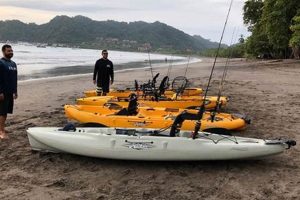
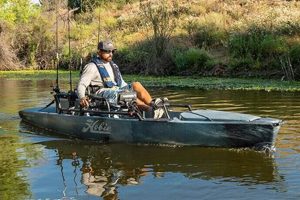
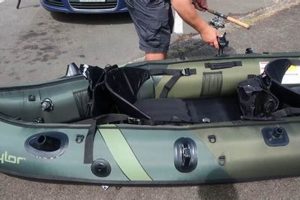
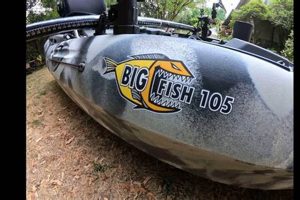
Specialized kayaks designed for fishing and diving offer a unique platform for pursuing these activities. These vessels typically feature a stable hull design suitable for both calm and moderately choppy waters. They often incorporate specialized features such as rod holders, gear tracks, and anchor trolleys for fishing, as well as ample storage space for diving equipment like tanks and fins. Some models may also include features like underwater viewing windows or dedicated dive platforms for easier entry and exit from the water.
The combination of fishing and diving capabilities in a single watercraft provides enhanced recreational opportunities. It allows individuals to seamlessly transition between activities without needing separate vessels. This versatility is particularly attractive for those exploring diverse aquatic environments, where the ability to both fish and dive expands the range of experiences available. Historically, purpose-built watercraft for these activities were less common, requiring individuals to adapt general-purpose kayaks or use separate boats. The development of specialized designs represents a significant advancement for enthusiasts of both sports.
Further exploration will cover topics such as specific design features, leading manufacturers, popular models, and essential safety considerations for utilizing this type of specialized kayak.
Tips for Fishing and Diving Kayaks
Proper preparation and technique are essential for maximizing safety and enjoyment when using a kayak for fishing and diving activities. The following tips provide valuable guidance for both novice and experienced users.
Tip 1: Stability Assessment: Before embarking, carefully assess the kayak’s stability, particularly with diving gear loaded. Consider practicing entries and exits in shallow, calm water to understand the vessel’s balance characteristics.
Tip 2: Equipment Securing: Secure all fishing and diving equipment properly. Loose items can shift during movement, affecting stability and potentially causing damage or loss. Utilize bungee cords, straps, and designated storage compartments.
Tip 3: Dive Flag Display: Always display a dive flag when diving from a kayak. This alerts other watercraft to the presence of divers, reducing the risk of collisions.
Tip 4: Weather Monitoring: Carefully monitor weather conditions before and during excursions. Wind, waves, and currents can significantly impact kayak handling and diver safety. Postpone activities if conditions are unfavorable.
Tip 5: Buddy System: Whenever possible, utilize the buddy system for both kayaking and diving. A partner can provide assistance in emergencies and enhance overall safety.
Tip 6: Navigation Planning: Plan navigation routes carefully, considering water depths, currents, and potential hazards. Utilize charts, GPS devices, and local knowledge to ensure safe and efficient navigation.
Tip 7: Weight Distribution: Distribute weight evenly within the kayak, optimizing stability and performance. Consider the placement of diving tanks, fishing gear, and other equipment to maintain balance.
Adhering to these guidelines will significantly enhance safety and optimize the overall experience when combining kayaking with fishing and diving activities.
The concluding section will offer a comprehensive overview of key takeaways and underscore the importance of responsible kayak usage for these combined activities.
1. Hybrid Design

The “hybrid design” concept is central to the functionality of specialized fishing and diving kayaks. This approach integrates design elements specific to both activities within a single platform, eliminating the need for separate watercraft. Cause and effect are directly linked: the demand for a versatile solution capable of supporting both fishing and diving led to the development of these hybrid designs. This integration optimizes functionality, allowing users to seamlessly transition between fishing and diving without the logistical challenges of managing multiple vessels or compromising performance. A real-life example is a kayak featuring a stable hull design ideal for dive entries and exits, combined with integrated rod holders and gear tracks optimized for fishing. This synergy enhances versatility and user experience.
The importance of a hybrid design as a core component of these kayaks is reflected in the careful consideration given to weight distribution, stability, and storage capacity. Designers must balance the conflicting demands of these activities, ensuring the vessel remains stable and maneuverable even when fully loaded with diving and fishing equipment. For instance, strategically positioned storage compartments and integrated mounting points for gear contribute to a balanced center of gravity, crucial for both diving and fishing activities. This specialized design enhances safety and performance, offering practical advantages over adapting general-purpose kayaks.
Understanding the hybrid design concept is crucial for selecting and utilizing these specialized kayaks effectively. Recognizing the careful balance of features and design choices inherent in these vessels allows users to appreciate their unique capabilities. While challenges such as weight capacity and potential compromises in pure fishing or diving performance exist, the overall benefit of streamlined multi-activity engagement outweighs these limitations for many users. This specialized approach to kayak design has expanded the possibilities for combined water-based activities, broadening accessibility and enriching recreational experiences.
2. Stability

Stability is paramount for kayaks designed for combined fishing and diving activities. These vessels must accommodate the dynamic movements associated with both pursuits, including casting lines, reeling in fish, entering and exiting the water for diving, and managing equipment. Cause and effect are directly related: a lack of stability compromises safety and effectiveness in both fishing and diving scenarios. For example, an unstable kayak can easily capsize during a dive entry or exit, posing significant risks. Conversely, a stable platform enhances safety and allows for more efficient movement and equipment management.
The importance of stability as a core component of fishing and diving kayaks is reflected in design features such as wider hulls, outriggers, and strategically positioned seating. These features contribute to a lower center of gravity and increased resistance to tipping. Practical applications include enhanced angler performance by providing a stable casting platform, and safer diver entries and exits. For instance, a kayak with a wide, flat hull offers superior stability compared to a narrower, V-shaped hull, making it easier to maintain balance while gearing up for a dive.
A thorough understanding of stability considerations is essential for safe and effective use of these specialized kayaks. While inherent design features contribute significantly to stability, factors such as weight distribution and water conditions also play crucial roles. Challenges include maintaining stability while maneuvering in currents or waves, and managing the added weight of diving equipment. However, prioritizing stability in design and operation enhances both safety and performance, making it a critical factor for successful fishing and diving excursions.
3. Storage Capacity

Ample storage capacity is a defining characteristic of specialized fishing and diving kayaks, directly impacting their practicality and effectiveness. These vessels must accommodate a diverse array of equipment, including fishing rods, reels, tackle boxes, dive tanks, buoyancy compensators, fins, masks, snorkels, and safety gear. Insufficient storage can compromise safety, limit operational range, and detract from the overall experience.
- Dedicated Compartments:
Purpose-built compartments, often sealed or water-resistant, safeguard sensitive equipment like electronics, cameras, and first-aid kits from water damage. Dry storage is crucial for preserving functionality and extending the lifespan of essential gear. For example, a dedicated compartment for a dive computer protects it from saltwater exposure and impact. This specialized storage enhances reliability and peace of mind during excursions.
- Tank Wells and Tie-Downs:
Securely mounting dive tanks is essential for maintaining stability and preventing equipment shifting during movement. Tank wells and strategically placed tie-down points ensure tanks remain firmly in place, even in choppy conditions. For instance, recessed tank wells prevent tanks from rolling or sliding, optimizing weight distribution and kayak balance. This secure mounting system enhances safety and facilitates efficient dive preparation.
- Rod Holders and Gear Tracks:
Integrated rod holders and gear tracks provide convenient storage and access to fishing rods and other essential equipment. These features keep gear organized and readily available, minimizing clutter and maximizing fishing efficiency. For example, flush-mounted rod holders secure rods while paddling or diving, preventing entanglement and damage. This organized storage enhances fishing preparedness and streamlines transitions between activities.
- Weight Capacity Considerations:
Understanding the kayak’s weight capacity is crucial for safe and efficient operation. Exceeding the specified limit compromises stability and performance, potentially leading to capsizing or equipment damage. Accurately assessing the combined weight of passengers, gear, and equipment ensures safe operation within design parameters. This awareness is essential for preventing dangerous overloading and maintaining optimal performance in various water conditions.
The interplay between these storage features and the overall design of a fishing and diving kayak directly impacts its functionality and usability. Strategic placement of compartments, tank wells, rod holders, and other storage solutions maximizes space utilization and contributes to a balanced center of gravity. This careful consideration of storage capacity is essential for creating a versatile and efficient platform capable of supporting both fishing and diving activities effectively.
4. Specialized Features

Specialized features distinguish fishing and diving kayaks from conventional recreational kayaks, optimizing them for the unique demands of these combined activities. These features enhance functionality, safety, and overall user experience. Careful consideration of these specialized adaptations is crucial for selecting a kayak suited to individual needs and preferences.
- Rod Holders and Gear Tracks
Integrated rod holders secure fishing rods while paddling or diving, preventing entanglement and damage. Gear tracks provide versatile mounting points for fish finders, GPS units, and other accessories. This organized arrangement keeps essential equipment readily accessible, streamlining transitions between fishing and diving. For example, adjustable rod holders accommodate different fishing styles and rod lengths. This adaptability enhances fishing efficiency and allows for customization based on individual preferences.
- Dive Platforms and Entry/Exit Points
Dive platforms offer stable surfaces for gearing up and entering the water. Designated entry and exit points facilitate smooth transitions between kayaking and diving, minimizing the risk of capsizing. Some models feature recessed areas or molded grips for secure footing during entry and exit. This enhanced stability is particularly beneficial when managing heavy diving equipment. For example, a wide rear dive platform provides ample space for donning fins and entering the water smoothly.
- Anchor Systems and Trolleys
Anchor systems allow for precise positioning in fishing or diving locations. Anchor trolleys facilitate controlled drifting, keeping the kayak aligned with the current or wind. This precise positioning optimizes fishing effectiveness and ensures divers can return to the kayak after ascending. For example, an anchor trolley system allows anglers to maintain position in a current while fishing, enhancing their ability to target specific areas. This controlled positioning is also crucial for diver safety, providing a consistent reference point for ascents.
- Underwater Viewing Windows or Ports
Some specialized kayaks incorporate underwater viewing windows or ports, enabling observation of marine life without entering the water. This feature enhances the overall experience, particularly for individuals interested in exploring aquatic environments from the surface. For example, a clear-bottom viewing window allows for direct observation of reefs and fish without requiring a dive. This added dimension enhances recreational enjoyment and provides educational opportunities for observing marine ecosystems.
The integration of these specialized features significantly enhances the functionality and versatility of fishing and diving kayaks. These adaptations cater specifically to the unique demands of these combined activities, improving safety, efficiency, and overall user experience. While the specific features offered can vary between models, the core principle remains consistent: optimizing design to support both fishing and diving pursuits effectively within a single platform. This specialized approach has expanded the possibilities for combined water sports, creating opportunities for more diverse and enriching recreational experiences.
5. Material Durability
Material durability is a critical factor in the construction of specialized fishing and diving kayaks, directly influencing their lifespan, performance, and safety. These kayaks are subjected to harsh marine environments, including saltwater exposure, UV radiation, and potential impacts with rocks, reefs, or other submerged objects. Durable materials resist wear and tear, ensuring the kayak remains structurally sound and functional over extended periods. Cause and effect are directly linked: robust materials withstand environmental stressors, preventing cracks, leaks, and other damage that can compromise safety and performance. For instance, a kayak constructed from high-density polyethylene (HDPE) will exhibit greater resistance to impact and abrasion compared to one made from a less durable material. This resilience translates to a longer lifespan and reduced risk of structural failure in demanding conditions.
The importance of material durability as a core component of these specialized kayaks is reflected in the selection of robust construction materials. Manufacturers often utilize high-density polyethylene (HDPE), fiberglass, or composite materials known for their strength, impact resistance, and ability to withstand UV degradation. Practical applications include enhanced resistance to damage from impacts with rocks or reefs during launching, landing, or navigation in shallow water. Furthermore, durable materials maintain their structural integrity over time, even with frequent exposure to saltwater and sunlight. For example, a fiberglass kayak with a gelcoat finish offers superior resistance to UV degradation compared to a bare polyethylene hull. This protective layer preserves the kayak’s appearance and structural integrity, extending its usable lifespan.
A thorough understanding of material durability is essential for informed decision-making when selecting a fishing and diving kayak. While initial cost may be higher for kayaks constructed from more durable materials, the long-term benefits of increased lifespan, reduced maintenance, and enhanced safety often outweigh the upfront investment. Challenges include balancing durability with weight and cost considerations. However, prioritizing material durability ensures the kayak can withstand the rigors of combined fishing and diving activities, providing a reliable and safe platform for exploring aquatic environments. Selecting a kayak constructed from robust, marine-grade materials contributes significantly to its overall performance, longevity, and safety, making it a critical factor for both novice and experienced users.
6. Maneuverability
Maneuverability is a critical performance attribute for specialized fishing and diving kayaks, directly impacting their effectiveness and user experience. These kayaks operate in diverse aquatic environments, often requiring precise positioning for fishing or navigating through complex underwater terrains while diving. Effective maneuverability enables users to efficiently reach desired locations, maintain position against currents or wind, and navigate tight spaces, enhancing both fishing and diving success. This characteristic becomes especially crucial in dynamic environments such as rivers, estuaries, and coastal areas.
- Tracking and Turning Performance
Tracking refers to the kayak’s ability to maintain a straight course, while turning performance dictates how efficiently it changes direction. Kayaks designed for fishing and diving often prioritize stability, which can sometimes compromise turning performance. However, efficient tracking and responsive turning are essential for navigating to fishing spots, following dive routes, and maneuvering in challenging conditions. For example, a kayak with a longer keel will generally track better in a straight line, while a shorter, wider hull will turn more easily. Finding a balance between these characteristics is crucial for optimizing maneuverability in diverse environments.
- Influence of Hull Design and Length
Hull design significantly influences maneuverability. Longer kayaks generally track better and glide more efficiently, while shorter kayaks offer enhanced maneuverability in tight spaces. Wider hulls provide increased stability but can reduce turning responsiveness. The specific hull design must balance stability, speed, and maneuverability to meet the demands of combined fishing and diving activities. For instance, a kayak with a shallow-V hull design offers a good compromise between tracking and maneuverability, making it suitable for a variety of water conditions.
- Impact of Rudders and Skegs
Rudders and skegs enhance directional control, particularly in windy or current-prone environments. Rudders provide active steering control, while skegs improve tracking and reduce yaw. These features are particularly valuable for longer kayaks, improving their responsiveness and making them easier to manage in challenging conditions. For example, a retractable rudder allows for precise steering adjustments, enabling users to maintain course in strong winds or currents. This enhanced control improves navigation accuracy and reduces effort required for maneuvering.
- Maneuverability Considerations for Diving
Maneuverability plays a crucial role in dive operations. Divers often need to navigate to specific dive sites, maintain position near underwater features, and return to the kayak after ascending. A maneuverable kayak simplifies these tasks, enhancing safety and efficiency during diving excursions. For instance, a kayak with good turning performance allows divers to easily maneuver around reefs or other underwater structures, optimizing their exploration and observation opportunities. This enhanced maneuverability contributes to a more rewarding and safer diving experience.
The interplay between these factors determines the overall maneuverability of a fishing and diving kayak. Selecting a kayak with appropriate maneuverability characteristics for the intended environment and activity is crucial for maximizing performance, efficiency, and enjoyment. While stability remains a primary concern, optimizing maneuverability enhances the user experience, making it easier to navigate to desired locations, maintain position, and explore diverse aquatic environments effectively. Balancing these performance attributes is essential for creating a versatile and user-friendly platform for combined fishing and diving activities.
Frequently Asked Questions
This section addresses common inquiries regarding specialized kayaks designed for combined fishing and diving activities. Clear and concise responses provide practical insights for informed decision-making and safe operation.
Question 1: What are the key advantages of using a specialized fishing and diving kayak compared to adapting a conventional recreational kayak?
Specialized designs offer enhanced stability, dedicated storage for diving and fishing equipment, and integrated features such as rod holders, dive platforms, and anchor systems. These adaptations optimize performance and safety for both activities.
Question 2: How does one determine the appropriate size and weight capacity for a fishing and diving kayak?
Consider the combined weight of the user, all diving and fishing equipment, and any additional gear. Select a kayak with a weight capacity exceeding this total for safe and efficient operation. Size considerations include user height and weight, as well as storage needs.
Question 3: What safety precautions are essential when diving from a kayak?
Always display a dive flag, utilize a buddy system whenever possible, and carefully assess weather and water conditions before diving. Ensure proper storage and securing of diving equipment to prevent shifting during entry and exit.
Question 4: What are the key maintenance requirements for a fishing and diving kayak?
Regularly rinse the kayak with freshwater after each use, particularly in saltwater environments. Inspect for damage, and address any necessary repairs promptly. Store the kayak in a sheltered location away from direct sunlight to prevent material degradation.
Question 5: What are the recommended accessories for enhancing fishing and diving kayak functionality?
Essential accessories include a personal flotation device (PFD), a paddle leash, a bilge pump, and a dry bag for storing valuables. Optional additions include a fish finder, GPS unit, anchor trolley system, and specialized dive gear storage solutions.
Question 6: How does one choose between different hull designs for optimal performance in various water conditions?
Wider, flatter hulls offer enhanced stability, ideal for calm water and dive entries/exits. Longer, narrower hulls provide better tracking and speed in open water. Consider the primary intended use environment when selecting a hull design.
Careful consideration of these frequently asked questions provides valuable insights for maximizing safety, efficiency, and overall enjoyment when using a specialized fishing and diving kayak. Informed decision-making and responsible operation are crucial for a positive experience on the water.
The following section will offer concluding remarks and summarize the key takeaways for utilizing these specialized watercraft effectively and safely.
Cobra Fish and Dive Kayak
Specialized kayaks designed for combined fishing and diving activities offer a unique platform for exploring aquatic environments. Careful consideration of key features such as stability, storage capacity, specialized design elements, material durability, and maneuverability is essential for selecting and utilizing these vessels effectively. Understanding the interplay between these factors ensures optimal performance, safety, and user satisfaction. Proper equipment maintenance, adherence to safety guidelines, and informed decision-making contribute to a rewarding and responsible approach to these combined water sports.
The continued development and refinement of specialized kayak designs promise further enhancements in performance, versatility, and user experience. As technology advances and user needs evolve, innovation in materials, construction techniques, and integrated features will likely drive further specialization within this niche market. Emphasis on sustainability and environmental consciousness will also shape future design considerations, promoting responsible interaction with aquatic ecosystems. Ultimately, informed selection and responsible operation of these specialized kayaks unlock diverse recreational opportunities, fostering deeper appreciation for the aquatic world.